
Two Dark Skies, Two Different Certifying Bodies
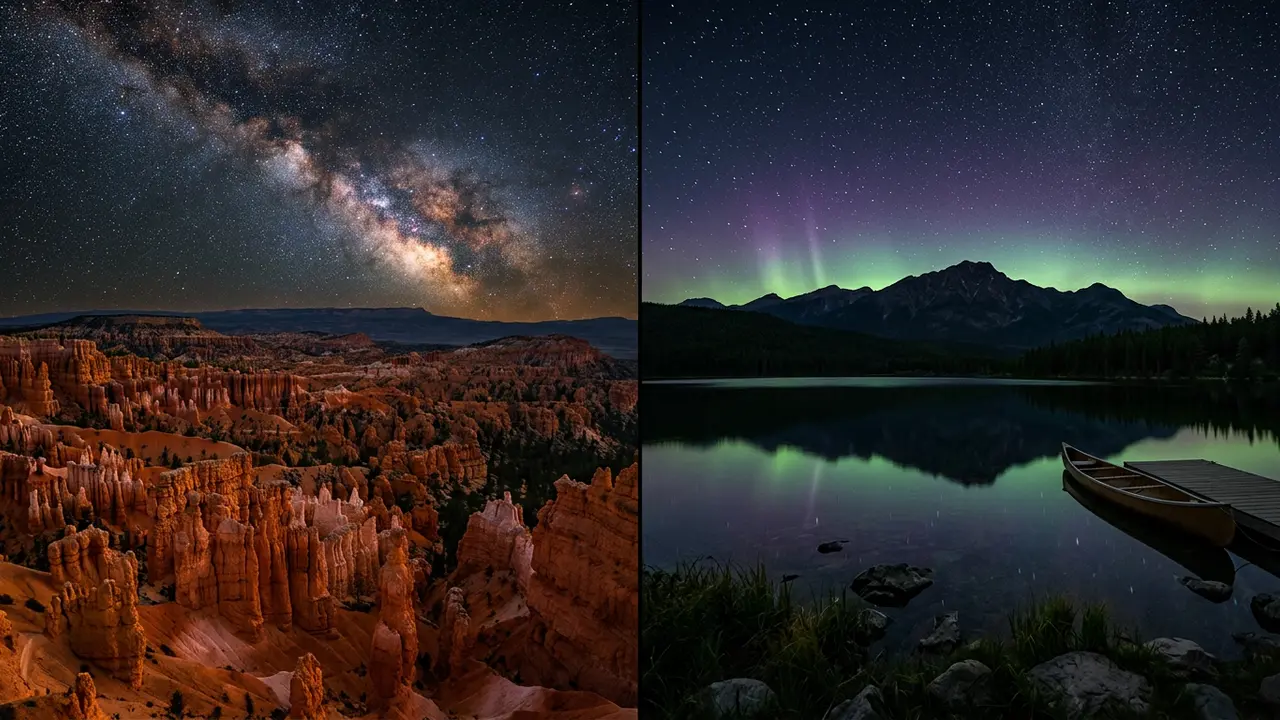
Bryce Canyon and Jasper both bill themselves as certified, drive-in dark-sky destinations with an annual festival built around the night sky, and it's tempting to lump them together as the same kind of stop on a longer astrotourism trip. They aren't. The certifying body, the size of the protected area, and what you can actually see once your eyes adjust are different enough that the distinction shapes everything downstream: how you pack, when you go, and whether the trip is a weekend add-on or a dedicated week away.
Bryce Canyon holds a Gold Tier[6] International Dark Sky Park certification, jointly announced by the National Park Service and DarkSky International on August 13, 2019[1]. Jasper's designation predates that by eight years and comes from an entirely different organization: the Royal Astronomical Society of Canada (RASC) named Jasper National Park a Dark-Sky Preserve on March 26, 2011, in partnership with Parks Canada[2]. Both parks also run their own annual festival, Bryce's in June and Jasper's in October, though exact dates shift year to year, so treat any specific weekend you read about as provisional until you check the current year's program.
The words matter here, not just the dates. DarkSky International's own Park category covers publicly or privately owned land under a single manager, with no minimum size requirement, which is exactly the shape of Bryce's certification, run entirely by the National Park Service[3]. Its separate Reserve category is a different animal: a dark core zone ringed by a populated periphery, established through a partnership of multiple land managers[4]. Jasper's own designation, a RASC Dark-Sky Preserve, is neither of those DarkSky International categories. It's a distinct Canadian national designation with its own criteria, and conflating the two names (easy to do, since they sound alike) gets the comparison wrong before it starts.
| Bryce Canyon | Jasper | |
|---|---|---|
| Certifying body | DarkSky International + National Park Service | Royal Astronomical Society of Canada + Parks Canada |
| Category | International Dark Sky Park, Gold Tier | Dark-Sky Preserve (RASC designation) |
| Designated | August 13, 2019 | March 26, 2011 |
| Protected area | Single NPS park unit | Over 11,000 km², second-largest in the world |
| Signature foreground | Hoodoo amphitheater | Rockies peaks and glacial lakes |
| Aurora chance | None, too far south | Occasional bonus on clear, cold nights |
Bryce Canyon's Case: Gold Tier, a Hoodoo Amphitheater, and a Straightforward Drive
Bryce's certification landed with a second number worth knowing: it arrived as the park marked 50 years of astronomy programming[5], one of the longest-running ranger-led star programs anywhere in the National Park System. This wasn't a park discovering its night sky for the first time; it was catching the paperwork up to five decades of star talks already running. The Gold Tier wording itself comes from independent coverage of the 2019 announcement rather than a directly quotable line in the NPS release: DarkSky International's highest classification, reserved for the least light-polluted, best-protected places it certifies[6].
That sky sits over a single National Park Service unit, a road-accessible national park by design, no permit or multi-day hike required, just a rental car and a road. Rainbow Point, at a rim elevation of 9,115 feet (2,778 meters), is the highest viewpoint in the park[7], while the Visitor Center itself sits at 7,894 feet (2,406 meters)[8], high enough that thinner air cuts real haze between the ground and the stars. Fly into Las Vegas or Salt Lake City and it's roughly 270 miles either direction; Cedar City, about 80 miles out, and St. George, about 125, shrink that drive considerably if a regional airport works for your trip[9]. None of it needs advance planning beyond picking a clear, new-moon week: the guide to stargazing in Bryce Canyon and full directions for getting to Bryce Canyon cover the rest.
Featured · Destination
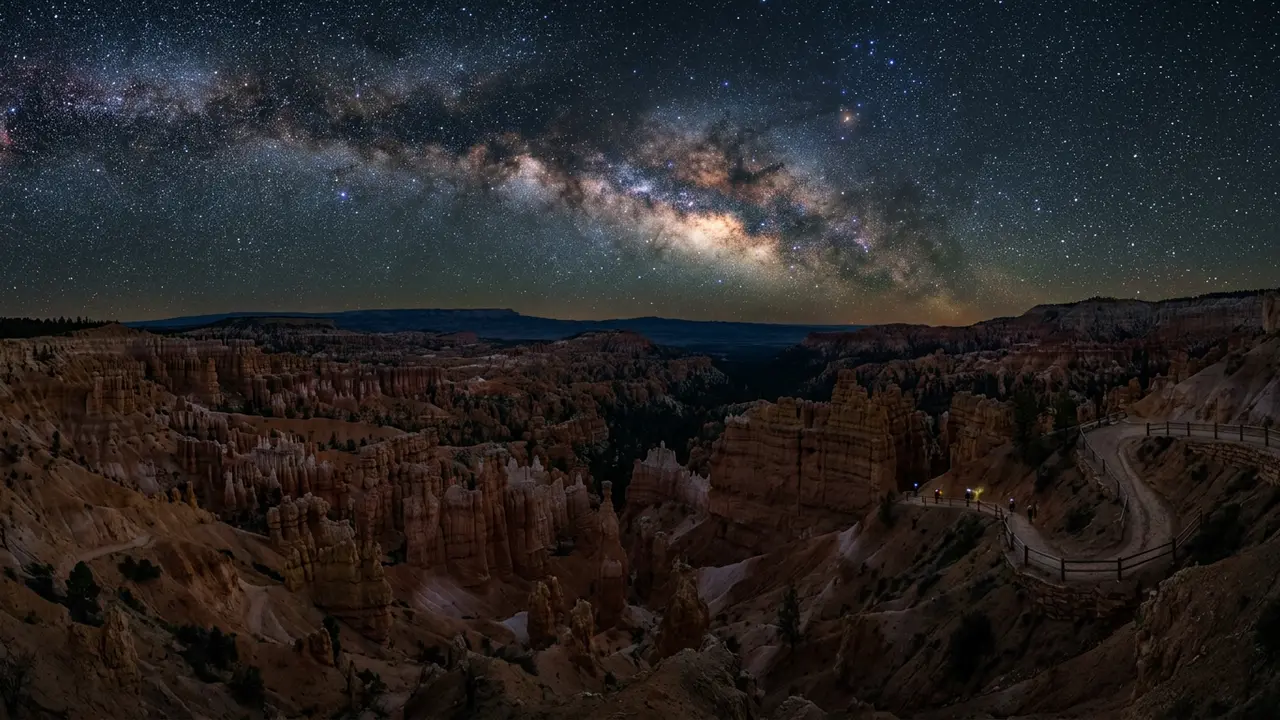
Stargazing in Bryce Canyon National Park
Bryce Canyon earned Gold-Tier Dark Sky Park status in 2019 after 50 years of astronomy programs. Drive in from Vegas or Salt Lake City to see it for yourself.
What Bryce has that Jasper doesn't is a foreground built from stone rather than mountains: the hoodoo amphitheater below the rim holds thousands of thin, banded spires, pale enough after dark to read as silhouettes against the sky. Stand at Sunset Point once the day-trippers clear out and it stops looking like an odd rock formation and starts looking like a foreground the Milky Way's core shows up against directly overhead on a clear night. The park's own Astronomy Festival each June leans into that same foreground for its ranger-led telescope nights, though the sky itself never actually needs the festival to look this way. None of that needs a special ticket; standard park admission covers the rim after dark the same way it covers a daytime hike.
Jasper's Case: A Preserve Big Enough to Hold a Town
Jasper's Dark-Sky Preserve isn't a single overlook, or even a single park unit end to end. RASC and Parks Canada put its size at over 11,000 square kilometers, the second-largest Dark-Sky Preserve in the world[10]. The acreage isn't really the point for a traveler, though. What matters is what sits inside the boundary: the Jasper townsite itself, with its hotels, grocery store, and restaurants, making Jasper the largest accessible Dark-Sky Preserve anywhere, not a backcountry reserve that takes days of hiking to reach. That's a genuinely rare setup: most large dark-sky reserves keep towns and lodging outside their darkest zones entirely, requiring a drive after check-in rather than a walk from the room.
Where Bryce's foreground is stone, Jasper's is water and ice: reflections off Pyramid Lake, glacier country along the Icefields Parkway, and Canadian Rockies peaks silhouetted against a sky that reads differently again once you're clear of the townsite's own lights. The guide to stargazing in Jasper National Park covers the full sky-quality picture, from the brighter reading right at the townsite to genuinely dark, backcountry-level skies out at Big Bend.
Sky Quality: Brighter Near Town, Darkest at the Backcountry Edge
You don't have to hike for hours to see a good sky in Jasper, but the sky over the townsite itself, hotels, streetlights, and all, is measurably brighter than the sky a short drive away. Pyramid Lake and Old Fort Point fall in between: dark enough for a genuinely good night, close enough to reach on a whim. Big Bend, deep in the backcountry, is where the preserve earns its reputation outright. Picking a spot inside that range matters as much here as picking a viewpoint does at Bryce. None of that requires backcountry gear either; Big Bend still sits on a maintained road, just a longer, quieter one than the townsite loop.
Aurora: The One Genuine Difference Bryce Can't Match
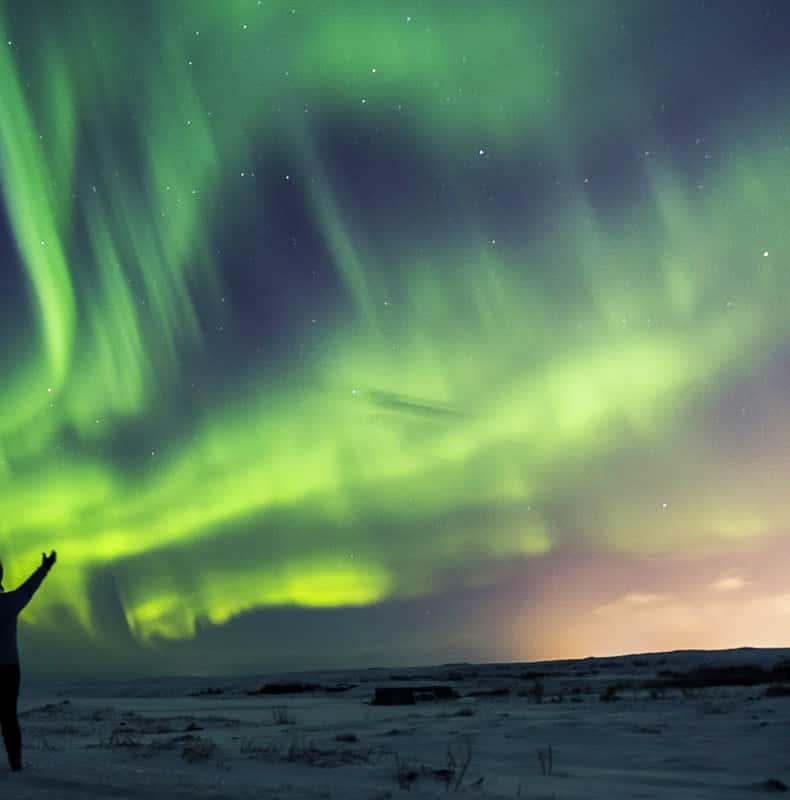
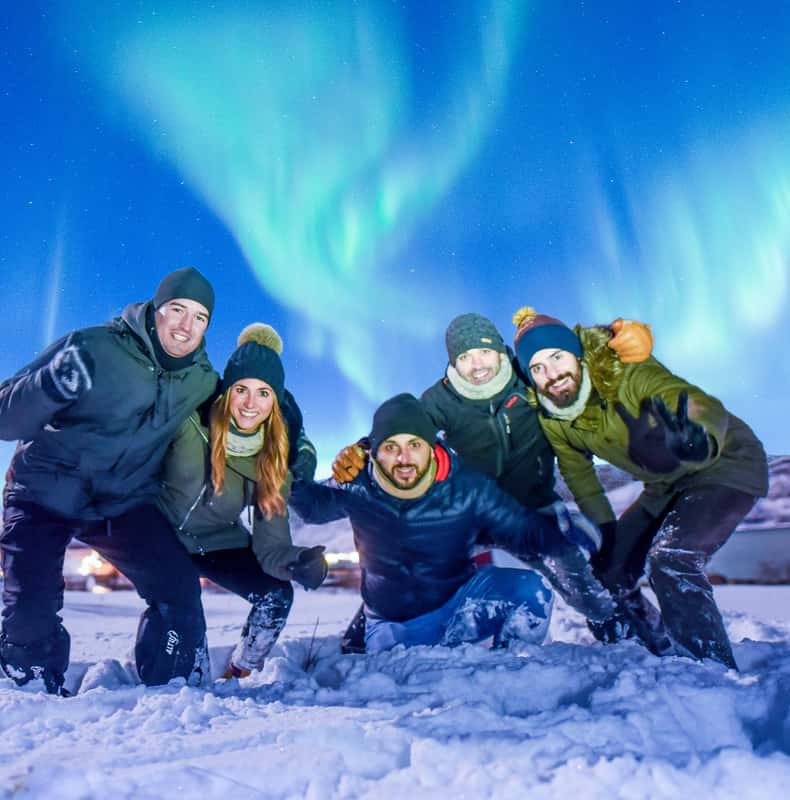
None of Bryce's certifications, elevation numbers, or foreground drama change one fact: at a latitude of roughly 37.6°N, the aurora borealis isn't a realistic sightseeing target there, no matter how dark the sky gets on a given night. Jasper sits far enough north that it occasionally is, though even Jasper's own materials are careful not to oversell it. "On clear, cold nights, you might even see one of nature's greatest light shows, the aurora borealis, shimmering across the horizon," reads Parks Canada's own Dark-Sky Preserve page[11], a bonus sighting in Parks Canada's own framing, not the reason to book the trip.
That's a real, sourced differentiator, not marketing hype, and it's worth being precise about what it means in practice. Aurora sightings track the Kp index, a rough measure of geomagnetic activity, and Jasper needs a stronger storm than Fairbanks or Tromso to put green light on the horizon, since it sits considerably further south than either, with fall and winter nights giving it the best odds. The explainer on the Kp index and how it predicts the northern lights covers the thresholds if aurora is genuinely part of the plan. For Bryce, skip that math entirely: book the trip for the Milky Way and the hoodoos, not for anything overhead that moves.
“On clear, cold nights, you might even see one of nature's greatest light shows, the aurora borealis, shimmering across the horizon.”
Getting There: Two Very Different Trips
Bryce is a Utah road-trip stop: fly into Las Vegas or Salt Lake City, rent a car, and drive, the same math covered above. Jasper asks for more. Most visitors fly into Edmonton, about a four-hour drive along the Yellowhead Highway, or Calgary, roughly five hours, often via the scenic Icefields Parkway from Banff and Lake Louise. Neither approach is a quick hop; a Jasper trip sits closer to a dedicated multi-night commitment than a stop bolted onto a Vegas weekend. Neither park has an airport inside its own boundary, so a rental car is non-negotiable either way.
That gap in access shapes who each park actually suits, and it comes with its own seasonal wrinkle. Winter driving on the Icefields Parkway demands real caution: conditions can turn quickly, and a rental car needs winter tires. Bryce's access roads close far less often, though even the scenic drive out to Rainbow and Yovimpa Point can shut temporarily after a heavy snowfall too. Bryce rewards travelers who want a genuinely dark sky without giving up an easy drive-in, easy to pair with Zion or Capitol Reef on a wider Utah loop. Jasper rewards travelers already committed to a Canadian Rockies trip, willing to treat the drive itself, and the size of the preserve, as part of the appeal rather than an obstacle. Pack layers either way; clear, high-altitude or high-latitude night skies get cold fast once the sun drops, festival week or not. If a Rockies trip is already on the table and the real debate is Jasper against its more convenient neighbor, the Jasper vs Banff stargazing comparison covers that separate decision in full; it's not the choice this piece is answering.
The Verdict: Which Sky Fits Your Trip
Pick Bryce if the trip needs to stay simple: a Gold Tier sky, a hoodoo amphitheater unlike anywhere else in the Southwest, and a straightforward drive from Las Vegas or Salt Lake City that folds neatly into a wider Utah itinerary. Pick Jasper if the trip is already built around the Canadian Rockies, or if a genuine, if occasional, shot at the aurora matters enough to justify the longer drive in. Both are real, sourced certifications, not marketing badges. Neither park is the wrong choice; they're answering different questions, and whichever way the trip leans, both are legitimate answers, not a runner-up and a winner.
A few situations make the choice easier than picking blind:
- A first stargazing trip that needs to stay a single, simple destination: Bryce
- A Rockies itinerary already on the calendar, glaciers and all: Jasper
- An aurora hope without the budget or time for Fairbanks or Tromso: Jasper, for the bonus chance, never the guarantee
- A Utah road trip pairing Zion or Capitol Reef: Bryce
Featured · Article
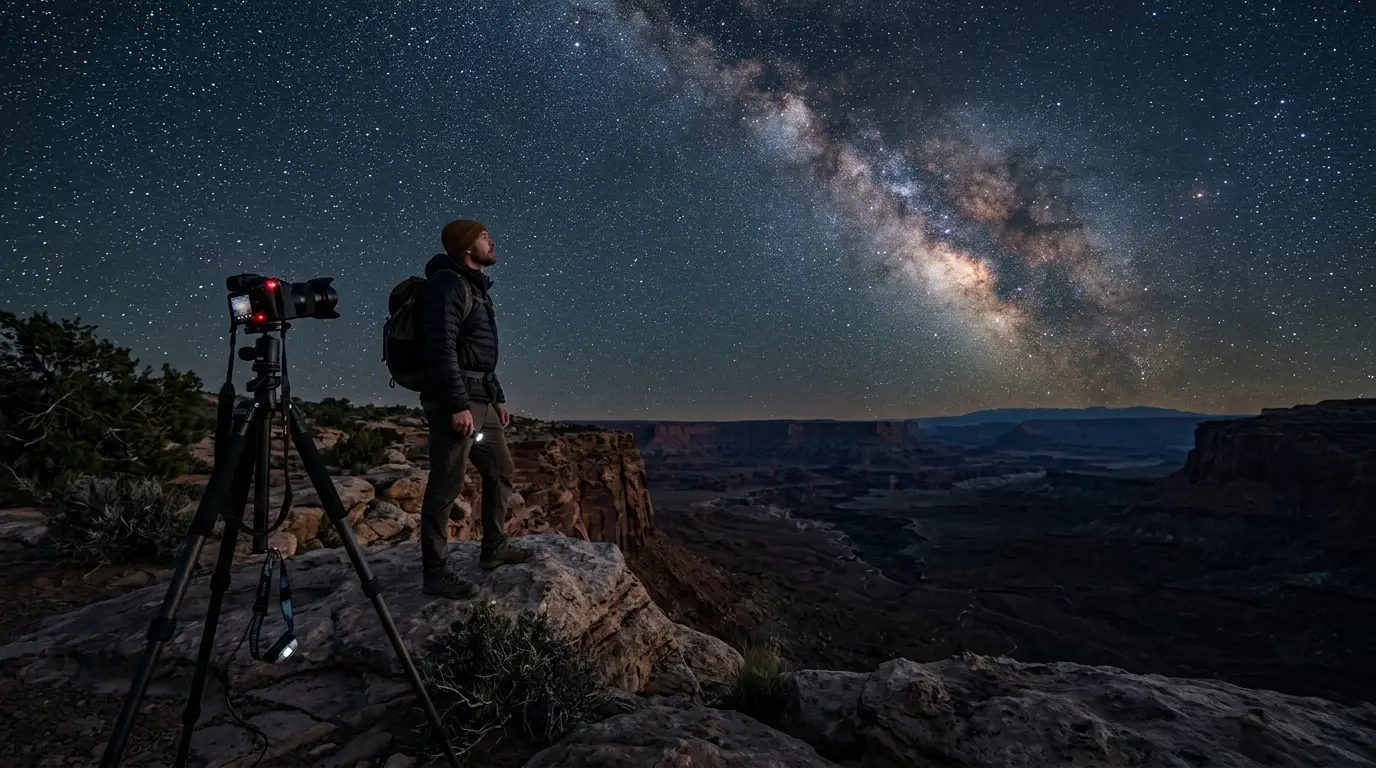
What Is Astrotourism? The Complete Beginner's Guide
Astrotourism means travel built around dark skies: meteor showers, auroras, the Milky Way. What it means, where to go, and how to plan your first trip.
Recommended tours
Tours are selected for quality, not commission. I earn a small fee if you book — at no extra cost to you.
Whichever park wins, check the new-moon window before locking in dates, and pack for cold, clear nights even outside winter proper. A Gold Tier certification or an 11,000-square-kilometer preserve boundary[12] is a promise about the sky's protection, not about a specific night's weather.