Four Named Viewpoints, One Gold-Tier Sky
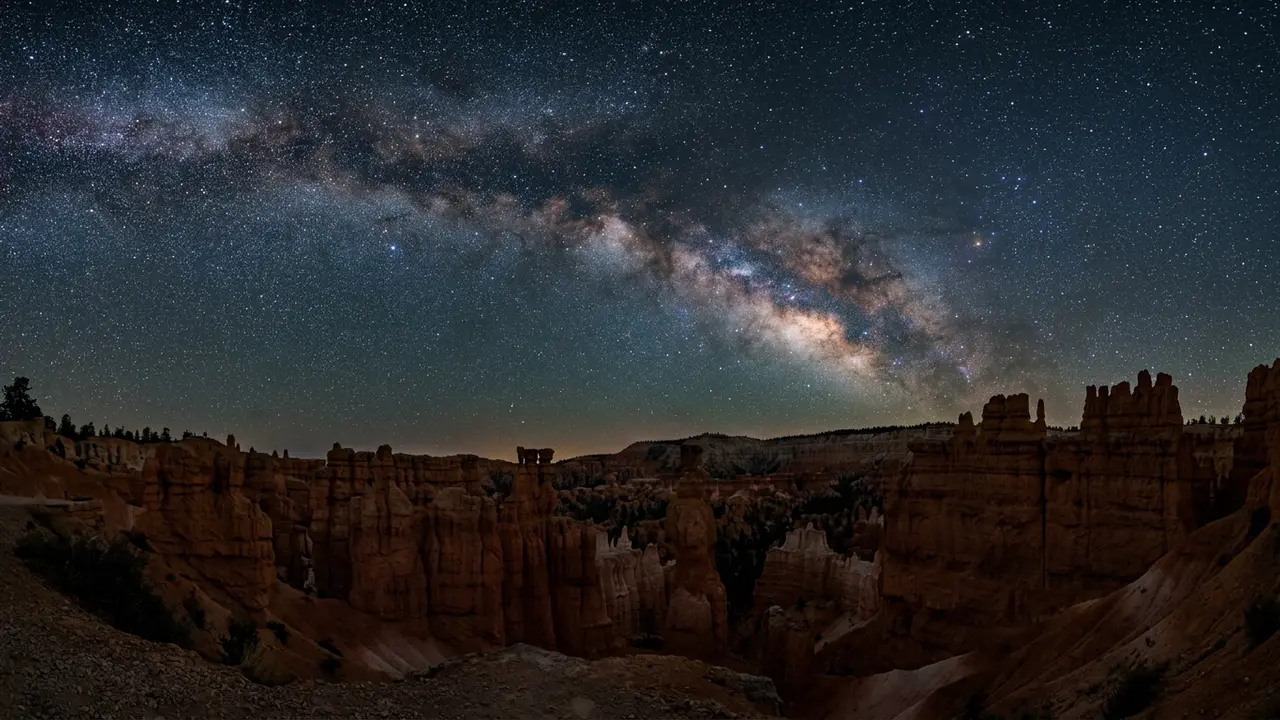
Bryce Canyon doesn't do aurora. Southern Utah's high plateau country sits too far south for the northern lights to be a realistic draw, and that's fine, because what the park does instead is harder to find nearby: a genuinely dark, high-elevation sky over a foreground unlike anywhere else in the American Southwest. In 2019, DarkSky International and the National Park Service certified the park as a Gold Tier International Dark Sky Park[3], the top rating on a three-tier scale, and one only a handful of U.S. parks carry.
That certification doesn't apply evenly to a single overlook, though. Bryce's rim holds four named viewpoints worth knowing by personality as much as by name: Sunrise Point and Bryce Point, both inside the main Bryce Amphitheater; Rainbow Point and Yovimpa Point, high up and quiet at the park's far edge; and Fairyland Point, reached by its own spur road at the rim's northern end on the Paunsaugunt Plateau. Each one shows a different slice of the same Gold Tier sky, and picking the right one for a given night, rather than defaulting to whichever overlook has the fullest parking lot, is most of what separates a good night on the rim from a forgettable one.
Gold Tier
What follows treats each viewpoint as its own decision, not a stop on a checklist, building on the broader picture in stargazing in Bryce Canyon National Park. Some nights call for Sunrise Point's easy access. Others are worth the longer drive to Rainbow Point. None of them need a permit or a reservation beyond standard park admission.
Sunrise Point: The Easiest First Night on the Rim
Start at Sunrise Point, one of the amphitheater's four named overlooks. It's an easy pick for a first night on the rim: a short paved walk from the parking area, the Bryce Canyon Lodge close enough to the amphitheater that walking back to a warm room afterward doesn't mean getting back in a car, and a wide, unobstructed line over the hoodoo field below.
It's also a workable stop if you're traveling with a dog. The Park Service allows pets at Bryce Canyon viewpoints, but only on paved surfaces, never on the unpaved rim trails[1]. That rules out a lot of the park's best daytime hiking, but it doesn't rule out an evening at Sunrise Point, since the overlook itself sits right off the paved path.
Featured · Destination
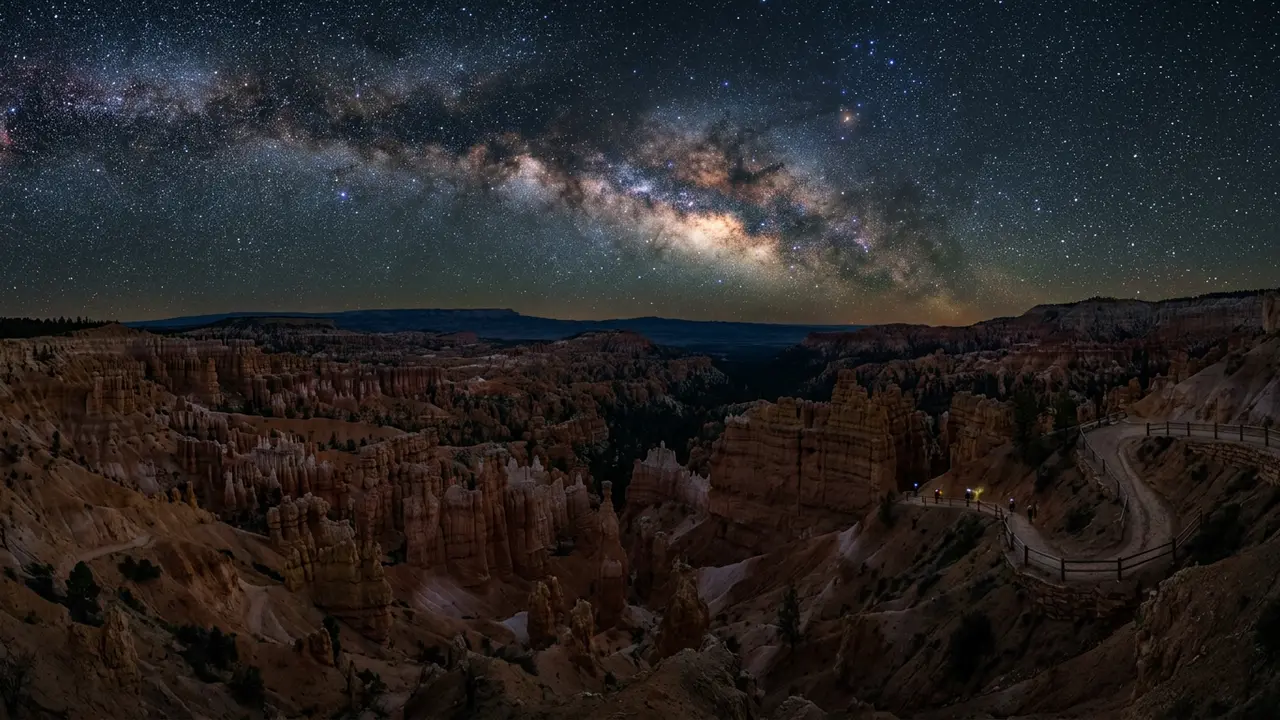
Stargazing in Bryce Canyon National Park
Bryce Canyon earned Gold-Tier Dark Sky Park status in 2019 after 50 years of astronomy programs. Drive in from Vegas or Salt Lake City to see it for yourself.
None of that makes Sunrise Point the best of the four, just the easiest one to commit to on a first visit. If it earns a second night on a return trip, it's usually because one of the amphitheater's other overlooks did something Sunrise Point couldn't.
Bryce Point: The Amphitheater's Most Dramatic Overlook
Walk out to Bryce Point, and it's easy to see why it's one of the most photographed overlooks in the park. The amphitheater's hoodoo field opens into a wide arc from Bryce Point, and the terrain drops away more steeply here than at Sunrise Point, giving the rock spires a layered, stacked look from this angle rather than the flatter spread the park's other overlooks show.
That vantage comes with a trade-off. It's popular by day, which means competitive parking by evening too, especially around an event like the park's June Astronomy Festival. Arrive with enough daylight left to find your footing at the rail, since the same drop that makes the daytime view dramatic makes a first visit after full dark disorienting if you don't already know where the edge is.
Comparing all four named overlooks side by side makes the choice easier than picking blind on arrival:
| Viewpoint | Best for | Crowd level after dark |
|---|---|---|
| Sunrise Point | First-timers, easy paved access, close to the lodge | Moderate |
| Bryce Point | The widest amphitheater panorama | Busiest, especially near the Astronomy Festival |
| Rainbow & Yovimpa Point | The park's highest, darkest edge | Quietest of the four |
| Fairyland Point | A quiet alternative off the main road | Light |
Rainbow Point and Yovimpa Point: The Park's Highest, Darkest Edge
Drive to the end of the park's main scenic drive, and you reach Rainbow Point and Yovimpa Point together, the highest viewpoints in the park — the scenic drive tops out at 9,115 feet (2,778 meters) at Rainbow Point[2]. That elevation is the whole draw here: thinner air means less atmospheric haze between the rim and the sky, on top of a location already about as far from the park's own visitor-center lights as the road goes.
The two overlooks share a single parking area, separated by a short paved walk between them, so one stop covers both without doubling the drive. Getting the timing right matters more here than at any of the other three viewpoints, since it's the farthest point from the entrance and not somewhere worth doubling back to on a whim. which season actually suits your visit walks through which months and moon phases make that drive worth it.
Which way to face
Yovimpa Point looks south, out over the Grand Staircase toward the Arizona line. Rainbow Point looks northeast, back across Bryce's own hoodoo formations from an angle none of the amphitheater's overlooks can match. Neither view beats the other; they're simply different directions to point a camera or a pair of binoculars from the same short walk.
Fairyland Point: The Quiet Alternative
Fairyland Point sits apart from the other three, on its own stretch of the Paunsaugunt Plateau rim, reached by its own short spur road off the highway before the main park entrance rather than inside it. That geography does the work of thinning the crowd: most visitors driving straight to the amphitheater's better-known overlooks never take the turn.
The trade-off is worth knowing before a winter trip. Spur roads at this elevation can close temporarily after a heavy snowfall, so check the park's current conditions page before committing to a Fairyland Point night in December or January rather than assuming a summer map still applies.
What you get for the detour is the hoodoos of the Fairyland Loop from an angle Sunrise, Bryce, Rainbow, and Yovimpa Points don't offer, with a fraction of the foot traffic once the sun goes down.
Planning a Night on the Rim
All four viewpoints share two things worth confirming before you go, however far in advance you plan the drive. First, accessibility: several of the park's stargazing viewpoints have paved, accessible parking, though it's worth checking each location's individual accessibility page for anything specific to that overlook. That's a stronger baseline than most national park stargazing spots offer, and worth confirming, not assuming, if mobility is a factor for anyone in your group.
Second, cold. Bryce Canyon's rim sits high enough that temperatures drop well below freezing on clear nights, even outside of winter proper, the same thin, dry air that keeps the sky so transparent working against you the moment the sun goes down. Real layers, not just a jacket, make the difference between an hour on the rim and twenty determined minutes before you give up and drive back.
Recommended tours
Tours are selected for quality, not commission. I earn a small fee if you book — at no extra cost to you.
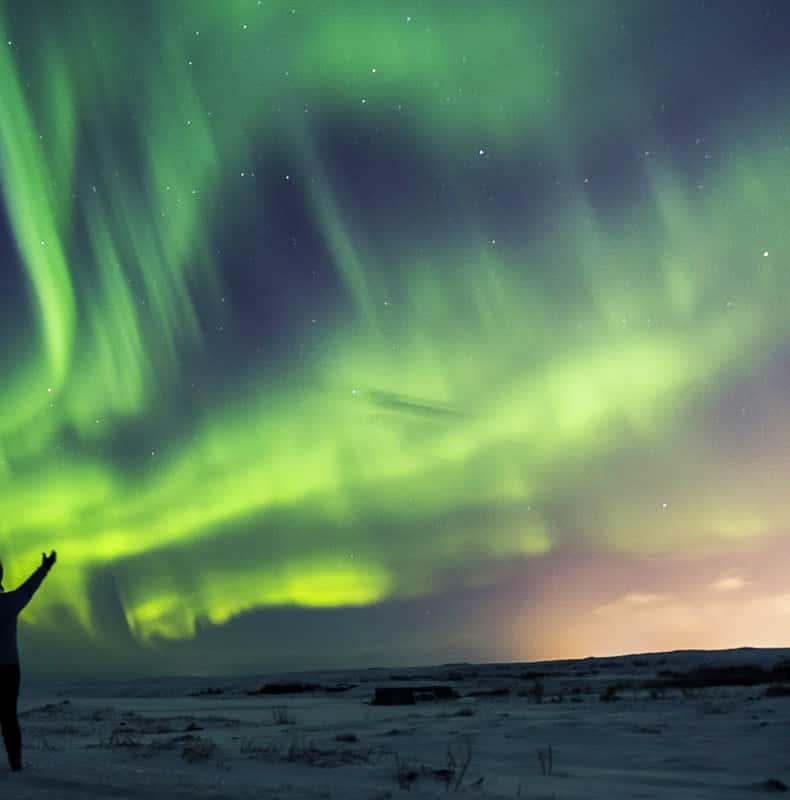
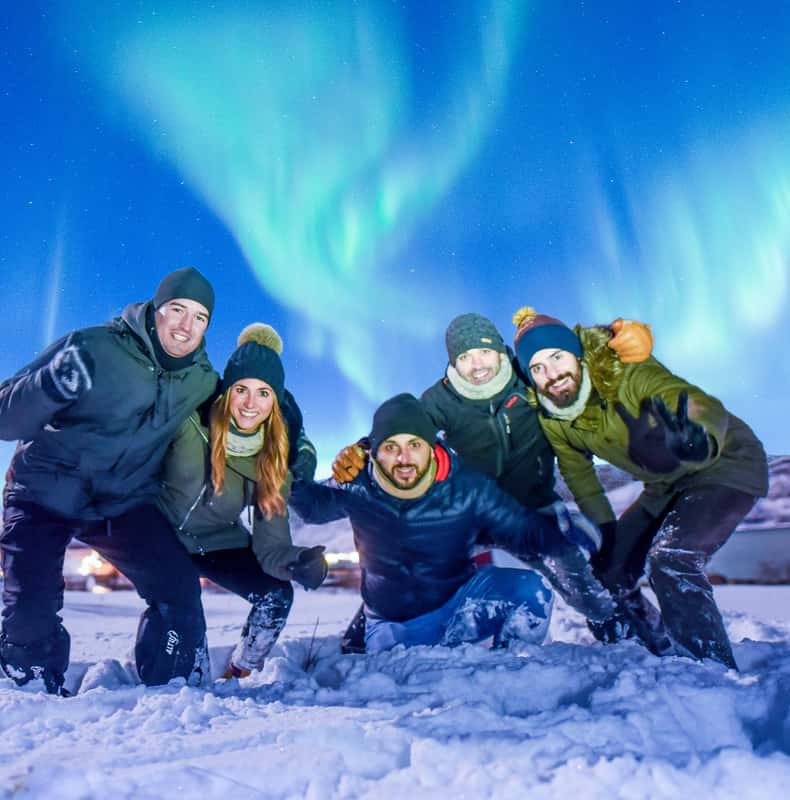
A few habits carry across all four viewpoints:
- Give your eyes real time to fully adjust to the dark before judging how bright or faint the sky actually looks, a bright phone screen or headlamp resets the clock instantly
- Use red light only, headlamp or phone screen, once your eyes have adjusted
- Check the park's current road and trail conditions before a winter trip to Rainbow, Yovimpa, or Fairyland Point specifically
- Pick a new-moon night over a full-moon one; timing matters here as much as viewpoint choice
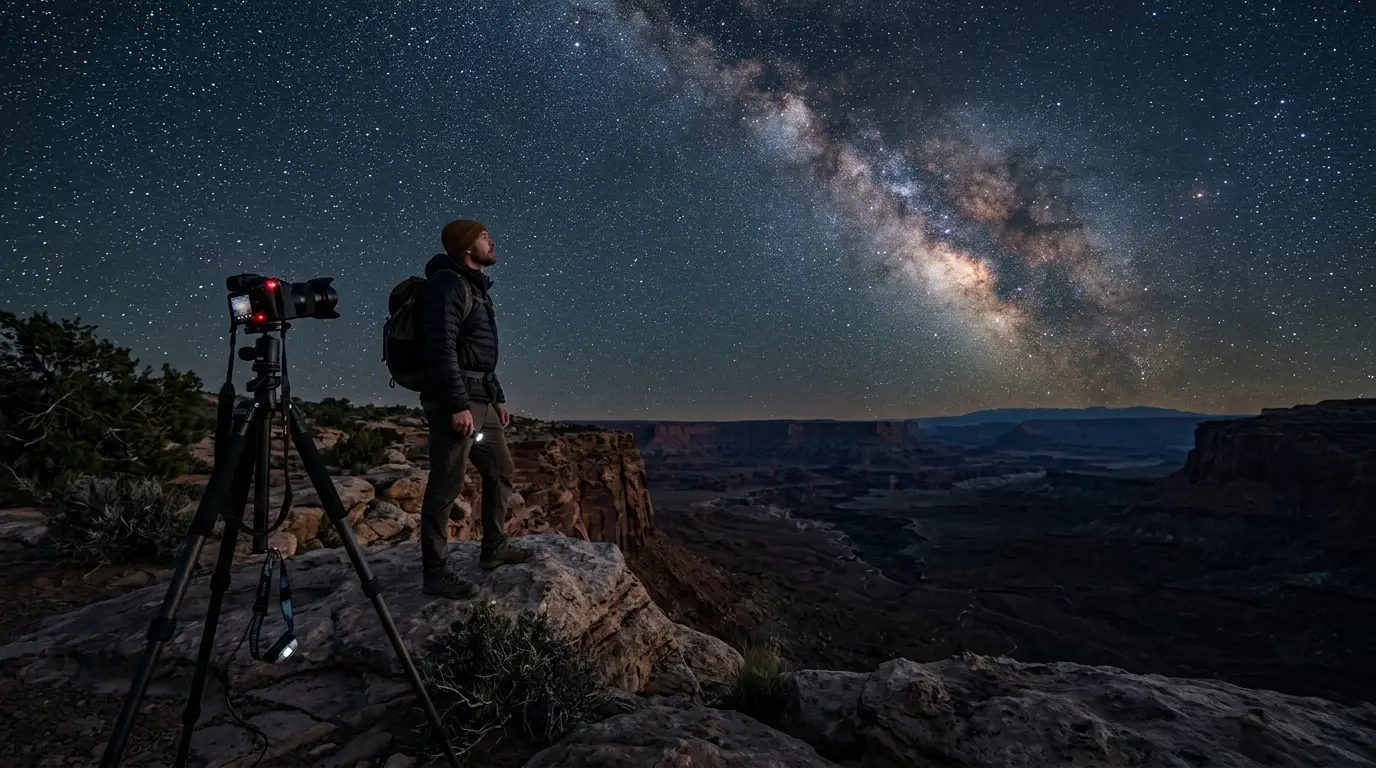
Featured · Article
What Is Astrotourism? The Complete Beginner's Guide
Astrotourism means travel built around dark skies: meteor showers, auroras, the Milky Way. What it means, where to go, and how to plan your first trip.
None of this is exotic gear or specialist knowledge. Dark sky etiquette and stargazing gear for beginners cover the rest of what's worth knowing before a first night out: red light discipline, what's actually worth packing, and what isn't. By day, the Rim Trail connects Sunrise, Sunset, Inspiration, and Bryce Points; after dark, most visitors drive between overlooks rather than walk it, and that's the more practical call once the temperature drops.
Four viewpoints, one Gold-Tier sky, and the only real decision left is which overlook matches the night you actually want: easy and social at Sunrise Point, dramatic at Bryce Point, darkest at Rainbow and Yovimpa, or quiet and half-forgotten at Fairyland. Pick one, let your eyes adjust, and look up.