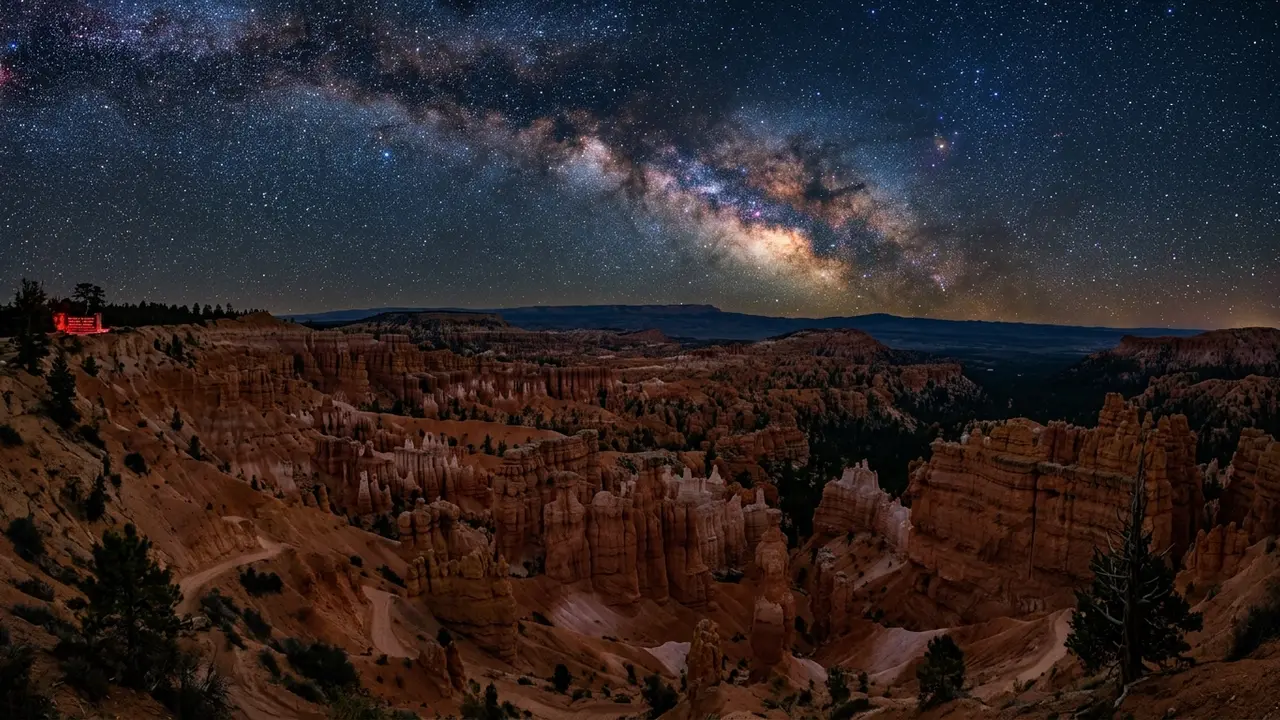

What International Dark Sky Park Certification Actually Means
A Dark Sky Park designation isn't something a park can put on its own visitor-center sign. DarkSky International, the nonprofit formerly known as the International Dark-Sky Association, certifies parks jointly with whichever agency manages the land, in Bryce Canyon's case the National Park Service. The two organizations jointly announced Bryce Canyon's certification on August 13, 2019.[1] The whole certification framework descends from one town: Flagstaff, the first Dark Sky City, whose 1958 ordinance and 2001 designation created DarkSky International's Dark Sky Places program in the first place.[8][9]
The bar for that certification is measured, not judged by eye. A park's core area has to show a night sky routinely equal to or darker than 20 magnitudes per square arcsecond, measured against the light pollution of the towns and cities around it.[2] That's a technical way of saying darker than almost anywhere most visitors have ever stood after sunset, verified with a Sky Quality Meter rather than a ranger's opinion.
Clearing that bar is only part of the application. A park also has to show:
- Energy-efficient outdoor lighting already installed and maintained
- Demonstrated community support for keeping the surrounding area dark
- A public education program teaching visitors why the darkness matters
Bryce Canyon met all three requirements before its paperwork went in, and the certification followed. That's worth knowing before the trip: the sky overhead at Bryce isn't dark by accident. It's dark because a park and the towns around it agreed to keep it that way, in writing, and had to prove it.
How Bryce Canyon Earned Gold Tier Status in 2019
The National Park Service's own release confirms the date and the joint sign-off, but the fetchable version of that release doesn't spell out which tier Bryce Canyon received. That detail comes from DarkSky International's separate rating system inside its Dark Sky Park category, and independent coverage is specific about where Bryce landed: Gold Tier, the program's top rung.[3]
Reading the two sources side by side is the honest way to state the claim. The National Park Service confirms Bryce Canyon is certified and names the date; dark-sky travel authority DarkSky Overland confirms the specific tier. Neither source alone tells the whole story, but together they do. Gold Tier isn't a marketing add-on layered onto a base certification. It's the highest rating inside the Dark Sky Park program, reserved for parks whose measured darkness clears the certifying body's own top bar, one only a handful of U.S. national parks have reached.
Aug 13, 2019
None of this happened overnight. The certification followed over a decade of hard work[4], lighting retrofits, ranger-led astronomy programming, and the community buy-in DarkSky International requires before a park's application even reaches review. A Gold Tier plaque at the visitor center is the end of that process, not the start of it.
The Tier System: Gold, Silver, and Bronze, Not the Same as Reserve or Sanctuary
Inside the Dark Sky Park category specifically, DarkSky International grades certified parks into three tiers, Gold, Silver, and Bronze, based on measured darkness quality.[5] Gold sits at the top, reserved for the darkest measured skies; Silver and Bronze cover parks that clear the certification bar with more residual light pollution nearby. Precise numeric thresholds for each tier, exact limiting-magnitude or Bortle-scale cutoffs, circulate across secondary dark-sky travel guides but weren't confirmed on a directly fetchable DarkSky International page at the time of writing. Treat any specific number you see quoted elsewhere for those cutoffs as a secondary source's estimate rather than a confirmed primary figure.
That tier system is easy to confuse with a different set of labels DarkSky International also uses, and worth separating clearly. Park, Reserve, Sanctuary, and Community are designation categories describing what kind of place is certified, not how dark it measures. Gold, Silver, and Bronze are a quality rating applied specifically within the Park category. Bryce Canyon is a Dark Sky Park that reached Gold Tier, two different labels answering two different questions.
| Label | What it actually describes |
|---|---|
| Gold / Silver / Bronze Tier | A quality rating measuring darkness, awarded only within the Dark Sky Park category |
| Park | A certified site with visitor infrastructure, typically smaller than a Reserve |
| Reserve | A large protected core ringed by a buffer zone with enforced lighting rules |
| Sanctuary | The most remote and pristine certified skies DarkSky International recognizes |
Gold Tier vs. Dark Sky Reserve or Sanctuary
A Dark Sky Reserve or Sanctuary elsewhere on this site belongs to a different category altogether, typically covering far more land under a different management model than a single national park. A Gold Tier Park like Bryce Canyon isn't competing with a Reserve or Sanctuary for the same rating; they're different designations serving different kinds of protected land. The best dark sky parks in the world guide breaks down how all four categories compare across a dozen certified destinations.
Why Bryce Canyon's Elevation and Remoteness Produce That Measurement
Certification measures a result. Elevation and location are why Bryce Canyon produces one worth measuring in the first place. Parts of the park's rim sit over 8,000 feet[6] above sea level, thin enough air that it scatters and holds far less haze than the air over lower-elevation towns nearby. A remote location and dry, clear air add to the same effect, conditions that keep moisture and ambient light from washing out the sky the way they do closer to a city. Water vapor is the variable doing much of that work: dry air holds less moisture than humid air at the same elevation, and moisture is exactly what scatters and blurs starlight before it reaches the ground, which is part of why a park's dark-sky rating depends on climate and elevation together rather than either one alone.
None of that guarantees a specific night is clear. Elevation and remoteness set the ceiling for how dark Bryce Canyon's sky can get; weather, moon phase, and season still decide whether a given visit actually reaches it. when the certification actually pays off covers how to time a trip around all three, rather than assuming a Gold Tier rating alone guarantees a good night.
Featured · Destination
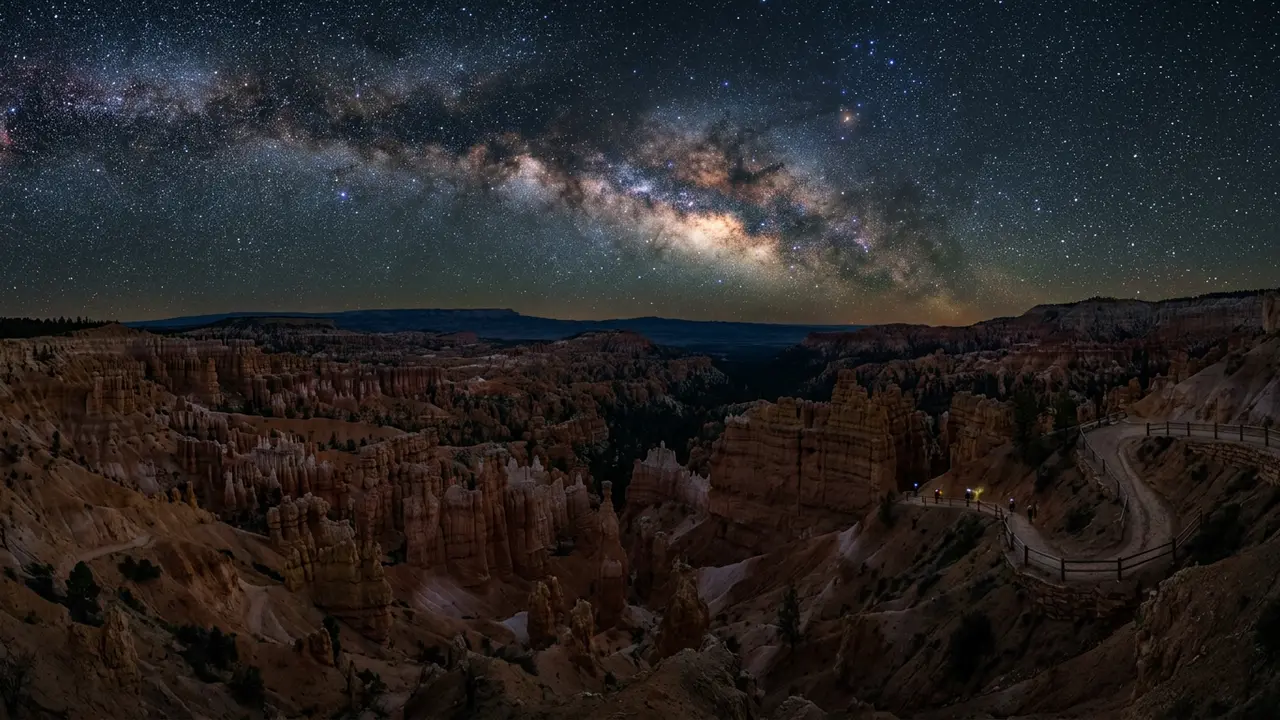
Stargazing in Bryce Canyon National Park
Bryce Canyon earned Gold-Tier Dark Sky Park status in 2019 after 50 years of astronomy programs. Drive in from Vegas or Salt Lake City to see it for yourself.
Why the Park Frames This as an Ongoing Commitment
Bryce Canyon Superintendent Linda Mazzu framed the certification less as a finish line than a promise to keep. Protecting dark places, she said in the park's own release, matters more now than it used to.[7]
That framing fits a pattern across the National Park System. A certification is a snapshot of a night sky measured against a fixed technical standard on one date, but the lighting ordinances, ranger programs, and community agreements behind it need maintaining every year after the ribbon gets cut, not just in the year DarkSky International signs off. Bryce Canyon's Gold Tier rating reflects conditions as of 2019. Nothing about the label is permanent if the park or the towns around it let those commitments slide. That's a different kind of claim than a one-time scenic designation, and it's why a Gold Tier rating from 2019 is still worth taking seriously years later: the maintenance, not just the original measurement, is part of what the label represents.
“dark places and commitments to protect them are more important than ever”
What Gold Tier Certification Means for Planning Your Trip
None of this is trivia. A Gold Tier rating is the reason a night at Bryce Canyon's rim looks different from a night almost anywhere else within driving distance, and it's worth understanding before you build a trip around it.
Recommended tours
Tours are selected for quality, not commission. I earn a small fee if you book — at no extra cost to you.
Practically, that means a few things. The certification doesn't promise a specific night will be clear. It doesn't guarantee a specific number of visible stars either, and no NPS or DarkSky source publishes one worth quoting. What it does confirm is that the park's darkest, highest-elevation viewpoints have cleared a measured bar few places in the country reach, and that the lighting rules keeping it that way are actively maintained rather than assumed.
For the ground-level version of that promise, Stargazing in Bryce Canyon National Park covers the amphitheater itself, the Astronomy Festival, and where to stay, while best stargazing spots in Bryce Canyon walks through which of the four named viewpoints suits a given night.
Featured · Article
What Is Astrotourism? The Complete Beginner's Guide
Astrotourism means travel built around dark skies: meteor showers, auroras, the Milky Way. What it means, where to go, and how to plan your first trip.
That's the practical shape of what a Gold Tier label buys a visitor: not a promise of a specific night, but confidence that the park and the towns around it keep their end of the bargain year after year. Everything else, when to go, where to stand, how to time the moon, is what the rest of this cluster covers in more specific, night-by-night detail.