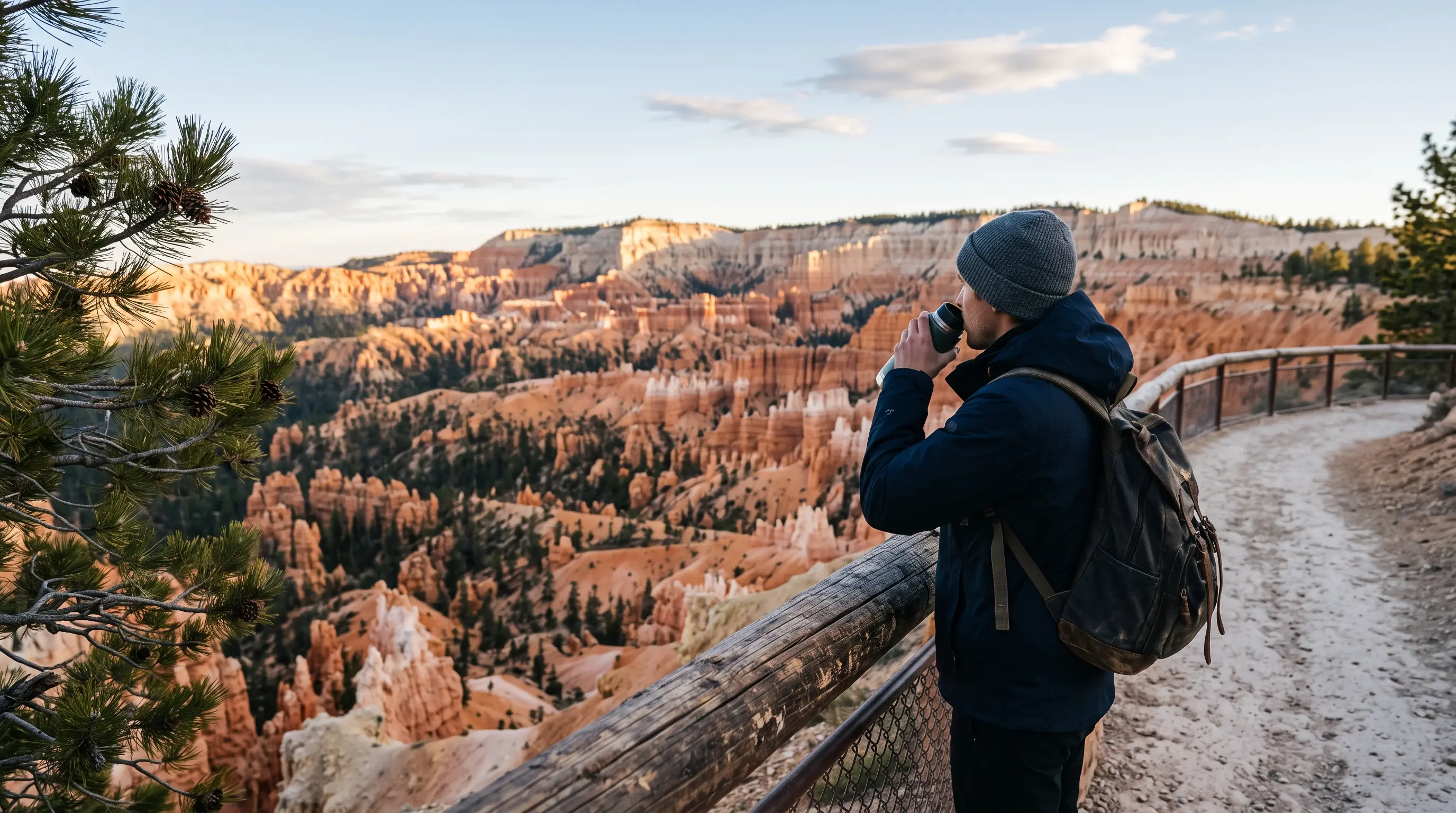
Who Was Bryce Canyon Named After? Ebenezer Bryce's Story
I've seen dark skies firsthand in the Atacama altiplano, Namibia's NamibRand Nature Reserve, and Morocco's Merzouga dunes; every other destination I write about is built from measured Bortle and SQM data, cloud climatology, and primary sources like park services and the International Dark-Sky Association.
- Ditch he helped finish
- 7 miles
- Paria Creek irrigation ditch, plus a timber road into the pink cliffs[2]
In this article
Jump to a section
Who was Ebenezer Bryce?
What Ebenezer Bryce actually did near the pink cliffs
Featured · Destination
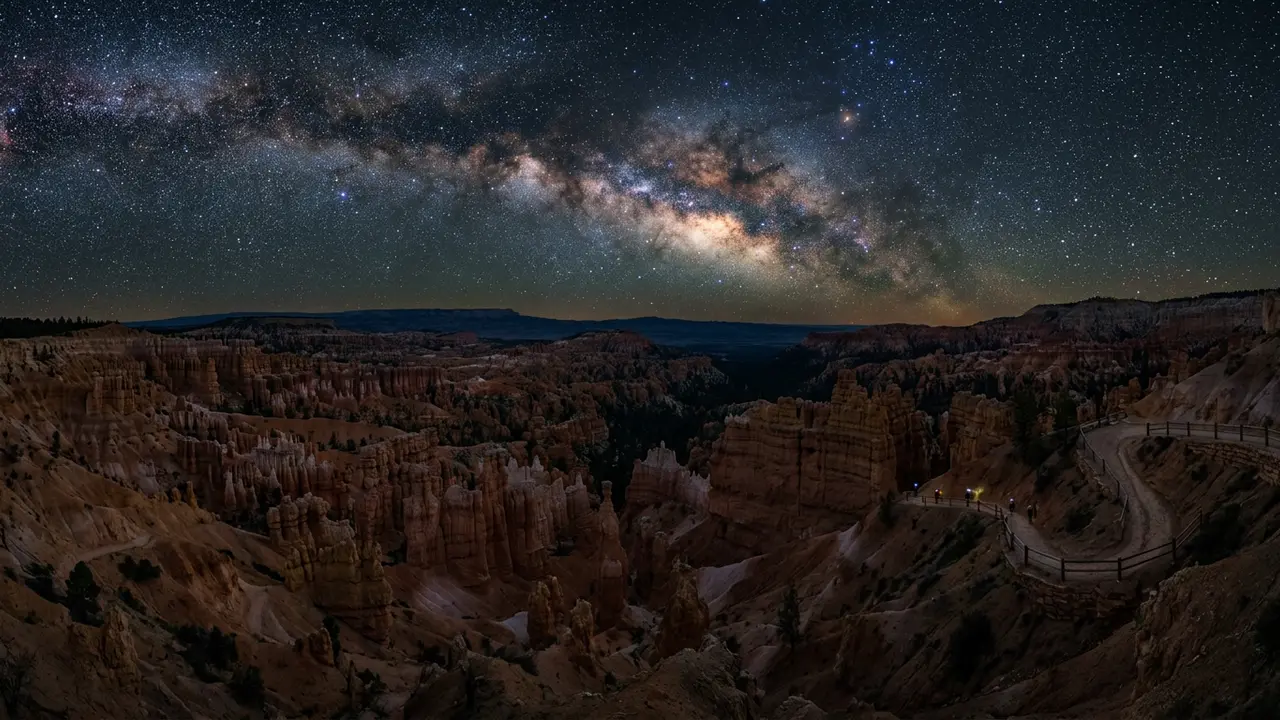
Stargazing in Bryce Canyon National Park
Bryce Canyon earned Gold-Tier Dark Sky Park status in 2019 after 50 years of astronomy programs. Drive in from Vegas or Salt Lake City to see it for yourself.
The Bryce family reached Clifton in 1875, moved upstream to Henderson Valley, also called New Clifton, and Ebenezer took on two jobs that mattered to a farming settlement[1][2]:
- Helping complete a seven-mile irrigation ditch from Paria Creek
- Building a road into the pink cliffs to make timber more accessible
How his name became the park's name
Featured · Article
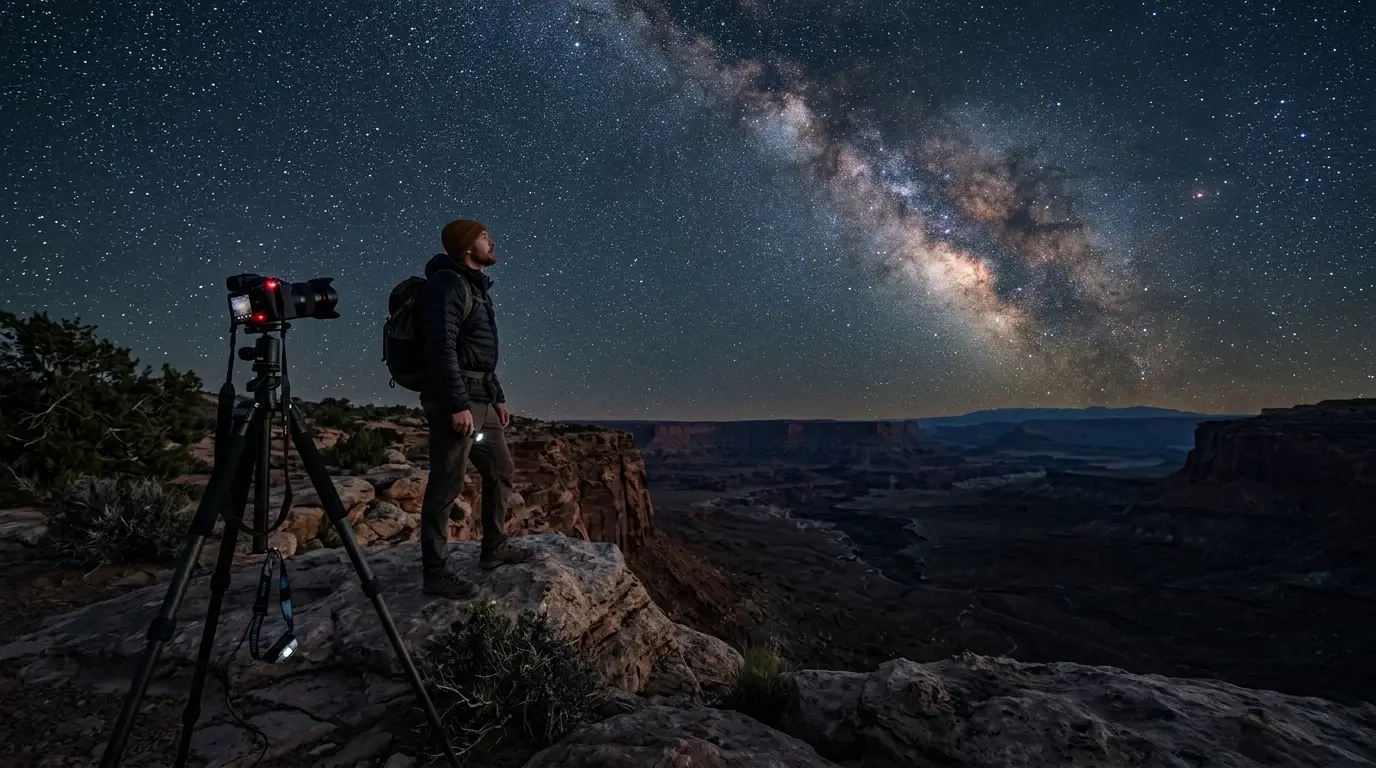
What Is Astrotourism? The Complete Beginner's Guide
Astrotourism means travel built around dark skies: meteor showers, auroras, the Milky Way. What it means, where to go, and how to plan your first trip.
- 1875
Bryce arrives in Clifton
The family soon moves upstream to Henderson Valley[1]
- 1880
Family leaves for Arizona
The Bryce's Canyon name stays behind[4]
- 8 June 1923
National monument proclaimed
President Harding signs the proclamation[13]
- 7 June 1924
Utah National Park bill
Congress passes the bill under the Utah name[14]
- 25 February 1928
Renamed Bryce Canyon
Utah National Park becomes Bryce Canyon National Park[3]
- 15 September 1928
Park established
The 1924 land conditions are met[5]
Planning a visit to the park that carries his name
Two more pages cover the practical side:
- Stargazing in Bryce Canyon National Park for when to go and where to stay
- Getting to Bryce Canyon for the drive in and the airports that serve it
Recommended tours
Tours are selected for quality, not commission. I earn a small fee if you book — at no extra cost to you.
Frequently asked questions
Who was Bryce Canyon named after?
Did Ebenezer Bryce live in Bryce Canyon?
Was Ebenezer Bryce a Mormon?
When did Bryce Canyon become a national park?
Where did Ebenezer Bryce go after leaving Utah?
Who was most responsible for creating Bryce Canyon National Park?
Sources
14 references Show Hide
- home.nps.gov — Pioneer history (opens in a new tab)
“Ebenezer Bryce and his family arrived in Clifton in 1875, but soon moved upstream to Henderson Valley (New Clifton).”
- home.nps.gov — Pioneer history (opens in a new tab)
“Ebenezer helped to complete a seven mile irrigation ditch from Paria Creek. Bryce built a road into the pink cliffs to make timber more accessible.”
- nps.gov (opens in a new tab)
“On February 25, 1928 "Utah National Park" was changed to "Bryce Canyon National Park".”
- home.nps.gov — Pioneer history (opens in a new tab)
“Ebenezer Bryce and his family moved to Arizona in 1880, but the Bryce's Canyon name stuck.”
- nps.gov (opens in a new tab)
“Conditions of the 1924 congressional bill were met later that year, and Bryce Canyon National Park was officially established on September 15, 1928.”
- Wikipedia (opens in a new tab)
“Ebenezer Bryce (November 17, 1830 – September 26, 1913) was a Mormon pioneer, best known as the person for whom Bryce Canyon National Park was named.”
- Wikipedia (opens in a new tab)
“He became a ship's carpenter, converted his faith to the Church of Jesus Christ of Latter-day Saints, and left Scotland for Utah at the age of seventeen.”
- Wikipedia (opens in a new tab)
“The chapel is unique in that the roof was built like an upside down ship hull using a technique that Bryce acquired as a shipbuilder in Scotland.”
- home.nps.gov — Americanindianhistory (opens in a new tab)
“Paiute Indians occupied the area around what is now Bryce Canyon starting around 1200 A.D.”
- home.nps.gov — Americanindianhistory (opens in a new tab)
“The legend of Bryce Canyon was explained to a park naturalist in 1936 by Indian Dick, a Paiute elder who then lived on the Kaibab Reservation”
- Wikipedia (opens in a new tab)
“In 1880, Bryce moved his large family to an area of Arizona, about two miles north of Pima, where the settlement of Bryce, Arizona is named in his honor.”
- home.nps.gov — Park history (opens in a new tab)
“The person most responsible for Bryce Canyon becoming a National Park was J. W. Humphrey.”
- home.nps.gov — Park history (opens in a new tab)
“President Warren G. Harding proclaimed Bryce Canyon a national monument on June 8, 1923.”
- home.nps.gov — Park history (opens in a new tab)
“On June 7, 1924, Congress passed a bill to establish Utah National Park, when all land within the national monument would become the property of the United States.”