Is Bryce Canyon Really a Dark-Sky Destination?
Featured · Destination
Stargazing in Bryce Canyon National Park
Bryce Canyon earned Gold-Tier Dark Sky Park status in 2019 after 50 years of astronomy programs. Drive in from Vegas or Salt Lake City to see it for yourself.
Do You Need a Permit to Stargaze at Bryce Canyon?
That gate price depends on how you arrive, not on what you plan to do once you're inside:
- Private vehicle: $35
- Per person (walk-in or bicycle): $20[4]
$0
What's the Best Month for Stargazing at Bryce Canyon?
| Season | Sky advantage | Trade-off |
|---|---|---|
| Spring & early summer (May-June) | Warmer, drier overlook conditions; June's Astronomy Festival | Longest festival crowds, especially near the amphitheater |
| Late summer & fall (Sept-Oct) | Milky Way core still visible early night, comfortable temps | Shorter dark window than winter |
| Winter (Nov-Mar) | Longest dark window, clearest air | Below-freezing nights, possible road and trail closures |
How Cold Does It Get at Night?
Is Bryce Canyon Stargazing Family-Friendly, and Do You Need a Car?
Weigh both sides before planning a night with young children:
- Independent stargazing is free and completely unrestricted
- Ranger-led astronomy programs are built for a general audience, covering constellations and the life cycles of stars rather than specialist material
- Overlooks have real drop-offs with little or no railing in places
- Terrain is unlit, and the below-freezing temperatures covered above hit small kids faster than adults
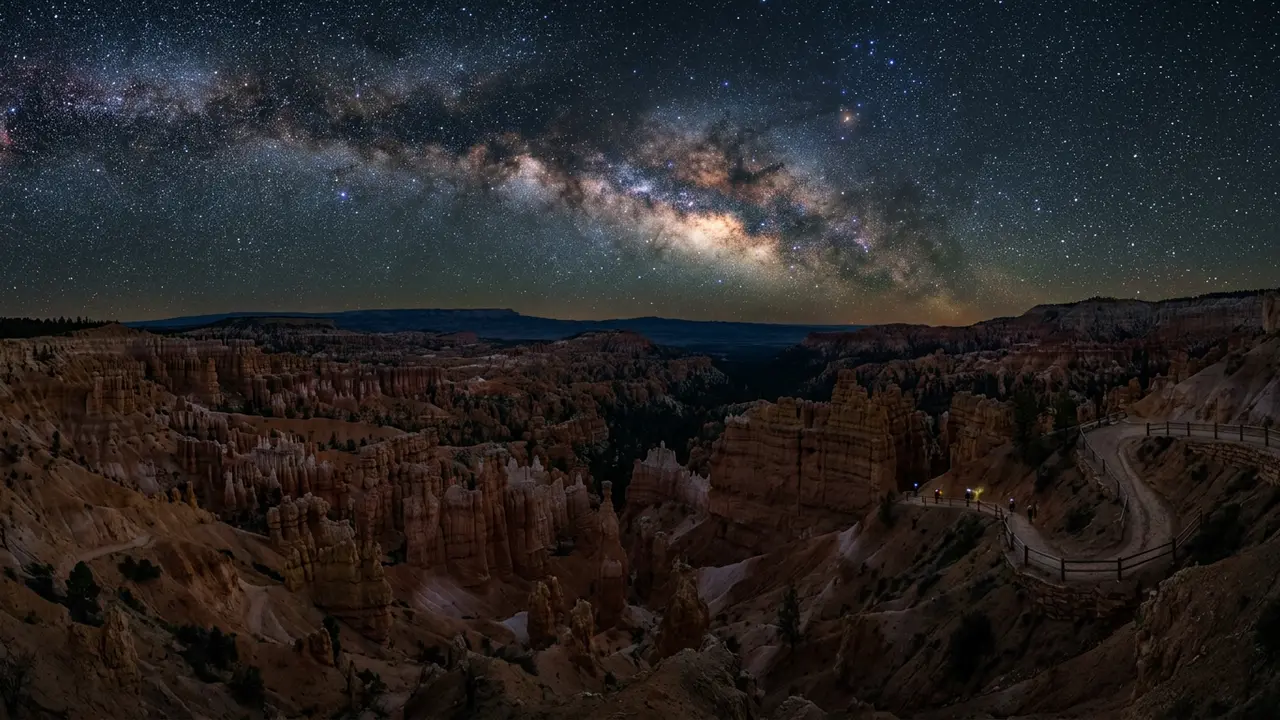
Can You See the Milky Way, and Do You Need a Telescope?
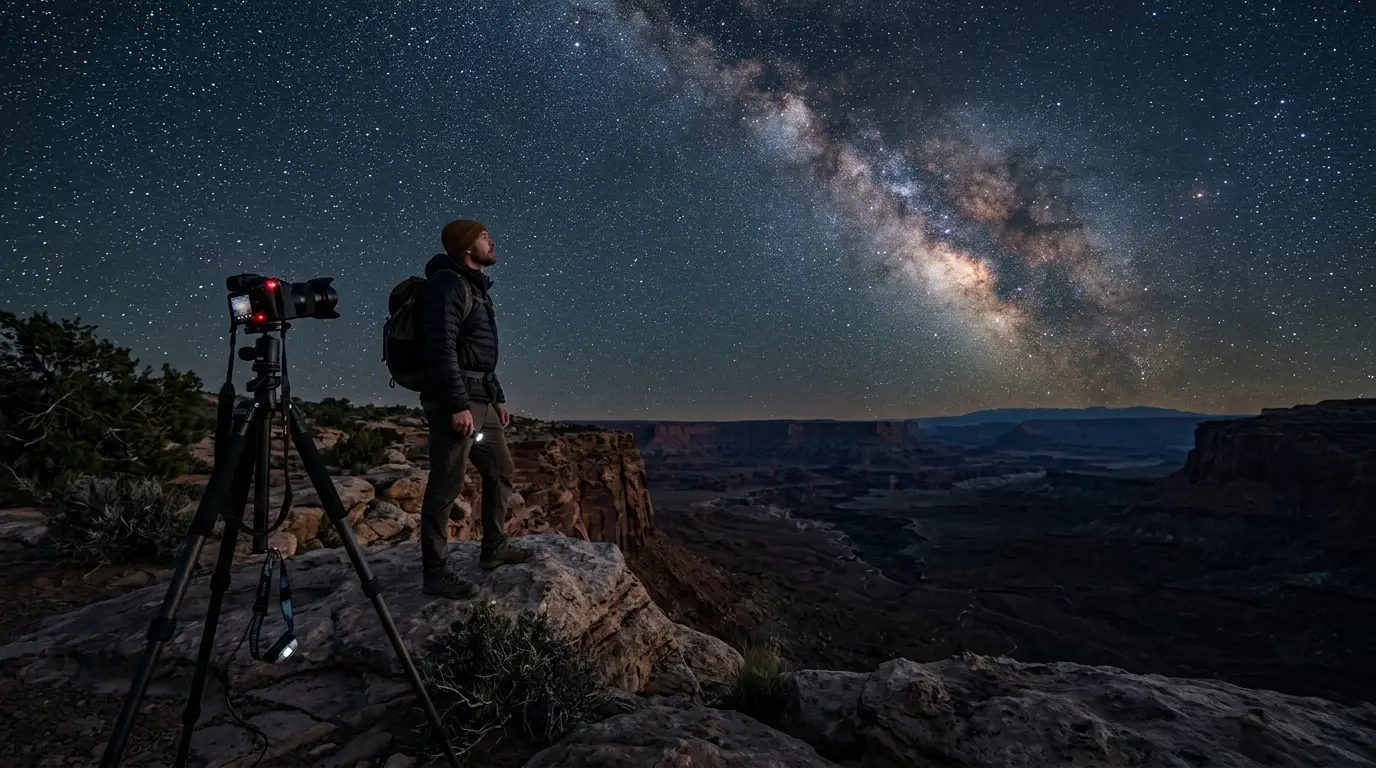
What you won't find is an official star count. Nobody has published one, and the honest reason to make the trip is the certification itself — high elevation, clean air, genuine remoteness — not an invented figure. You don't need a telescope for the sights most first-time visitors come for:
- The Milky Way's core
- Meteor showers
- Familiar constellations
Featured · Article
What Is Astrotourism? The Complete Beginner's Guide
Astrotourism means travel built around dark skies: meteor showers, auroras, the Milky Way. What it means, where to go, and how to plan your first trip.
Recommended tours
Tours are selected for quality, not commission. I earn a small fee if you book — at no extra cost to you.