Bryce Canyon Is More Than a Night-Sky Park
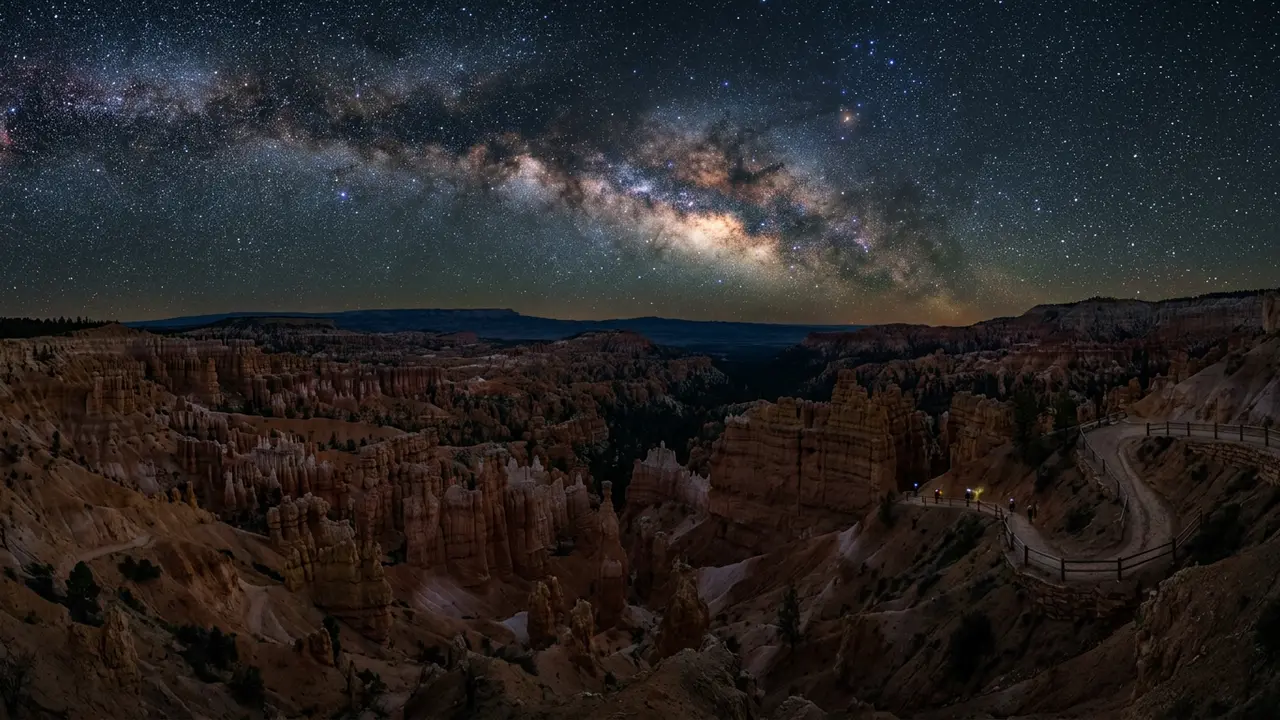
Bryce Canyon earned its Gold Tier dark-sky reputation for a reason: on a clear, moonless night the amphitheater's hoodoos turn into silhouettes against a genuinely dark Milky Way. My guide to the best stargazing spots in Bryce Canyon covers the four named overlooks in detail. What that focus tends to obscure is that stargazing in Bryce Canyon is only half the park's case for itself, and treating an evening at the rim as the whole trip leaves most of what Bryce actually offers untouched.
Three daytime pursuits make the strongest case for staying more than one night. Hiking down into the amphitheater on the Queen's Garden and Navajo Loop combination puts you among hoodoos instead of looking at them from above. Horseback riding with Canyon Trail Rides covers the same ground from the saddle, at a pace that suits anyone who'd rather not manage switchbacks on foot. And winter snowshoeing turns the whole park into a quieter, colder version of itself, with fewer people at the rim by day and, often, a clearer sky once the sun goes down.
None of it competes with the after-dark plan. It extends it. A trip built around a single stargazing evening is a half-day trip stretched thin; one that pairs a daytime pursuit or two with a night on the rim is a real multi-day visit, and Bryce rewards the extra time.
Hiking Into the Hoodoos: The Queen's Garden & Navajo Loop Trail
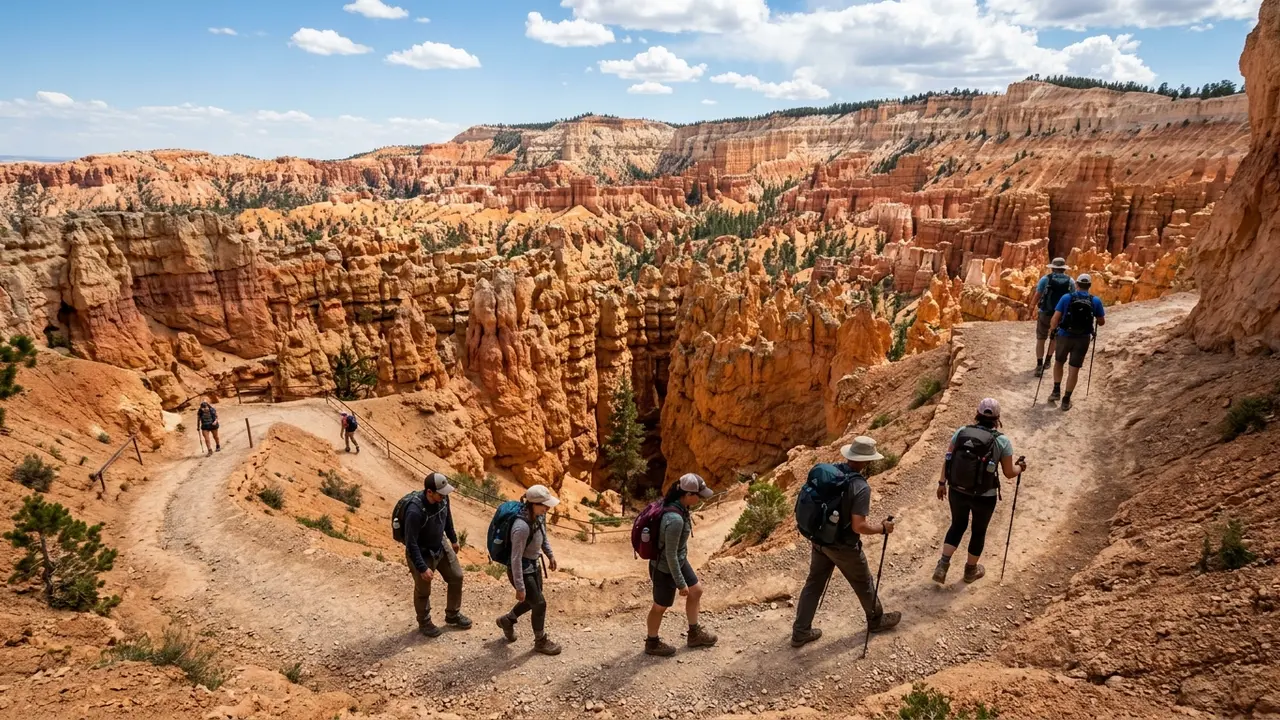
Start at Sunrise Point, and the Queen's Garden and Navajo Loop combination trail takes you down into the amphitheater and back up a different way: a 2.9-mile (4.6 km) loop with 625 feet (191 m) of elevation gain. The National Park Service calls it the hike it most recommends to first-time visitors, moderate, roughly two to three hours, and the most direct way to walk among the hoodoos rather than admire them from the rail[1].
Most people hike it in one direction rather than the other: down Queen's Garden's gentler switchbacks first, then up the steeper grade of Navajo Loop to finish. That order saves the harder climbing for a shorter stretch, worth knowing before you commit, since doubling back partway through a descent among hoodoo columns is a rougher experience than finishing the loop as planned.
Featured · Destination
Stargazing in Bryce Canyon National Park
Bryce Canyon earned Gold-Tier Dark Sky Park status in 2019 after 50 years of astronomy programs. Drive in from Vegas or Salt Lake City to see it for yourself.
The Navajo Loop side includes Wall Street, a narrow slot between two towering hoodoo walls with switchbacks stacked tightly enough that hikers coming the other direction have to squeeze past. It's the trail's signature stretch, and also its most exposed to rockfall. That side of the loop, along with a Rim Trail segment further along, can close for a season when conditions call for it, so check current trail status before you build a route around Wall Street specifically. The Sentinel, a hoodoo above this trail, lost its top 15 feet in 2016, and the Sentinel hoodoo collapse explainer covers the frost wedging blamed for it.
- Distance: 2.9 miles (4.6 km) round trip
- Elevation gain: 625 feet (191 m)
- Difficulty: Moderate
- Time: Roughly 2-3 hours
Bring more water than the distance suggests. You're hiking at elevation, and the climb out on Navajo Loop's switchbacks is steeper than the numbers alone let on.
Riding Into the Amphitheater: Canyon Trail Rides
If switchbacks aren't your thing, or you're traveling with someone who can't manage a downhill hike back up, Canyon Trail Rides is the park's official concessioner for horseback and mule trips into the amphitheater, running 2-hour and 3-hour guided rides[2]. Both options follow a dedicated horse trail and the Peekaboo Loop Trail down among the same hoodoo formations the Queen's Garden hikers walk past on foot[3].
The season is shorter than the hiking trail's: guided rides typically begin in April and run through October 31, weather permitting, then pause for winter[4]. That's worth building into a trip plan directly. A June or September visit can pair an evening at the rim with a morning in the saddle; a January one can't, no matter how clear a winter sky looks by comparison.
Riders should expect a few practical constraints that come standard with any concessioner-run trail ride: a weight limit, a minimum age, and closed-toe shoes. Canyon Trail Rides publishes its current requirements and rates directly, and since both change season to season, check them there rather than trusting an older trip report before booking.
The park also allows a smaller number of visitors to arrange their own, non-guided riding time separately from the concessioner's tours. That option runs on its own schedule and fee structure, so treat it as a second track worth asking about rather than an extension of the guided rides above.
Winter at Bryce: Snowshoeing the Rim and Amphitheater
Snow changes Bryce more than most national parks. The same red-and-white hoodoo formations that draw hikers in summer take on frost and snow caps in winter, and the park stays open and accessible for it. Snowshoeing is often required on the park's day hiking trails after a big snowfall[5], which means the Queen's Garden and Navajo Loop route, the Rim Trail, and the rest of the network all stay walkable once conditions call for snowshoes rather than boots.
Timing matters more here than gear does. Right after a fresh snowfall, most of the park's day hiking trails genuinely need snowshoes for traction[6]. Give it a few days of freeze-thaw cycles and repeated foot traffic, though, and those same trails pack down into hard, icy surfaces where snowshoes stop helping and can even work against you[7]. Check current trail conditions before you strap in; a snowshoe hike planned around last week's forecast can turn into a slippery walk in stabilizers instead.
Every trail
A few things to plan around for a winter visit:
- Layer for cold, not just snow. Clear winter nights at this elevation drop well below freezing, and daytime temperatures don't always climb far above it.
- Expect shorter days. Winter daylight limits how much trail you can cover before dark, especially on the longer Under-the-Rim routes.
- Check road conditions, not just trail conditions, since some spur roads to the park's quieter viewpoints can close temporarily after heavy snow.
- Bring your own snowshoes or rent nearby. Gear rental is available outside the park if you're not packing your own.
Recommended tours
Tours are selected for quality, not commission. I earn a small fee if you book — at no extra cost to you.
Rangers also lead guided snowshoe walks through the winter months when conditions allow, a good option if you'd rather learn the route and the etiquette from someone who does it daily than figure it out alone.
Ranger Programs and Other Ways to Fill the Daylight Hours
Guided hiking and horseback riding aren't the only ranger-supported options at Bryce. Ranger-led programs run less often once winter thins out the visitor numbers. Depending on the season, that can mean a geology talk at one of the amphitheater overlooks, a short guided walk along a stretch of the Rim Trail, or, in winter, one of the snowshoe walks already covered.
Checking the park's current programs calendar before a visit is worth the five minutes it takes. Ranger programs shift with staffing and season, and a schedule pulled from an old trip report is more likely to send you to an empty meeting point than an active one.
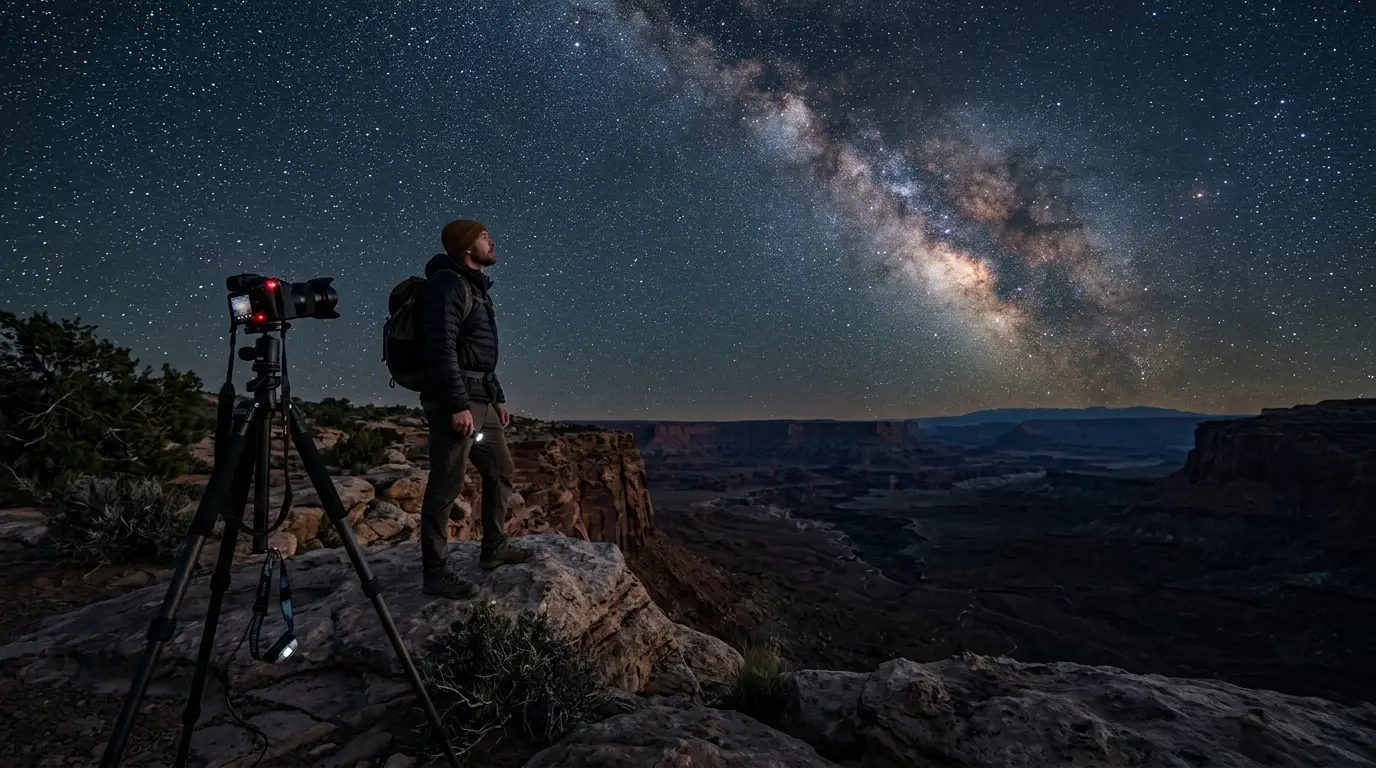
Featured · Article
What Is Astrotourism? The Complete Beginner's Guide
Astrotourism means travel built around dark skies: meteor showers, auroras, the Milky Way. What it means, where to go, and how to plan your first trip.
For travelers who'd rather book something guaranteed on the calendar than show up and hope, the after-dark programming this piece deliberately sets aside is still worth knowing about. This guided evening telescope program runs structured evening sessions with equipment and a guide already sorted, and the park's annual Astronomy Festival turns one June week into the busiest stretch of the year. Neither replaces a daytime plan; they fill the evening once the hiking boots or snowshoes come off.
Building a Multi-Day Itinerary That Pairs Day and Night
None of these three pursuits needs the others, but combined they turn a single overlook evening into a trip worth the drive. A two-night stay covers it comfortably: one day for the Queen's Garden and Navajo Loop hike, an evening at the rim for stargazing, and a second day split between a Canyon Trail Rides trip or, in winter, a snowshoe walk, with a second night on the rim if the sky holds.
Staying inside the park, at the amphitheater-adjacent lodge, removes the drive between a daytime activity and a night on the rim entirely, which matters more here than it does at destinations where the overlook is a longer trip from wherever you're sleeping. For a longer stay, how many days you actually need at Bryce Canyon breaks down the trade-offs between a quick overnight and a fuller multi-day visit.
Here's how the three pursuits compare, side by side, for picking which ones fit your trip:
Pick based on season and physical pace rather than trying to fit all three into one trip. A summer visit favors the hike and the horseback ride; a winter one favors the snowshoe walk and a longer night at the rim once the crowds thin out. Either way, budget more than one evening. Bryce Canyon's daylight hours are the rest of the trip you'd otherwise skip.
| Activity | Best season | Time needed |
|---|---|---|
| Queen's Garden & Navajo Loop hike | Spring through fall | 2-3 hours |
| Canyon Trail Rides | April to October 31 | 2-3 hours |
| Snowshoeing the rim | Winter, after fresh snow | Half a day or more |