
A Gold Tier Sky Is Not a Promise for Tonight
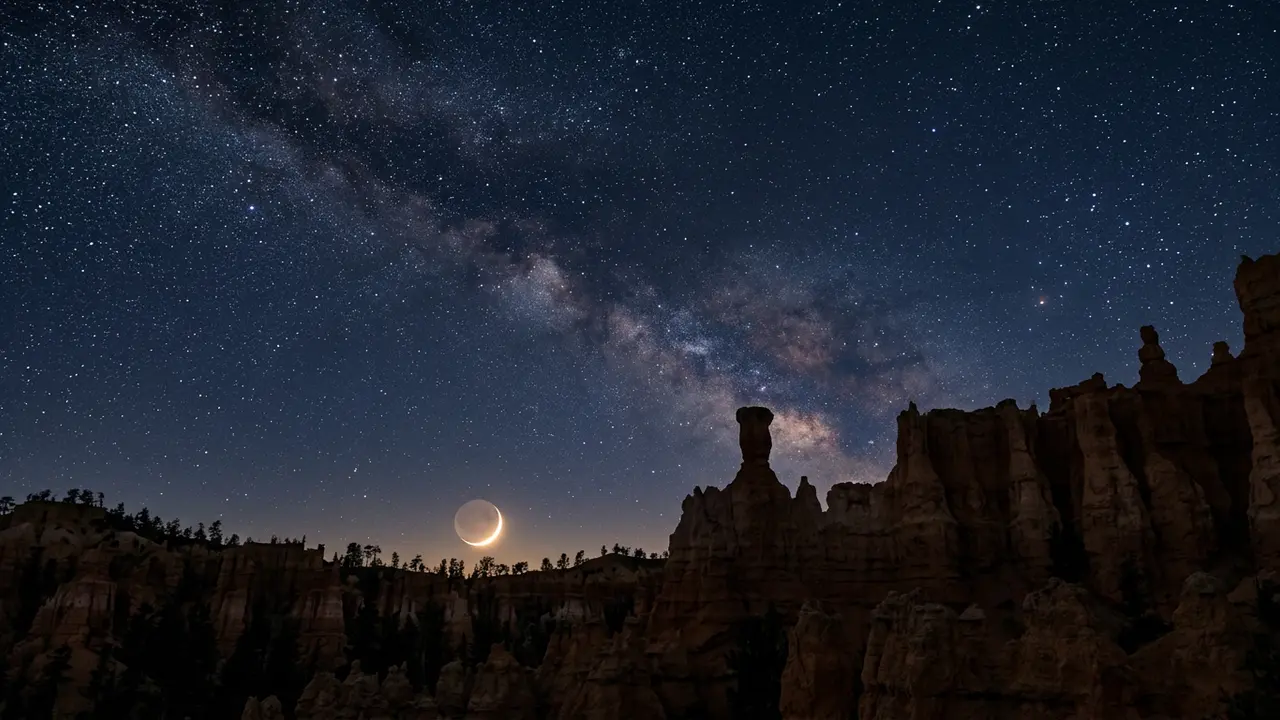
Bryce Canyon earned International Dark Sky Park status in 2019[1], specifically Gold Tier, the top rating on a three-tier scale[2]. The National Park Service's own guidance about what that certification actually buys you is specific: during a new moon on a clear weather night, you can see thousands of stars and the full band of the Milky Way[3]. Read that sentence closely and it names two separate conditions, not one. A dark-sky certification tells you the light pollution is low. It says nothing about whether clouds roll in on the particular night you booked.
Being on top of a high desert plateau does work in your favor here. The park's own phrase for it is a high clearing index, meaning a large share of nights come out clear rather than overcast[4]. That's a real advantage over most of the country, but it's a seasonal average, not a guarantee for a Tuesday in July. A trip built around the new moon can still land on a monsoon storm rolling off the plateau, and a trip in February can hit a clear, brutally cold night that rewards checking the forecast rather than guessing from the calendar. For exactly what that Gold Tier rating requires, see the full explainer on Bryce Canyon's Dark Sky certification. Stargazing in Bryce Canyon National Park covers the hoodoo amphitheater itself in more depth; this piece covers the part most trip-planning guides skip past, how to actually check, in the days and hours before you drive out, whether the sky is going to cooperate.
Three tools do that job, each answering a different question:
- A specialized Clear Sky Chart built for astronomers, showing cloud cover several days out
- A standard National Weather Service point forecast for the park's own coordinates, useful same-day
- The moon phase for your specific travel date, checked against the season
Reading Bryce Canyon's Clear Sky Chart
The Clear Sky Chart is the most useful single tool for a short-range forecast here, and it isn't a general weather site repurposed for astronomers. It's built for them from the ground up: at a glance, it shows when it will be cloudy or clear for the next few days[5], using a numerical model developed specifically for astronomers by Allan Rahill of the Canadian Meteorological Centre, not the general-purpose models behind a typical weather app[6].
Three rows carry the real information, each on a color scale running from dark blue to white:
- Cloud Cover forecasts total cloud cover, dark blue for clear and white for overcast[7]
- Transparency measures water vapor in the air, which matters most for faint, low-contrast targets like galaxies and nebulae[8]
- Seeing measures atmospheric steadiness, the scintillation that blurs fine planetary detail at high magnification[9]
3 chart rows
A dark-blue Cloud Cover row on your travel date is the number worth checking first. Good transparency matters more if a galaxy or a faint nebula is the actual target; steady seeing matters more if a planet through a telescope is. None of the three rows tells the whole story alone, which is exactly why the chart lays them out side by side instead of collapsing everything into one score.
A chart showing patchy, uneven cloud rather than a clean dark-blue band isn't necessarily a reason to cancel. It's a reason to recheck the same page closer to your travel date, since a forecast built several days out narrows as the date approaches, the same way any weather model does.
Cross-Checking a Standard Weather Forecast
The Clear Sky Chart covers cloud, transparency, and seeing several days out, but it's worth cross-checking against a standard National Weather Service point forecast for the park's own coordinates rather than the nearest town's. Search weather.gov, enter Bryce Canyon's location directly, and the hourly forecast that comes back breaks sky cover down hour by hour instead of night by night, useful in the hours right before you actually drive out to a viewpoint.
That cross-check earns its keep most in summer. Bryce Canyon's monsoon season, roughly July through August, brings frequent, usually brief, afternoon thunderstorms[10], the kind of localized weather a five-day chart can smooth over and an hourly forecast catches same-day. A storm that rolls through at four in the afternoon can clear completely by nine at night, and only a same-day check tells you which side of that window you're standing on.
Featured · Destination
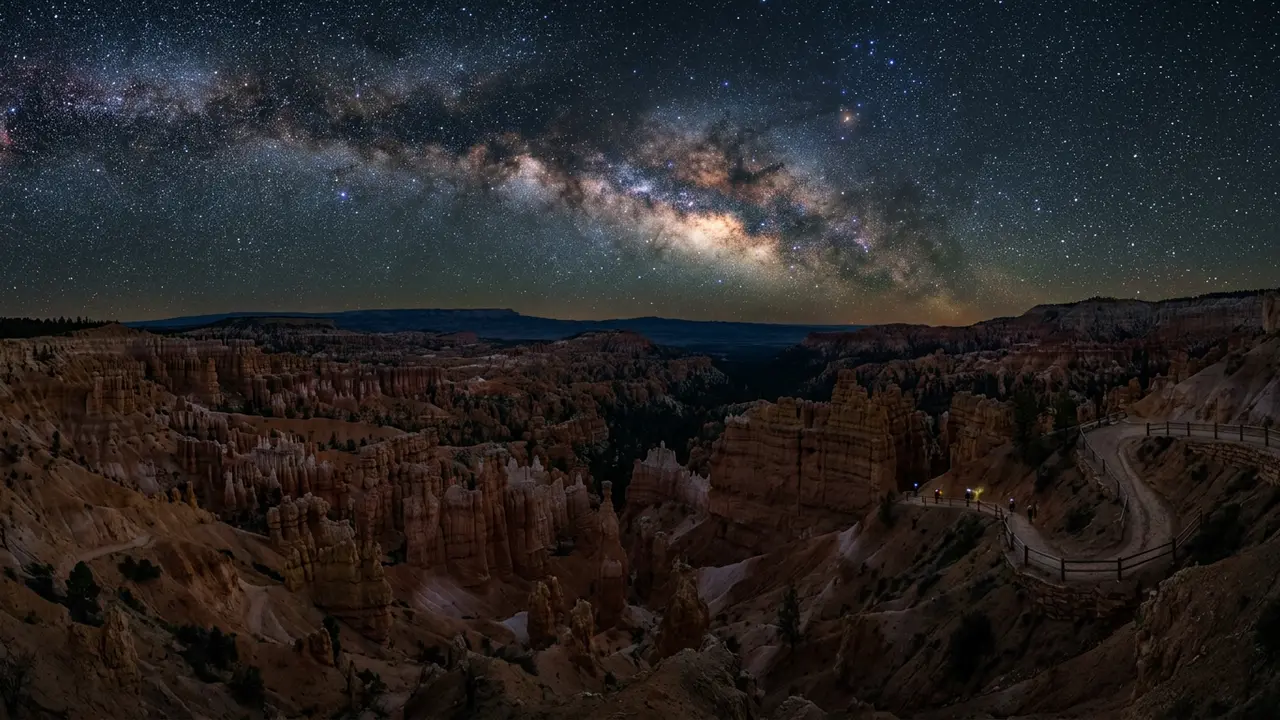
Stargazing in Bryce Canyon National Park
Bryce Canyon earned Gold-Tier Dark Sky Park status in 2019 after 50 years of astronomy programs. Drive in from Vegas or Salt Lake City to see it for yourself.
Winter flips the variable from cloud to cold. From October through May, nighttime temperatures fall below freezing nearly every night at this elevation[11], clear skies or not, so check the forecast for temperature as much as cloud cover if you're planning to stand at a rail for an hour after dark. A clear winter sky with no wind-chill warning is a genuinely different trip than a clear sky at ten below.
Timing a Visit Around the Moon
None of the above matters if the moon phase washes out the sky. The best time to stargaze at Bryce Canyon covers which months favor the Milky Way core against winter's clearer, colder air in full detail; the piece worth adding here is the mechanics of checking moon phase for your actual travel dates against that seasonal picture.
Recommended tours
Tours are selected for quality, not commission. I earn a small fee if you book — at no extra cost to you.



The park's own Annual Astronomy Festival is the clearest real-world example of new-moon-anchored planning. It's deliberately scheduled around the June new moon, on the logic that there's no time like a new moon in June to see Bryce Canyon by night[12]. The 2026 festival runs June 11 through 13[13], though the exact dates shift with the moon every year, so confirm the current year's schedule before booking rather than assuming this year matches last year's.
You don't need a festival on the calendar to use the same logic. A moon phase calendar or a basic stargazing app tells you, in seconds, how many nights of real darkness a given week offers, and when to stargaze walks through reading that calendar against a season and a weather forecast together, for Bryce Canyon or any other dark-sky destination on this site.
Three Forecasts, One Trip: Putting Them Together
Checking one of these three tools in isolation leaves a gap the other two exist to close. The Clear Sky Chart tells you the shape of the sky several days out. The National Weather Service point forecast sharpens that picture down to the hour once you're within a day of travel. The moon phase calendar tells you whether a clear sky will actually be a dark one. Run all three together and the picture that comes back is closer to what you'll actually see standing at the rail than any single check would give you.
In practice, that means three separate looks at three separate points before a trip: the Clear Sky Chart about a week out, to decide whether the trip is even worth committing to; the moon-phase calendar as soon as you're picking dates, since that variable doesn't change with the weather; and the NWS point forecast the morning of, to catch a monsoon storm or a cold snap the five-day outlook missed.
| Tool | What it tells you | When to check it |
|---|---|---|
| Clear Sky Chart | Cloud cover, transparency, and seeing for the next few days | About a week before you travel |
| NWS point forecast | Hour-by-hour sky cover and temperature for the park's coordinates | The day of, or the morning before |
| Moon-phase calendar | How dark the sky will actually be once it's clear | As soon as you're choosing travel dates |
The same three-tool habit carries to any dark-sky destination on this site, not only Bryce Canyon. The specific chart and the specific forecast page change from park to park, but the sequence, seasonal or moon-phase planning first, a specialized astronomy forecast a week out, a standard point forecast the morning of, doesn't.
A Pre-Trip Forecast Checklist
Put the three tools into an actual sequence and a Bryce Canyon stargazing trip stops being a guess:
- Pick your travel window around a new moon, weighing Milky Way core season against winter's clearer, colder air, per the season-by-season guide linked above
- Check the Clear Sky Chart about a week out to see whether the trip is worth the drive at all
- Recheck the National Weather Service point forecast the morning you leave, especially in monsoon season or deep winter
- Pack for the temperature the forecast actually shows, not the season's average, and review dark sky etiquette and stargazing gear for beginners before you go
None of this guarantees a clear night. A Gold Tier sky still sits under real weather, and Bryce Canyon's high clearing index is a seasonal average, not a promise. What checking all three tools buys you instead is the difference between driving out on a hunch and driving out because three separate sources agree tonight is worth it. That's a better basis for a four-hour round trip than the calendar alone.
Featured · Article
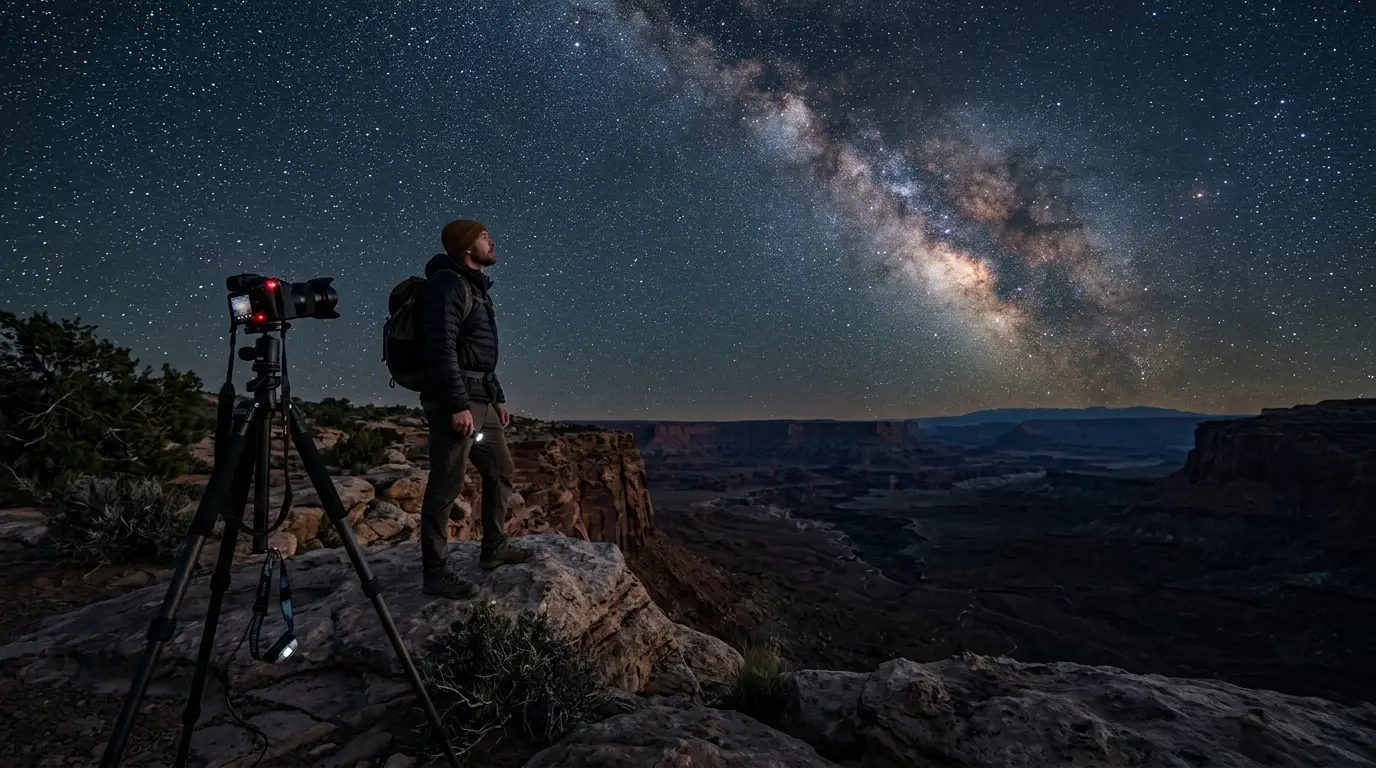
What Is Astrotourism? The Complete Beginner's Guide
Astrotourism means travel built around dark skies: meteor showers, auroras, the Milky Way. What it means, where to go, and how to plan your first trip.