The Short Answer: Two Nights Minimum, Three for a Buffer

One overnight isn't enough if stargazing is the actual point of the trip. A single night gets you a sunset and maybe a sunrise, but it leaves no room for a cloudy sky, a late arrival, or the hike you came to do during the day. Two nights is the practical minimum for anyone planning to pair Bryce Canyon's Gold-Tier sky with real daytime hiking, and three nights is the version that plans for a bad night rather than hoping for a good one.
The math backs this up. Most visitors to Bryce Canyon spend somewhere between two and five days at the park[1], and travel writers who track this specifically are blunt about why an overnight stay changes the trip: staying past a single day is what lets you see a sunset, watch the stars, and catch sunrise the next morning[2], not just tick off the viewpoints in daylight. A day trip covers the overlooks by noon and is gone before dinner. It doesn't cover the reason Bryce earned its Gold-Tier dark-sky certification in the first place.
So the real question isn't whether to stay overnight, it's how many nights buy enough of a buffer against weather, crowds, and your own hiking pace. Two nights or three changes what the rest of the trip looks like, not just how long you're gone. Here's how each version plays out in practice.

2-5 days

The typical length of a Bryce Canyon visit, according to trip-length data from travelers who've actually made the drive, room enough for at least one stargazing night and more than one trail.

Two Nights: One Dark-Sky Window and the Queen's Garden/Navajo Loop
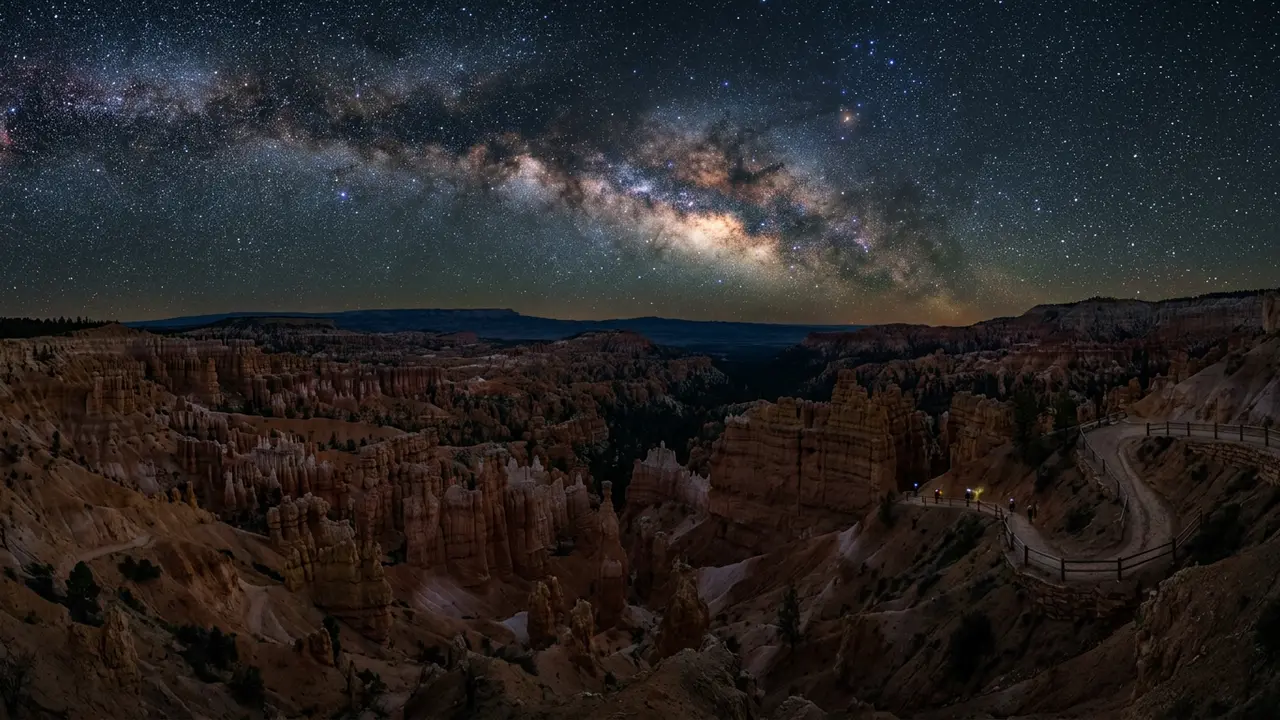
Two nights is the floor, not a compromise. Day one covers the drive in, a look at Sunset Point or Bryce Point while the light is still good, and the hike that earns its reputation as the park's signature trail: the Queen's Garden/Navajo Loop combination, a 2.9-mile route with 625 feet of elevation gain that takes about two to three hours[3]. It drops down among the hoodoos themselves rather than just looking at them from the rim, steep enough to feel like a real hike and short enough to leave the afternoon free before the one thing the whole trip is built around: the night.
That first night is the only guaranteed dark-sky window a two-night trip gets. If it's clear, you get stargazing in Bryce Canyon National Park at its best: hoodoos reading as pale silhouettes below a Milky Way band most visitors have never seen with their own eyes. If it clouds over, a two-night trip has no second chance built in, only the option to gamble on night two instead of an easy hiking day.

Featured · Destination

Abisko Stargazing

Abisko's rain-shadow microclimate keeps skies clear when nearby Arctic spots cloud over. Aurora season, the Sky Station, ICEHOTEL, and getting there by train.

That's the honest trade-off of the shorter trip. It works if your schedule is tight and you're comfortable with some weather risk. It's a worse bet if a clear sky is the entire reason for the drive, since a single overcast evening means going home having seen the hoodoos but not the sky above them.

Three Nights: A Weather Buffer Plus the Fairyland Loop

Add a third night and the math changes completely. Instead of one shot at a clear sky, a three-night trip gets two, maybe three attempts, which turns stargazing from a hope into something closer to a plan. Bryce's high desert climate is usually cooperative, but 'usually' isn't the same as 'guaranteed', and a single cloudy night on a two-night trip means going home without the thing you came for.
The extra day also earns its keep during daylight. Where a two-night trip has time for exactly one trail, three nights make room for the Fairyland Loop, an 8-mile round trip that typically takes four to five hours[4] and sees a fraction of the foot traffic the Queen's Garden/Navajo Loop combo does. It's a different kind of hike: longer, quieter, and closer to the rim's northern end, away from the parking lots that fill up fastest by mid-morning.
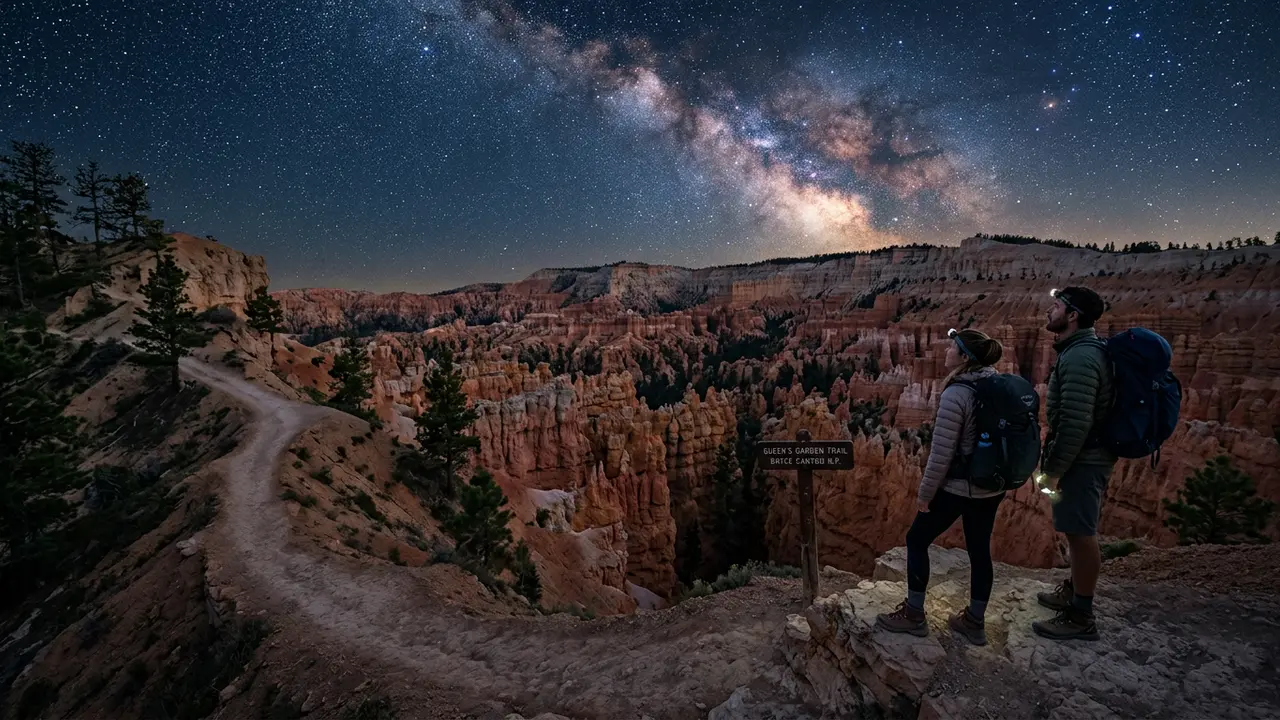
Hikers pausing on the Queen's Garden Trail at dusk as the Milky Way rises over Bryce Canyon's hoodoos, illustrating how many days for Bryce Canyon stargazing to plan

Hikers pausing on the Queen's Garden Trail at dusk as the Milky Way rises over Bryce Canyon's hoodoos, illustrating how many days for Bryce Canyon stargazing to plan

Start the Fairyland Loop early if you're doing it on a third day, ideally right after breakfast. It's more of a genuine loop than the quick out-and-back feel of Queen's Garden, with elevation change spread across the full 8 miles instead of concentrated near the trailhead, and more direct sun once the morning shade off the rim burns away by midday. Trekking poles help on the loose, sandy stretches near the amphitheater's edge, and afternoon light does more favors for the hoodoos here than the flatter midday glare most day-trippers settle for.
What you get2 nights3 nights
Stargazing chancesOne night, no backupTwo to three nights, with a weather buffer built in
HikingQueen's Garden/Navajo Loop only (2-3 hrs)Adds the Fairyland Loop (4-5 hrs) or a repeat visit
Best forTight schedules, flexible expectationsAnyone who wants insurance against a cloudy night
The best time to stargaze at Bryce Canyon covers exactly which nights of the year give the best clear-sky odds, worth reading before locking in a specific week rather than guessing at a date months out.

Why Bryce's Elevation Changes the Math

There's a practical reason to favor the extra night beyond weather odds: Bryce Canyon sits high. The park averages around 8,000 feet in elevation and reaches over 9,000 feet along the rim[5], high enough that visitors arriving straight from sea level often notice it before they notice the view. Short of breath on the first hike, worse sleep the first night, a headache that has nothing to do with dinner: standard high-altitude symptoms, and all things that ease with a day or two of acclimatization.
None of that ruins a two-night trip. It just means the first night, the one you're counting on for stargazing, sometimes lands on the night your body is working hardest to adjust. A third night gives both the sky and your own system more room to cooperate: an extra chance at clear weather, and an extra night for your body to catch up to the altitude before you're standing at a rim overlook in the cold trying to hold a camera steady rather than fighting a headache back at the room.
The elevation is also part of why the sky looks the way it does here in the first place. Thinner air scatters less light and holds less haze, which is a large part of what makes Bryce's rim dark enough to earn Gold-Tier certification. The same air that leaves you a little winded on the hike up to Bryce Point is the air that makes the stars look sharper once the sun goes down.

Timing It Around the Calendar

Trip length and trip timing aren't separate decisions, even though it's tempting to treat them that way. Bryce Canyon's own visitor data shows a clear seasonal split: sixty percent of annual visitors arrive between June and September[6], while the park itself promotes October through May as a genuinely good alternative window, not just an off-season consolation prize.
That split matters for a multi-night trip in two ways. Peak season means fuller parking lots at the popular overlooks and a busier trail on the Queen's Garden/Navajo Loop combo, which can eat into the buffer a third night is supposed to buy you. Shoulder season trades some of that crowding for colder nights, which loops back to the acclimatization and layering point from the last section.
Shoulder season isn't uniform, either. October evenings can already dip toward freezing at the rim's elevation, on top of the acclimatization concerns from the last section, while a March or April visit sometimes runs into leftover snowmelt turning parts of the Fairyland Loop and Rim Trail muddy or icy in shaded stretches. Neither rules out a shoulder-season trip; both are worth checking against the park's current conditions page before building a hiking day around a specific trail.

Featured · Article

What Is Light Pollution? Definition, Types, and Solutions

Light pollution is artificial light brightening the night sky, affecting 80% of the world. Learn the 4 types, wildlife and health effects, and how to fix it.

Exactly which months give the best odds of seeing the Milky Way's core clearly is its own question, one the best time to stargaze at Bryce Canyon answers in more depth than fits here. What's worth deciding upfront, before booking a specific week, is whether you're optimizing for fewer crowds, milder nights, or the clearest possible sky, because those three things don't always point to the same month.

Sample Itineraries: 2-Night and 3-Night Plans

Here's how each version of the trip breaks down, hour by hour rather than in the abstract.

A two-night plan looks like this:

  • Day 1: Arrive by early afternoon, check into Bryce Canyon Lodge or a nearby property, hike the Queen's Garden/Navajo Loop combo before dinner
  • Night 1: Walk out to a rim overlook after dark for the trip's main stargazing window
  • Day 2: Catch sunrise, drive the scenic road out to the park's farther viewpoints, depart in the afternoon
Timeline
  1. Night 1

    Main stargazing window

    The only guaranteed clear-sky attempt on a two-night trip.

  2. Day 2

    Fairyland Loop or rest day

    Added on a three-night trip; a second trail or acclimatization time.

  3. Night 2

    Weather-buffer stargazing

    A second chance at a clear sky if night one clouded over.

  4. Day 3

    Departure

    Sunrise, a last look at the scenic drive, then the road out.

A three-night plan adds a full extra day in the middle:

  • Day 2 (added): Hike the Fairyland Loop instead of repeating the same trail, or simply rest and acclimatize
  • Night 2 (added): A second stargazing window if night one was cloudy, or just a second look if it wasn't
Either plan works. The three-night version is the one that actually plans for things not going perfectly: a cloudy first night, a slower hiking pace, a body still catching up to the elevation, rather than hoping they don't happen. If you want help deciding where to stay or how to fill a clear night with more than a folding chair and a phone app, Best Lodges for Bryce Canyon Stargazing and Dark Ranger Telescope Tours cover the two decisions that come right after this one.