
The Short Answer: What You're Actually Weighing
Bryce Canyon is worth the trip if you're driving through southern Utah anyway, willing to time a visit for a new-moon week, and comfortable working around a busy park by day in exchange for a genuinely dark rim after dark. It's a harder sell if you're flying in specifically for one clear night, traveling with someone who struggles at elevation, or hoping for a solitary experience anywhere near Sunrise or Bryce Point in June.
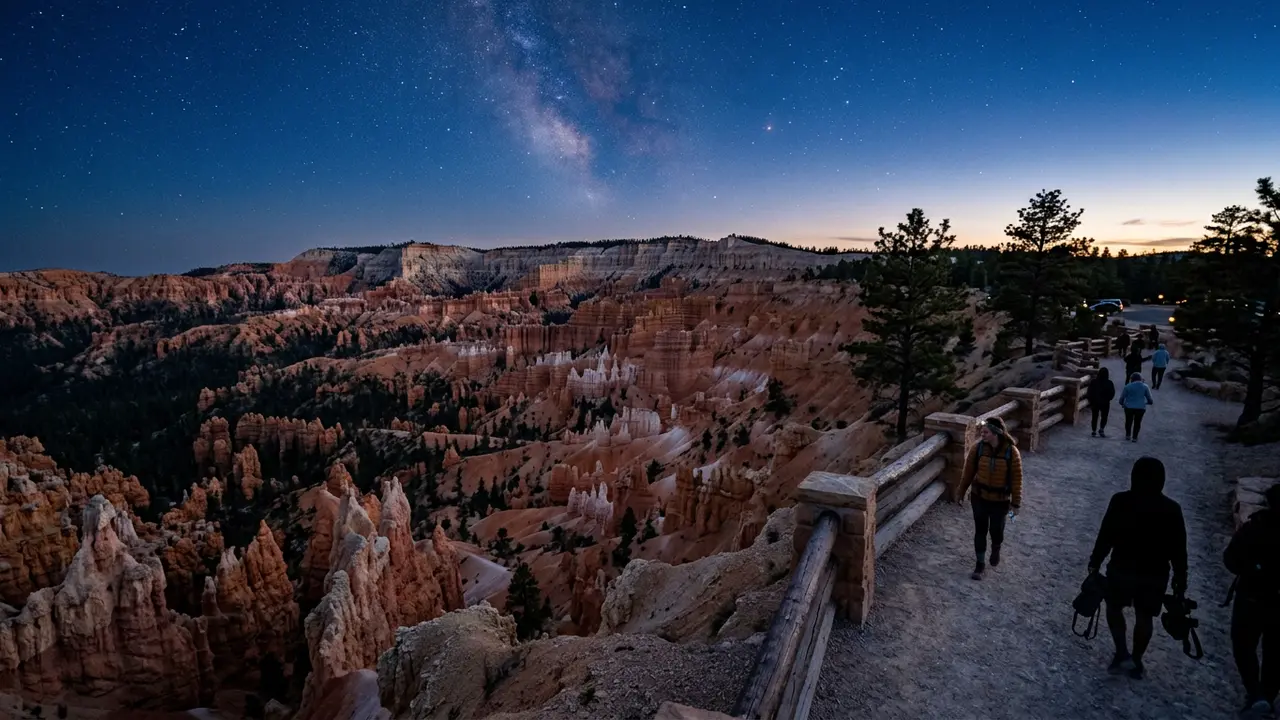
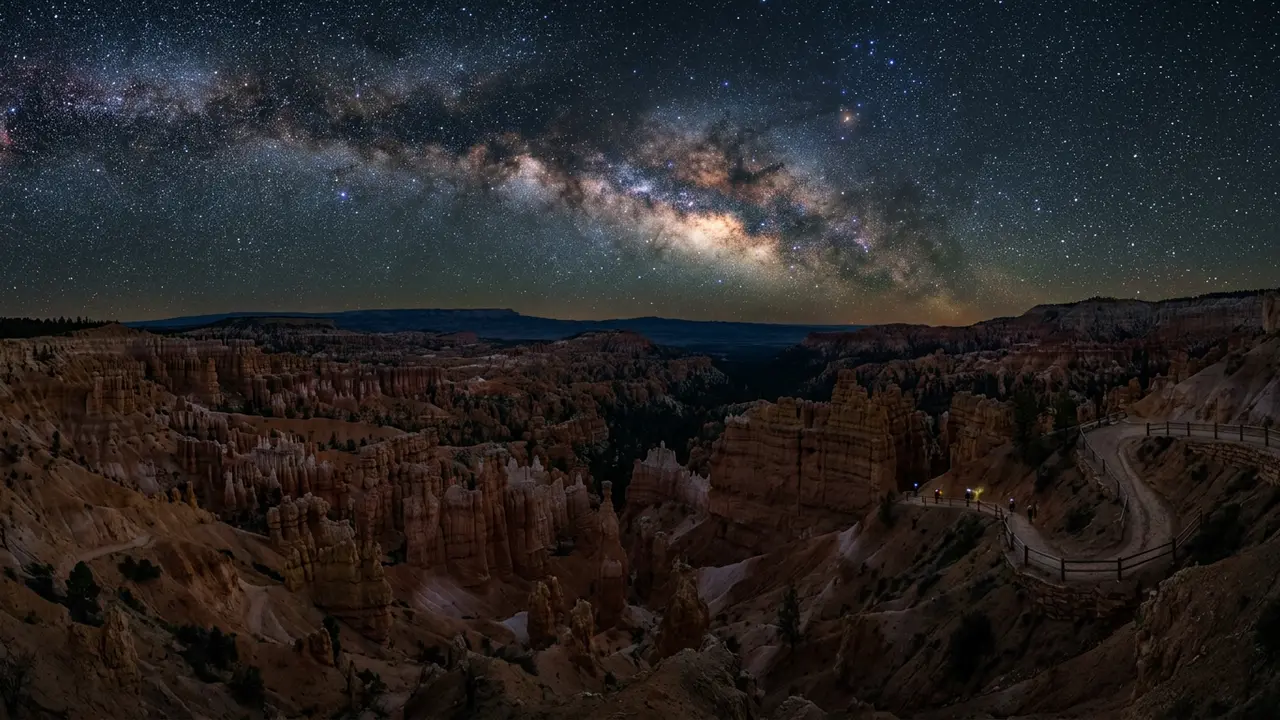
That split is the honest starting point. Bryce Canyon earned International Dark Sky Park certification at the Gold Tier level in 2019[9][10], the top rating DarkSky International hands out, and that Gold Tier sky is about as dark as naked-eye stargazing gets in the continental United States. Its hoodoo amphitheater does something no flat desert or lakeside dark-sky site nearby can: it gives the Milky Way a foreground carved out of stone.
None of that is in dispute. What's worth weighing honestly, before you book three nights and a rental car, is:
- The entrance fee, higher than it used to be for some international visitors
- Crowding at the handful of named rim viewpoints everyone photographs
- What nearly 8,000 feet[6] of elevation actually does to a body that isn't used to it
This isn't a sales pitch. It's the same math stargazing in Bryce Canyon National Park covers from the other direction, worth going through before, not after, you've committed the days off.
The Cost: What You'll Actually Pay to Get In
Entry itself is not the expensive part. Standard admission works out to a handful of tiers depending on how you arrive[1]:
- Private vehicle: $35, covers seven days and everyone in the car
- Walk-in or bicycle: $20 per person
- Motorcycle: $30
- Bryce Canyon annual pass: $70, worth it if you're visiting more than once a year
The America the Beautiful pass covers Bryce alongside every other federal fee site if your year includes more than one park.
What changed is who pays more. As of January 1, 2026, non-U.S. residents aged 16 and up owe an additional $100 nonresident fee[2] at Bryce Canyon and ten other major national parks, charged at the gate rather than folded into the base price. For a solo U.S. domestic visitor, the true cost of getting through the entrance barely moves. For a family of four traveling from overseas, that surcharge alone can add several hundred dollars to a trip that already includes flights, a rental car, and lodging near the rim.
None of this makes Bryce expensive by national park standards. It's still cheaper than a single night at most in-park lodges. But it's the kind of number worth checking before you land in Las Vegas or Salt Lake City assuming the entrance fee is a rounding error rather than a line item.
$100
Crowding: What's Actually Busy, and What Isn't
Bryce Canyon isn't a hidden park, and pretending otherwise would be dishonest. Independent travel writers who track Utah's Mighty 5 parks routinely describe it as one of the busier ones, particularly at trailheads like Queens Garden and Navajo Loop through the late-May-to-September stretch. The specific visitor-count ranking that gets repeated across travel blogs isn't something the National Park Service states in those exact terms, so treat it as reasonably well-known rather than a citable statistic. What is documented is simpler, and just as relevant to a stargazing trip: overcrowding at the rim's most popular overlooks is a real, recurring problem during peak season (roughly May through September), not a one-time event.
Most of that congestion has nothing to do with anyone looking at the sky. The Park Service is specific about the actual cause: the number-one reason overlook parking lots fill up is hikers whose cars occupy the spaces for hours while they're out on a trail[3], not a crowd of stargazers staying put after dark. Lots close temporarily once full, which matters if you're planning to move from viewpoint to viewpoint at sunset chasing the best light.
Featured · Destination
Stargazing in Bryce Canyon National Park
Bryce Canyon earned Gold-Tier Dark Sky Park status in 2019 after 50 years of astronomy programs. Drive in from Vegas or Salt Lake City to see it for yourself.
The park's answer is a free shuttle, and it's a genuine mitigation rather than a box-ticking exercise. It isn't mandatory[4], but the Park Service recommends it because of exactly this congestion, and it runs often enough to be a real option: buses arrive roughly every 15 minutes[5], from 8 a.m. to 8 p.m. between May and September, with a shorter 8-to-6 window in April and October. Getting to Bryce Canyon covers the full park shuttle system and route if you're planning around it.
Here's the part the crowding conversation usually skips: almost none of it applies after dark. The overlooks that fill up by 10 a.m. thin out fast once the sun sets, because the hikers who caused the congestion in the first place are gone, back at their cars or their lodges. A rim that felt crowded at 2 p.m. can feel close to empty at 10 p.m., new moon or not.
Altitude: What 8,000 Feet Actually Feels Like
Bryce Canyon's rim runs high. Elevation averages around 8,000 feet and climbs past 9,000 feet at points like Rainbow and Yovimpa Point[6], numbers that matter more to a stargazing trip than they might first appear, since a late-night walk to an overlook is exertion too, even if it doesn't feel like a hike. A short trip leaves little time for real altitude acclimatization, so the first evening on the rim is often the hardest one physically.
At 8,000 feet, effective oxygen levels drop to roughly 75% of sea level[7], which the Park Service says can cause faster breathing, a higher heart rate, dizziness, headache, and muscle aches even from mild activity, not just a strenuous trail. For most visitors coming from near sea level, this shows up as reduced stamina and a mild headache rather than anything resembling classic altitude sickness. The elevation here is real, but it's the kind of thing a slow first evening and extra water manage, not a reason to cancel.
Recommended tours
Tours are selected for quality, not commission. I earn a small fee if you book — at no extra cost to you.
Hydration does more of the practical work than most visitors expect. Thin, dry mountain air increases how much water your body loses even at rest, and the Park Service specifically recommends close to a gallon of water a day and skipping alcohol while adjusting[8]. That last part matters more for a stargazing trip than a hiking one: showing up at an overlook already dehydrated from a day at altitude is a worse setup for standing outside in the cold for an hour than most people plan for.
Hydration does more of the practical work than most visitors expect.
None of this is a reason to stay home if you're not used to elevation. It's a reason to build a slow first evening into the schedule, drink more water than feels necessary, and skip the ambitious sunrise hike on day one if the headache from the drive up hasn't cleared.
So, Is It Worth It? Who Should Go and Who Should Wait
Bryce Canyon is worth it for a stargazer who can build in at least two nights, drive rather than fly, and treat the entrance fee and altitude as real but manageable line items rather than reasons to cancel. How many days for Bryce Canyon stargazing walks through the two-versus-three-night math in more detail, but the short version holds here too: a single overnight leaves no room for a cloudy sky or a rough first night at altitude, and this is a park worth giving a real chance to clear.
It's a harder case for:
- Anyone banking the whole trip on a guaranteed clear Milky Way photo over the hoodoos on one specific night
- A traveling companion with a diagnosed heart or lung condition that elevation complicates
- Someone hoping to have Bryce Point to themselves on a June evening during the Astronomy Festival
None of those are reasons to write the park off. They're reasons to plan around the trade-off rather than discover it on arrival.
Featured · Article
What Is Astrotourism? The Complete Beginner's Guide
Astrotourism means travel built around dark skies: meteor showers, auroras, the Milky Way. What it means, where to go, and how to plan your first trip.
What tips the balance, more than the fee or the crowd, is timing. The best time to stargaze at Bryce Canyon covers the new-moon windows and Milky Way core season that do more to determine whether a given night is worth the trip than anything covered here. Get that part right, and the $35[1], the busy parking lot at 2 p.m., and the mild headache on day one all shrink down to the fine print of a trip that was worth taking anyway.
How This Compares to a Fly-In Dark-Sky Trip
Weighed against other dark-sky destinations on this site, Bryce's costs and crowds look different once you compare what getting there actually requires. A trip to see the aurora over Yellowknife means flights, a charter operator, and a real weather gamble stacked on top of the ticket price. Bryce needs none of that. It's reachable by rental car from Las Vegas or Salt Lake City, each about a four-hour drive, or a shorter hop from regional airports in Cedar City or St. George. There's no charter premium built into the trip, and no single clear night to bet the whole visit on if you build in two or three instead of one.
That drive-up model changes the cost-benefit math more than the entrance fee does. A family flying in from overseas, renting a car, and paying the $35 vehicle fee[1] plus a $100-per-person nonresident surcharge[2] is still spending far less on entry than on flights and lodging combined. Set Bryce against a fly-in-only aurora destination or a remote Southern Hemisphere observatory trip, and the entrance fee, surcharge included, is closer to a footnote than a deciding factor.
Here's how the trade-offs actually stack up side by side:
None of that makes the choice for you. It just means the honest weigh-in isn't fee versus no fee, or crowd versus no crowd. It's a drive-up park with real, manageable trade-offs against a fly-in one with different, often larger ones. For most stargazers willing to plan around a new-moon week and pack for cold, thin air, Bryce Canyon's Gold-Tier sky is worth the trip. For anyone banking the whole vacation on one guaranteed clear night at a single overlook, look elsewhere first.
| Factor | Bryce Canyon (drive-in) | Fly-in dark-sky trip (e.g. Yellowknife) |
|---|---|---|
| Getting there | Rental car from Las Vegas, Salt Lake City, or a regional airport | Flights plus a charter operator, often a multi-day itinerary |
| Main cost driver | $35 vehicle fee, plus a $100/person nonresident surcharge if applicable | Flights and guided tour packages, typically the larger expense |
| Crowding | Busy rim overlooks by day, quiet after dark | Small tour groups, but weather-dependent scheduling at peak season |
| Weather risk | Multiple nights let you wait out a cloudy one | Often a single scheduled outing per trip |