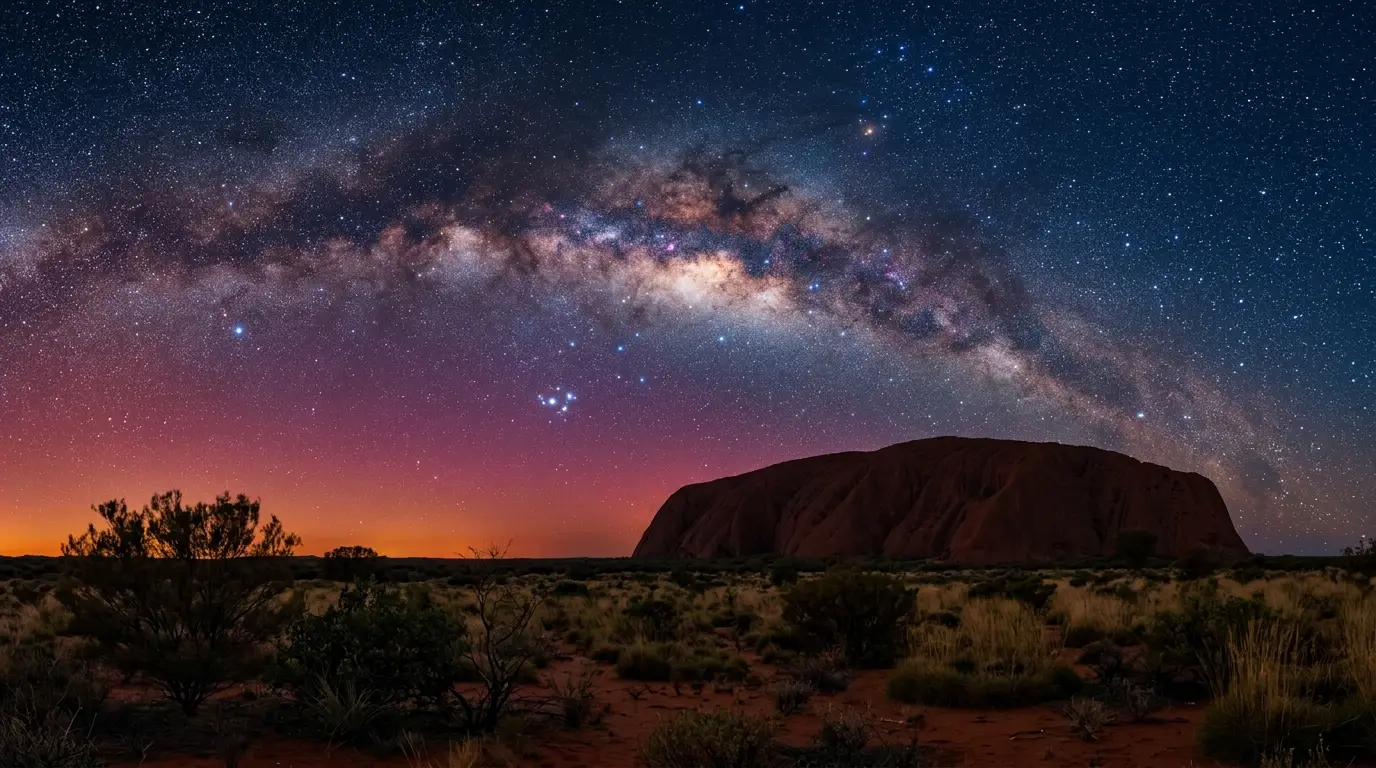

Two nights is the floor, three lets the trip breathe
Start with the number the park itself already picked for you. Uluru-Kata Tjuta National Park sells its entry pass in a single size, three consecutive days, for $38 per adult or $50 as an annual pass, with everyone under 18 admitted free[1]. There is no one-day or two-day ticket to buy instead. That alone settles most of the planning question before you have looked at a single tour brochure: a park built around a three-day pass is a park built for at least two nights, not one.
Book only one night and the trip still works, technically, but it puts everything on a single evening. One clouded-over sky and there is no second attempt before your flight home. Two nights buys a backup night for the astro tour; three adds a full day for Kata Tjuta's own walks, which a one-night, "just Uluru" itinerary skips by default rather than by choice. A quarter of the revenue from those passes goes directly to supporting Aṉangu homelands, training, and business development[6], so the extra night is, in a small way, part of the point of the visit rather than just a cost against it.
For the full picture of the park, from getting there to where to stay, see Uluru stargazing.
One licensed tour, no plan B: why a buffer night matters
Here is the detail most "how many days" advice misses: Uluru Astro Tours is the only operator licensed to take visitors inside the national park after the gates close for the night[4]. Parks Australia's own listing confirms the arrangement, describing the operator's special access to the park at night for its stargazing sessions[5]. That is not a marketing line; it is a licensing condition, and it changes the trip-length math more than any weather forecast does.
At most stargazing destinations, a clouded-out night means switching to a different company or a different date with the same company next week. At Uluru there is one company, and if you are only in town for a night or two, no next week either. Book a single night and a bad forecast leaves you with photos of Uluru at sunset and nothing of the sky you actually flew here for. Book two or three nights and a clouded-out evening becomes an inconvenience instead of the whole trip.
Featured · Destination
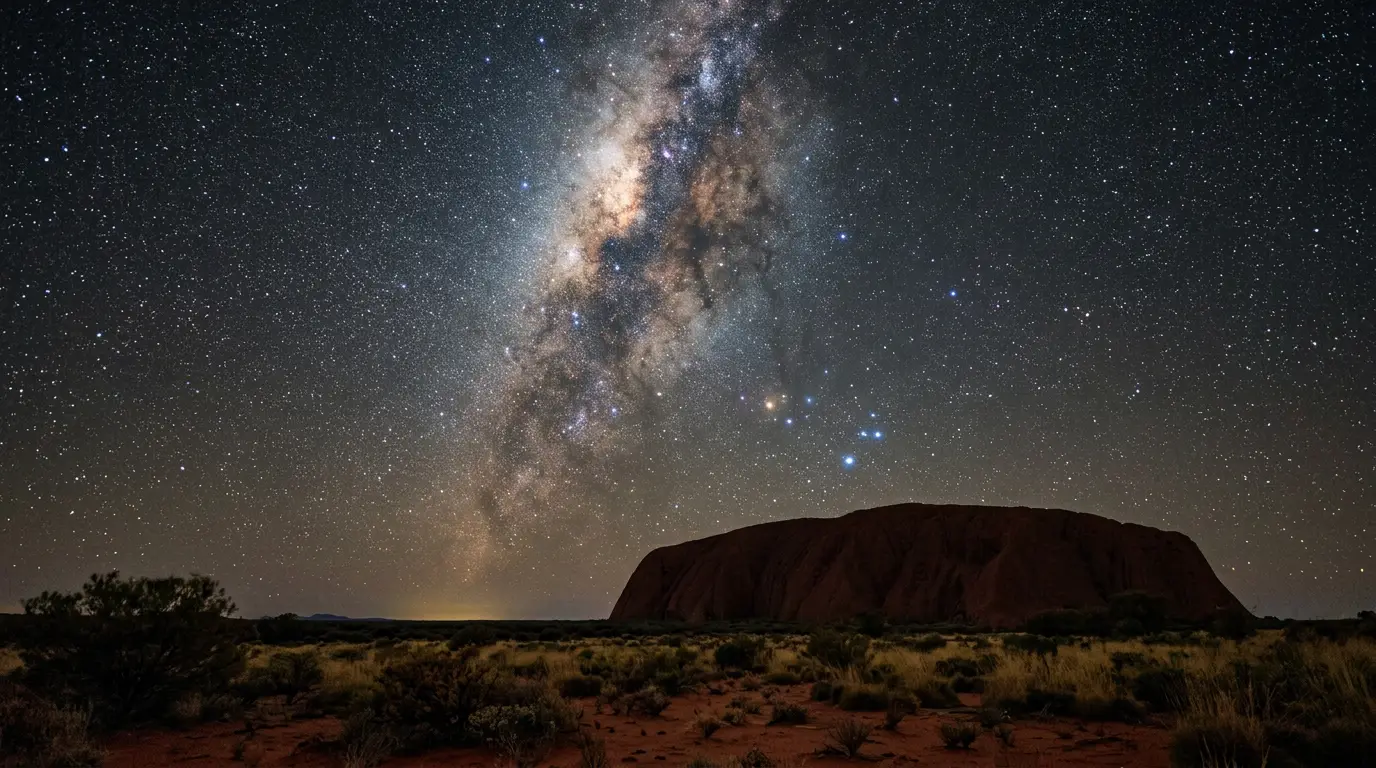
Uluru
Stargaze at Uluru on Anangu-owned, jointly managed land: the Milky Way's core, Magellanic Clouds and Southern Cross over Australia's red-centre outback.
None of this is a guarantee that a second booking gets you in free if the first one is rained out. The rebooking terms for a cancelled session are not published on the Parks Australia or Northern Territory tourism pages, so check directly with the tour operator before you lock in dates if that matters to your plans. What is certain is that a single scheduled night carries real odds of showing you nothing, and a longer stay is the only buffer actually available.
Kata Tjuta needs its own day, not an afternoon detour
Uluru gets all the attention, but Kata Tjuta, the cluster of red domes west of the main rock, has two walks that deserve real daylight hours, not a rushed stop on the way back to Yulara. The full Valley of the Winds circuit takes three to four hours and is rated Grade 4 by the park's own walk guide: steep, rocky, and difficult in places[2]. At the easier end, the Walpa Gorge walk covers just 2.6 km and takes about an hour, a sensible option if the Valley of the Winds' grading or your own fitness rules out the full circuit[3].
Try to fit both walks, plus Uluru's own base walk and a sunset or sunrise viewing stop, into a single day, and something gets cut, usually Kata Tjuta entirely, since it sits further from where most visitors are staying. A third night does not just add stargazing insurance; it adds an actual free morning or afternoon to do Kata Tjuta properly instead of picking one walk and skipping the other.
3-4 hours
Where you sleep in Yulara decides how far three nights stretches
Yulara is the only accommodation hub for the entire park, so the real question is not where to stay near Uluru, it is which of Yulara's own properties fits your three nights. Longitude 131° puts guests in glass-fronted tented pavilions with a direct sightline to the rock, worth the splurge if star-watching from your own deck matters as much as the guided tour. Sails in the Desert and Desert Gardens Hotel are the more conventional resort choice, a short walk from the town square and the Cultural Centre, while the Outback Pioneer property covers the hostel-and-cabin end of the price range without putting you outside the same gate.
Recommended tours
Tours are selected for quality, not commission. I earn a small fee if you book — at no extra cost to you.



Three nights at any of these gives you room to actually use the property, not just sleep in it: a pool afternoon between the heat of midday and the cool of the astro tour, or a slow breakfast before the drive to Kata Tjuta rather than a rushed one. Whichever budget you are working with, book early. Rooms sell out fastest in the dry-season peak, exactly when the sky is at its best, and the full spread of options is worth comparing in best lodges for Uluru stargazing before you commit to three nights in one place.
Match your stay to what you actually came for
Not every visitor needs the same three nights. If Uluru is one stop on a broader Red Centre road trip that already includes Alice Springs or Kings Canyon, two nights focused tightly on Uluru and Kata Tjuta is a reasonable trim, especially outside the peak dry season when the astro tour has more available dates to fall back on. If this is a dedicated stargazing trip, the kind where seeing the Magellanic Clouds and the Milky Way's galactic core is the actual point of flying to Central Australia, three nights is the shorter end of sensible, not the longer end.
Families traveling with kids get a practical bonus at the low end of the age range: under-18s enter the park free[1], and the astro tour itself is built to welcome younger children, unlike some of the more technical astrophotography tours you might book elsewhere. Anyone bringing a camera and planning to actually shoot the sky, rather than just watch it, should treat three nights as the floor rather than the target: one clear night on the tour, one kept as a backup if weather does not cooperate, and ideally a third for a personal attempt away from the group, moon phase permitting.
Featured · Article
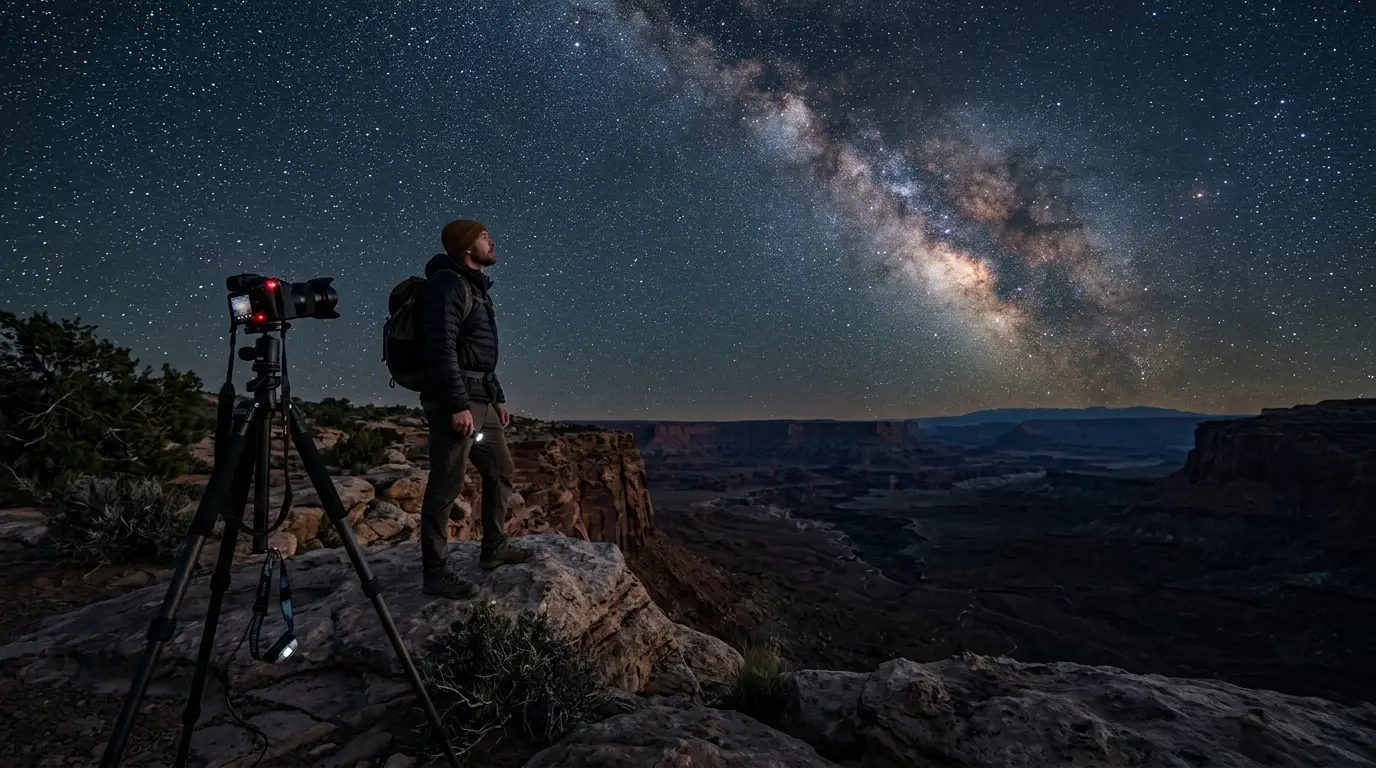
What Is Astrotourism? The Complete Beginner's Guide
Astrotourism means travel built around dark skies: meteor showers, auroras, the Milky Way. What it means, where to go, and how to plan your first trip.
The short answer, by trip type
However you slice it, the trip-length question at Uluru comes down to three fixed features of how the park runs, not preferences to plan around: a park pass sold only in three-day blocks[1], one licensed operator for the only in-park night tour[4], and two Kata Tjuta walks that each need their own daylight hours[2][3].
| Trip length | Best for | What you get |
|---|---|---|
| 1 night | A stopover between other Red Centre stops | Uluru at sunset and sunrise, no buffer if the astro tour clouds over |
| 2 nights | A trip already built around other Northern Territory stops | One tour night plus a backup, little time for Kata Tjuta |
| 3 nights | A dedicated first stargazing trip | Matches the park pass length, room for one clouded-out night and a full Kata Tjuta day |
| 4+ nights | Astrophotography or a slower family trip | A scouting night, a backup, and time to walk both Kata Tjuta trails separately |
Book the nights before you book the tour. The astro tour and the better rooms at Yulara both sell out first during the dry season, and a flight home booked around a fixed return date is the one variable none of this planning can adjust for. Decide your trip length first, factor in the moon phase if a genuinely dark sky matters to you, and then fill in the tours and the walks around it, not the other way round.