How Fast Is the Athabasca Glacier Retreating
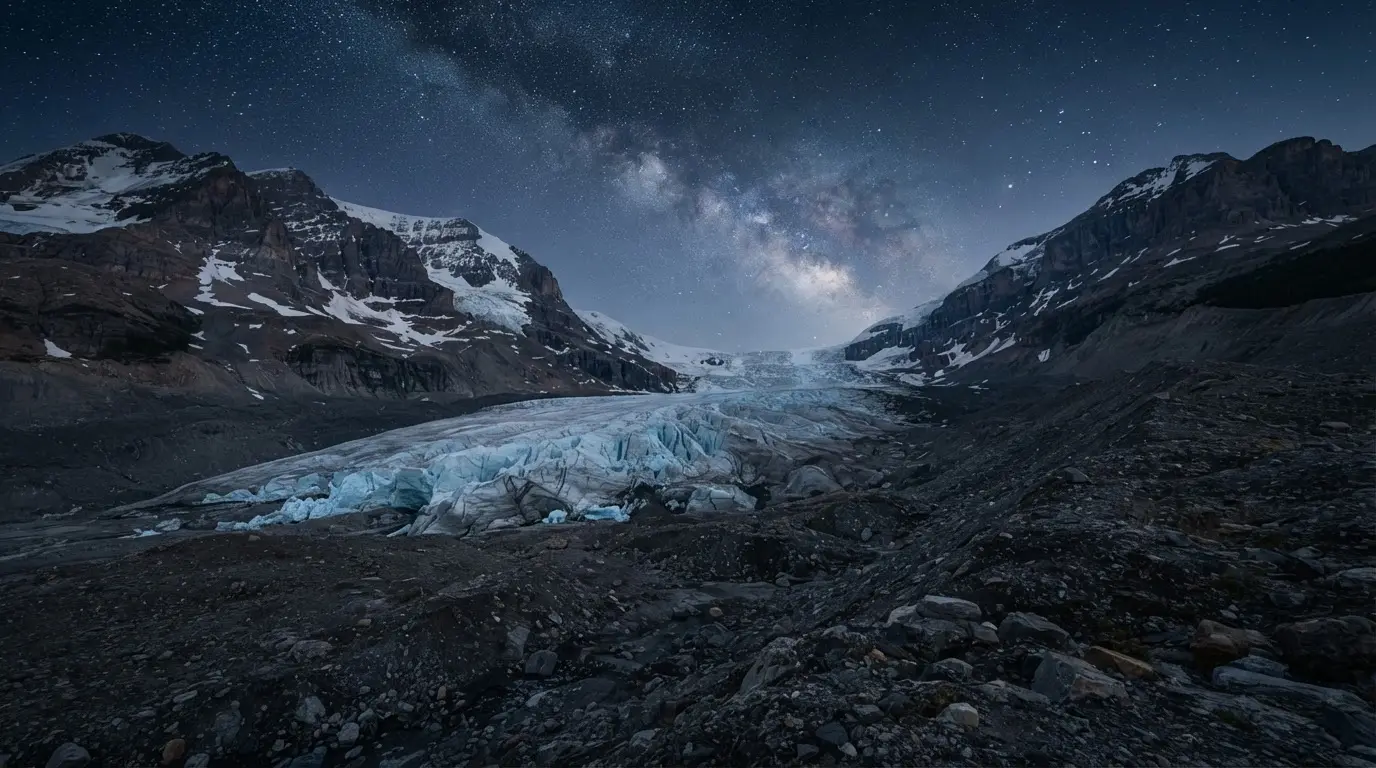
Numbers first, because vague language is what most coverage of Athabasca settles for. The glacier currently loses depth at about 5 meters a year[1], measured across its surface rather than at any single point. Over the past 125 years it has pulled its terminus back more than 1.5 kilometers and shed over half its total ice volume[2]; the two figures track the same collapse, distance and mass, and each one corroborates the other.
None of that is a modern anomaly. Retreat has been continuous since the glacier's furthest historic advance in the late 1800s, and the wider Columbia Icefield has been experiencing significant retreat over the past century[4], not just in a single standout year. For the wider list of pullouts along the parkway, Best Stargazing Spots in Jasper covers where to actually point a camera. This piece is narrower: what the retreat itself does to the one foreground everyone already knows.
100+ years
Why the Melt Has Accelerated
Athabasca is a valley outlet of the Columbia Icefield, the largest icefield in the Canadian Rockies, and it behaves like every retreating glacier at this latitude: it loses more ice in its ablation zone, the lower, melting section, each summer than snowfall replaces in its accumulation zone higher up. That imbalance is called negative mass balance, and it's been negative at Athabasca for most of the last century.
Three mechanisms compound each other:
- Longer, warmer summers extend the melt season on both ends
- A retreating terminus exposes darker rock and debris, which absorbs more heat than white ice, a feedback glaciologists call reduced albedo
- Thinner ice ends up at lower, warmer elevations, which speeds its own loss
None of those three mechanisms is unique to Athabasca. What's specific to this glacier is how visible the result is from a paved road: few retreating glaciers anywhere are this easy to reach, this well documented, or this exposed to a camera.
The Columbia Icefield's other outlet glaciers, Saskatchewan and Dome, show the same downward trend, but Athabasca gets the attention because it's the one you can drive to in under two hours from Jasper townsite and walk toward from a paved parking lot. That accessibility cuts both ways for anyone planning a night shoot: daytime crowds are heavy, but they thin out fast once the interpretive centre closes, leaving the overlook to whoever stayed for the dark.
What a Shrinking Glacier Does to Your Composition
A retreating terminus doesn't just make headlines, it moves the shot. The rock apron in front of the ice, the boulder field many older photographs use as foreground, was ice within a single generation. Compositions built around the toe of the glacier a decade ago now show bare moraine and meltwater instead, because the terminus has genuinely moved that far back[2].
Practically, that means checking the current terminus position before building a shot plan rather than trusting an old reference photo. It also changes lens choice: as the ice recedes further from the parking area and viewing path, a wide-angle lens does more work than it used to, pulling in both the retreating tongue and enough sky above the icefield to justify the trip. Astrophotography Gear for Jasper covers the specific bodies and lenses that hold up in the cold at this elevation.
None of this argues against visiting. It argues for treating the glacier itself as the subject, not scenery behind a starfield, because the version in front of the lens this year is measurably not the version in last year's photo.
Visiting the Icefield Under a Dark Sky
The Athabasca Glacier sits directly off the Icefields Parkway (Highway 93N), the road connecting Banff and Jasper through the Columbia Icefield, and it's the reason a retreating glacier and a dark-sky destination share the same parking lot. Jasper's Dark Sky Preserve covers the glacier and the surrounding icefield — the second largest Dark Sky Preserve in the world and the largest one accessible by road anywhere[3].
Featured · Destination
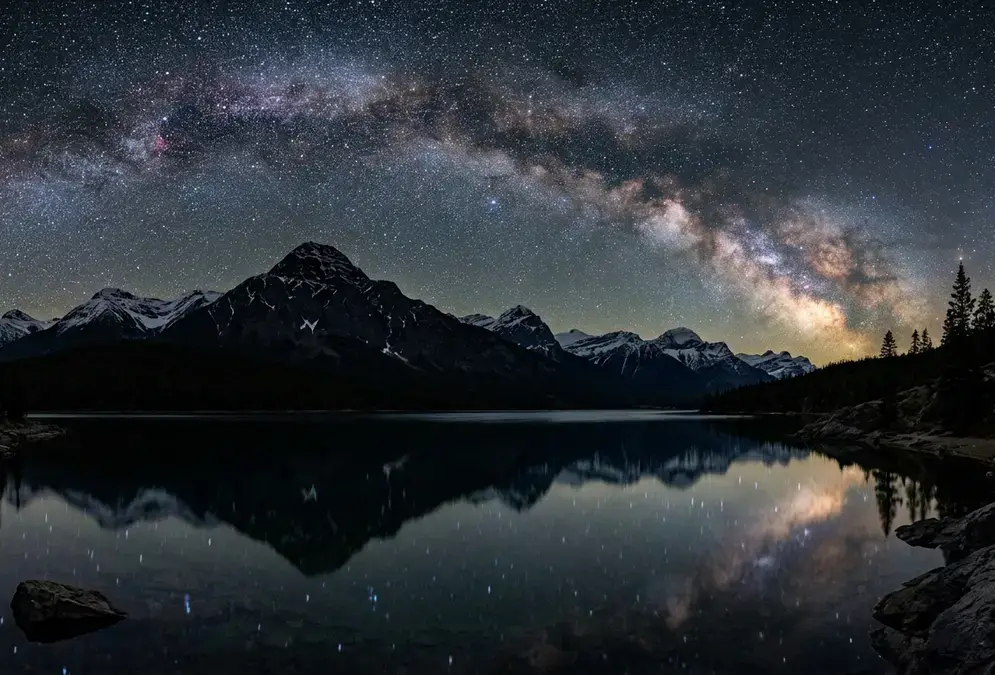
Stargazing in Jasper National Park
Jasper National Park is widely called the largest accessible Dark Sky Preserve in Canada: 11,228 km², an October Dark Sky Festival, and a 38-seat planetarium.
Because the glacier is still an active outlet of the Columbia Icefield, the retreat shows up year over year, not only in decade-old comparisons. Interpretive markers near the icefield centre track roughly the same terminus position that shows up in the monitoring data, so the same stop that gets you a dark-sky access point can also show you how far the ice has moved since your last visit.
Getting to the Icefield
From Jasper townsite, the drive south on the Icefields Parkway to the glacier's parking area takes a little over an hour, and it's one of the most photographed stretches of highway in Canada for good reason: glaciers, hanging valleys, and pullouts with unobstructed sightlines the entire way. Icefields Parkway Stargazing Tour runs the drive after dark with a guide who knows which pullouts clear fastest once the sun goes down.
Where You Can Actually Stand
The ice itself isn't open to unguided visitors, day or night, so any night shot is composed from the marked viewing trail and overlook, not the glacier's surface. That's less of a limitation than it sounds: the overlook sits close enough to frame the terminus against the Milky Way on a clear, moonless night, and Jasper Stargazing tracks current pullout notes and access details for the wider preserve.
Parking fills fast in the hour before sunset, since day visitors and night photographers overlap for a window most guides don't mention. Arriving with enough daylight left to scout the current overlook position, rather than assuming it matches last year's, saves a wasted trip if the marked trail has shifted with the ice.
Planning the Shot Before the Ice Changes Again
Because the terminus keeps moving, the smartest plan treats this less like a bucket-list stop and more like a seasonal check-in. A clear, new-moon night gives the sharpest contrast between pale ice and a dark sky, and checking cloud cover and moon phase before locking a date matters more here than at most stops on the parkway. A wasted night doesn't just cost you the Milky Way, it costs you a foreground that's already changing. Jasper Stargazing Forecast tracks exactly that combination for the surrounding preserve.
Late spring through early autumn gives the longest ice exposure and the easiest road access; winter closes some of the trailside viewing points and shortens the practical shooting window to the hours right after dusk. Best Places to Stay for Stargazing in Jasper covers lodges within a short drive of the parkway rather than the townsite itself, worth checking before booking somewhere that adds an hour each way to a night shoot.
Featured · Article
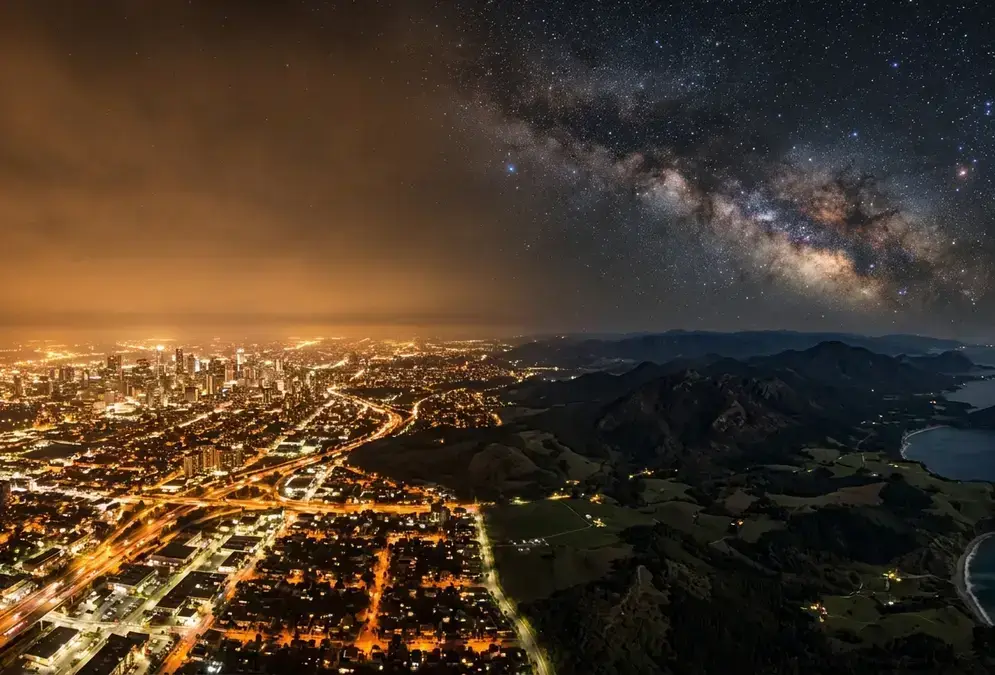
What Is Light Pollution? Definition, Types, and Solutions
Light pollution is artificial light brightening the night sky, affecting 80% of the world. Learn the 4 types, wildlife and health effects, and how to fix it.
Recommended tours
Tours are selected for quality, not commission. I earn a small fee if you book — at no extra cost to you.
The glacier won't wait for a return trip. Book the night, not the season, and treat the current terminus position, not last year's photos, as the plan.