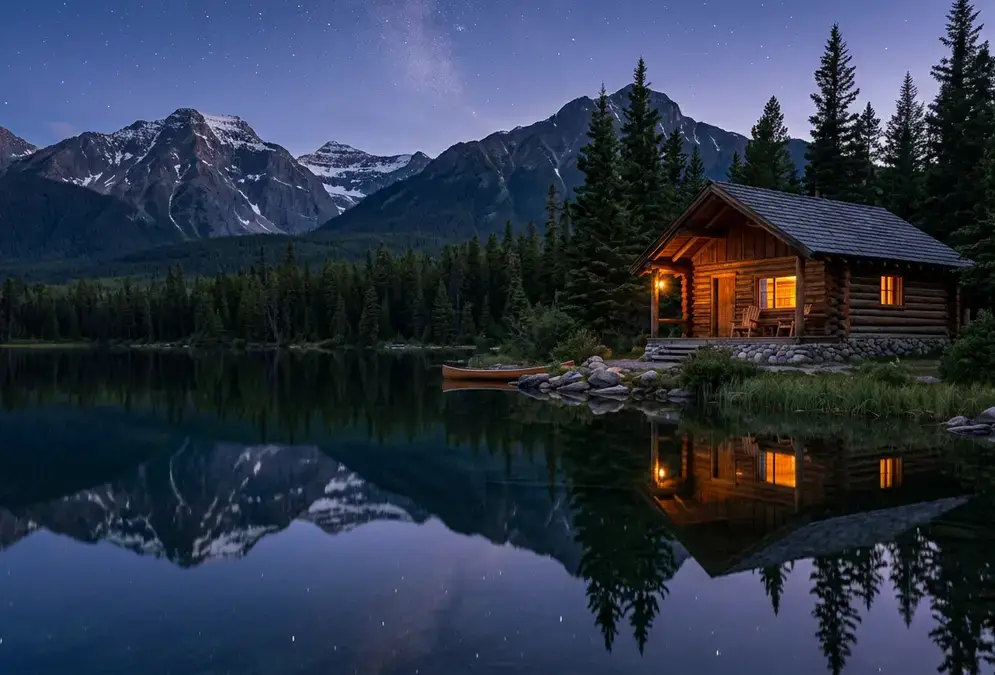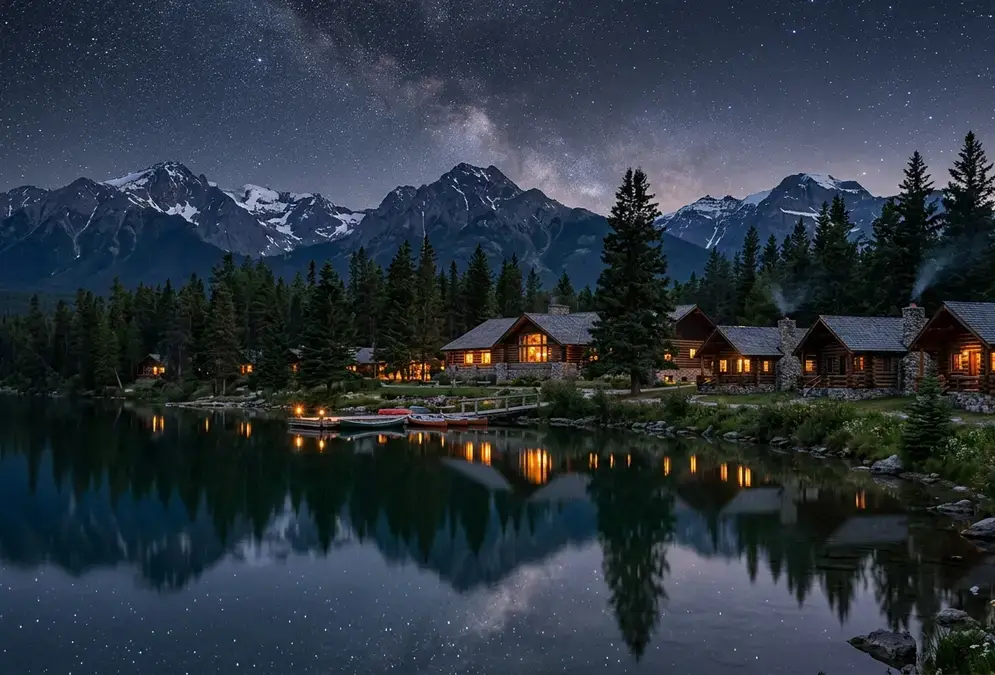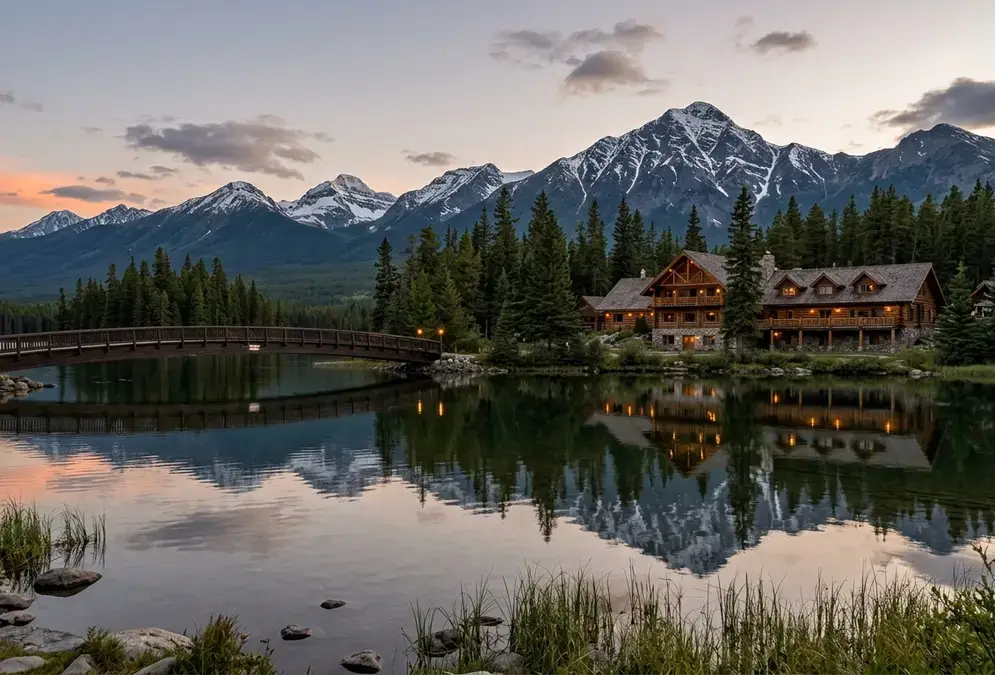
A guided astrophotography tour in Jasper puts a camera in your hands, not a rented eyepiece. Jasper National Park is one of the world's largest Dark Sky Preserves, designated by the Royal Astronomical Society of Canada, and the Rockies give you something the Canary Islands and the Atacama altiplano can't: a jagged, glacier-carved skyline as foreground for every wide shot. The guides who run these sessions, Jasper Photo Tours and SunDog Tours among them, are working photographers first. For the full picture of when to go and where to stay, see the Jasper stargazing guide; this page covers the camera-coaching experience specifically.
What you get: camera coaching, not a telescope queue
Jasper Photo Tours has operated in the park for more than 30 years, and its guides carry IGA certification, the standard credential for Rockies interpretive guiding. Their 2-hour night photography tours cover manual exposure, focusing on stars in near-total darkness, and composing a wide-field shot with a mountain or lake as anchor. SunDog Tours, a Jasper operator since 1997, also lists astrophotography workshops, though the company's core business is day tours and shuttles rather than night photography specifically.
Here is the honest gap: neither operator publishes exact pricing, group size, or whether a tripod and camera are provided versus bring-your-own for the camera-coaching sessions. That level of detail is not standardized across Jasper's small tour market the way it is in more established astrophotography destinations. Call or email before you book. Jasper Star Trails, a separate astronomy operation based at Lake Annette, is worth mentioning too: it runs a 1.5-hour After Dark Astronomy session focused on telescope viewing and constellation orientation rather than camera work, so it is a different product if you want a guide rather than a lens in your hands.
The foregrounds: Pyramid Lake and Maligne Lake's Spirit Island
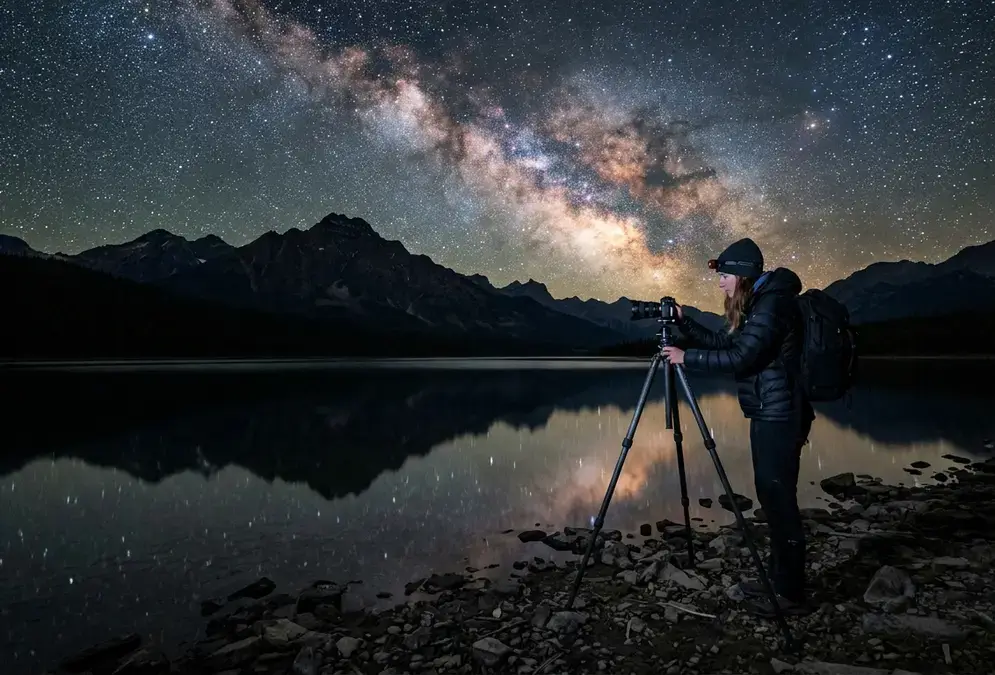
Foreground is the whole game in Rockies astrophotography, and Jasper has two locations most night-tour guides build a session around. Pyramid Lake sits less than 15 minutes' drive from Jasper townsite, and its boathouse and shoreline give you a still-water reflection of the Milky Way arch when the wind drops. Maligne Lake, about 15 miles out, is where Spirit Island sits, one of the most photographed spots in the Canadian Rockies and, on a still night with the core positioned right, a strong silhouette against the arch after dark. At the right time of year the Milky Way lines up close to vertically over the lake, which is the shot most photographers are chasing when they book a Maligne Lake session. If you would rather spend an evening purely on the lake without the camera-coaching structure, the Maligne Lake night tour is a dedicated excursion built around that location.
Whether a single tour visits both lakes in one night, or you book them as separate outings, depends on the operator and the season; ask directly rather than assuming. Distances and dark-to-dawn timing in the Rockies make combining both a long night. For a fuller list of named viewpoints beyond these two, the full viewpoint roundup covers the park's other locations.
What you'll actually shoot
The main target is the Milky Way's galactic core, workable against a dark Rockies sky through the warmer months when nights are short but the core sits highest, and lower but still shootable in the shoulder seasons when nights stretch longer. A guide coaches you through a single, correctly exposed wide-field frame first: mountain or lake foreground, core arching overhead. From there, if your camera and patience allow, the session can move into star trail sequences, stacked frames that turn the sky into concentric arcs, and, on a clear, still night, a basic time-lapse.
Aurora is a genuine possibility this far north in Alberta, especially during active solar periods, but it is not why people book this tour and no guide can promise it. Treat any sighting as a bonus on top of a Milky Way session, not the reason you came.
Gear, cold, and calling ahead
Bring a DSLR or mirrorless body with full manual control. Lens matters more than body: a fast wide-angle lens (f/2.8 or faster, in the 14–24mm range) pulls in enough light for a clean core shot at a reasonable ISO. Jasper's night cold is real but not Arctic: expect temperatures well below freezing in winter, and cool, sometimes near-freezing nights even in summer at elevation, so pack real layers rather than a light fleece. A red headlamp protects everyone's night vision, and two charged batteries mean you are not stuck when the cold drains the first one. See the Jasper astrophotography gear guide for a full kit list built around these Rockies conditions.
Because so much of the astrophotography-specific tour detail, price, duration beyond the standard 2-hour photography walk, and exactly what is provided, is not published, treat any number you find online as a starting point and confirm it directly with Jasper Photo Tours or SunDog Tours before you build a trip around it.
If you just want to look through a telescope
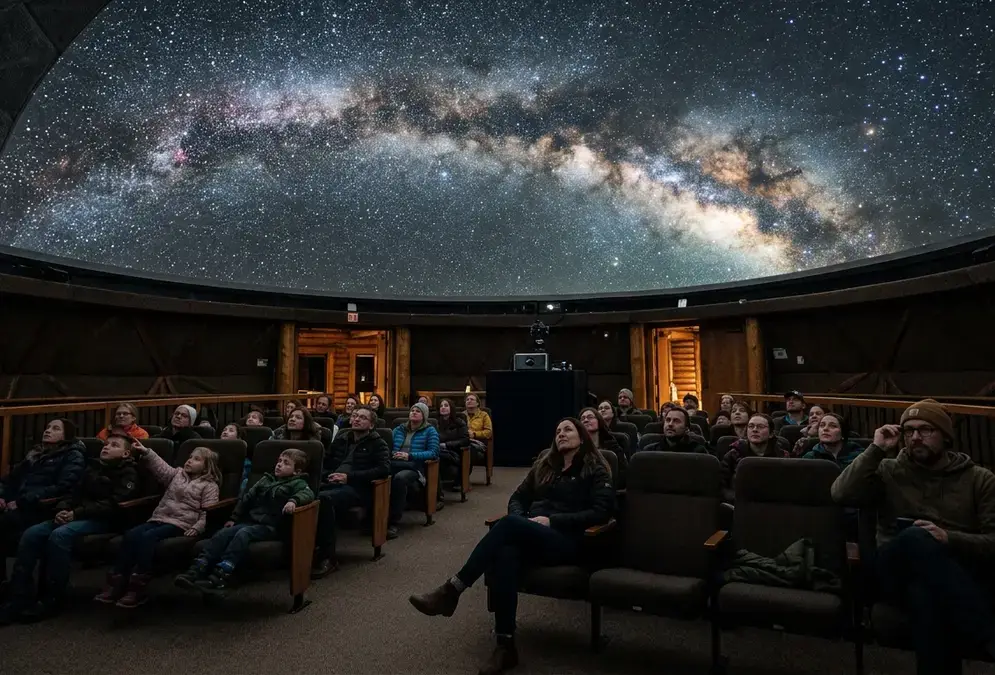
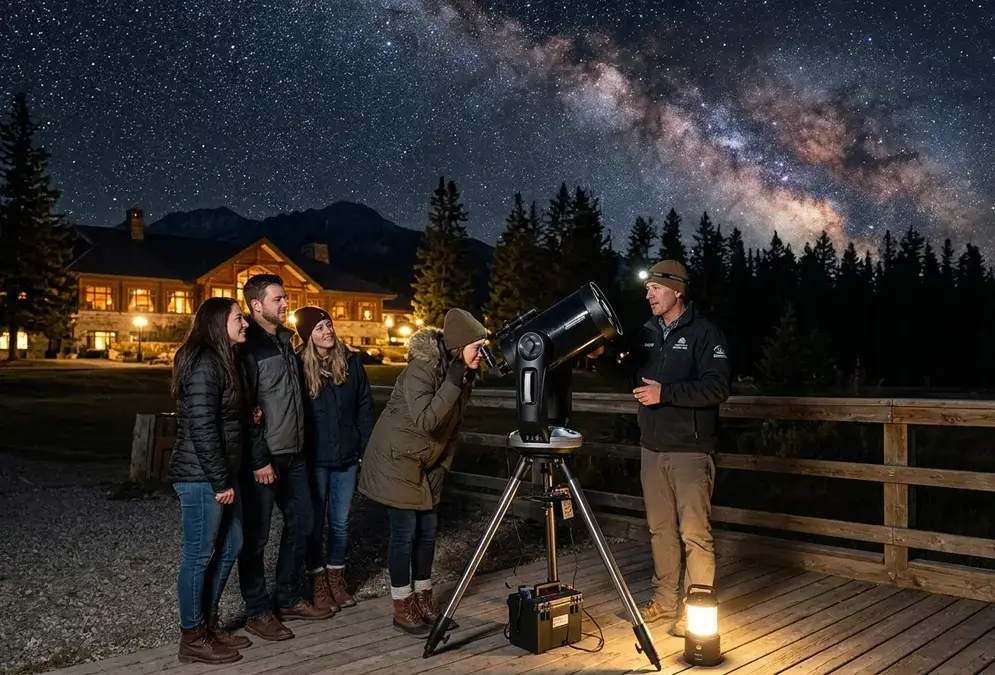
Not everyone booking a Jasper night out wants to manage a camera in the dark. The Pyramid Lake Lodge Telescope Experience, run in partnership with the Jasper Planetarium, is a confirmed, bookable alternative: $40 CAD for adults and $20 CAD for youth aged 4 to 17, for a 45 to 60-minute session with live telescope viewing, 4K screen displays of what the telescope sees, and hands-on meteorite samples. It comes with a free two-year weather rain-check if cloud rolls in, a policy the camera-coaching tours do not advertise. Read the Jasper Planetarium night tour for the full writeup on that experience. This astrophotography tour is for people who want to leave with their own images, not just a look through someone else's eyepiece.