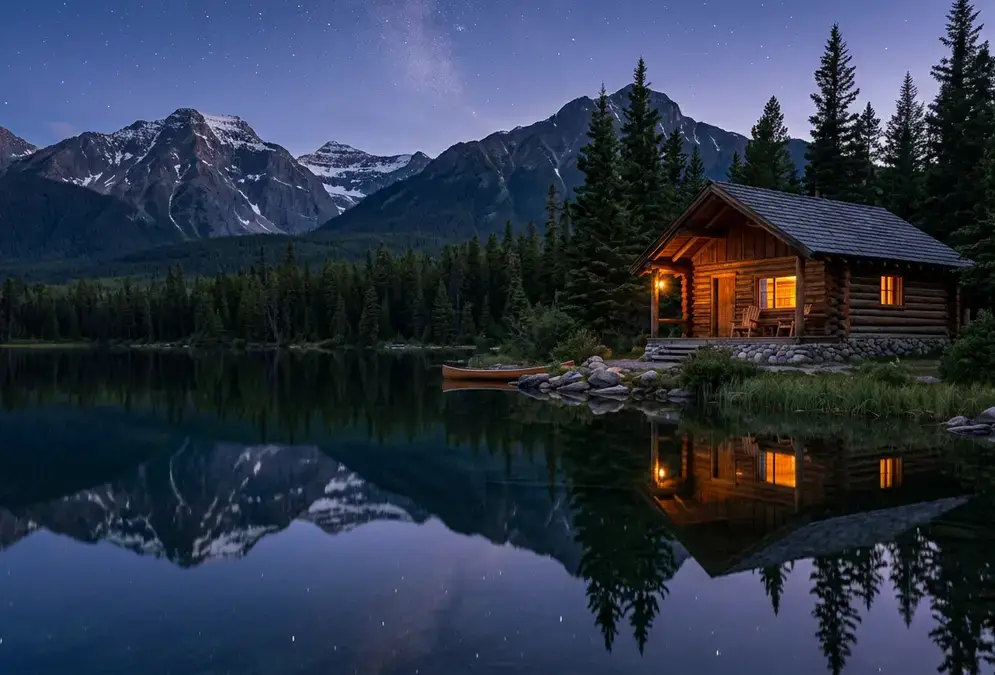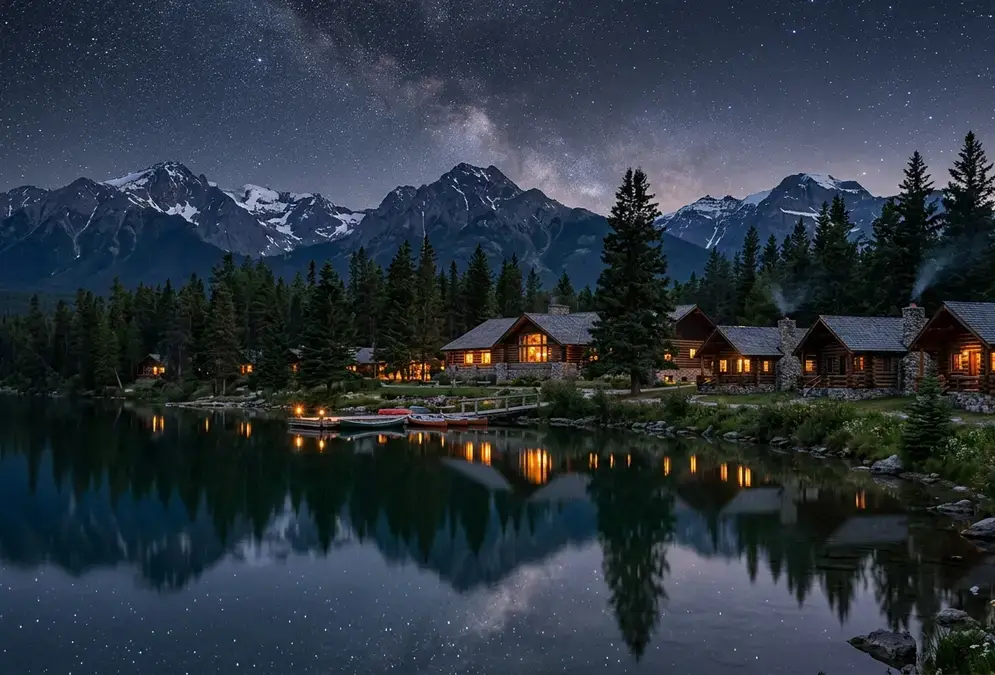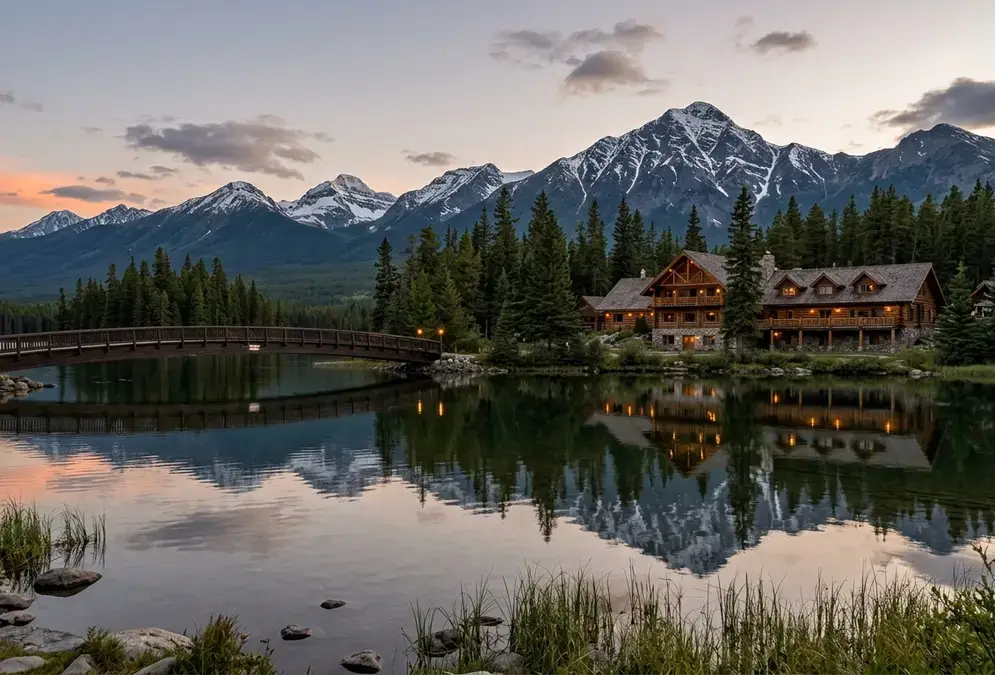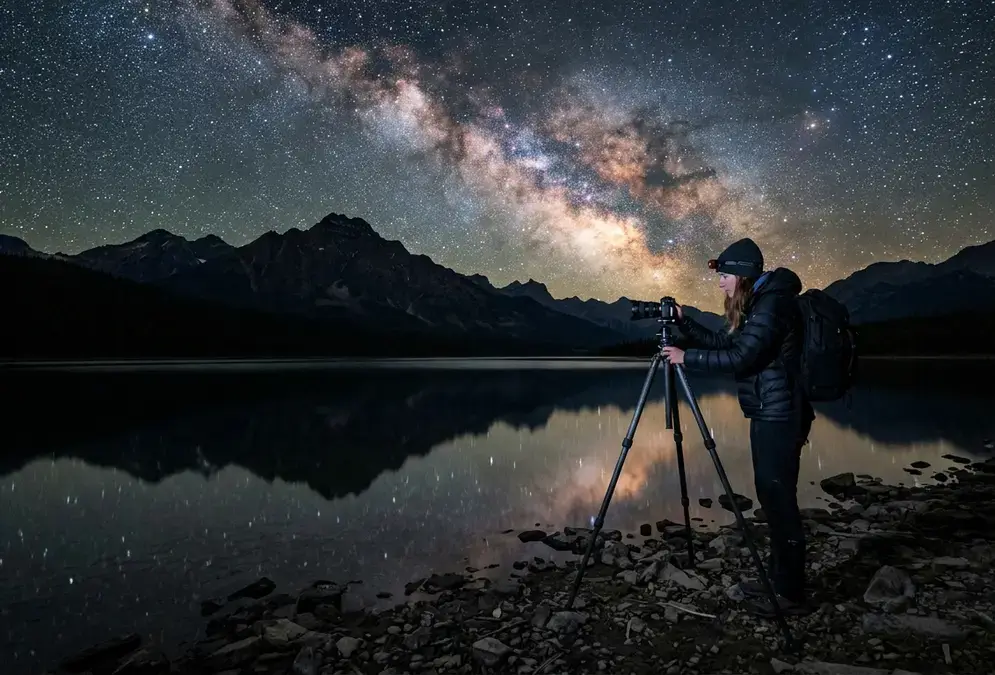
Jasper National Park sits inside one of the world's largest Dark Sky Preserves, a designation from the Royal Astronomical Society of Canada that caps outdoor lighting across more than 11,000 square kilometres of Rocky Mountain wilderness. You don't need to hike into the backcountry to use that darkness. SunDog Transportation and Tour Company, a locally owned operator running trips out of Jasper since 1997, runs a guided Dark Sky Astronomy Tour out of Fairmont Jasper Park Lodge that packages the two most useful ways to experience that sky into one evening: a planetarium dome show and a guided telescope session.
This is the tour most visitors land on when they search for the best way to stargaze in Jasper, and for good reason. It's built in tiers, so you can buy exactly the experience you want rather than a fixed package, it runs rain-or-shine because half of it happens indoors, and it's led by staff trained specifically in constellation astronomy and Northern Lights science rather than a driver reciting facts from a card.
What's actually included
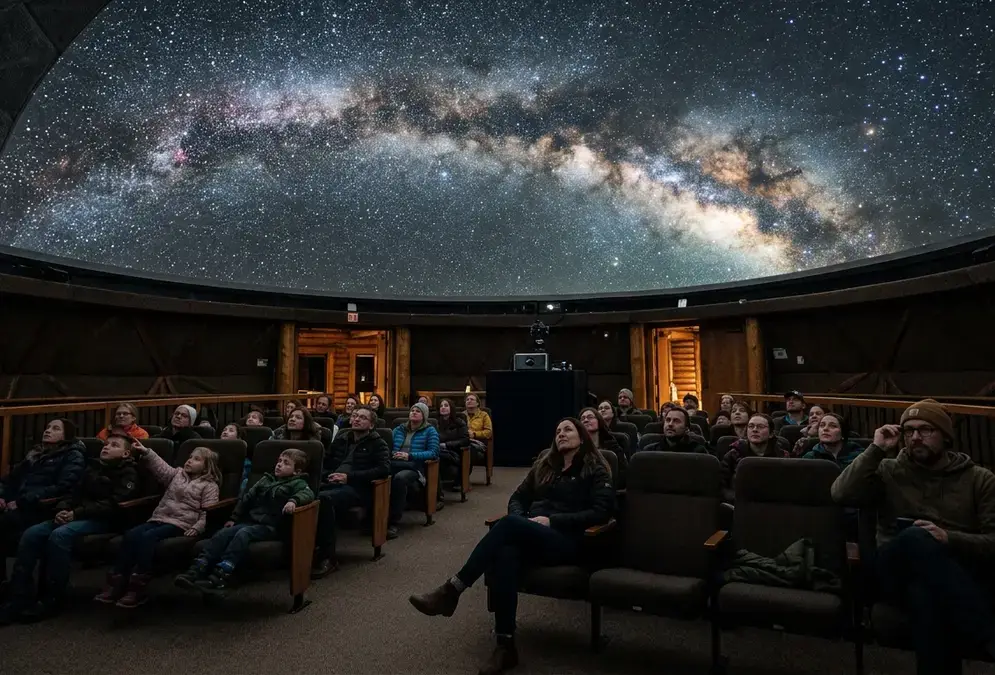
The full experience has two components. First is a 38-to-40-seat dome theater session, roughly 40 minutes, where guides project a moving night sky onto the curved ceiling and walk through what's actually up there that night: constellations, planets, and a guided introduction to Canadian Indigenous constellations, the star patterns and stories used by First Nations across the region long before European naming conventions arrived. This part happens entirely indoors, which is why the tour operates regardless of weather.
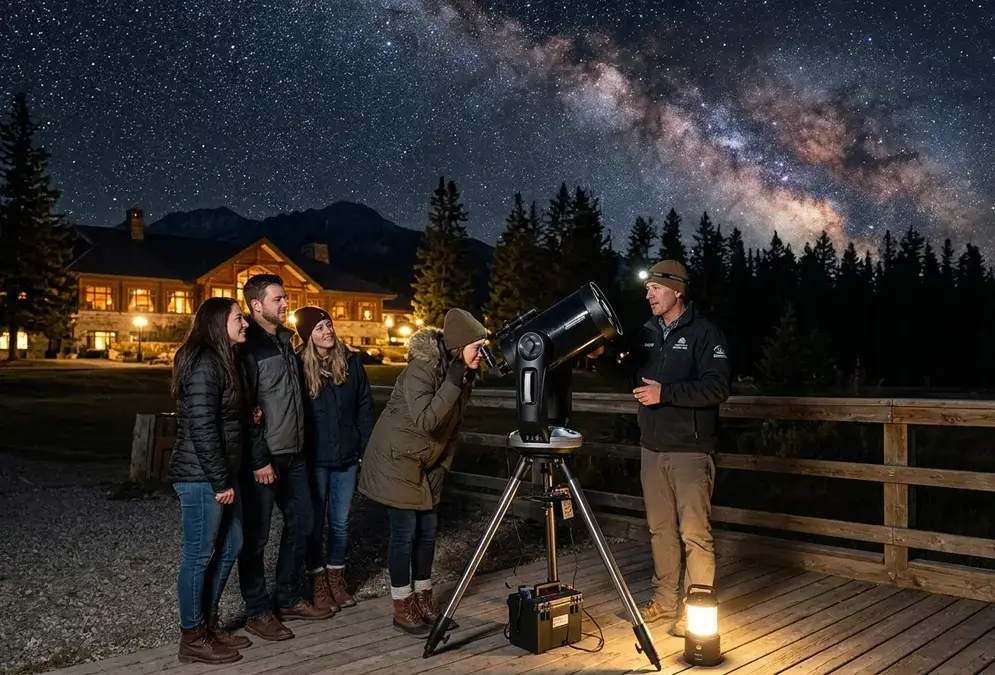
Second is a roughly 45-minute outdoor telescope session, using a set of optical and video telescopes the operator maneuvers between targets, plus binoculars for wider views. On a clear night this is where the tour delivers: Milky Way observation, a look at whatever planets are above the horizon, and open discussion of what a meteorite actually is (guides bring a sample to pass around). Guides also cover the science behind the Northern Lights, useful context even on a night when the aurora doesn't show, since Jasper's latitude makes sightings possible but genuinely unpredictable, not something to plan a trip around.
Both pieces run out of the Main Lodge at Fairmont Jasper Park Lodge, downstairs, opposite the Art Gallery, so there's no separate transfer to arrange once you've arrived at the lodge.
Three ways to book: planetarium, telescope, or both
The pricing splits into three tiers, and which one makes sense depends on what you actually came for.
Planetarium only, $40 CAD buys the 40-minute dome show alone. This is the fallback that makes the whole tour rain-or-shine: if the forecast is bad, or if you're traveling with young kids who won't sit still for an hour outdoors in the cold, this tier still delivers a full constellation walkthrough and Indigenous sky-lore session without any weather risk at all.
Telescope only, $55 CAD buys the outdoor session on its own. It's the pick for anyone who already knows their constellations and wants maximum time at the eyepiece rather than a classroom-style dome presentation, though skipping the planetarium means skipping the guided orientation that helps beginners get the most out of the telescope targets that follow.
Combo, $79 CAD, buys both. Bought separately, the two tiers add up to $95 CAD, so the combo saves $16 CAD and, more importantly, gives you the full arc: an indoor primer on what you're looking for, then an outdoor session actually finding it. For a first-time visitor with one evening to spend on Jasper's sky, this is the one to book.
Beyond the standard tour: SunDog's other night-sky options
The Dark Sky Astronomy Tour is SunDog's flagship product, but it isn't the only one, and knowing the alternatives helps if the standard tour doesn't fit your dates or interests. A separate Winter Dark Sky Astronomy Tour runs during the colder months outside the April–November window of the standard tour, built around the Rockies' long winter nights. A Wildlife & Dark Sky Astronomy Tour combines an evening wildlife-spotting drive with a stargazing component, for visitors who want both in one outing. And a Stargazing-In-Style vintage bus tour, run through Jasper Planetarium directly, adds a novelty transport element to the same basic astronomy programming. None of these compete directly with the standard Dark Sky Astronomy Tour described here; they're variations for different seasons and interests, and worth asking about if your travel dates fall outside April–November.
Weather, seasons, and the rain check
The tour operates April through November. Outside that window, ask about the Winter Dark Sky Astronomy Tour instead. Within the season, the planetarium half of the tour is effectively weatherproof, and the operator backs the outdoor half with an unusually generous policy: if cloud cover blocks the stars on your scheduled night, you get a two-year rain check to come back and try again, rather than a same-night refund and nothing else. That's a meaningfully better deal than most single-night stargazing tours offer, where a cloudy night simply means a wasted booking.
The minimum age is 4 years old, and the operators describe the activity level as minimal, no hiking or standing required beyond moving between the dome theater and the outdoor telescope station. That makes this one of the more family-workable stargazing tours in the portfolio: a five-year-old can sit through the dome show and look through a telescope without the cold-endurance test that a longer, more remote stargazing tour would demand.
Practical details
Booking: the tour is listed on GetYourGuide and Viator, both offering 24-hour free cancellation, and directly through SunDog's own site. Direct booking is worth checking if your dates are flexible, since availability sometimes differs slightly between the operator's own calendar and the third-party platforms.
What to bring: even in July, Jasper's evening temperatures at the lodge's elevation drop faster than a warm afternoon suggests. Bring a jacket for the outdoor telescope portion; the dome theater is heated and indoors.
Group size: the dome theater seats 38 to 40 per session; the outdoor telescope groups are smaller and rotate through the available scopes and binoculars.
Best time to go: new-moon windows between May and September give the darkest skies and the longest comfortable evenings before the cold sets in; the shoulder weeks around Jasper's October Dark Sky Festival add astronomy talks and extra departures to the calendar, but also the tightest booking competition of the season.