Uluru's packing list starts with the thermometer, not the wardrobe
Central Australia runs on genuinely large temperature ranges between day and night, in every season, not only the hottest or coldest months[1]. The two extremes worth knowing before you pack come from opposite ends of the calendar: summer afternoons can push into the low 40s°C, and winter nights can drop to 0°C or below[2], though never both in the same 24 hours. Yulara's own climate data confirms the seasonal split at a gentler scale: July, the coldest month, averages just 12.6°C, while January, the hottest, averages 30.7°C[3].
What every season shares is a real drop after sunset, even without the seasonal extremes stacking on top of each other. That gap is the reason a generic desert packing list falls short here. A trip built around 'it's a desert, so it's hot' packs shorts and sunscreen and stops there, then discovers on the night tour that the ground gives back the day's heat fast once the sun is down. Build the list around whichever season you're actually traveling in, not a single high temperature pulled off a forecast app, and the rest of this guide follows: layer for both ends of your day, not just for the number you land in at 2pm.
40s°C / 0°C
First-timers usually get this backwards. They over-prepare for the heat, since 40°C is the number everyone quotes about the outback, and under-prepare for the cold, since 'freezing' doesn't sound like a word that belongs anywhere near a desert. Both are real, just not on the same day: pack for your season's actual extreme, not for both of them at once.
If you haven't settled on when to go yet, which months give the clearest sky here breaks down how winter's cooler nights compare with summer's longer days, and why the season matters less than the tour booking itself.
Daytime defense: sun, heat, and how much water you actually need
The Red Centre's sun is strong enough that local visitor guidance treats sun protection as a baseline, not an optional extra: a shirt, a hat, sunglasses, and a minimum SPF 30+ sunscreen, worn every time you're outside rather than only around midday[4]. That's an easy standard to skip on a hot afternoon when shade or a swim feels like enough. It isn't. UV exposure across Central Australia's interior stays high through most of the day, so treat sun cover as part of getting dressed, not something you reapply once you notice you're burning.
Hydration matters just as much and gets underestimated more often. Dehydration is common enough in the desert that visitors are advised to increase fluid intake to roughly one litre of water per hour while out and about[5], well above what feels necessary until you're already behind on it. That figure applies to daytime activity in the heat, walking around the base of Uluru or through Kata Tjuta, not to standing still after dark. Carry more water than seems reasonable, and refill at every chance rather than waiting until the bottle runs dry.
Timing helps as much as gear. Visitors who schedule the hottest stretch of the day, roughly late morning through mid-afternoon, around shade, air conditioning, or a slow lunch tend to handle the rest of the day better than anyone who pushes straight through it. Save the harder walking for early morning or late afternoon, when the heat has eased and the light is better for photos anyway.
What actually belongs in a daytime desert kit:
- A wide-brim hat and UV-rated sunglasses
- SPF 30+ sunscreen, reapplied through the day
- Long, loose sleeves for extended midday exposure
- A refillable water bottle, ideally 1.5 litres or larger
- Electrolyte tablets or powder for longer walks, since water alone doesn't replace what you sweat out
Layering for the cold: what the licensed night tour actually needs
Every after-dark stargazing session at Uluru runs through Uluru Astro Tours, the operator licensed to bring visitors inside Uluru-Kata Tjuta National Park once the gates close for the night. The tour starts roughly an hour after sunset and runs two and a half to three hours outdoors, standing still more than moving, which is exactly the combination that makes desert cold bite hardest. Walking generates its own warmth. Standing at a telescope for two hours in the dark does not.
Build the layering system around that stillness rather than the daytime heat you left behind at the hotel. Start with whatever you wore during the day, then add a mid-layer and a proper outer layer once the group heads outside. A jacket alone rarely covers a full session once temperatures keep dropping past 9pm. Plan on genuine layers rather than one warm item grabbed on the way out the door.
What actually earns a place in the layering system:
- A fleece or wool mid-layer that packs down small
- A windproof outer shell, since even a light breeze turns a still desert night cutting
- A warm hat, since heat loss through the head is real and easy to fix
- Gloves for winter sessions, especially if you're handling camera gear or a phone for photos
- A scarf or buff for the neck, doing double duty against dust on the drive out
A jacket alone rarely covers a full session once temperatures keep dropping past 9pm.
Cold saps battery life fast, on phones and on cameras alike. A battery that reads half-charged at sunset can die within an hour of standing in near-freezing air, so keep a spare in an inner jacket pocket rather than in a cold camera bag, and let it warm back up to body temperature before you swap it in.
Footwear, red light, and the small gear that makes the difference
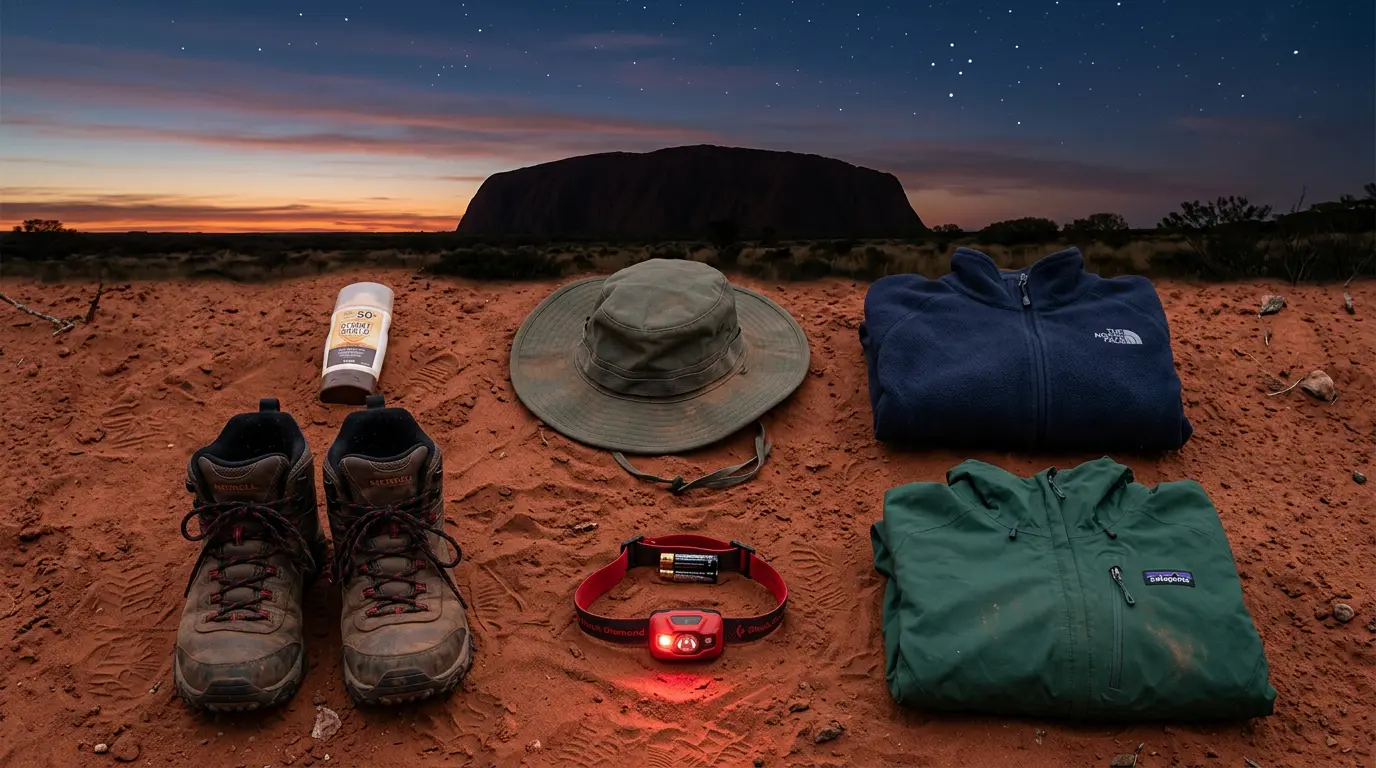
Uluru's desert ground doesn't stay flat once you're off the paved viewing areas, and a night session standing on cooling red sand and loose gravel isn't the place to discover your sandals aren't up to it. Closed-toe shoes with real tread cover both the daytime walking tracks around the rock's base and the uneven ground most stargazing spots sit on after dark.
Recommended tours
Tours are selected for quality, not commission. I earn a small fee if you book — at no extra cost to you.
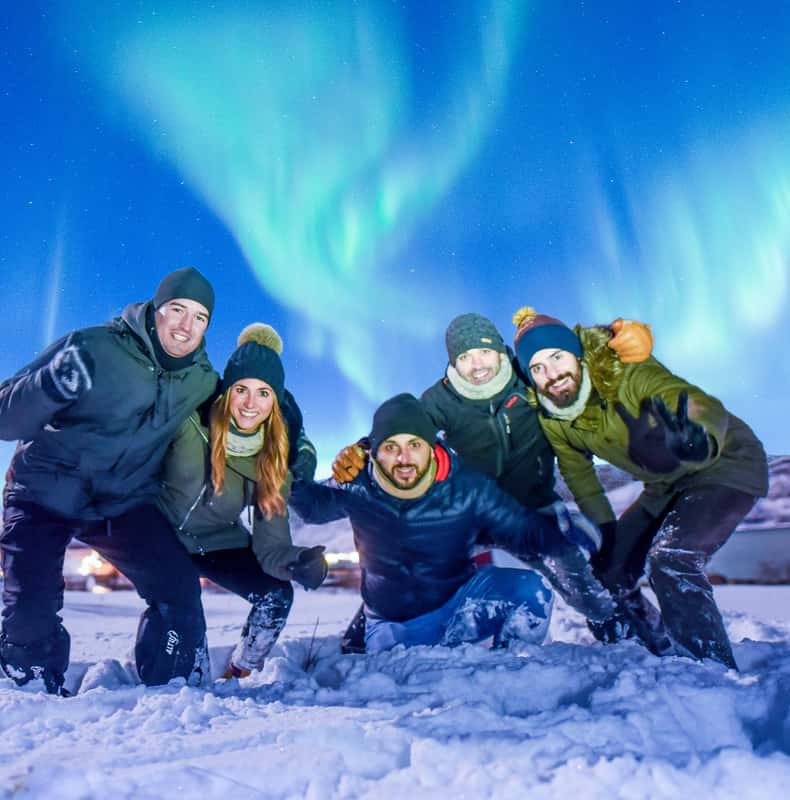
A headlamp with a red-light setting belongs in the same bag. Human eyes take roughly 20 to 30 minutes to fully adjust to darkness, and one burst of white light resets that adaptation instantly, for you and for everyone standing near you. Red light doesn't trigger the same reset, which is why it's standard kit for any stargazing trip rather than something specific to Uluru.
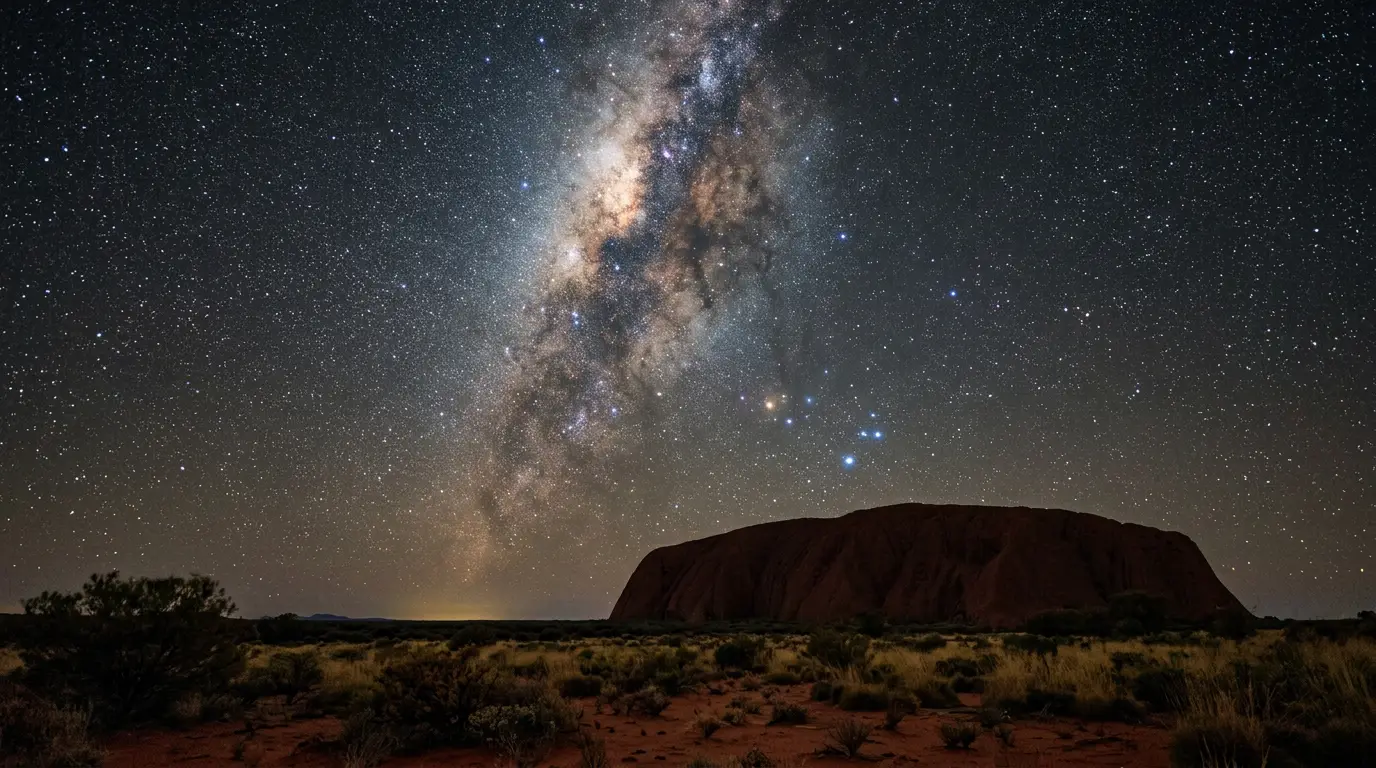
Featured · Destination
Uluru
Stargaze at Uluru on Anangu-owned, jointly managed land: the Milky Way's core, Magellanic Clouds and Southern Cross over Australia's red-centre outback.
A short list of small things that matter more than they look:
- A red-light headlamp or torch, checked and charged before you leave the hotel
- Closed-toe shoes with grip, not sandals or flip-flops
- Lip balm and a heavier moisturiser than usual; desert air dries skin fast, day or night
- A dry bag or sealed pouch for a phone or camera, since fine desert sand works into any seam or port
- A basic first-aid kit with blister plasters, useful after a day on sandy, uneven tracks
Pack the small stuff together in one dedicated pouch rather than scattered across a daypack. A single stargazing kit, headlamp, spare batteries, lip balm, and first-aid basics, means less digging around in the dark trying to find one item by feel while everyone else is already looking up.
Central Australia's remoteness: what Yulara can supply, and what to bring instead
Yulara's town square covers the essentials of a resort village, not a regional hub. The facilities list running today includes a supermarket, a newsagent, a post office, a bank, a hair and beauty salon, a tour and information centre with car rental desks, a handful of places to eat, and souvenir, clothing, and gift shops[6]. That covers sunscreen, snacks, and a forgotten phone charger. It doesn't cover a shopping strip's worth of options, and prescription medication, specialty gear, or anything genuinely urgent sits outside what's reliably on the shelf.
Medical care follows the same pattern. Yulara's facilities run to a resort medical centre reached through your hotel reception rather than a walk-in clinic you'd find in a larger town[7], and reports on whether a pharmacy actually operates inside the resort's shopping centre conflict depending on the source. Rather than betting on either answer, bring what a multi-day desert trip with limited resupply actually needs: your own prescriptions, any specialty toiletries, spare contact lenses or glasses, and basic first-aid supplies.
Be specific about what 'bring what you need' actually means here: contact lens solution, a spare pair of glasses, any daily medication in its original packaging, a phone charger with the right plug adapter, and enough of any specialty toiletry to cover the whole trip rather than a day or two. None of it is exotic. All of it is exactly the kind of thing a small resort village's supermarket doesn't stock in the specific brand or dose you need.
Alice Springs, the nearest town of any real size, sits a genuine multi-hour drive away across open desert, not a quick supply run. That distance is the practical reason to over-pack rather than under-pack: a missing layer or a forgotten adaptor isn't a problem you solve on the way to Uluru stargazing the next morning. Treat Yulara like any remote outpost. Bring what the trip actually needs, and let the shops cover only what you genuinely forgot.
The Uluru desert stargazing packing checklist
Pull all of the above into one list and an Uluru stargazing packing list for any season looks like this:
- Wide-brim hat, UV-rated sunglasses, and SPF 30+ sunscreen
- Long, loose sleeves for daytime sun
- A refillable water bottle, 1.5 litres or larger, plus electrolytes for longer walks
- Fleece or wool mid-layer and a windproof outer shell for after dark
- Warm hat, gloves, and a scarf or buff
- Closed-toe shoes or boots with real grip
- A red-light headlamp or torch
- Lip balm, heavier moisturiser, and a basic first-aid kit
- Your own prescriptions and specialty toiletries, since Yulara's shops don't reliably stock them
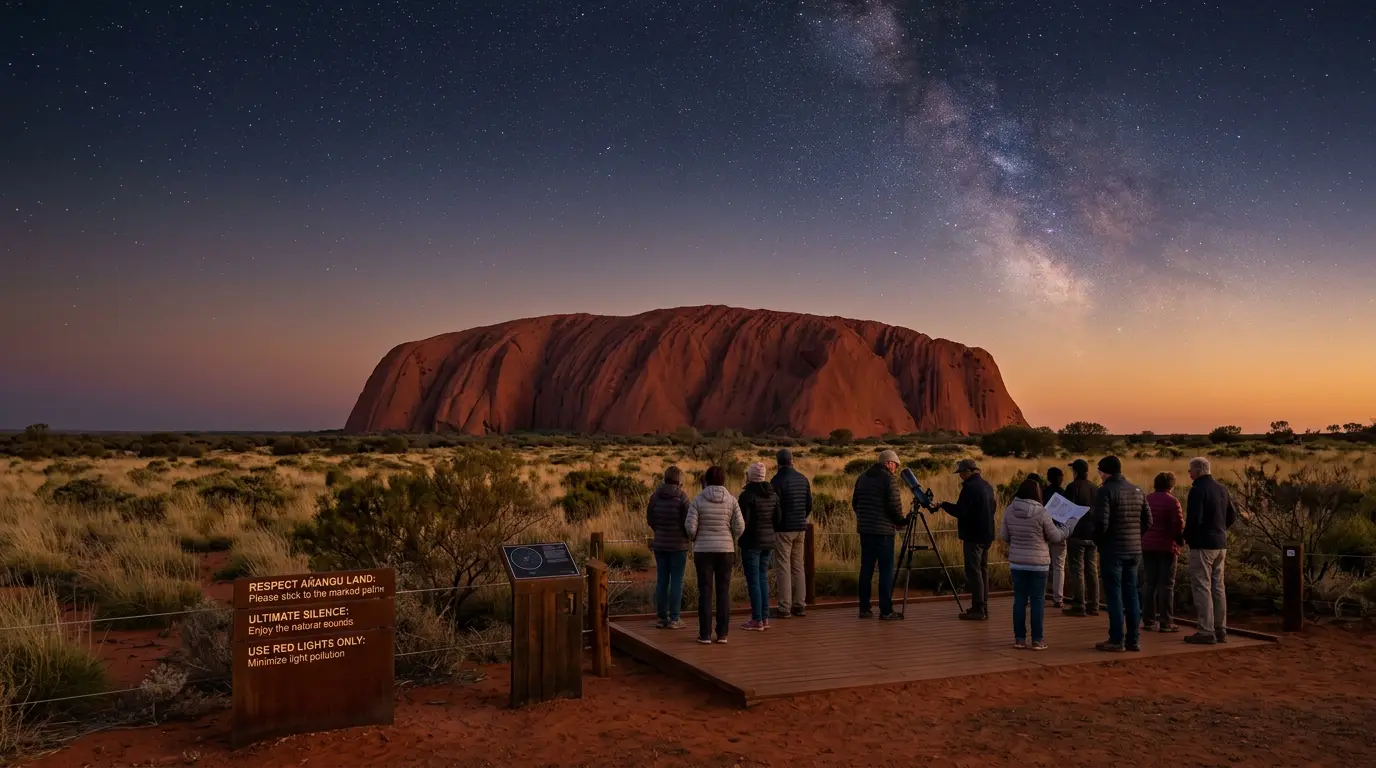
Featured · Article
Uluru Cultural Significance and Visitor Etiquette
Uluru is Anangu land under joint management. Here's why the 2019 climb closure is settled policy, what you can't photograph, and real visitor etiquette.
Exactly how much cold-weather gear earns a spot shifts with the season. Winter nights call for the full layering system; summer nights need less of it but still more than a single jacket. What doesn't change is the underlying logic: Uluru's desert punishes a packing list built for only one half of the day. Pack for the swing, keep the layering system close at hand once the sun drops, and let the checklist above do the rest of the thinking before you've even landed. The reward for getting it right is standing under a genuinely dark sky, comfortable enough to actually enjoy it rather than counting down the minutes until you can get back to the car.