Joshua Tree's Real Packing Problem: One Trip, Two Climates
Joshua Tree National Park earned International Dark Sky Park status in 2017, at the Silver Tier level[1]. That's the sky worth the drive: a genuinely dark stretch of Mojave and Colorado desert about two hours from Los Angeles, inside Joshua Tree National Park. What most packing advice skips is the climate you're driving into to see it.
Joshua Tree's weather doesn't sit still. The National Park Service is blunt about the range: conditions here can swing from blistering heat to freezing cold, with gale-force wind, heavy rain, and even snow depending on season and where in the park you're standing[2]. Summer daytime heat is serious enough that hikers are told to avoid the hottest hours, take shade breaks, and carry plenty of water[3]. The desert doesn't cool off gently once the sun drops. It lets go of the day's heat fast, and a clear, moonless sky, exactly the kind you came for, means nothing is trapping that warmth near the ground once dark falls.
2017
That's the packing problem this list solves. Not a multi-day, no-cell-service survival kit built for a week deep in the backcountry, but a quick-trip kit: what covers one hot afternoon and one cold, clear night in the same daypack, for a visit that runs a weekend rather than a week.
Layering for a Fast Day-to-Night Swing
Skip the idea of packing for "desert weather" as one single thing. You're really packing for two: an afternoon hot enough to matter, and a night sky vigil cold enough to end the trip early if you're underdressed. Joshua Tree's high desert elevation is a big part of why the gap between afternoon and after-dark feels so much larger than a daytime forecast alone would suggest, even without pinning that gap to one precise number.
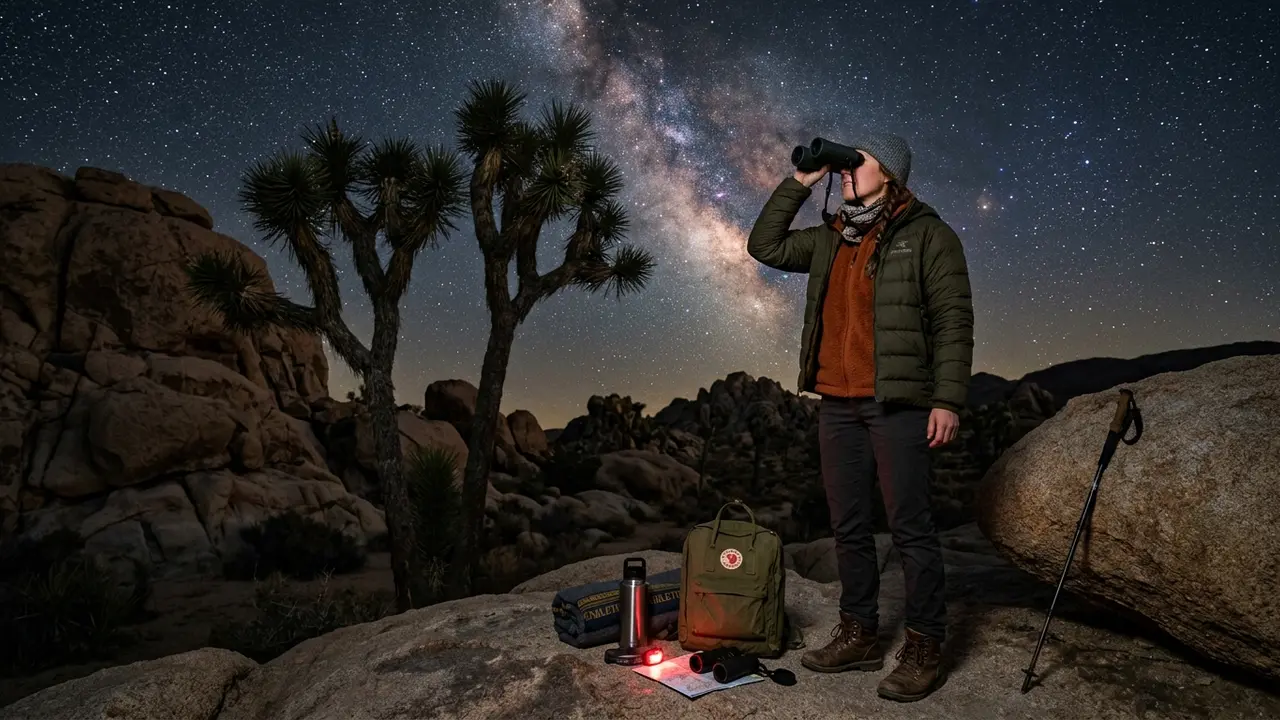
A simple three-layer system covers most of the swing. Start with a moisture-wicking base layer, worn or just carried, since a shirt soaked through from afternoon heat turns cold and clammy fast once temperatures drop. Add a fleece or light insulated mid layer for the hour after sunset, when the day's warmth is still bleeding out of the rock and sand around you. Then a packable, windproof outer shell, since even a mild desert breeze cuts hard once you're standing still at a stargazing pullout instead of moving on a trail.
Featured · Destination
Joshua Tree National Park
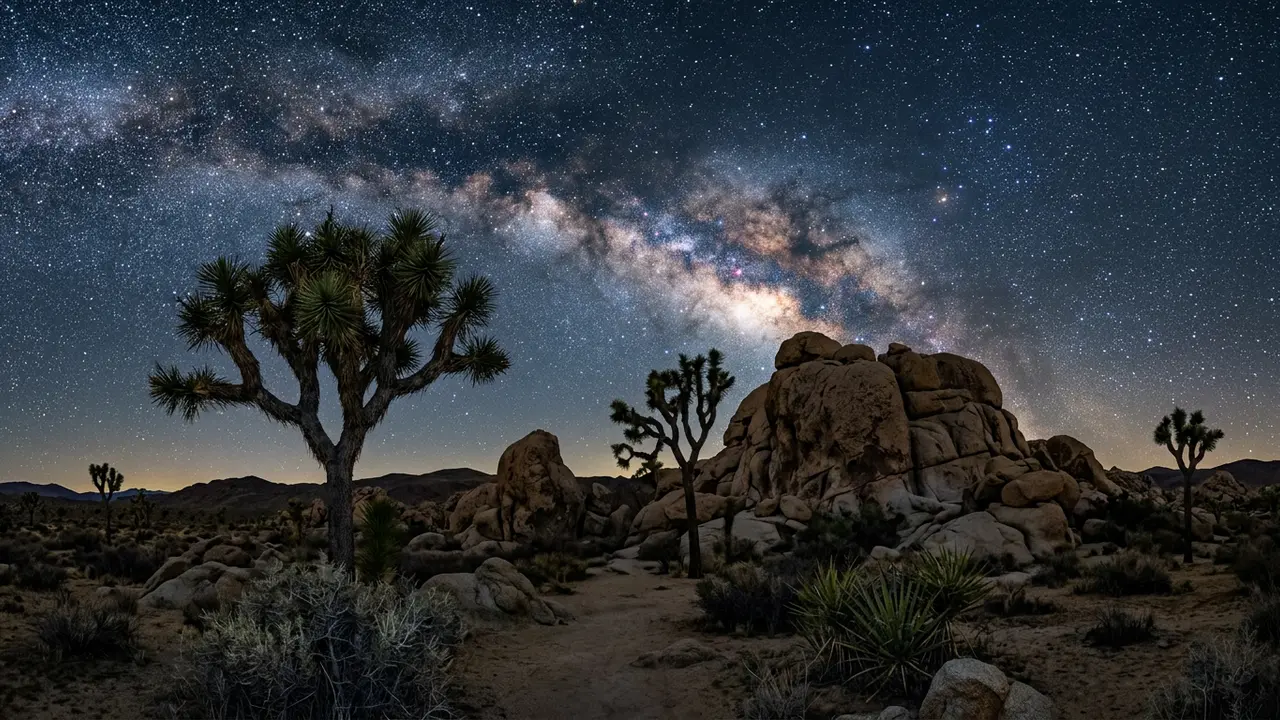
Joshua Tree earned International Dark Sky Park status in 2017, just two hours from LA. Here's where to see the Milky Way, dodge crowds, and stay the night.
- A breathable short- or long-sleeve layer for the hot part of the day
- A fleece or light puffy jacket for the after-sunset cooldown
- A windproof shell, packed small enough to live in the daypack all day
- A warm hat and light gloves, worth carrying even if the evening starts mild
- Long pants once the sun is down, for warmth and for brushing past cactus and yucca in the dark
None of this needs to be expedition-grade. It needs to take you from short sleeves at four in the afternoon to a hat and shell a few hours later, without a trip back to the car in between.
Water, Food, and the No-Services Reality Inside the Park
This is the part of a packing list that a remote backcountry guide would treat as survival prep. For a weekend stargazing trip to Joshua Tree, it's mostly logistics, but logistics that catch first-time visitors off guard. There are no places to get food, gas, water, lodging, or other services once you're past the entrance gate[4]. Only two campgrounds in the entire park, Black Rock and Cottonwood, have water fill stations[5], and a common rule of thumb among desert hikers is to carry roughly one to two gallons of water per person per day.
Water matters most, and more of it than a normal day hike, especially if you're out during the hot part of the afternoon before your night session even starts. Bring it from outside the park; don't count on refilling once you're in, since the two campgrounds above are the only exception in the entire park.
There are no gas stations, no restaurants, and no other services once you're past the entrance gate.
Food and gas work the same way. Twentynine Palms, home to the park's North Entrance[6], along with the nearby towns of Joshua Tree and Yucca Valley, are where you fill the tank and grab dinner, since none of that exists past the gate. Cell service is spotty at best once you're inside, so download directions and any stargazing apps before you leave town rather than counting on a signal to bail you out.
For a weekend trip built around one or two nights of stargazing, the practical move is simple:
- Fill the gas tank in town before you drive in, not after (see Getting to Joshua Tree for the routes in from LA and Palm Springs)
- Pack a full water supply, plus a bit more than you think you'll need for one hot afternoon
- Bring dinner or a cooler rather than planning to eat inside the park
- Treat the visitor centers, not the park's interior, as your last stop for anything you forgot
A weekend trip doesn't need a week's worth of supplies. It needs enough for the one hot afternoon and one cold night you're actually staying for.
Red Light, Night Vision, and Dark-Sky Etiquette
A regular white flashlight, or a phone screen at full brightness, undoes twenty minutes of your eyes adjusting to the dark in about two seconds, and it does the same thing to everyone else standing near you at a stargazing pullout. A headlamp with a red-light mode is the single cheapest, most useful thing in this bag: it lets you read a map, find a dropped lens cap, or walk back to the car without ruining your night vision or anyone else's.
This isn't just personal comfort. Dark-sky etiquette around Joshua Tree specifically encourages red flashlights[7] and shielded lamps to cut light pollution, part of the same community lighting partnership tied to the park's Dark Sky designation[9]. The towns just outside the boundary have agreed to lighting standards to help protect the rating; the least a visitor can do is not undo that with a bright white beam pointed at the sky.
Recommended tours
Tours are selected for quality, not commission. I earn a small fee if you book — at no extra cost to you.
A few small habits round this out. Keep a phone on its dimmest setting or a red-light mode if it has one, and hold off checking it at all if you can manage. If you're in a group, agree on red light only before anyone gets out of the car, since one bright white headlamp ruins the adjustment for everyone standing nearby, not just for the person holding it.
Binoculars Over a Telescope, and the Apps Worth Downloading
A telescope isn't the first piece of gear a weekend visitor needs. Setup time, the learning curve of aligning it in the dark, and the extra weight in the trunk all cost more than they pay back on a single-night trip — a guided outing like Joshua Tree Excursions' night tour hands you a telescope already set up rather than adding one to the packing list. A pair of 7x50 or 10x50 binoculars does more for less effort: a wide enough field of view to sweep the Milky Way's dust lanes, light enough to hang around your neck all evening, and zero setup time once you're parked at Cap Rock or Hidden Valley.
A stargazing app, downloaded and tested at home before you lose signal in the park, earns its spot too. Point a phone at the sky and an app like Stellarium or SkyView names what you're looking at in real time, useful for a first-timer who can find the Big Dipper but not much else. Set the app's night mode or a red-tinted screen filter before you go, so checking it doesn't cost you the same night vision the headlamp is trying to protect.
| Tool | Best for a weekend trip | Trade-off |
|---|---|---|
| Binoculars (7x50 or 10x50) | Wide views of the Milky Way's dust lanes, zero setup time | No magnified detail on planets or star clusters |
| Stargazing app (Stellarium, SkyView) | Naming what you're looking at in real time | Screen brightness costs night vision unless dimmed |
| Telescope | Detailed views of planets and star clusters | Setup time and weight rarely pay off on a single night |
Cold and continuous screen use both drain a phone battery faster than a normal day out, so a portable charger is worth the extra ounce in the bag, especially if the app and a camera are both running off the same phone. For a kit that goes beyond binoculars and a phone, Joshua Tree astrophotography gear covers what to add for actually photographing the sky rather than just looking at it.
When to Go and Where to Point Your Gear
The Milky Way's bright core is at its highest and brightest on moonless summer nights, roughly late spring through early fall, so a weekend trip timed around a new moon in that stretch gives you good odds without any special gear at all. Outside that window, winter nights trade the galactic core for Orion, Sirius, and the rest of the brighter winter sky, still worth the trip, just a different view overhead.
The park maintains four officially designated stargazing areas: the parking lots at Quail Springs, Hidden Valley, Cap Rock, and Ryan Mountain, with Pinto Basin recommended separately for having the darkest skies in the park[8]. None of them require a permit beyond the standard park entrance fee, and none of them demand more gear than what fits in the daypack you've already packed.
Featured · Article
What Is Astrotourism? The Complete Beginner's Guide
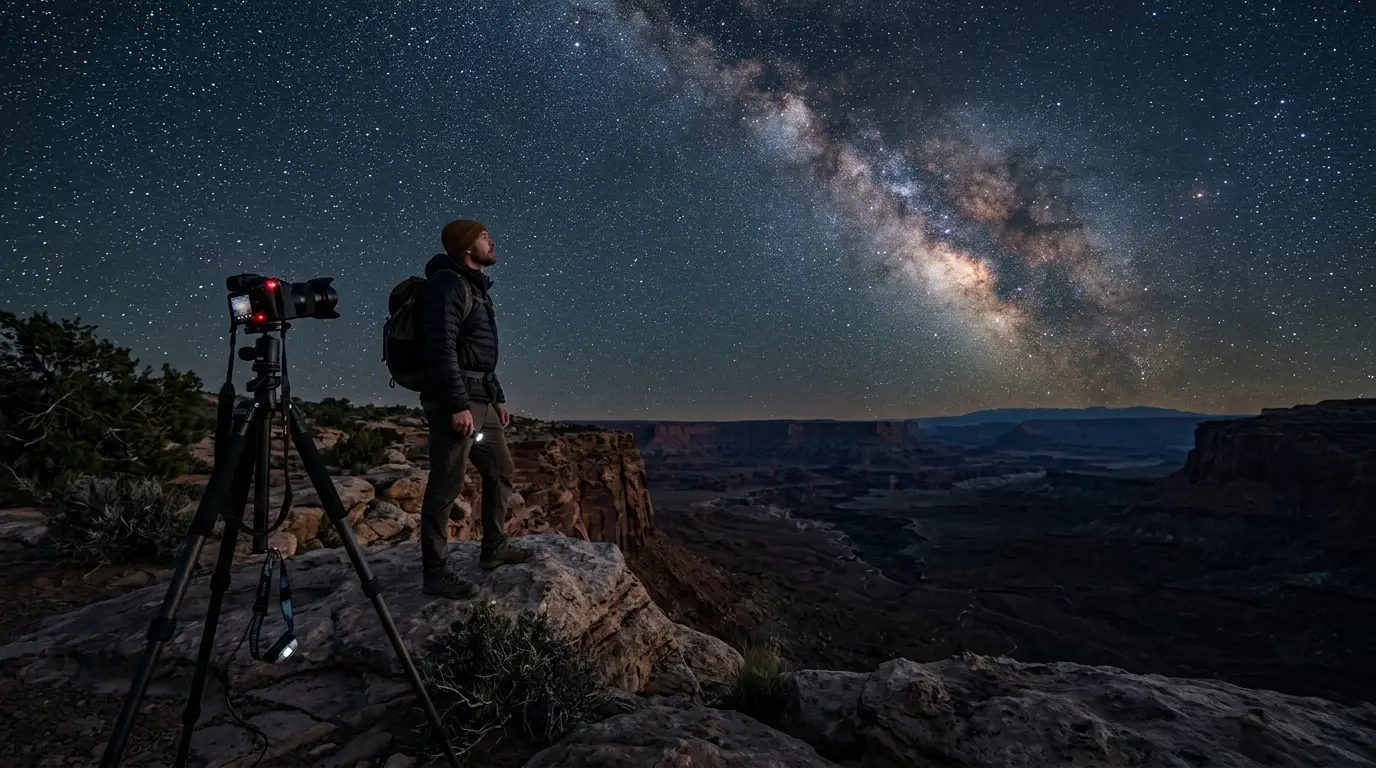
Astrotourism means travel built around dark skies: meteor showers, auroras, the Milky Way. What it means, where to go, and how to plan your first trip.
That's really the shape of a Joshua Tree weekend: pack for a scorching afternoon and a cold, clear night, bring in your own water and fuel, protect your night vision with a red light, and let binoculars and a star-chart app do the work a telescope would only slow down. For picking the right week to go, see best time to stargaze in Joshua Tree; for a spot-by-spot breakdown of all four areas, see best stargazing spots in Joshua Tree.