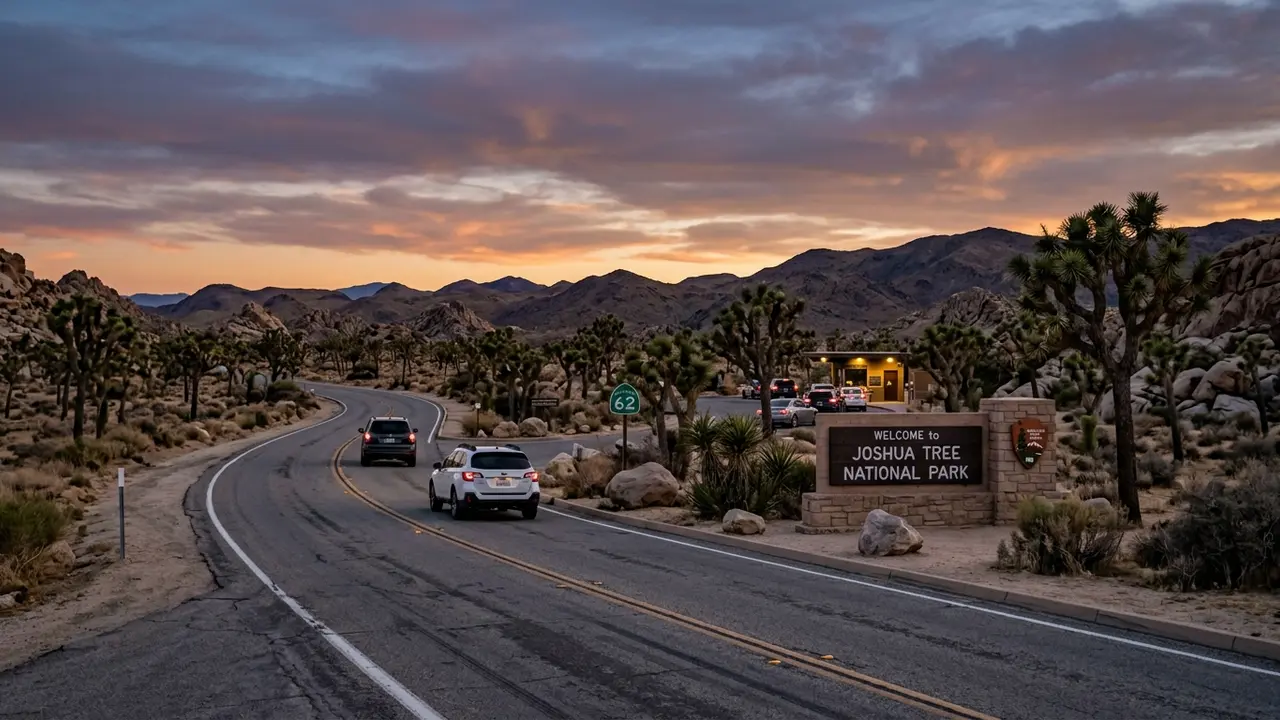

The Short Answer: You Drive to Joshua Tree
Start with what Joshua Tree doesn't have. There's no train station, no interstate bus route, and no airport within the park boundary. The National Park Service is direct about the gap: public transportation to the park is limited, and the agency points visitors toward the Morongo Basin Transit Authority for the handful of local bus routes that exist[1].
For nearly everyone, that means arriving by car. The National Park Service names Palm Springs as the closest airport to the park[2], and once you've landed anywhere in the region, a rental car isn't optional: there are no shuttle buses inside Joshua Tree and no public transit reaching its overlooks, so you will need your own car regardless of which airport you fly into[3].
The most direct route for most visitors is also the simplest to plan around. The straight-line drive from Los Angeles covers about 143 miles (230 km) and takes roughly 2 hours 29 minutes in normal traffic via I-10 East[4], a Friday-evening drive, not a flight-and-connect ordeal.
143 miles
Flying In: Which Airport Gets You There Fastest
Multiple airports serve the region, and picking the right one changes the last leg of the trip more than anything else in the planning process.
Palm Springs International Airport (PSP) sits closest to the park, about 43 miles from the West Entrance and roughly a 1-hour drive[5]. It carries fewer nonstop routes than the bigger California airports, but for anyone flying from a West Coast hub, it cuts the drive down to almost nothing.
Ontario International Airport (ONT), about 93 miles from the West Entrance, adds roughly 1 hour 45 minutes of driving[6] in exchange for more flight options and often lower fares than Palm Springs.
Further out, LAX sits nearly 150 miles from the West Entrance, a drive of 3 hours or more[7] once traffic through the Inland Empire is factored in. San Diego International Airport (SAN) runs about 170 miles from the same entrance, close to a 3-hour drive[8]. And for visitors flying into Las Vegas, the drive to the North Entrance runs roughly 180 miles, 3 to 3.5 hours depending on traffic through the Mojave[9].
Whichever airport you land at, the same rule applies: budget for a rental car before you book the flight. None of these airports connect to the park by shuttle or rideshare coverage.
| Airport | Distance from West Entrance | Drive time |
|---|---|---|
| Palm Springs (PSP) | 43 miles | About 1 hour |
| Ontario (ONT) | 93 miles | About 1 hour 45 min |
| LAX | Nearly 150 miles | 3 hours or more |
| San Diego (SAN) | 170 miles | About 3 hours |
| Las Vegas (LAS) | About 180 miles to the North Entrance | 3 to 3.5 hours |
The Three Entrances, and Which One Fits Your Route
Joshua Tree has three entrances, and which one makes sense depends entirely on where you're driving from.
The West Entrance, the park's main gate, sits five miles south of the Highway 62 and Park Boulevard junction at Joshua Tree Village[10]. It's the busiest of the three and the natural choice for anyone approaching from Los Angeles, San Diego, Palm Springs, or Orange County.
The North Entrance sits in Twentynine Palms, three miles south of the Highway 62 and Utah Trail junction[11], the entrance most travel-blog guides recommend for Las Vegas arrivals since it sits closest to the route down from Nevada.
Featured · Destination
Joshua Tree National Park
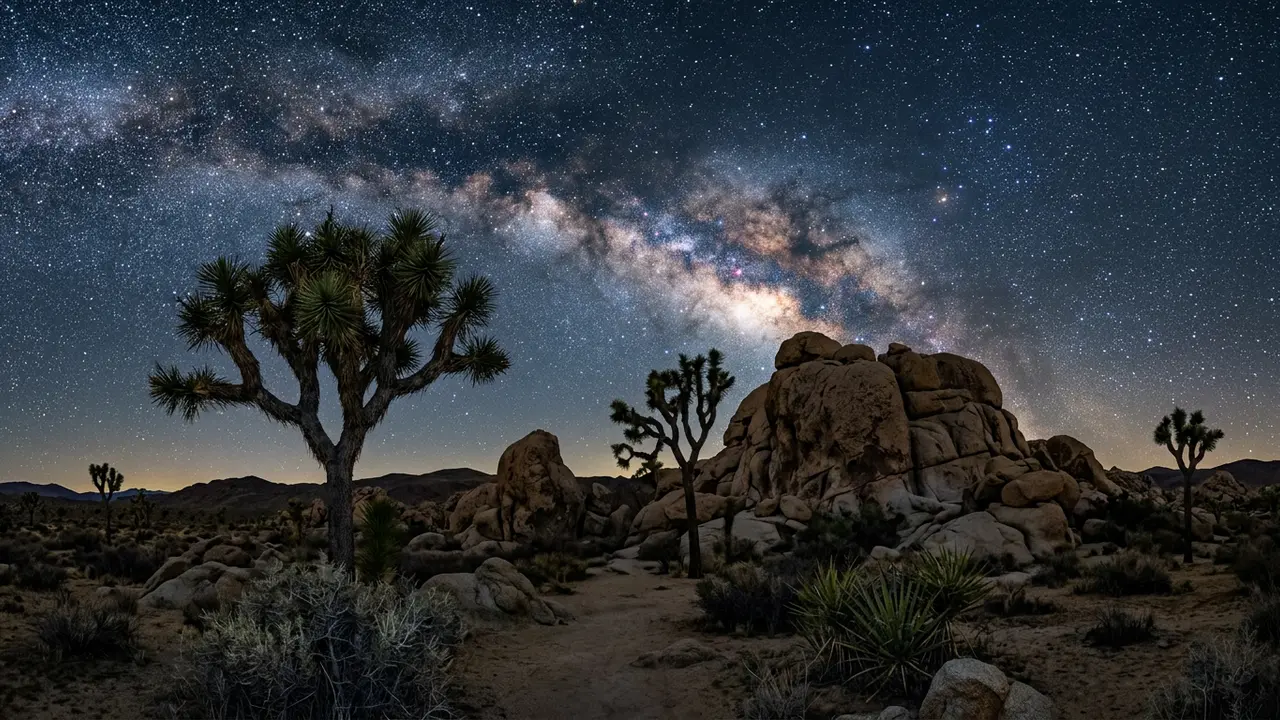
Joshua Tree earned International Dark Sky Park status in 2017, just two hours from LA. Here's where to see the Milky Way, dodge crowds, and stay the night.
The South Entrance, near Cottonwood Spring, runs along Interstate 10 about 25 miles east of Indio[12]. It's the quietest of the three, and the obvious pick for anyone driving in from Phoenix or eastbound along I-10.
- West Entrance: Los Angeles, San Diego, Palm Springs, Orange County
- North Entrance: Las Vegas, Twentynine Palms
- South Entrance: Phoenix, Indio, eastbound I-10 traffic
That routing split isn't an NPS-published rule so much as a practical consensus across guidebooks and park-adjacent camping sites, a sensible default, not a hard requirement. Nothing stops a San Diego visitor from entering through the South gate if that's where the trip is already headed, and once you're through whichever gate, Joshua Tree National Park covers where to actually stargaze once the drive is over.
Driving In From Los Angeles, Palm Springs, and the Inland Empire
For most visitors, this is the whole trip: get in the car in Los Angeles or Palm Springs and drive straight to the park.
From LA, the route runs almost entirely on I-10 East, past Ontario, Redlands, and the wind farms outside Palm Springs, before Highway 62 peels north into the desert toward Joshua Tree Village and the West Entrance. Traffic through the Inland Empire is the one variable worth building slack around: what's a clean 2 hour 29 minute drive[4] outside rush hour can stretch past three and a half hours on a Friday evening, the exact window most weekend visitors are trying to leave in.
Recommended tours
Tours are selected for quality, not commission. I earn a small fee if you book — at no extra cost to you.
Palm Springs cuts nearly all of that away. Sitting 43 miles from the West Entrance[5], it's less a gateway city than a shortcut, close enough that a night in a Palm Springs hotel before an early drive to the gate is a genuinely reasonable plan, not a compromise. Whether that convenience is worth trading for a darker sky closer to the North Entrance is exactly the call where to stay for Joshua Tree stargazing walks through.
Coming from Orange County or the South Bay adds some time onto the LA baseline, the exact amount depending on the freeway interchange used, but the destination doesn't change: everyone converging from this direction funnels through the same West Entrance at Joshua Tree Village.
Driving From San Diego and Las Vegas
San Diego and Las Vegas anchor the two ends of Joshua Tree's reach, one from the coast, one across the desert, and both work as a long day trip or an easy weekend if the schedule allows.
From San Diego, the airport-to-entrance figure is the most reliable number available: about 170 miles and close to a 3-hour drive[8] from San Diego International Airport to the West Entrance. Driving city to city rather than airport to gate lands in a similar range, though the exact figure varies a little by source and route, so treat any number tighter than "about three hours" with a little skepticism.
Las Vegas sits on the opposite side, feeding the North Entrance at Twentynine Palms. The airport-to-entrance drive runs roughly 180 miles, 3 to 3.5 hours[9] depending on traffic through the Mojave. Again, city-to-city estimates land close to that figure without matching it exactly, close enough that the planning takeaway doesn't change: block out a half-day for the drive either direction.
Featured · Article
What Is Astrotourism? The Complete Beginner's Guide
Astrotourism means travel built around dark skies: meteor showers, auroras, the Milky Way. What it means, where to go, and how to plan your first trip.
Neither route offers a shortcut. What both share with the LA and Palm Springs approaches is the same bottom line: there's no way into Joshua Tree that doesn't run through a rental car and a real highway, so book the room to match whichever entrance you're aiming for; the best stargazing lodges near Joshua Tree breaks down the closest options to each one.
Why Joshua Tree Is the Easiest Dark-Sky Trip in This Guide
Set this access picture against most of the other International Dark Sky Places worth traveling for, and Joshua Tree looks almost effortless by comparison. Reaching a genuinely dark reserve often means a regional flight, a long unpaved drive, or both; Joshua Tree asks for a rental car and a highway that's paved the whole way, no permit required beyond the standard park entrance fee.
That accessibility is the whole differentiator. A park with a Silver Tier International Dark Sky Park designation, two and a half hours from one of the largest metro areas in the country, is a rare combination: most sites with skies this dark sit far enough from a major city that a weekend trip means burning a full vacation day just on transit. Joshua Tree turns the same trip into a Friday-night drive and a Sunday-afternoon return.
None of that changes the two practical facts worth repeating before booking anything: there's no public transit into the park, and no shuttle once you're inside it. Bring a full tank of gas, a rental car reservation, and a plan for which of the three entrances matches your route. Before you go, the Joshua Tree stargazing packing list covers what to load into that rental car for a desert night. For the question that naturally follows once the drive is sorted, how long to actually stay, see how many days to spend in Joshua Tree.