
A Silver Tier Sky Is Not a Promise for Tonight
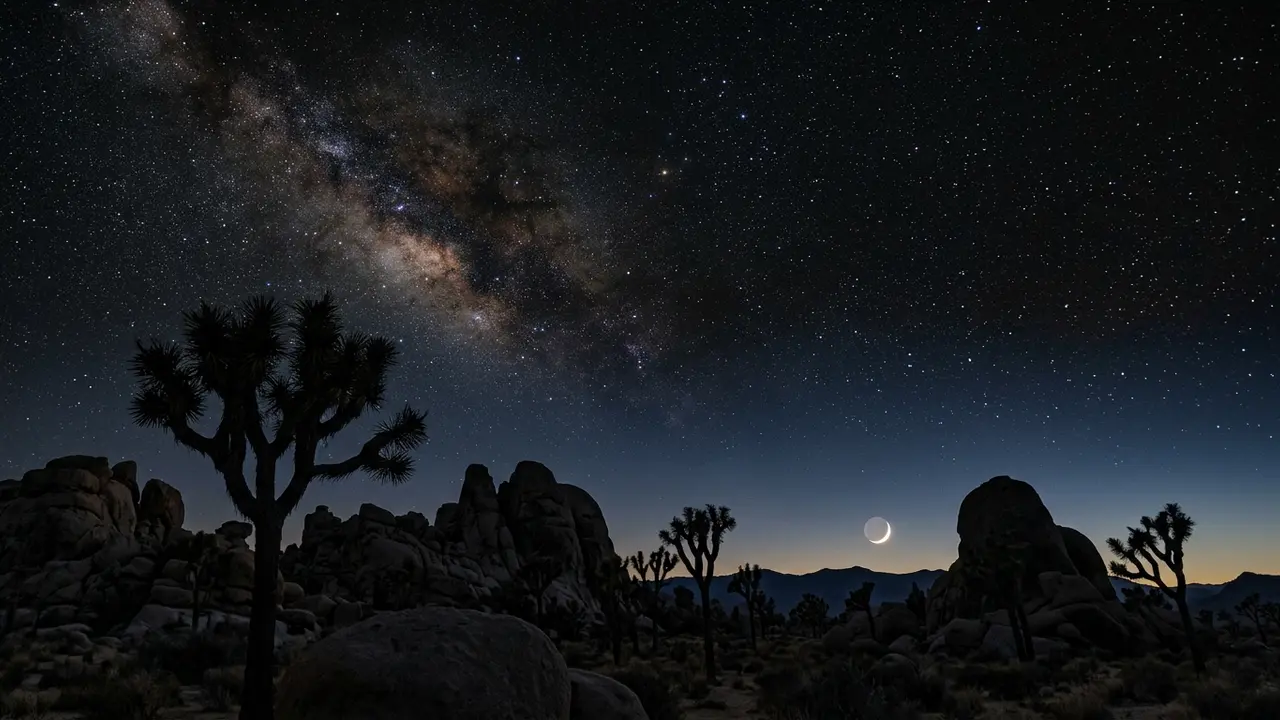
Joshua Tree National Park earned International Dark Sky Park status in 2017, at the Silver Tier level[1], a rating the National Park Service is specific about the limits of. The Milky Way is at its best on a moonless summer night[2], which names two separate conditions, not one. A Silver Tier designation means the park's ambient light pollution is managed and low. It says nothing about whether a monsoon cell rolls in on the particular Tuesday you drove three hours to get there.
Location inside the park matters too. Light pollution from surrounding communities still reaches Joshua Tree's skies, so some areas of the park are meaningfully darker than others[3], a detail my explainer on what's actually washing out the sky covers in more depth. Stargazing in Joshua Tree National Park covers the park's dark-sky case in full; this piece covers the part most trip-planning guides skip past: how to actually check, in the days and hours before you drive out, whether the sky is going to cooperate.
Three tools do that job, each answering a different question:
- A specialized Clear Sky Chart built for astronomers, showing cloud cover, transparency, and seeing several days out
- A standard National Weather Service zone forecast for the park's own coordinates, useful same-day
- The moon phase for your specific travel date, checked against the season
None of this is unique to Joshua Tree. Every dark-sky destination worth the drive lives under the same three unknowns: cloud, moonlight, and whether the patch of sky you're under is actually pointed away from a city's glow. Joshua Tree's boulder-strewn horizon just makes the payoff worth checking for.
Reading Joshua Tree's Clear Sky Chart
The Clear Sky Chart is the most useful single tool for a short-range forecast here, and it isn't a general weather site repurposed for astronomers. It predicts hourly cloud cover, atmospheric transparency, and seeing[4], the three numbers that actually matter for a night at the eyepiece, built from a model developed by Allan Rahill of the Canadian Meteorological Center[5], not the general-purpose models behind a typical weather app.
Two charts cover the park: one centered on the Joshua Tree Astronomy Arts Theater, near the town of Joshua Tree itself, and a second centered on Jumbo Rocks, the popular dark-sky campground deeper inside the park boundary. Which one to check depends on where you plan to stand: the town-adjacent chart suits a visit centered on the West Entrance, and the Jumbo Rocks chart suits anyone staying near that campground.
96 hours
The chart's real limitation is its horizon: it shows conditions at a glance for the next 96 hours[6], so it's only worth checking within three or four days of a planned trip. Bookmark it earlier than that and you'll just be refreshing a forecast that hasn't been generated yet.
Three rows carry the real information, each on a color scale running from dark blue to white:
- Cloud Cover: dark blue for clear, white for overcast
- Transparency: water vapor in the air, which matters most for faint targets like galaxies and nebulae
- Seeing: atmospheric steadiness, the factor that blurs fine planetary detail at high magnification
A dark-blue Cloud Cover row on your travel date is the number worth checking first.
Cross-Checking the NWS Zone Forecast in Monsoon Season
The Clear Sky Chart covers several days out, but it's worth cross-checking against the standard National Weather Service zone forecast for the park's western zone, rather than the nearest town's forecast. The hourly breakdown that comes back is useful in the hours right before you actually drive out to a viewing area, especially once you're within a day of travel.
That cross-check earns its keep most between July and September, when summer monsoons bring nearly all of the park's warm-season rain[7]. It's the park's real seasonal risk window: a monsoon cell can build over the mountains in the afternoon and clear completely by full dark, or it can stall and ruin the whole evening, and only a same-day zone forecast tells you which. A cell that stalls over the mountains to the west can soak the park's western half while the Colorado Desert section, to the south and east, stays dry the same night, one more reason to check a zone forecast rather than assume a single number covers the whole park.
Featured · Destination
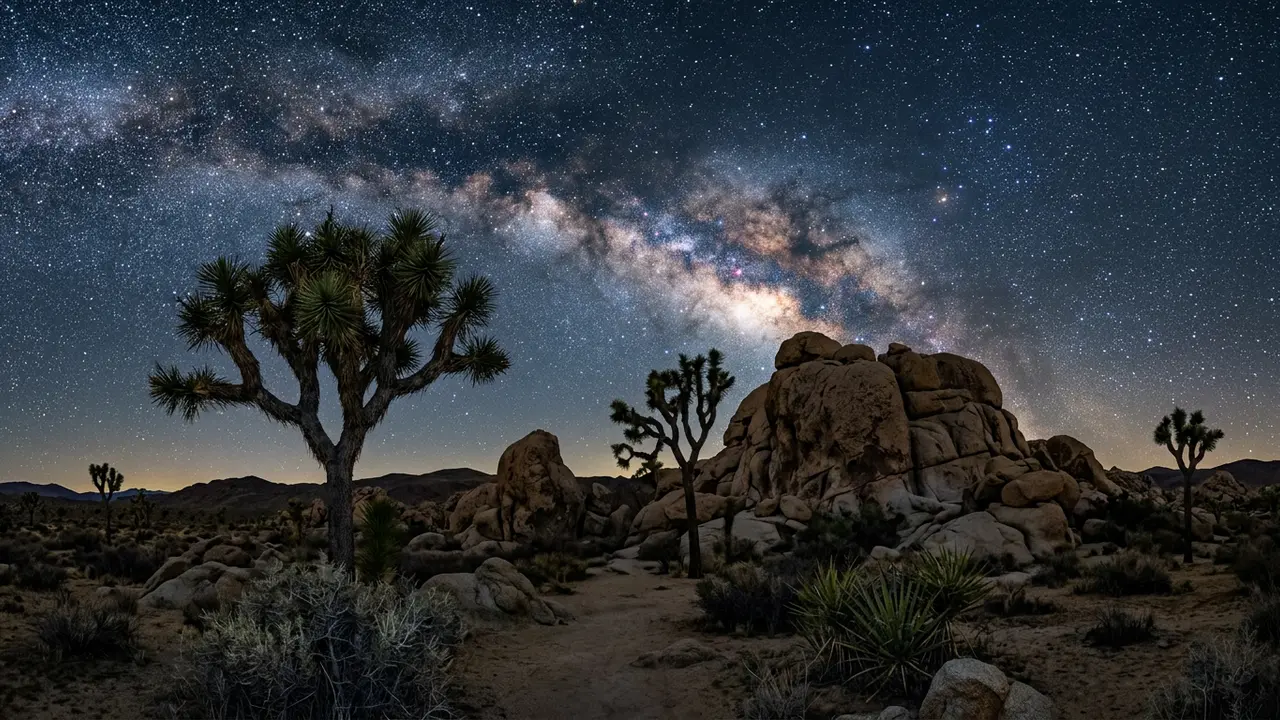
Joshua Tree National Park
Joshua Tree earned International Dark Sky Park status in 2017, just two hours from LA. Here's where to see the Milky Way, dodge crowds, and stay the night.
Outside monsoon season, the odds tilt heavily in a visitor's favor. Humidity at Joshua Tree typically runs under 30 percent[8], and clear skies dominate most of the year, with cloud cover mainly showing up during occasional winter storm systems[9]. That's a genuine advantage over more humid dark-sky destinations, but it's a seasonal average, not a guarantee for any specific night.
Timing a Visit Around the Moon
None of the above matters if the moon phase washes out the sky. NPS says it plainly: bright moonlight reduces the number of stars you'll see, so check the moon's phase and rise and set times before planning a visit[10]. The best time to stargaze in Joshua Tree covers which months favor the Milky Way's galactic core against winter's longer dark window in full detail; the piece worth adding here is the mechanics of checking moon phase for your actual travel dates against that seasonal picture.
Recommended tours
Tours are selected for quality, not commission. I earn a small fee if you book — at no extra cost to you.


Winter has one underrated advantage worth building into the moon math: in December, sunset can come as early as 4:30 p.m., with full dark by 5 p.m.[11], which buys a longer viewing window before a reasonable bedtime than any summer night offers. Pair an early winter sunset with a new moon week and the darkness starts early and holds.
For astrophotographers, that new-moon window matters even more: a wide-field Milky Way shot needs the sky as dark as the park gets, and the difference between a first-quarter moon and true darkness shows up immediately in a long exposure.
A moon-phase calendar for the destination tells you, in seconds, how many nights of real darkness a given week offers, no memorizing a lunar cycle required.
Three Forecasts, One Trip: Putting Them Together
Checking one of these three tools in isolation leaves a gap the other two exist to close. The Clear Sky Chart tells you the shape of the sky several days out. The National Weather Service zone forecast sharpens that picture down to the hour once you're within a day of travel. The moon-phase calendar tells you whether a clear sky will actually be a dark one. Run all three together and the picture that comes back is closer to what you'll actually see standing at Keys View or Cap Rock than any single check would give you.
Skip any one of the three and the gap shows up exactly when it's least convenient: a clean five-day outlook that ignores an afternoon monsoon cell, or a bone-dry zone forecast that says nothing about a gibbous moon rising at eleven at night.
| Tool | What it tells you | When to check it |
|---|---|---|
| Clear Sky Chart | Cloud cover, transparency, and seeing for the next 96 hours | Three to four days before you travel |
| NWS zone forecast | Hour-by-hour sky cover and precipitation risk for the park's zone | The day of, or the morning before |
| Moon-phase calendar | How dark the sky will actually be once it's clear | As soon as you're choosing travel dates |
In practice, that means three separate looks at three separate points before a trip: the Clear Sky Chart about three or four days out, since that's the edge of its forecast window; the moon-phase calendar as soon as you're picking travel dates, since that variable doesn't change with the weather; and the NWS zone forecast the morning of, to catch a monsoon cell or a cold snap the multi-day outlook missed.
The same three-tool habit carries to any dark-sky destination on this site, not only Joshua Tree. The specific chart and the specific forecast zone change from park to park, but the sequence, moon-phase or seasonal planning first, a specialized astronomy forecast three or four days out, a standard zone forecast the morning of, doesn't.
A Pre-Trip Forecast Checklist
Put the three tools into an actual sequence and a Joshua Tree stargazing trip stops being a guess:
- Pick your travel window around a new moon, weighing Milky Way core season against winter's longer dark window, per the season-by-season guide linked above
- Check the Clear Sky Chart three or four days out, using whichever of the two park charts sits closer to where you'll actually stand
- Recheck the National Weather Service zone forecast the morning you leave, especially between July and September
- Pack for the temperature the forecast actually shows, not the season's average, bring a red-light flashlight, and give your eyes real time to adapt to the dark before judging the sky; for which viewing area suits your plan, see my guide to the best stargazing spots in Joshua Tree
None of this guarantees a clear night. A Silver Tier sky still sits under real weather, and Joshua Tree's low summer humidity is a seasonal average, not a promise for a specific date. What checking all three tools buys you instead is the difference between driving out on a hunch and driving out because three separate sources agree tonight is worth it. That's a better basis for the drive out than the calendar alone.
Featured · Article
What Is Astrotourism? The Complete Beginner's Guide
Astrotourism means travel built around dark skies: meteor showers, auroras, the Milky Way. What it means, where to go, and how to plan your first trip.