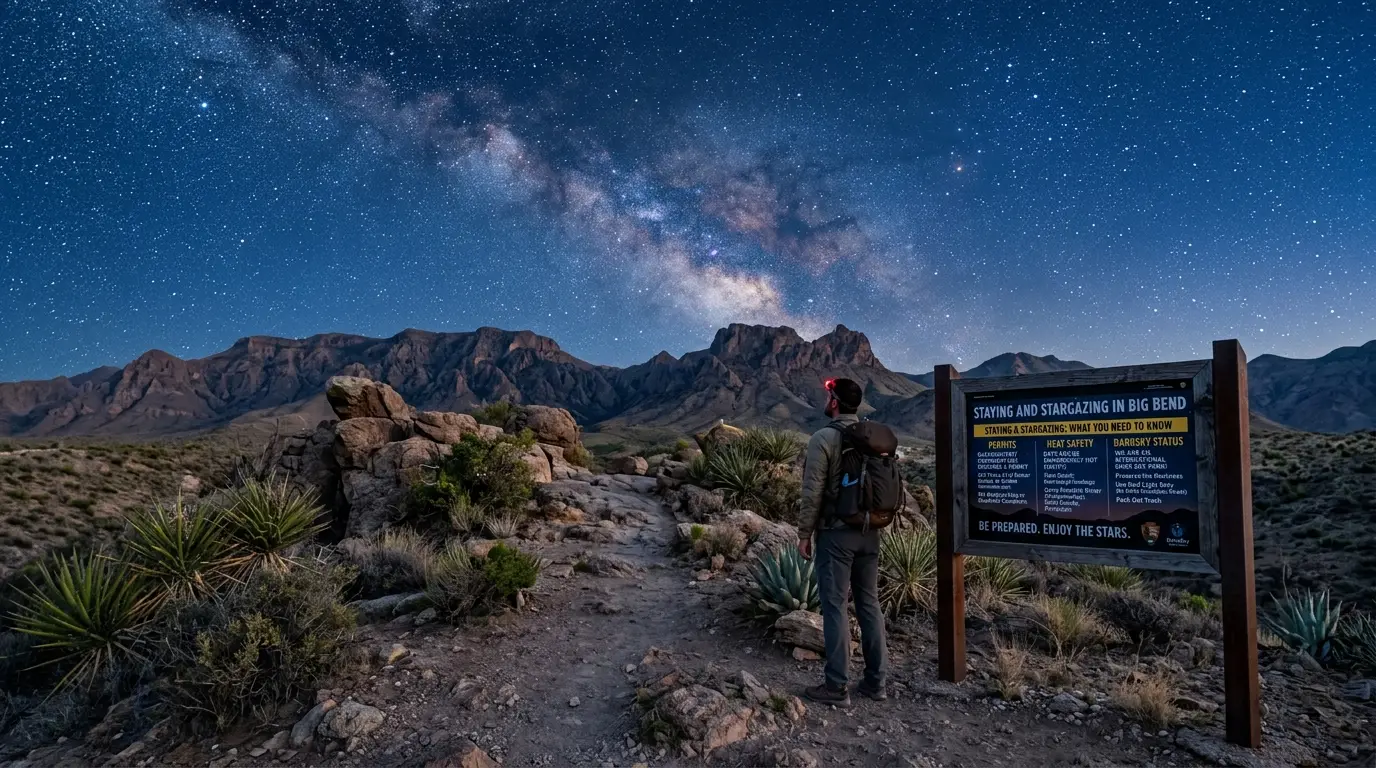
Is Big Bend Really One of the Darkest Places to Stargaze in the US?
Big Bend National Park earned International Dark Sky Park status from the International Dark-Sky Association[1], and the National Park Service goes further: it describes Big Bend's night sky as the darkest of any national park in the lower 48 states[2]. That claim comes directly from the NPS, not a marketing brochure, and it puts Big Bend in a small group of parks where "darkest sky in the country" isn't just a line repeated by travel blogs.
You'll see specific Bortle-scale numbers and acreage figures attached to Big Bend across travel sites and forums. Those specifics aren't consistently confirmed on the park's own pages, so this FAQ sticks to what NPS states outright, a lower-48 superlative for darkness, rather than repeating an unverified class rating. For the fuller picture on where the sky reads darkest inside the park, see the destination hub for stargazing in Big Bend National Park. For the Sky Quality Meter data and IDA certification behind the specific ratings that circulate online, see Big Bend's dark sky certification, explained.
Featured · Destination
Big Bend National Park
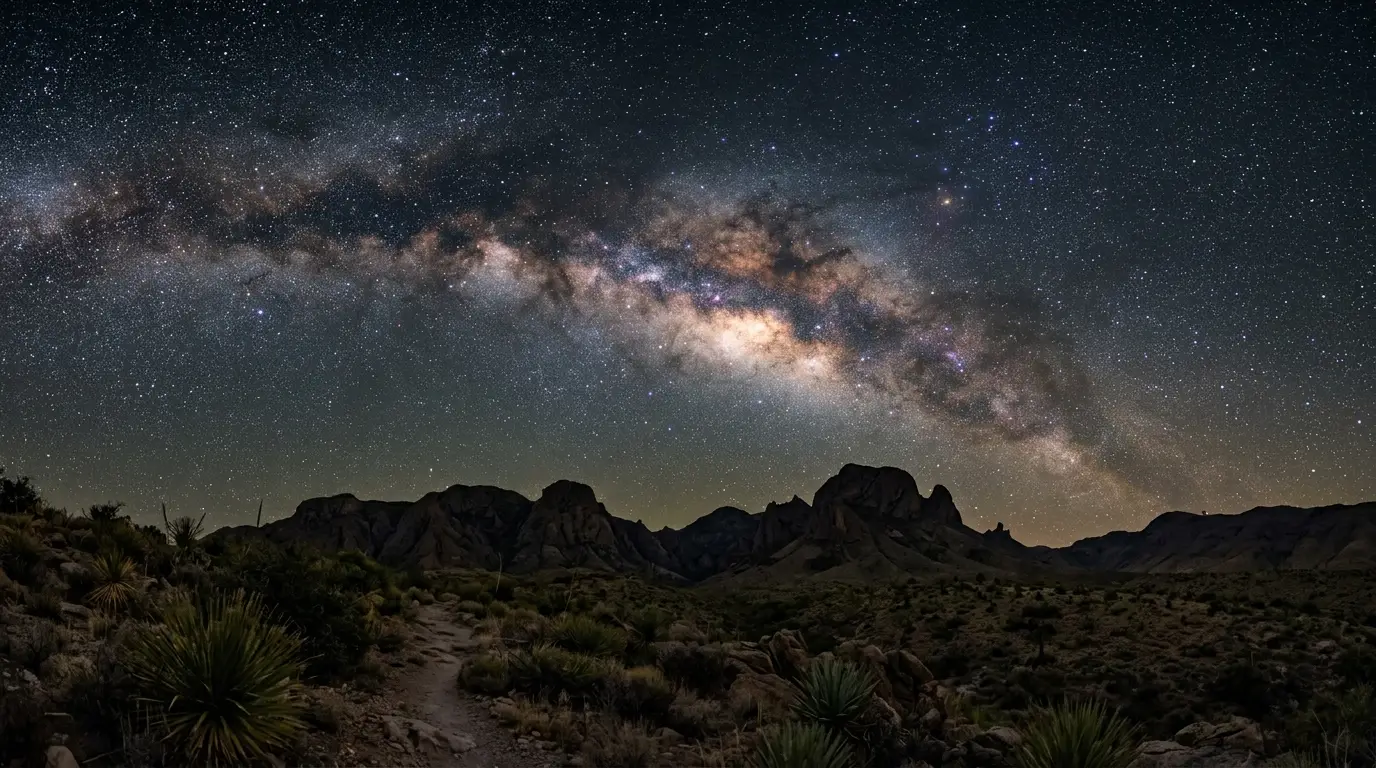
Big Bend National Park is Bortle Class 1, the darkest rating the Bortle scale has. What that dark sky rating means on the ground, and the best months to go.
What that darkness looks like on the ground: the Chihuahuan Desert setting and the park's distance from any sizeable town keep artificial light close to zero on most clear nights, at almost any pullout inside the boundary. None of that means you can skip planning. A clear, moonless night still does more for what you'll actually see than any certification on a park sign, so pair a trip here with a real moon-phase check before you commit to a date.
What Is the Best Month for Stargazing at Big Bend?
There's a real split between the most comfortable month to visit and the month with the darkest, most photogenic Milky Way core, and they don't line up. Cooler, drier conditions generally run October through April, the same stretch that is also Big Bend's peak visitation season, running November through April[3]. The easiest weather window is also the busiest one.
The Milky Way runs on its own calendar. Its core is generally most visible from March through October, brightest during the warmer months, which overlaps with the stretch when Big Bend's daytime heat turns into a real planning problem, covered in full below. Chasing the most vivid core means accepting that heat trade-off, or settling for a fainter early-spring or late-fall view instead.
| Window | What you get | Trade-off |
|---|---|---|
| October-April | Driest air and mildest temperatures; also Big Bend's peak visitation season | Best comfort, most crowded |
| March-October | Milky Way core visible, brightest in summer | Summer heat becomes genuinely dangerous, covered below |
| March-April & October | Overlap of both windows | The most balanced pick for a first trip |
For most first-time visitors, March, April, or October hit the sweet spot: cool enough at night, dry enough for clear air, and still inside the Milky Way's viewing season. For live conditions before you commit to a date, check the Big Bend stargazing forecast for moon phase and cloud cover. A new moon week in one of those three months is the tightest fit most travelers will find.
Do You Need a Permit to Stargaze at Big Bend?
Not for a standard evening at a pullout, campground, or any developed area, the spots most stargazers actually use require no permit at all. Permits enter the picture only once you go further: overnight stays in the backcountry need a Backcountry Use Permit, issued in person at the Panther Junction or Chisos Basin visitor centers, obtainable up to 24 hours before the trip[4]. Some specific campsites can also be reserved online well in advance, up to 180 days ahead, via Recreation.gov, though that reservation doesn't replace the in-person permit itself.
River use falls under the same permit, not a separate one. NPS lists overnight backpacking, primitive camping, horse or stock use, and river use together as activities that all require the same Backcountry Permit[5], so a Rio Grande trip is covered by the same paperwork as a night in the backcountry.
180
- Roadside and developed-area stargazing: no permit needed
- Backcountry camping: Backcountry Use Permit, issued in person at Panther Junction or Chisos Basin
- River use: covered by the same Backcountry Permit, not a separate river-only permit
None of this affects a normal night at a Chisos Basin or Rio Grande Village pullout. It only applies once you're sleeping in the backcountry or putting a boat on the river.
How Hot and Cold Does It Get at Big Bend for Night Stargazing?
Summer heat is Big Bend's real limiting factor, not the sky. Heat begins in May and turns extreme fast: the desert floor is usually well above 100°F by late morning, while the Chisos Mountains run 10 to 15 degrees cooler[6]. That heat doesn't fully break after dark either, so a summer stargazing trip means planning around daytime safety first, clear skies second.
Recommended tours
Tours are selected for quality, not commission. I earn a small fee if you book — at no extra cost to you.
Cooler months swing the other way, and by a lot. Spring is typically warm and pleasant, and it's the park's busiest season[7], mild enough for a light jacket rather than a parka after dark. Winter is generally pleasantly mild and usually sunny, though periods of cloudy weather and freezing cold do occur[8], enough that a clear night at Chisos Basin's higher elevation can still dip toward freezing.
- Summer (May onward): desert floor 100°F+ by late morning, Chisos Mountains ~10-15°F cooler, minimal overnight relief
- Spring: warm and pleasant, the park's busiest season, comfortable for evening stargazing
- Winter: mild and usually sunny, but freezing cold snaps do occur, pack real layers for after dark
Whatever month lands on your calendar, carry more water than feels necessary and check the specific forecast for your dates. None of this is exotic desert-park caution, it's the same math that applies at Joshua Tree vs Big Bend stargazing: dry heat feels deceptively mild until the sun's been up an hour, and it doesn't ask permission before it turns dangerous.
Is There Cell Service at Big Bend?
Barely, and don't plan around it. NPS states it plainly: cellular service is very spotty throughout the entire Big Bend area[9], with only limited, unreliable coverage even near the park's two busiest hubs, Panther Junction and Chisos Basin. Away from those two points, expect no signal at all.
That gap matters more after dark. Fewer visitors are on the roads at night, and a phone that can't call out is a real problem if a vehicle breaks down on one of the park's rougher, unpaved tracks. Before heading out for a night of stargazing:
- Download offline maps in advance
- Tell someone your planned route and return time
- Carry a paper map as backup
- Don't count on calling for help from most viewpoints
None of this is unique to Big Bend among remote national parks, but the park's size and the thinness of its road network make the gap wider than most.
Do You Need a Car to Visit Big Bend, and What Kind?
Yes, and not just any car. Big Bend is enormous, and a personal vehicle is essential since there's no public transit inside the boundary and no shuttle between overlooks, so whatever you drive in is what you'll be stargazing from. Given how much of the park sits beyond paved roads, an SUV or vehicle with real ground clearance serves you far better than a standard sedan.
A standard sedan handles the park's main paved routes fine: Chisos Basin, the visitor centers, Rio Grande Village. Where it struggles is the unpaved side roads that reach some of the park's quieter, less-crowded viewpoints; higher ground clearance matters once you leave the main road, and a rental sedan is a poor match for washboard gravel in the dark.
Featured · Article
What Is Astrotourism? The Complete Beginner's Guide
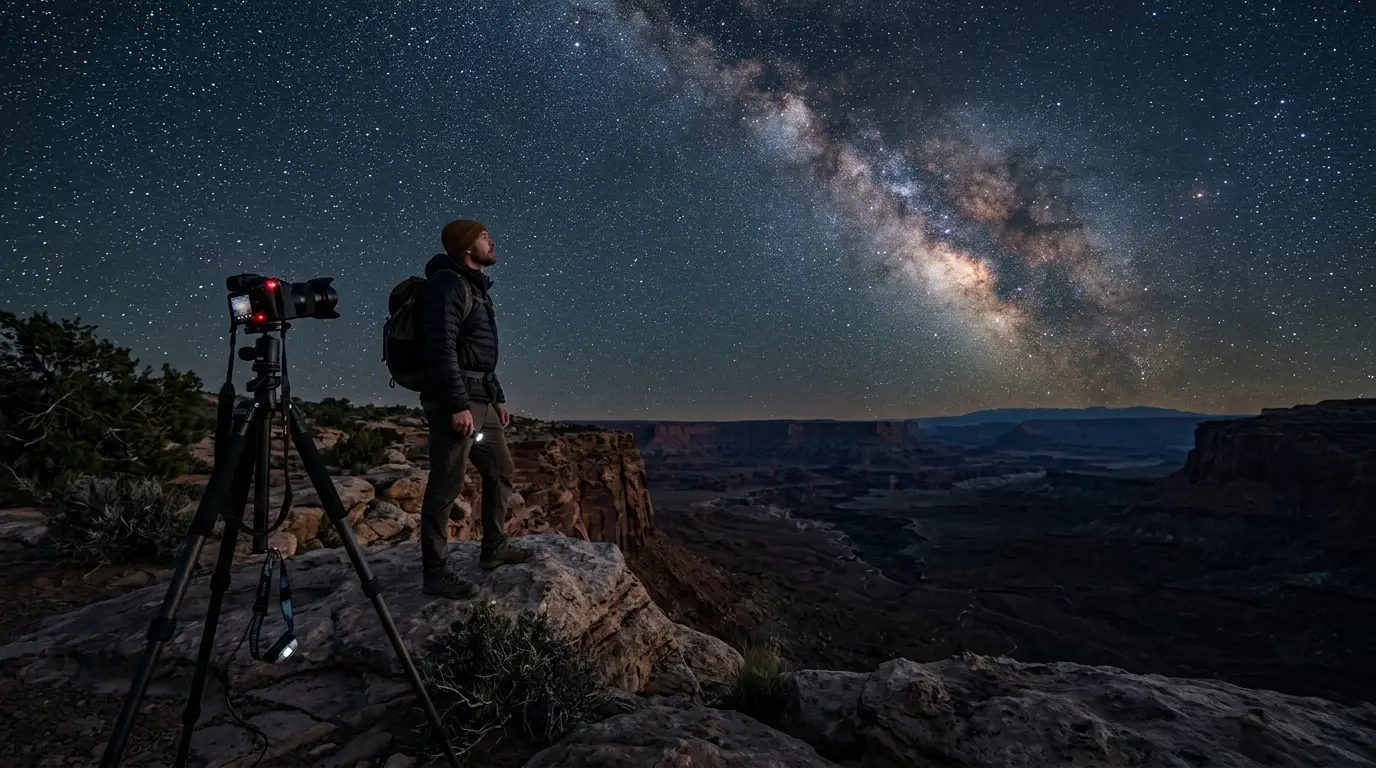
Astrotourism means travel built around dark skies: meteor showers, auroras, the Milky Way. What it means, where to go, and how to plan your first trip.
For the roadside spots worth the drive and which ones need which kind of vehicle, see the best stargazing spots in Big Bend. For the honest logistics on getting to the park in the first place, airports, drive times, and where the pavement runs out, see getting to Big Bend.