
More Than a Dark Sky: What Fills Big Bend's Daylight Hours
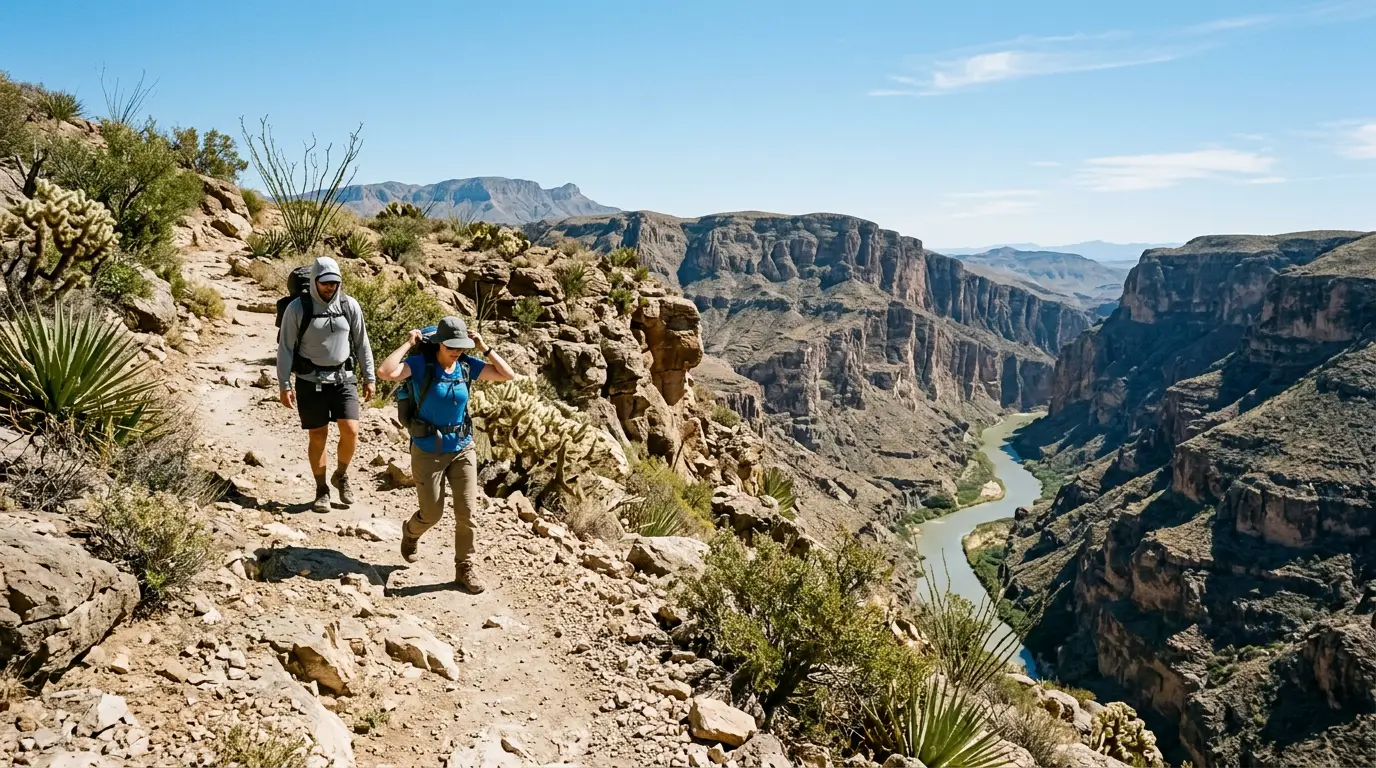
Big Bend National Park earns its reputation after dark, but the sun is up a lot longer than it's down, and the daytime side of a visit here is not an afterthought. This stretch of the Chihuahuan Desert holds around 200 miles of hiking trails[1] and another 150 miles of dirt roads[2], a natural hot spring on the banks of the Rio Grande, canyon float trips through limestone walls, and a 30-mile scenic drive that ranks among the best in the National Park System.
None of it requires giving up the night sky to get it. Hike in the morning before the heat sets in, float the river midday, and you're back at an overlook by dusk with hours of exploring already behind you. The real trade-off Big Bend asks of visitors isn't time, it's heat: through the height of summer, several of these activities turn genuinely dangerous, and planning around the cooler hours matters more here than the mileage on any map.
200 mi
This guide covers the five best day hikes, the hot spring worth the gravel-road drive, how to get on the Rio Grande by canoe or raft, the scenic drive that shows off the park's western canyons, and a curiosity 90 miles north that has nothing to do with astronomy at all. Big Bend National Park is the destination for the sky itself; this is everything else on the itinerary.
Five Trails Worth Lacing Up For
Start easy and work up, or just pick based on how much shade and water you want to carry. These five cover the full range Big Bend offers, from a wheelchair-accessible boardwalk to a strenuous ridge climb the park itself warns against in summer.
Rio Grande Village Nature Trail is the gentlest of the bunch: a 0.75-mile loop where the first 100 yards is wheelchair accessible and crosses a boardwalk through a spring-fed wetland[3], before the path climbs to a low ridge with river and mountain views. It's a good warm-up hike or a way to see the river up close without committing to something longer.
Featured · Destination
Big Bend National Park
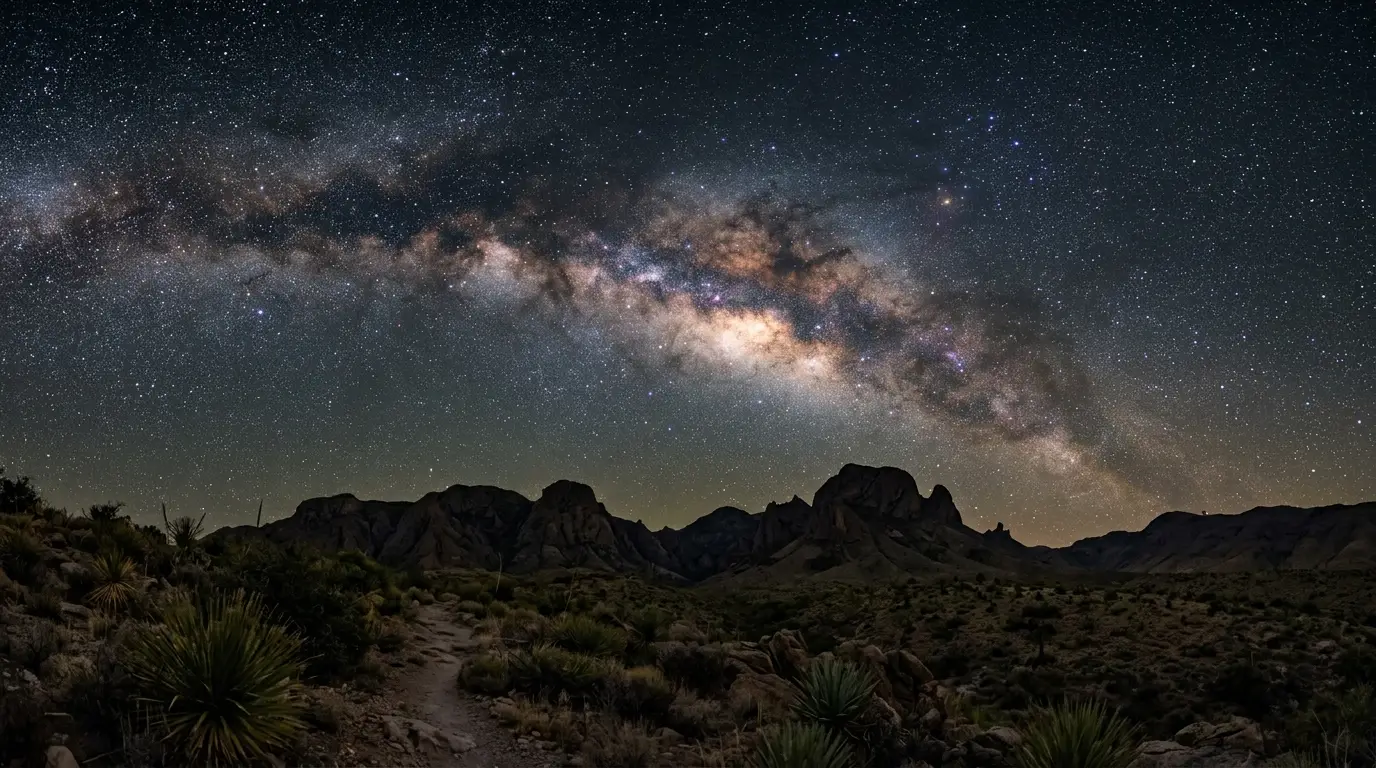
Big Bend National Park is Bortle Class 1, the darkest rating the Bortle scale has. What that dark sky rating means on the ground, and the best months to go.
Boquillas Canyon Trail runs 1.4 miles round trip along the Rio Grande, past cliff views and ancient mortar holes ground into the rock by the region's earlier indigenous inhabitants, a small detail that turns a river walk into a five-minute history lesson. Santa Elena Canyon Trail, at 1.7 miles round trip, is the one most guidebooks call a Big Bend classic, walking you straight into a canyon with walls rising on both sides. Getting there means crossing Terlingua Creek, usually just a wet-foot wade.
The Hot Springs Historic Trail is a short 0.5-mile round trip[4] to the spring itself (more on that below), with an optional one-mile loop extending around the bluff above the river for anyone who wants a longer walk from the same trailhead.
For real elevation gain, Ernst Ridge Trail runs 6 miles round trip and carries the park's most direct hiking warning: the park's own river-hikes notes call it dangerous in summer, no shade, no water. Treat that warning as literal, not cautious boilerplate, it's the same blunt language the park uses for its most exposed, least shaded routes.
What to carry on any Big Bend day hike
- More water than feels necessary, refilled before you leave the visitor center, not after
- A hat and real sun protection; shade is rare on most of these trails
- A paper map or downloaded offline route; cell coverage is unreliable across most of the park
- Sturdy footwear for the Terlingua Creek crossing on the Santa Elena Canyon Trail
Soaking in Boquillas Hot Springs
On the eastern edge of the park, right where a short trail meets the Rio Grande, a spring-fed pool sits inside the ruined foundation of an early-1900s bathhouse. The water emerges warm and mineral-rich, steady enough to feel like a hot tub against Big Bend's own desert heat.
Getting there takes some commitment. Hot Springs Road is a two-mile gravel road, rough and narrow, and motor homes and oversize vehicles are barred from certain sections of it. From the trailhead it's the same short walk covered above, a 0.5-mile round trip to the spring, or one mile on the loop around the bluff. Budget extra time if the gravel road is new to you; it isn't one to rush.
0.5 mi
The park keeps a short, firm list of rules at the spring:
- No soaps or oils in the water
- No swimming
- No glass containers
- No alcohol
- No overnight camping in the Hot Springs area
Check current conditions before driving out. The trail floods at higher river levels, and after heavy rain the crossing and the pool itself can both be affected, worth a quick look at the park's conditions page rather than a wasted trip down a rough gravel road.
Floating the Rio Grande: Canoes, Kayaks, and Rafts
The Rio Grande borders the park for 118 miles[5], and a good stretch of that river runs through limestone canyons that are difficult to see any other way. A day trip is enough to get a feel for it; an extended, multi-day float is how you actually see the canyons end to end.
Several outfitters, including Far Flung Outdoor Center and Hidden Dagger Adventures, run guided trips through Big Bend's five river canyons, offering kayak, canoe, or raft options[6]. Trip lengths, rentals, and water-level windows change from year to year, so check each outfitter's current trip notes before booking rather than assuming a fixed calendar.
A day trip is enough to get a feel for it; an extended, multi-day float is how you actually see the canyons end to end.
None of this requires prior rafting experience for the shorter, guided day trips, though multi-day floats through the canyons are a different commitment. Read the outfitter's own trip notes on water levels before booking, and expect to arrange a river-use permit through the park regardless of which outfitter you go with. Crossing to the Mexican side at shallow points near Boquillas Canyon is possible in places, but it crosses an international border; check current National Park Service guidance before treating any crossing as casual.
Ross Maxwell Scenic Drive and Big Bend's Best Overlooks
If there's one drive that captures the range of what Big Bend looks like without leaving the pavement, it's this one. The Ross Maxwell Scenic Drive winds through the park's western desert for roughly 30 miles, ending at the Santa Elena Canyon overlook, one of the most photographed spots in the park.
Santa Elena Canyon itself is the drive's payoff: sheer limestone walls rise straight up from the Rio Grande, shaped by fault activity in the region, one of the most dramatic canyon views in the park. Stop at the overlook even if you don't plan to hike the canyon trail below it, the wall alone is worth the drive. If you do want to hike in, it's the same Santa Elena Canyon Trail covered above, and it becomes impassable when Terlingua Creek floods, so check conditions first[7].
Recommended tours
Tours are selected for quality, not commission. I earn a small fee if you book — at no extra cost to you.

Along the way, the drive passes Sotol Vista, an open overlook where the desert falls away below and Santa Elena Canyon itself is visible in the distance, and Castolon Historic District, a cluster of early-20th-century adobe buildings that once served as a US Army post and later a farming community. Old Sam Nail Ranch and the Burro Mesa Pour-Off area round out the stops worth a short walk from the pull-outs.
Sotol Vista does double duty after dark, too, and it's worth a look if the best stargazing spots in Big Bend are also on your list alongside the daytime drive.
Birdwatching, Biking, and a Curiosity 90 Miles North
Big Bend has a reputation as one of the best birdwatching destinations in the National Park System, and it holds up: over 450 bird species have been recorded here, drawn by the overlap of desert, river, and mountain habitat in one place. Rio Grande Village and the cottonwoods around it are the easiest spot to start, binoculars in hand, no hike required.
For a different kind of exploring, the park's paved network covers everything in this guide already, and its 150 miles of dirt roads[2] are open to cyclists as well as vehicles. Most of those dirt roads are a real four-wheel-drive undertaking and a separate trip from anything covered here.
One more thing worth knowing about, purely as a curiosity: the Marfa Lights, a decades-old unexplained light phenomenon in the town of Marfa, roughly 90 miles north of the park. A well-known viewing area sits along Highway 90 east of town. Witnesses describe the lights as orbs that shift in color and intensity, sometimes moving, sometimes still, occasionally splitting or merging; they typically read yellow-orange. It has nothing to do with the park itself and isn't a detour to build a day around, but if you're already driving north through the region with an evening free, it's a short stop, not a reason to change your itinerary.
Featured · Article
What Is Astrotourism? The Complete Beginner's Guide
Astrotourism means travel built around dark skies: meteor showers, auroras, the Milky Way. What it means, where to go, and how to plan your first trip.
Between the trails, the spring, the river, and the drive, a single day covers maybe two of these. Give yourself three or four days if you want all of it without rushing, and save at least one clear night for the sky that brought you here in the first place. The in-park lodge puts you within a short walk of trailheads and dark sky alike if a single in-park base matters to your plan.