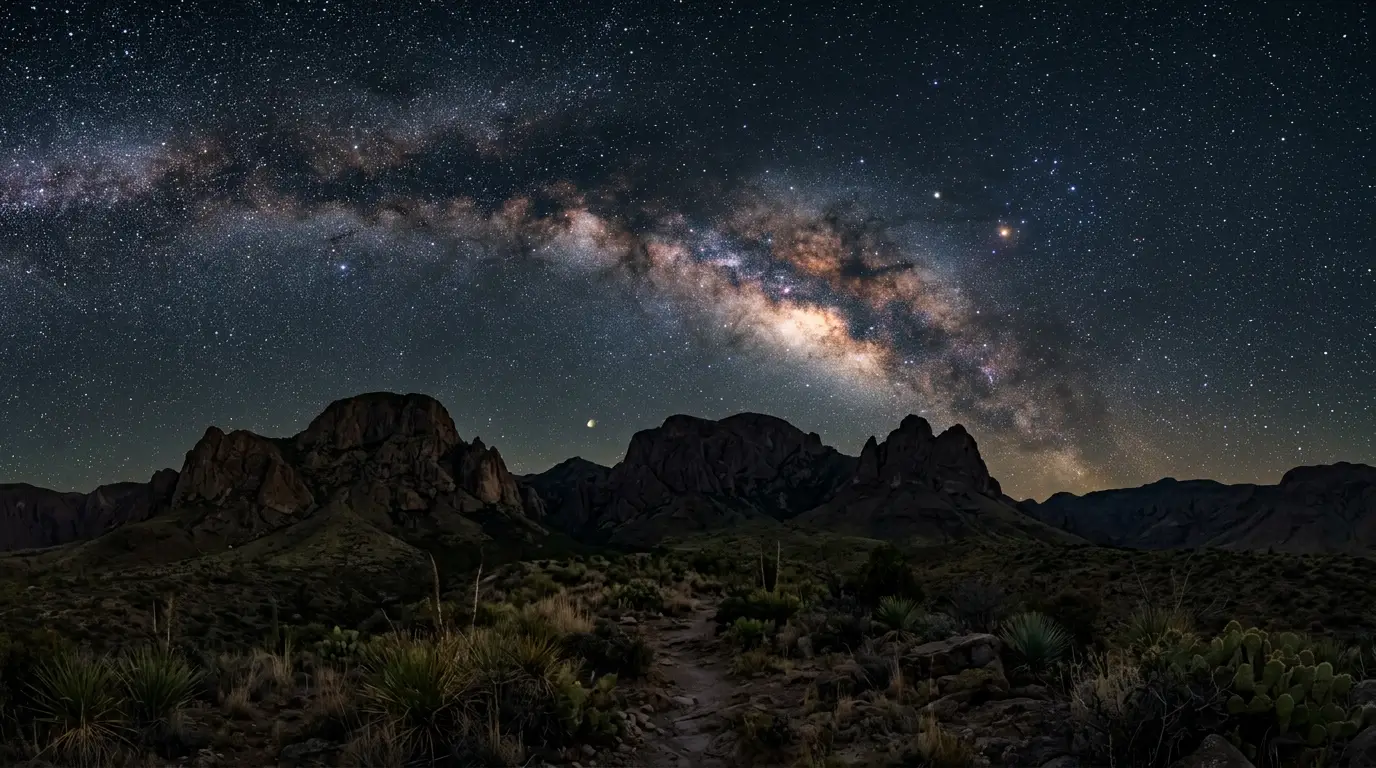

The pitch: why Big Bend's sky gets called the darkest in the Lower 48
The National Park Service isn't shy about the claim. Big Bend has the darkest night skies of any national park in the lower 48 states[1], and it carries the least light pollution of any other national park unit in the lower 48 states[2], two separate superlatives, both published by the agency that runs the place, not repeated secondhand from a tourism board.
That darkness has paperwork behind it. Big Bend received International Dark Sky Park status in 2012 from the International Dark-Sky Association, with combined protected dark sky areas totaling 1,112,000 acres once you count neighboring Big Bend Ranch State Park[3]. That's roughly the size of Rhode Island, handed over almost entirely to nothing brighter than starlight, which is why a serious visit here gets planned around the new moon rather than a long weekend.
The National Park Service isn't shy about the claim.
You'll see 'Bortle Class 1' attached to Big Bend across the astronomy blogosphere, and it's a plausible number for the park's darkest corners. NPS's own materials, though, don't put a specific class on it. They stick to the comparative claims above instead, the ones backed by the agency's own monitoring data. Treat the specific rating as a widely repeated estimate rather than an official figure, and let the 'darkest in the Lower 48' claim, the one the park does put its name on, do the actual convincing. For the measured Sky Quality Meter data behind that widely repeated number, see the park's official IDA designation.
None of that tells you what actually shows up overhead. Visitors can expect meteor showers, constellation spotting, Milky Way viewing, and night sky photography[4] on a clear night, with none of the sky-glow that dilutes all four almost everywhere east of the Rockies. For a spot-by-spot rundown of exactly where inside the park to point a camera, the guide to Big Bend's best stargazing spots covers the four viewpoints that do most of the work.
What makes the darkness feel different here, rather than just measure differently, is the setting it sits inside. The Rio Grande marks the park's southern edge, and the land on the far side of that river carries almost as little artificial light as the park itself, so there's no distant glow bleeding in from the horizon the way there often is even at other dark-sky parks with a town just outside the boundary. The Chihuahuan Desert stretches in every direction with nothing to interrupt it, which is exactly why the darkness readings come back the way they do.
The remoteness bill: airports, drive times, and the last empty stretch
Start with the honest math on getting there, because it's steep. Big Bend National Park is one of the most remote National Parks in the United States, and one of the most remote spots in the contiguous 48 states[5]. That's not travel-blog hyperbole; it's the same conclusion every guide who's actually driven in keeps landing on.
Two airports work as realistic gateways, and neither is close. Midland International Air and Space Port sits slightly closer to the park[6], though no source publishes an exact drive time for it. El Paso International Airport is farther, about 315 miles and a genuine 6 to 6.5-hour drive[7], and it's the one most guides actually recommend, better flight options and an easy rental-car pickup once you land. Whichever one shows up cheaper on a flight search, budget the better part of a day just to close the gap between the runway and the park entrance.
There's no shortcut around either drive, and no train or bus fills the gap. A rental car is the entire plan, not a backup option, and cell service is unreliable to nonexistent once you're past the entrance gates. The full breakdown of getting to Big Bend covers exactly where signal disappears and what to load in the car before you leave pavement.
| Airport | Distance | Drive time |
|---|---|---|
| Midland International Air and Space Port | Slightly closer | No published drive time |
| El Paso International Airport | ~315 miles | 6–6.5 hours |
Book the car when you book the flight, not after. Both gateway airports are small, regional operations rather than major hubs, and their rental counters carry a fraction of the inventory a bigger airport keeps in reserve. A canceled reservation at Midland or El Paso doesn't get quietly fixed with a rideshare app the way it might somewhere with actual public transit; it turns into a genuinely stranded afternoon. Treat the reservation as fixed the day you book the flight, not a detail to sort out closer to the trip.
The heat trade-off: when the darkest sky comes with 104°F days
Here's the part the darkest-sky headline leaves out. Summers at Big Bend are famous for extremely hot temperatures that average over 100°F, and at the lowest elevations, summer routinely reaches 40°C (104°F)[8]. That's not a rare spike; it's the seasonal baseline for exactly the months, roughly March through October, when the Milky Way's core is at its brightest overhead.
That overlap is the real trade-off this trip asks you to make. The nights that show off the sky best are the same nights you're hiking, driving, and managing water logistics through daytime heat that can turn a short trail into a genuine risk. Shoulder-season visits, especially April or October, keep a good chunk of that dark-sky window while trimming the worst of the daytime extremes.
104°F
None of this is a reason to skip Big Bend. It's a reason to plan around the heat the way you'd plan around a storm system anywhere else: check the forecast, carry more water than instinct says you need, and treat the middle of the day as downtime rather than sightseeing time.
The practical version of that advice looks like this: hike and drive in the early morning or late afternoon, nap or read through the hottest hours instead of forcing a midday trail, and save the actual stargazing for after the heat has broken, usually a couple of hours past sunset. A trip built around that rhythm barely notices the daytime numbers; a trip that ignores them turns a stargazing vacation into a heat-management exercise with a night sky as an afterthought.
McDonald Observatory: the day-trip add-on that changes the math
McDonald Observatory sits about 16 miles northwest of Fort Davis, Texas, at an elevation over 6,700 feet[9], not inside Big Bend, and not a quick detour from it. It's north, in the Davis Mountains, a genuine day given over to driving more than stargazing itself. If the exact hours matter for your itinerary, the McDonald Observatory Star Party page has the current drive-time and ticket breakdown.
Recommended tours
Tours are selected for quality, not commission. I earn a small fee if you book — at no extra cost to you.
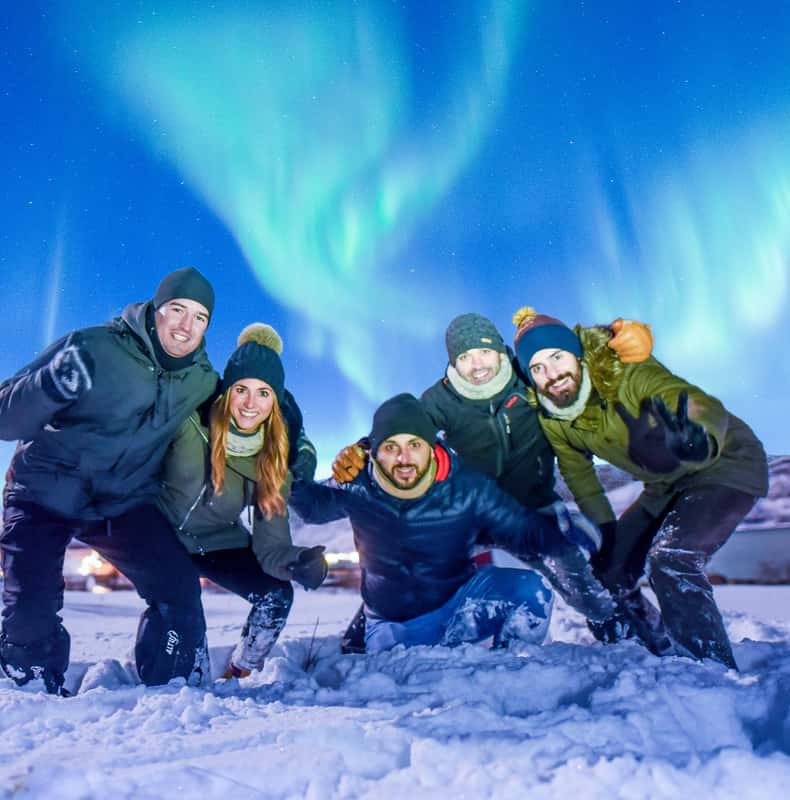
What you're driving toward is real research infrastructure, not a roadside telescope prop. The observatory's Hobby-Eberly Telescope carries an 11-meter mirror and ranks among the largest optical telescopes in the world, dedicated in 1997[10]. Its optical upgrade was completed in 2016. Its location in the Davis Mountains, far from city lights, is itself described as offering the darkest skies in the United States[11], a claim that puts McDonald in direct competition with Big Bend for the same superlative.
Public evening programs run on a fixed rhythm: daytime tours cover the science, and Star Parties, typically thrown Tuesday, Friday, and Saturday nights[12], put visitors behind dedicated public telescopes after dark. Book ahead; weekend slots fill first, and this isn't a walk-up plan.
Featured · Destination
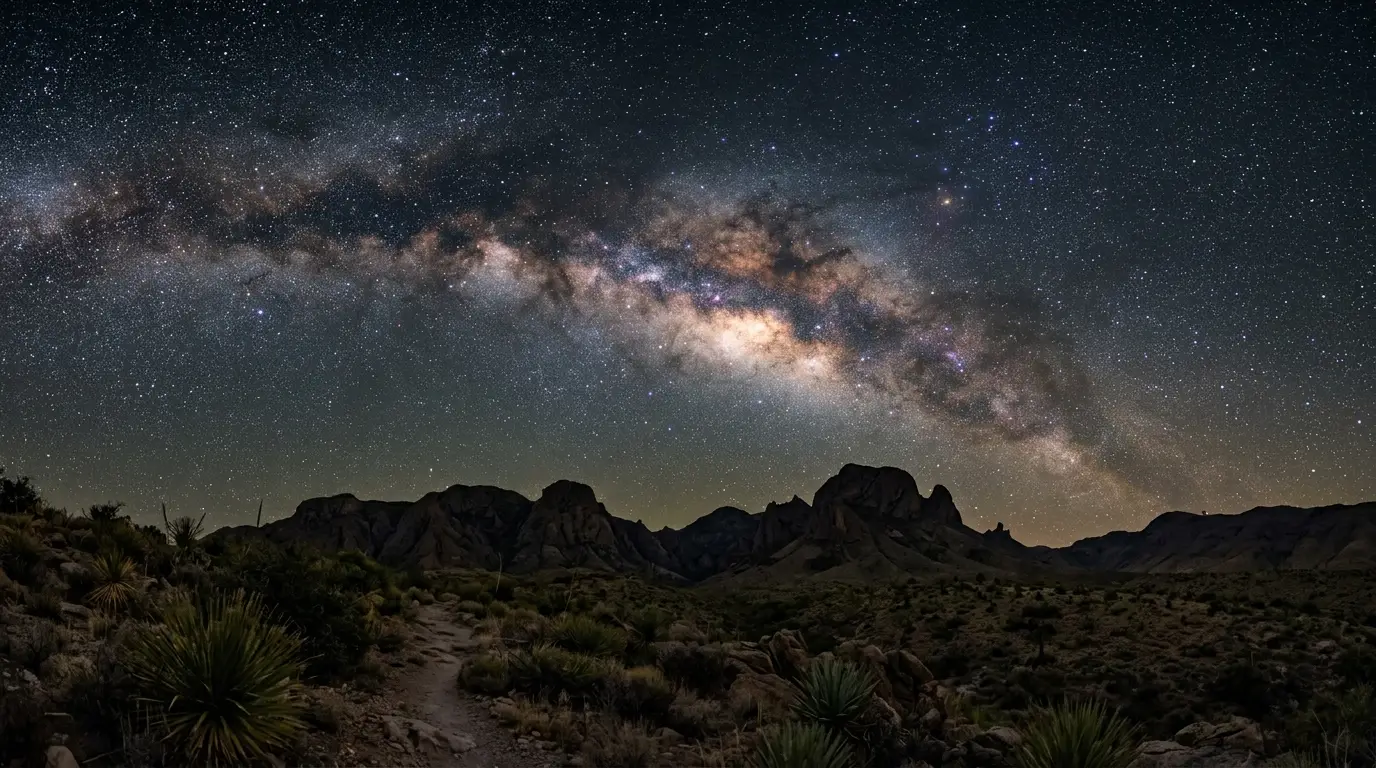
Big Bend National Park
Big Bend National Park is Bortle Class 1, the darkest rating the Bortle scale has. What that dark sky rating means on the ground, and the best months to go.
The honest question isn't whether the observatory is worth seeing, it clearly is, but whether it's worth adding to a Big Bend itinerary that's already asking a lot of your time and your gas tank. If the trip is a quick two or three nights, the observatory detour eats a full day you could otherwise spend inside the park itself. If you've got four or five nights, or you're already routing through Fort Davis on the way in or out, the math flips: a working research telescope and a second dark-sky location on the same trip stops being an add-on and starts being the reason to build the extra day in.
Who this trip actually suits, and who should reconsider
Big Bend's math works cleanly for a specific traveler: someone who already treats remoteness as part of the appeal, not an obstacle to route around. If you've done a dark-sky trip before and found yourself annoyed by a horizon glow from a distant town, this park's isolation is the actual product, not a side effect of the drive.
Think of it less as a stargazing detour and more as a trip where the drive, the heat, and the sky are all part of the same package. Someone weighing Big Bend against a closer, easier dark-sky park is really weighing two different kinds of trip: a convenient one and a genuinely remote one. Neither is the wrong answer, but only one of them delivers a sky this dark.
It suits:
- Dedicated stargazers and astrophotographers who want a Milky Way shot without a light-pollution filter doing the heavy lifting
- Road-trip travelers already in West Texas, for whom the drive is a feature of a bigger loop rather than a standalone flight
- Anyone pairing the trip with McDonald Observatory, since the day-trip logistics reward travelers who aren't in a rush
It's a harder sell for:
- First-time stargazers wanting a guaranteed sighting with minimal effort — a closer dark-sky park with better infrastructure gets there with less risk
- Anyone traveling June through August without genuine heat tolerance and a flexible schedule
- Travelers without a rental car, or uncomfortable relying on unreliable cell service, since neither is optional here, both are the baseline
The verdict on Big Bend
Big Bend is worth it if the honest pitch is the one you actually want: a night sky the National Park Service itself calls the darkest in the Lower 48, wrapped in a five-hour worst-case drive, patchy-to-nonexistent cell service, and summer heat that tops 100°F on the same days the Milky Way looks best.
It's not worth it if you want a dark sky with minimal logistics attached, a park closer to a major airport, with better cell coverage and gentler weather windows, will get you a similar photo with a fraction of the planning. But if the remoteness itself is part of what you're after, and you plan around the heat rather than ignoring it, Big Bend delivers exactly what it advertises: a sky most of the country can no longer see.
Featured · Article
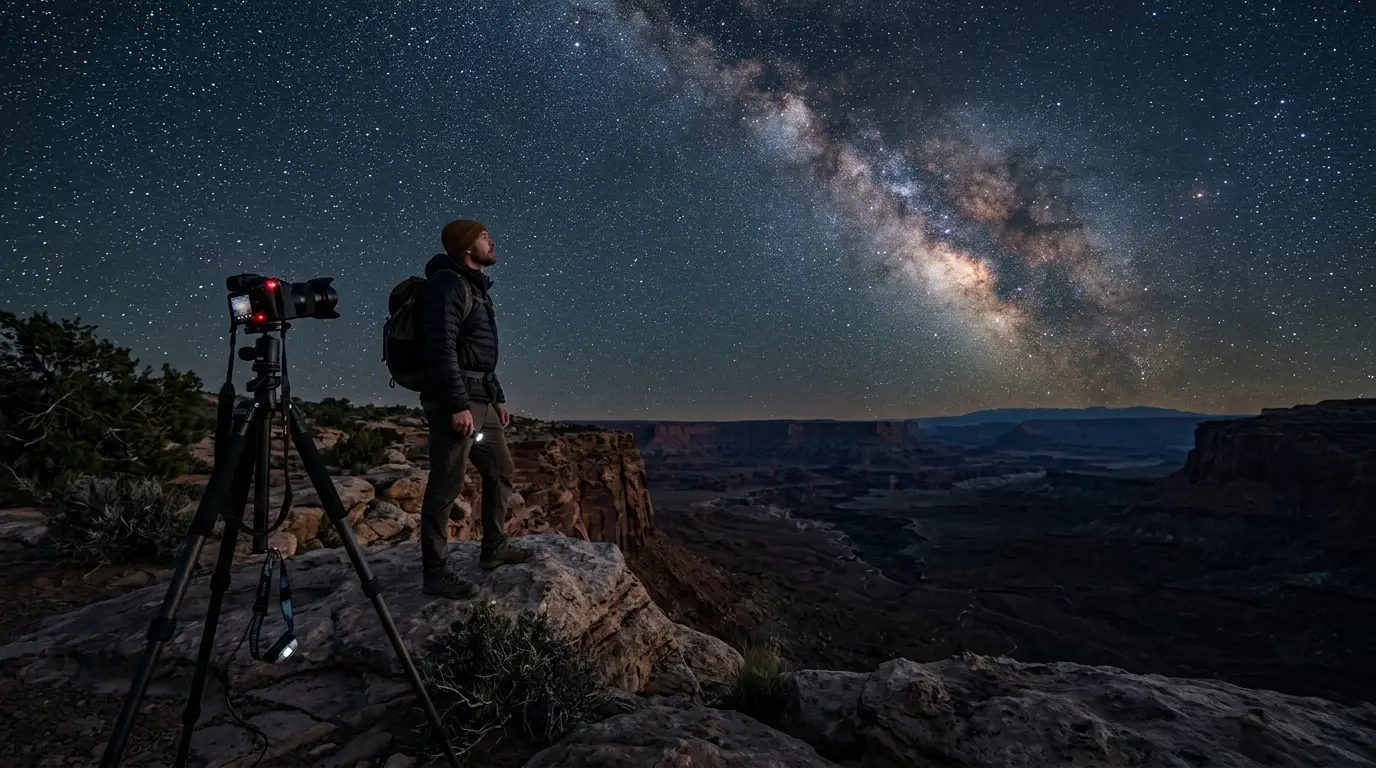
What Is Astrotourism? The Complete Beginner's Guide
Astrotourism means travel built around dark skies: meteor showers, auroras, the Milky Way. What it means, where to go, and how to plan your first trip.
Bring the water, book the car early, and time the trip around the new moon rather than a random long weekend. Do that, and the five-hour drive stops feeling like the cost of the trip and starts feeling like the part that earns you the sky you actually came for.