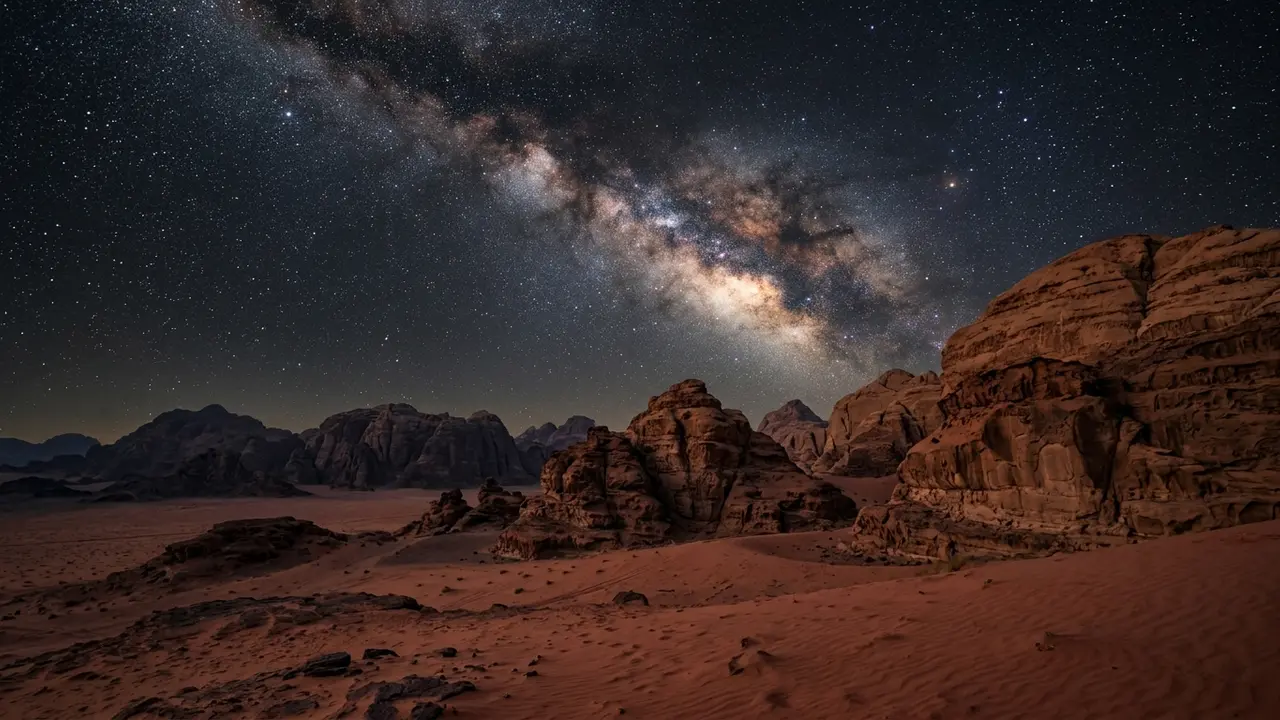

What Wadi Rum's UNESCO Status Actually Is
Start with the paperwork that's real. In 2011, UNESCO inscribed the Wadi Rum Protected Area on its World Heritage List as a mixed site, meaning the listing recognizes both cultural and natural value in the same place rather than one or the other[1]. UNESCO calls that combination Outstanding Universal Value, the standard every World Heritage nomination has to meet. That distinction, mixed versus purely natural or purely cultural, is worth holding onto, since it explains why guidebooks describe Wadi Rum in almost archaeological language one paragraph and almost geological language the next. The protected area itself covers roughly 74,200 hectares of southern Jordanian desert[2], a scale that matters later in this piece: there's a lot of empty land between any camp and the nearest town.
Compare that to a straightforward natural listing recognized purely for geology, or a purely cultural listing built around a single monument. Wadi Rum's inscription folds both together into one file: the rock formations and the human record layered onto them are judged as a single, inseparable case, not two separate applications that happened to land on the same patch of desert.
That mixed-site language isn't a bureaucratic technicality. It means Wadi Rum earned its listing for the red-sand valley itself and for what's carved into the rock inside it, not for its night sky. UNESCO's World Heritage Committee evaluates cultural and natural significance. It doesn't measure light pollution, issue Bortle-scale ratings, or certify stargazing destinations.
None of this is remotely obscure once you know where to look, but it rarely gets explained clearly on a booking page. A camp operator has every incentive to reach for the flashiest available label, and 'Dark Sky Reserve' sounds better than 'genuinely remote desert with strict building rules.' It's also, as it turns out, wrong.
UNESCO's World Heritage Committee evaluates cultural and natural significance. It doesn't measure light pollution, issue Bortle-scale ratings, or certify stargazing destinations.
The rest of this piece works through what the UNESCO listing actually covers, why 'Dark Sky Reserve' is the wrong label for it, and how genuine remoteness produces the darkness overhead. For the practical side, camps, seasons, what a night out there actually looks like, see Wadi Rum stargazing.
Why 'Dark Sky Reserve' Is the Wrong Label
Search 'Wadi Rum dark sky' and plenty of tour operators and blogs will call it a Dark Sky Reserve, sometimes even an International Dark Sky Association reserve by name. Neither claim holds up. DarkSky International runs the only globally recognized dark-sky certification program, and no Jordanian site appears anywhere on its public register of designated places.
Scroll through enough Wadi Rum camp listings and the pattern repeats: a photo of the Milky Way, a line about being one of the world's few dark-sky reserves, and no link to any certifying body because there isn't one to link to. That's not malicious. Most operators are almost certainly repeating what a competitor's site said first. It still means every reader has to do the two-minute check this section just did.
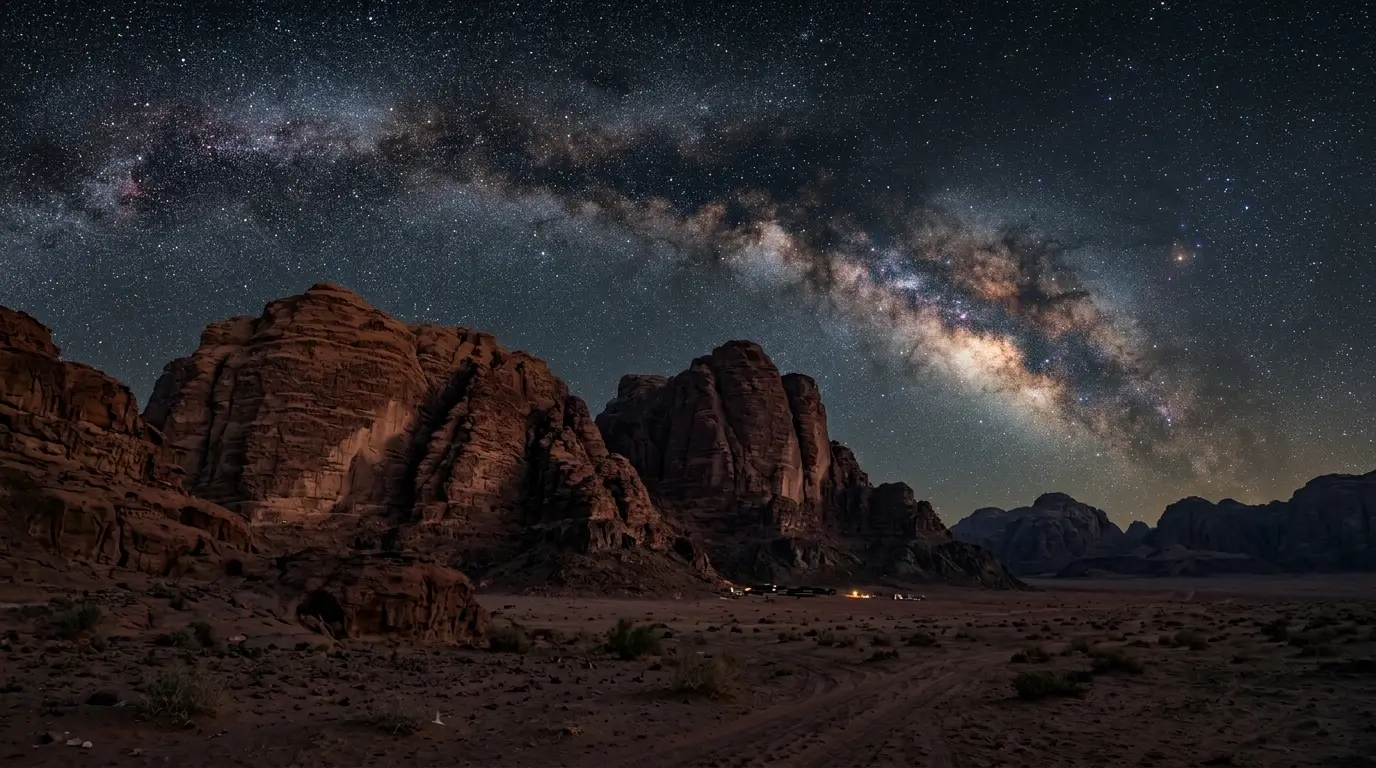
Featured · Destination
Wadi Rum
See the Wadi Rum night sky from a Zalabieh Bedouin camp in Jordan's UNESCO desert: bare tents to glass domes, Bortle 2-3 skies, and year-round stargazing.
That gap matters beyond pedantry. A traveler who books a desert night expecting an audited, guaranteed dark sky because a listing said Reserve is trusting a word that carries real regulatory weight in other contexts and none at all here. The sky itself doesn't change based on which word a camp uses. What changes is whether you can verify the claim against anything, and with 'Dark Sky Reserve' in Wadi Rum's case, you can't.
Two facts make that absence easy to confirm rather than just assert. When DarkSky International certified Ramon Crater in Israel's Negev desert in 2017, it billed the reserve as the first International Dark Sky Place in the entire Middle East[3]. That claim only holds if no Jordanian site, Wadi Rum included, had already earned or later received the same distinction. The only internationally certified place actually named 'Rum' is the Isle of Rum, a DarkSky Sanctuary off Scotland's west coast[4], a small inhabited island with nothing in common with this Jordanian desert beyond the name.
That's almost certainly where the mislabeling started: someone, somewhere, conflated a real certification for one Rum with a completely different, uncertified Rum on the other side of the world. None of this means Wadi Rum's sky isn't dark. It means the specific credential attached to that darkness in marketing copy doesn't exist, and repeating it doesn't make the sky any darker, it just misdescribes why.
The Rock Art That Earned the Cultural Half of the Listing
The cultural half of Wadi Rum's inscription rests on one of the densest concentrations of rock art anywhere on Earth. UNESCO's citation credits the site with 25,000 petroglyphs and 20,000 inscriptions, a body of rock art whose continuity over at least 12,000 years is what sets Wadi Rum apart from other petroglyph sites worldwide[5].
Walk the base of Barrah Canyon or the approach to Khazali Canyon with a guide who knows the panels, and the rock art stops being an abstract number. A single boulder can carry ibex outlines stacked over ancient script stacked over a modern initial someone scratched in decades ago, three different centuries occupying the same square meter of stone. Local Bedouin guides who grew up in the valley can usually point out specific panels by name, knowledge passed down more reliably than any dated academic survey.
25,000
That density reframes what a stargazing trip to Wadi Rum is actually walking through. The same sandstone walls that block ambient light after dark carry:
- Carvings of ibex, camels, and human figures left by hunter-gatherers, Nabataean traders, and everyone in between
- Inscriptions in multiple ancient scripts, layered over centuries of different visitors marking the same rock faces
- Archaeological remains documenting continuous human presence across twelve millennia
A night camp pitched near any of that isn't sitting in an empty desert. It's sitting inside a 12,000-year-old[8] open-air record of who passed through this valley, and why they kept coming back to a place with almost nothing to block the horizon.
Why Remoteness and Protection Together Keep the Sky Dark
UNESCO's citation also credits Wadi Rum for its natural criterion: the protected area is recognized as an iconic desert landscape of sandstone mountains, natural arches, gorges, and dramatic weathering forms shaped over geological time[6]. That's the aesthetic case for the listing. It's also, incidentally, close to the practical case for why the sky above it stays dark: this is a landscape built almost entirely of rock, sand, and empty space, with very little room for the kind of development that produces light pollution in the first place.
Wadi Rum's darkness is really the product of two things working together, not one certification. The first is geography: this is a remote stretch of southern Jordan, the same protected area UNESCO inscribed on the World Heritage List in 2011[7], far from the country's main urban centers, and that isolation directly suppresses how much artificial light reaches the sky here. The second is regulation. As a protected area, Wadi Rum operates under management rules that restrict development and most human activity across the reserve, allowing construction only within Rum village itself.
Recommended tours
Tours are selected for quality, not commission. I earn a small fee if you book — at no extra cost to you.
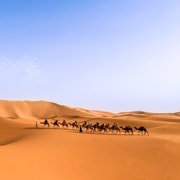
That gap between a legal designation and a night-sky rating isn't unique to Wadi Rum. Plenty of genuinely dark places worldwide have never gone through a certification process, simply because nobody's applied on their behalf. What makes Wadi Rum's case unusually well-documented is the UNESCO paper trail: an inscription file, published criteria, and a management plan that all predate any stargazing-specific interest in the site.
Stand on the dune field an hour after the last camp generator cuts off and the difference is immediate: no glow on any horizon, no orange dome overhead the way a city produces one. That's not a measured Bortle-scale reading this piece can cite, but it's the direct, visible result of the geography and the rules described above.
Those rules exist to protect the landscape and the rock art, not the night sky specifically, but the effect on light pollution is the same either way: nothing gets built out here that would compete with the stars. Put plainly, Wadi Rum doesn't need a Bortle-scale reading or a DarkSky plaque to explain a dark sky. Remoteness plus a legal ban on development do the same job a certification would otherwise formalize. They just don't come with an audited number you can cite.
What This Means for Planning a Stargazing Trip
None of this UNESCO-versus-DarkSky distinction should change what you actually do once you're standing in the desert after dark. It should change what you believe about why the sky looks the way it does, and which claims about remoteness and certification you trust while you're planning.
Practically, that means:
- Don't book a camp because its marketing page calls Wadi Rum a Dark Sky Reserve, that status doesn't exist, certified or otherwise
- Do trust the remoteness case instead: no nearby city, minimal development inside the protected area, and rock formations that block stray light at ground level
- Check moon phase before you pick your dates, it matters more for what you'll actually see than any certification would
For where inside the protected area to actually set up, best stargazing spots in Wadi Rum covers the four named locations guides return to again and again. For timing, best time to stargaze in Wadi Rum breaks down season and moon phase across the year.
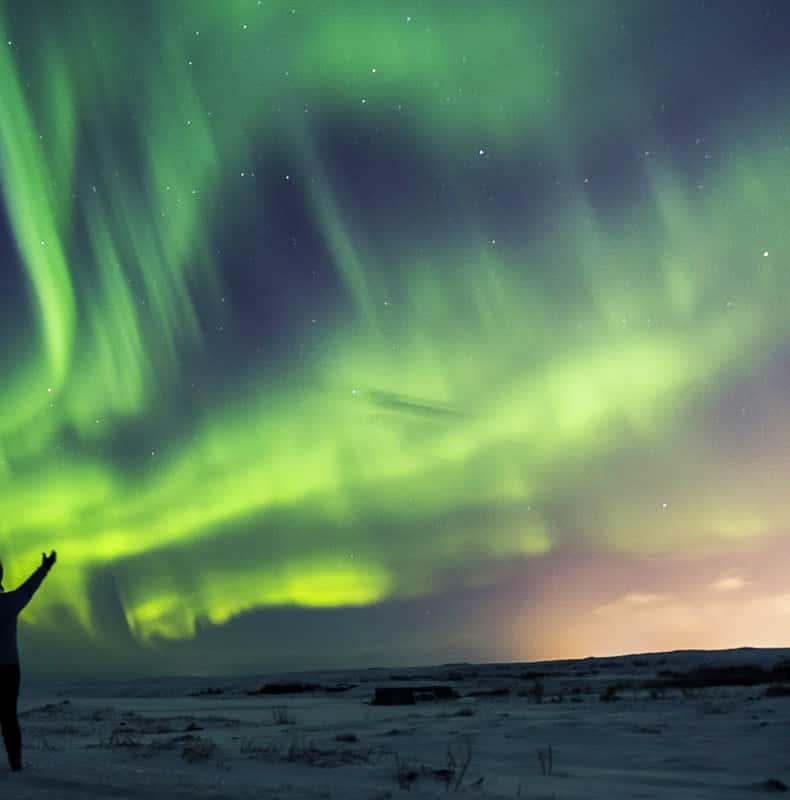
Featured · Article
What Is Astrotourism? The Complete Beginner's Guide
Astrotourism means travel built around dark skies: meteor showers, auroras, the Milky Way. What it means, where to go, and how to plan your first trip.
That distinction also changes how to read camp reviews and tour packages. A listing that leans hard on 'Dark Sky Reserve' language is worth a second look, not because the operator is lying about the experience, but because it suggests nobody checked the claim any more carefully than the last blog they copied it from. A listing that instead talks about distance from Aqaba, a lack of nearby towns, and dark, unlit walks from camp to open desert is describing the real mechanism, whether or not it ever uses the word UNESCO.
Wadi Rum vs a Certified Dark-Sky Park
If UNESCO status isn't a dark-sky certification, what would a genuine one look like, and how does Wadi Rum's case compare? A place with an actual DarkSky International designation goes through a third-party audit: sky brightness gets measured, the site commits to lighting standards, and the resulting tier, Sanctuary, Reserve, Park, or Community, comes with a published rating. My guide to the best dark sky parks in the world covers what each tier requires and which destinations hold one.
Wadi Rum's case runs on a different kind of evidence: a UNESCO listing that predates any dark-sky consideration by years, layered on top of remoteness and development restrictions that happen to produce a similar visual result. Neither path is fake. One just comes with an audit trail you can point to, and the other doesn't.
| Question | Wadi Rum (UNESCO) | A DarkSky-certified park |
|---|---|---|
| Who evaluates it | UNESCO World Heritage Committee | DarkSky International |
| What's assessed | Cultural and natural significance | Measured sky brightness and lighting policy |
| Published night-sky rating | None | A specific tier: Sanctuary, Reserve, Park, or Community |
| Basis of protection | Heritage conservation law | Voluntary certification plus a lighting ordinance |
It's worth saying plainly: a UNESCO listing is not a consolation prize for missing a DarkSky badge. The two programs evaluate completely different things, one heritage significance, the other measured light pollution, and a site can hold one, both, or neither without that saying anything about how dark its sky actually gets. For a traveler weighing Wadi Rum against a closer, DarkSky-certified desert, that difference is worth naming honestly rather than glossing over. A certified park comes with a citation you can check yourself. Wadi Rum comes with a heritage listing, a legal building ban, and a very long way between the camp and the nearest streetlight, which is a real case, just a different kind of one. For a direct side-by-side against one such certified competitor, see Wadi Rum vs AlUla stargazing.
That distinction matters most when you're deciding whether Wadi Rum belongs on a stargazing itinerary at all, given the flight time and cost most travelers face getting there. Is Wadi Rum worth it for stargazing works through that trade-off directly.