Best best glass-igloo pick, though booking runs direct-only
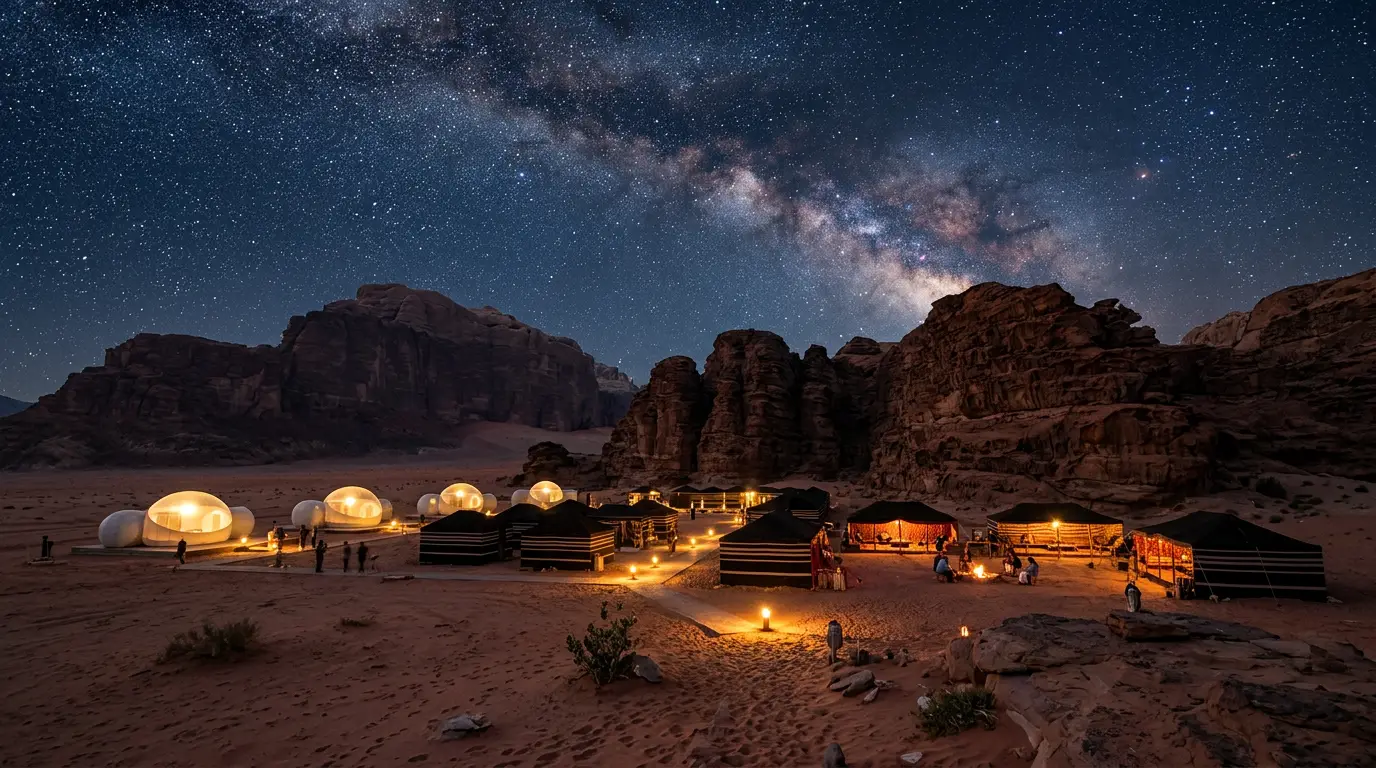
Wadi Rum Night Luxury Camp
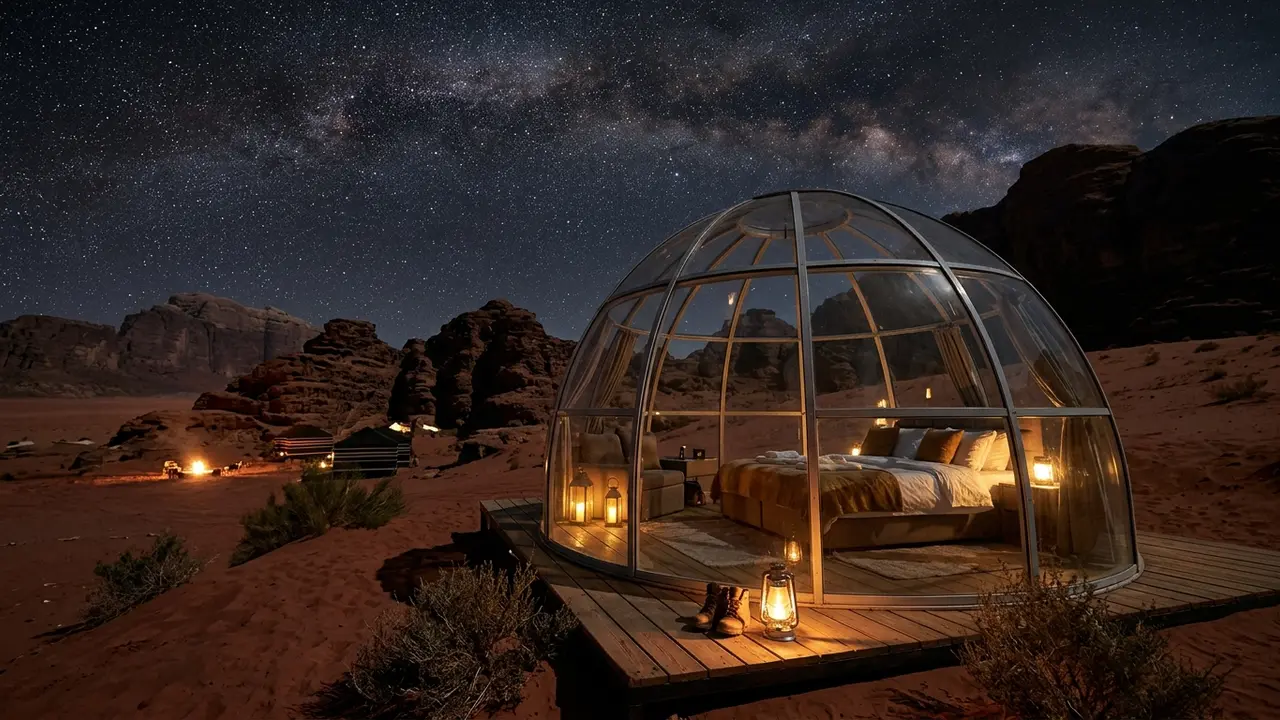
Glass igloos (walls and roof both transparent), 32 tents, from $142/night, TripAdvisor 4/5 (837 reviews), direct booking only
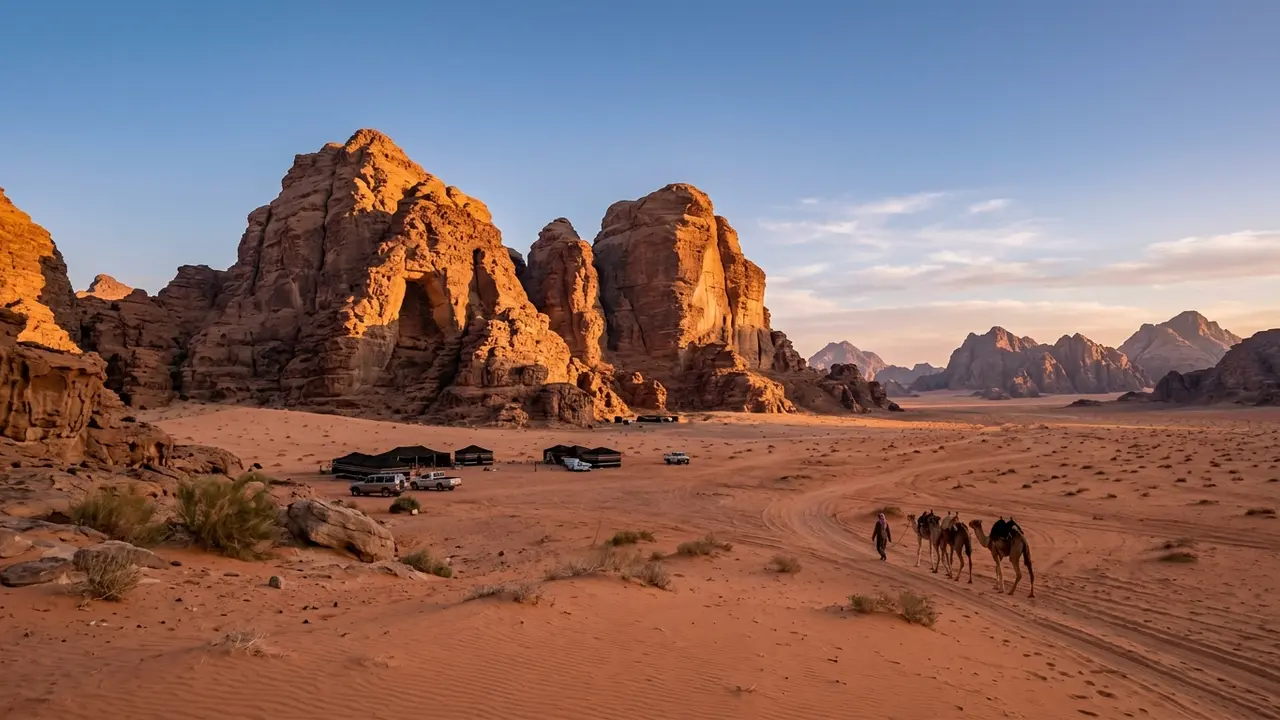
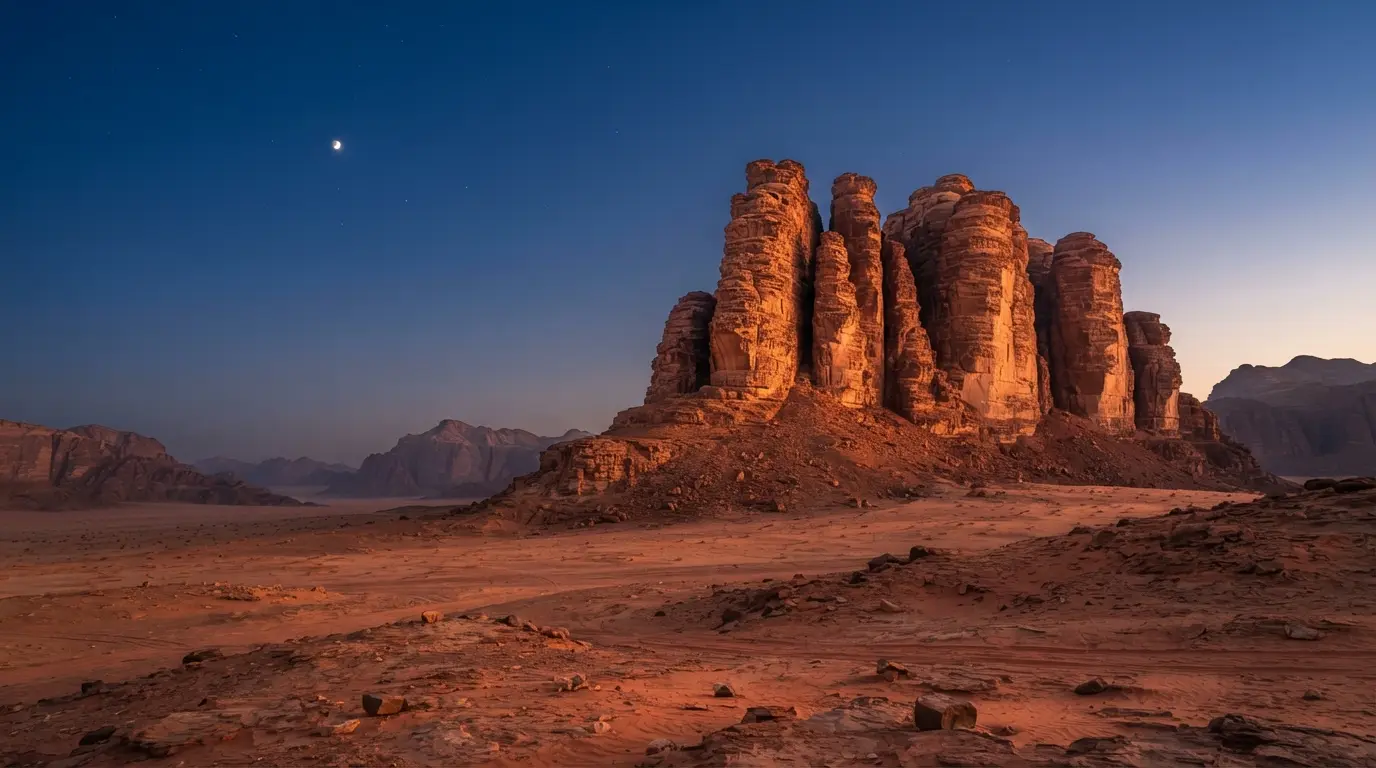
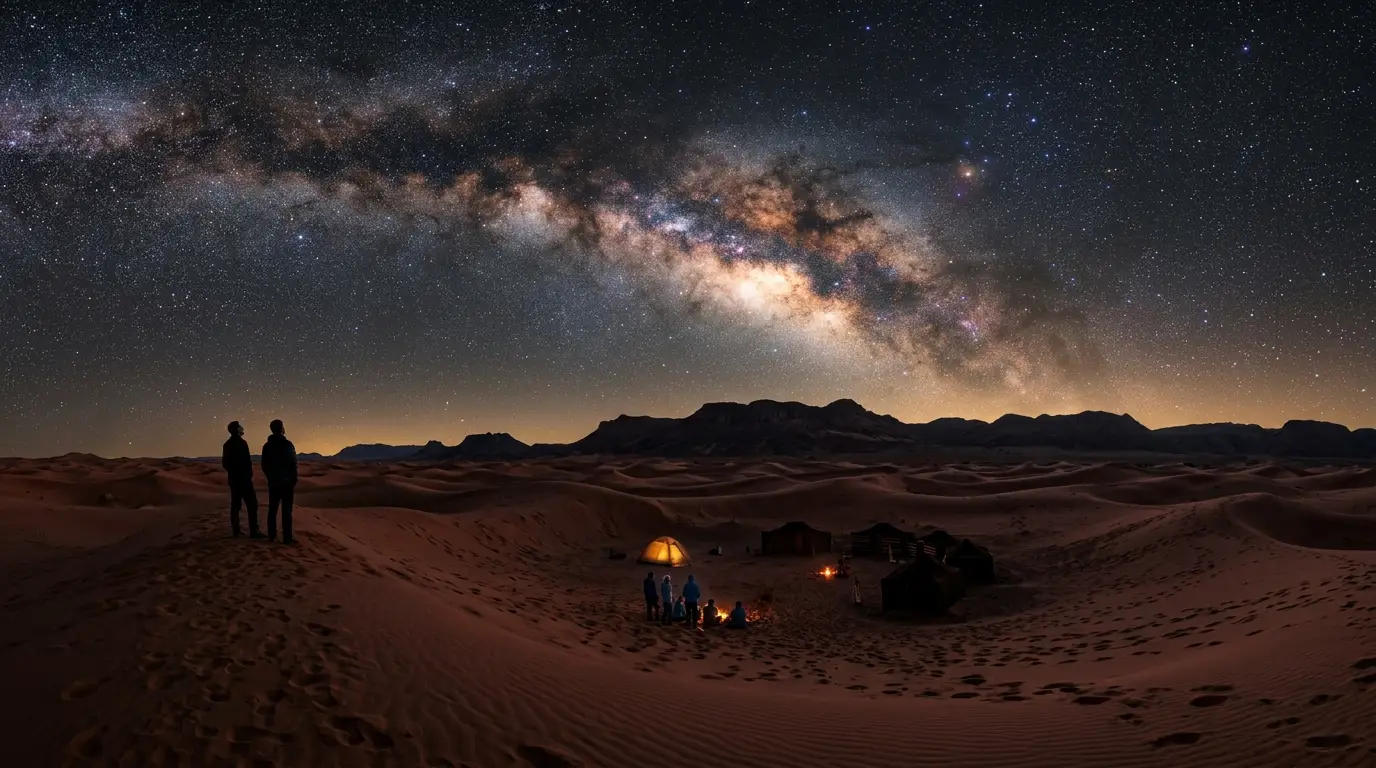
Wadi Rum is Jordan's UNESCO World Heritage desert, a Mars-like sandstone landscape where Bedouin-led camps put you under near-total darkness at night.
Photo tour of the lodges, night-sky trips, and guides for this destination.
Best best overall: in-bed dome stargazing with the most flexible booking
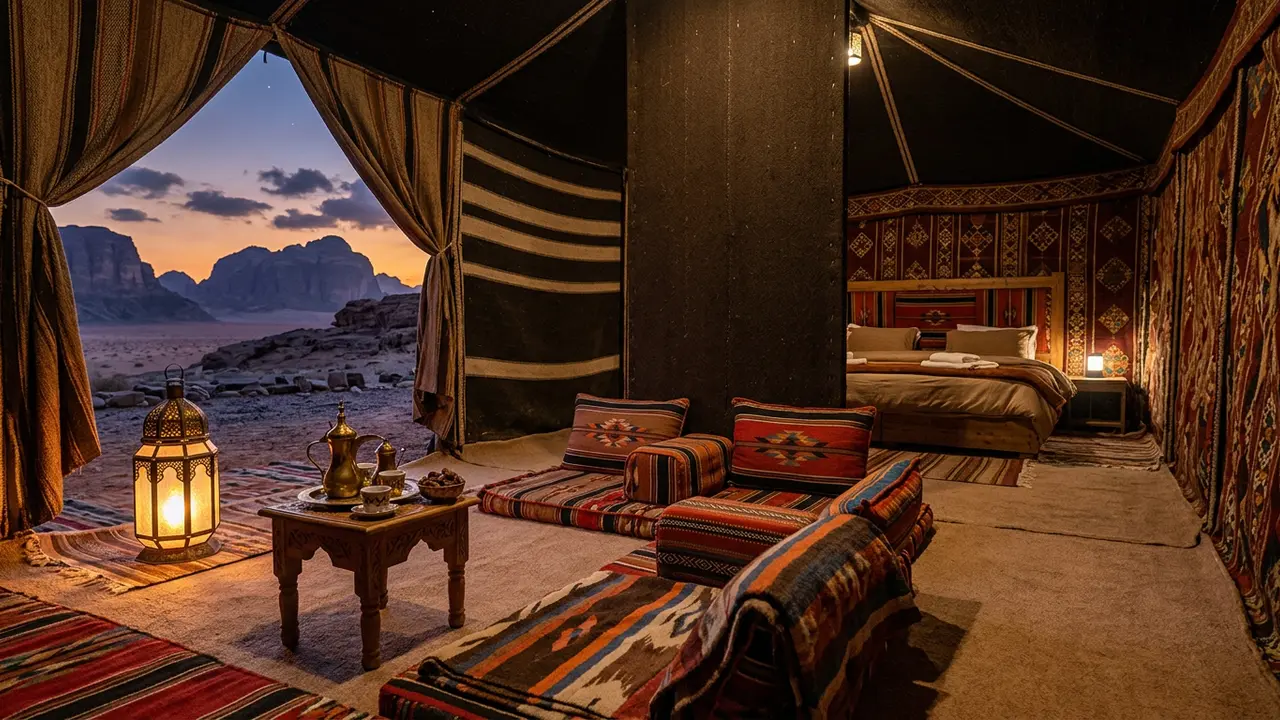
Overnight desert camp in Wadi Rum. Deluxe Bedouin tents, exceptional dark skies. Not a stargazing specialist, but a comfortable base for dark-sky desert nights.
Four Wadi Rum desert camps ranked for stargazing: Martian Dome bubbles, transparent domes, glass igloos, and a Bedouin-run traditional camp, compared.
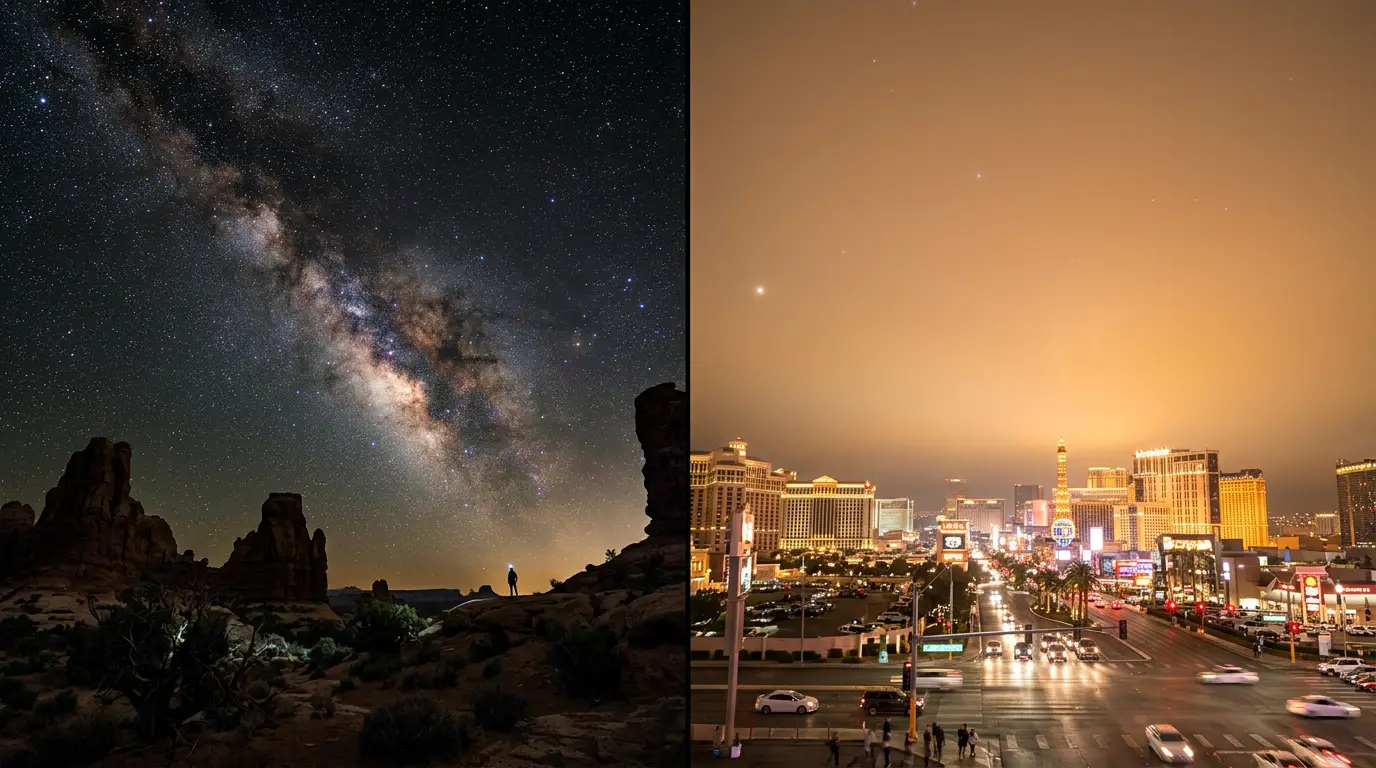
The Bortle scale rates night-sky darkness from 1 to 9. Here's what each class actually looks like, who created it, and how to find your own sky's rating.
Best best for groups: every one of 55 tents has a transparent dome, not just a signature room
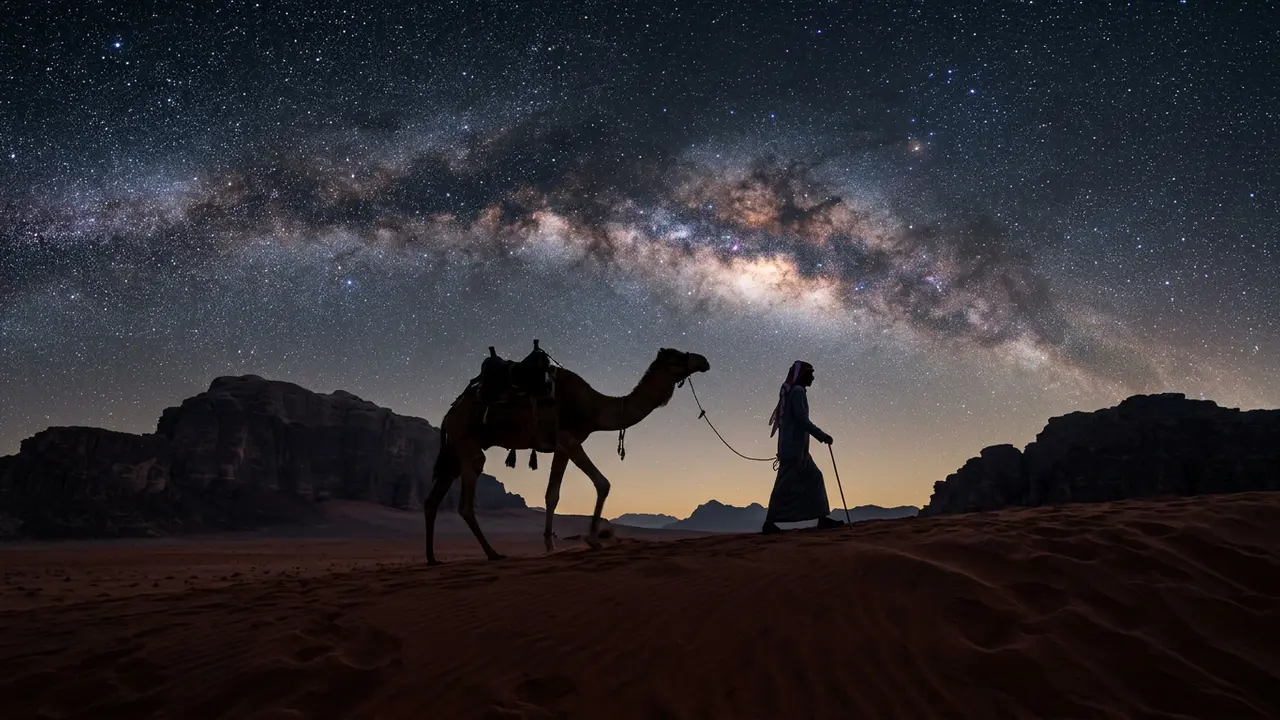
Overnight camel trekking in Wadi Rum's billion-star desert. Sleep in caves or Bedouin camps with dinner and breakfast included. From 15 JD per person.
Ranked by Bortle darkness, clear-night odds, and galactic-core season: 14 places worldwide where the Milky Way is genuinely visible, from Atacama to Uluru.
Four named spots make Wadi Rum's UNESCO desert worth a night out: Um Frouth's arch, Barrah Canyon, Lawrence's House ruin, and dunes with no city glow.
Weighing it against somewhere else? Wadi Rum vs AlUla Stargazing: Which Desert Wins? Merzouga vs Wadi Rum Stargazing: Full Comparison
Bortle 2-3 sky
What the Bortle scale meansThe Milky Way is richly structured overhead; the Andromeda Galaxy is an easy naked-eye smudge.
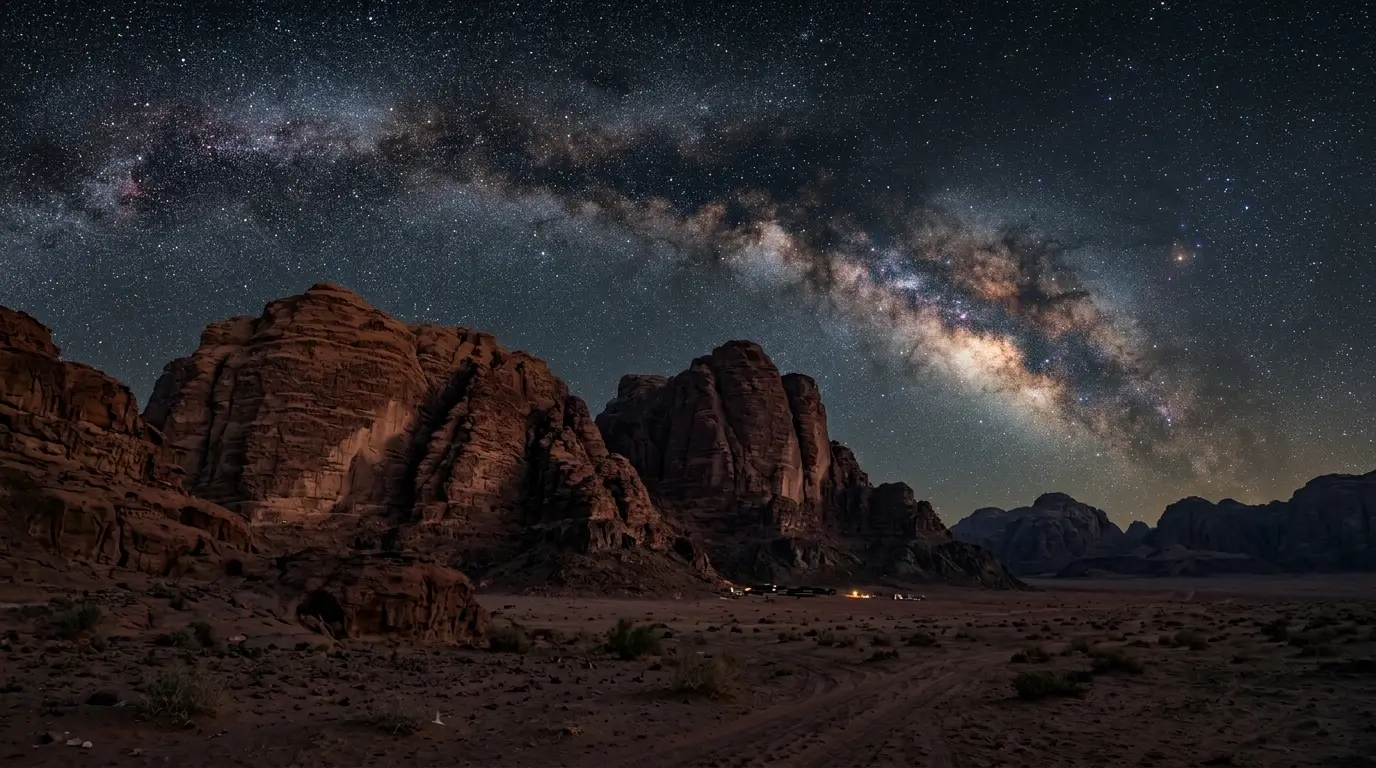
This destination rates Bortle 2-3 on the 9-level Bortle dark-sky scale, where 1 is a pristine dark sky and 9 is an inner-city sky. The Milky Way is richly structured overhead; the Andromeda Galaxy is an easy naked-eye smudge.
On this page
Updated
Wadi Rum earned its place on the UNESCO World Heritage List in 2011 for two reasons at once: an inscribed archaeological record stretching back millennia and a natural landscape of red sandstone and granite that looks, credibly, like another planet. That second quality is why film crews keep showing up, and it's part of why the sky above the valley stays dark enough to matter. This is Jordan's largest wadi, a protected desert of roughly 74,200 hectares (about 720 km2) in Aqaba Governorate where the Zalabieh Bedouin run the camps, jeep treks, and camel rides that make an overnight stay here possible.
This hub covers what actually makes Wadi Rum's night sky worth building a trip around, the Thamudic petroglyphs carved into Khaz'ali Canyon's walls, the real spread of Bedouin-run camps from bare tents to glass-domed suites, when to go given the desert's sharp day-to-night temperature swing, and the visa and border logistics that most stargazing write-ups skip entirely. If you're still weighing whether the trip is worth it at all, our honest verdict on Wadi Rum for stargazing covers the real cost against the payoff.
Computed for Wadi Rum at 30°N. Updates nightly.
First quarter tonight, 36% illuminated
Next new moon August 12. The nights either side of it are the darkest of the month.
About 7 hours of astronomical darkness tonight
The sun drops more than 18 degrees below the horizon, so the sky gets genuinely dark for deep-sky viewing at 30°N.
Hours of astronomical darkness by month at Wadi Rum: January 11 hours, February 10 hours, March 9 hours, April 8 hours, May 7 hours, June 7 hours, July 7 hours, August 8 hours, September 9 hours, October 10 hours, November 11 hours, December 11 hours.
Perseids active now
Peaks August 12. Up to 100 meteors per hour at maximum. The 2026 peak lands on a new moon — a dark-sky year with zero lunar washout.
See the Perseids guideWhere to go stargazing in July
Wadi Rum carries no formal international dark-sky certification on record, so the case for its night sky rests on something more verifiable: geography. The protected area covers roughly 74,200 hectares (about 720 km2), the largest wadi in Jordan. Elevation across the protected area varies widely, roughly from the low hundreds of meters up to around 1,750m at its highest points, though published figures for the exact range vary. That spread of elevation, combined with the near-total absence of settlement outside the small gateway village of Rum, keeps ambient light to a minimum across most of the protected area.
The UNESCO inscription itself was granted in 2011 under three separate criteria covering both the site's cultural record and its natural landscape, a mixed designation UNESCO gives to only a small number of places worldwide. Wadi Rum's darkness is a byproduct of genuine remoteness and low population density, not a marketing claim, and that's the honest version worth building a trip around. For the full breakdown of what that UNESCO listing does and doesn't cover, and why it isn't a substitute for a DarkSky certification, see Wadi Rum's UNESCO dark sky status, explained.
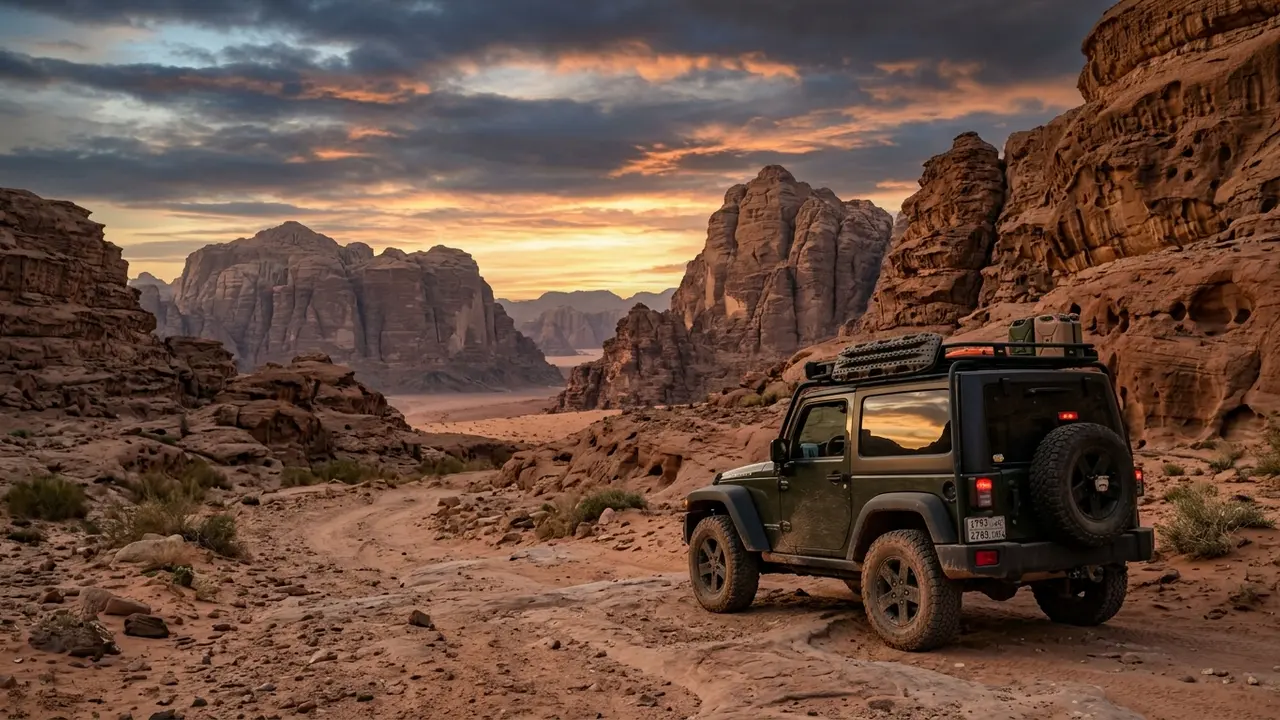
Locals and early visitors call Wadi Rum the Valley of the Moon, and the resemblance to another world isn't just a nickname. The valley's signature mountains are built from iron-rich Umm Ishrin Sandstone, worn into tall, near-vertical faces by wind and flash flood over millions of years, sitting on older granite from the Aqaba Complex below. The iron in that sandstone is what turns the whole landscape the deep red and ochre color that shows up in every sunset photo taken here.
Filmmakers noticed decades ago. Lawrence of Arabia (1962) used Wadi Rum as its desert backdrop, and the valley has since doubled for the Martian surface in The Martian and Red Planet, plus fictional desert worlds in the Star Wars franchise and Dune (2021). A Royal Film Commission coordinator has put the total at roughly 600 film and TV projects shot here every year, which makes Wadi Rum less an occasional filming location than a working backlot with a resident population. Daylight hours between stargazing nights fill easily too, with rock climbing, hot-air ballooning, and driving past the valley's film-location cliffs — see our full guide to things to do in Wadi Rum beyond stargazing.
Wadi Rum's UNESCO inscription isn't only about geology. Khaz'ali Canyon, a narrow slot canyon a short drive from Rum village, holds petroglyphs cut into the rock walls depicting humans and antelope, attributed to the ancient Thamudic people who crossed this desert long before any tour operator did. Standing in the canyon after dark, phone light on the carvings, is one of the few places where the historical case for visiting and the stargazing case point at exactly the same rock.
Rock art and inscriptions turn up elsewhere across the protected area too, part of a longer archaeological record that runs from early carvings through later markings left by desert travelers, evidence of how long people have crossed this particular stretch of ground under this particular sky.
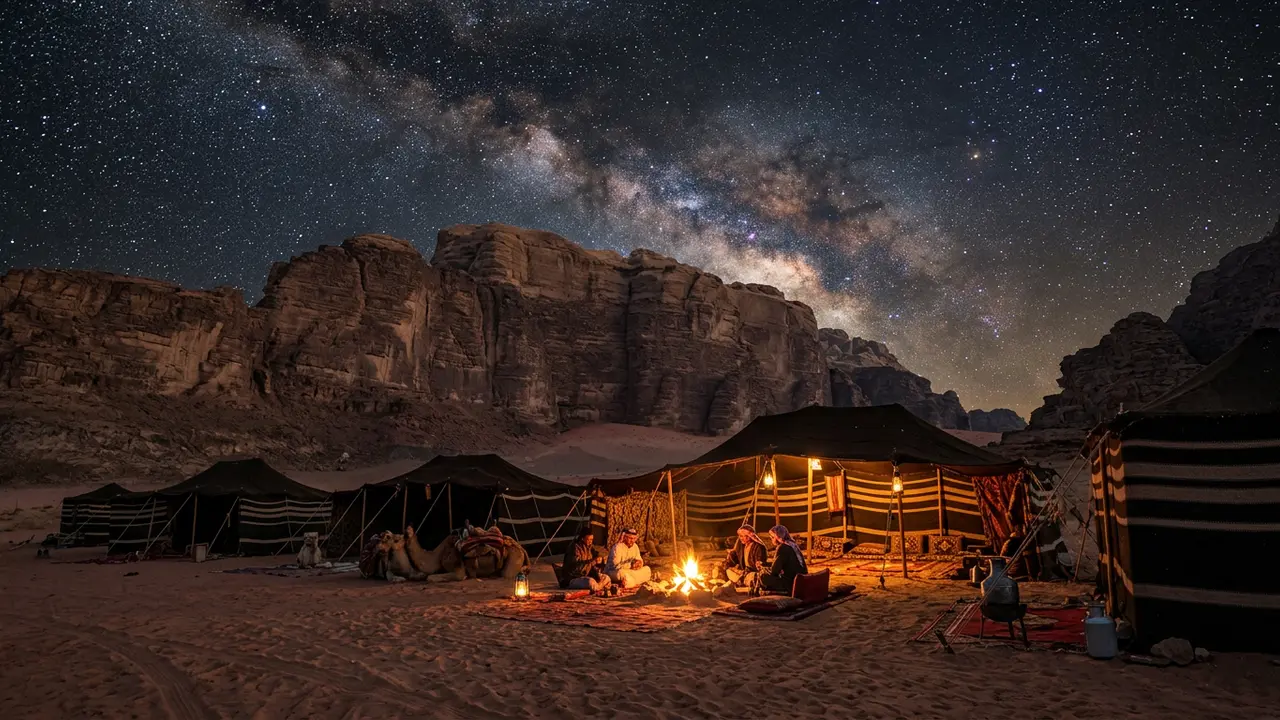
Nearly everyone who overnights in Wadi Rum stays in a camp run by the Zalabieh Bedouin, the tribe that, per the available record, settled in the area around 1980 and built the desert's tourism economy from nothing: jeep tours, camel treks, and the camps themselves. That's worth stating plainly rather than wrapping in generic desert-hospitality language, because it's a specific, sourced fact about who runs this place and how recently the current tourism model took shape.
The camps span a real range:
For stargazing-specific write-ups of individual camps, see Sun City Camp and its Martian Dome bubble tents, Memories Aicha Luxury Camp and its transparent domes, the glass igloos at Wadi Rum Night Luxury Camp, or the Bedouin-run, budget-tier Wadi Rum Nomads. What matters at the hub level is the honest range itself: Wadi Rum camp covers everything from a shared tent to a climate-controlled glass dome, at very different prices, and it's worth deciding which end of that range you actually want before you book. For a full side-by-side ranking of pricing, sky exposure, and booking options across all four, see our ranked guide to Wadi Rum's best desert camps for stargazing.
Best best glass-igloo pick, though booking runs direct-only
Glass igloos (walls and roof both transparent), 32 tents, from $142/night, TripAdvisor 4/5 (837 reviews), direct booking only
Best best budget and most culturally authentic pick
Bedouin-owned traditional camp plus cave bivouac camping, from ~$42/night (overnight add-on rate), direct booking only
Wadi Rum's night sky is viewable year-round, and the planning question here is about temperature, not sky clarity. Summer's mean daily high runs around 34-36°C (93-97°F), hot enough to make midday desert activity genuinely uncomfortable, and the hottest days can still spike toward 40°C (104°F). January's average daily minimum drops to about 4.6°C (40.3°F), and even in summer, desert nights cool fast once the sun goes down and the day's heat radiates back out. Pack for both extremes regardless of season, because the swing is the constant, not the exception.
Spring and autumn shoulder seasons split the difference: milder days than summer, milder nights than winter, and a sky that doesn't care which month you show up.
Wadi Rum clocks over 300 clear nights a year, so darkness above the dunes is close to a given whenever you show up. What actually moves this scorecard is comfort and access: freezing desert nights in deep winter, punishing summer heat past 40°C plus khamsin sandstorms, and a narrow window each spring and autumn when sky and thermometer finally agree. Book March-April or September-November for the easiest balance of clear skies and bearable nights.
Going in March? See what else the sky offers that month
Wadi Rum sits in Aqaba Governorate in Jordan's south, roughly an hour's drive from Aqaba and several hours from Amman, depending on which airport you fly into. King Hussein International Airport in Aqaba and Queen Alia International Airport near Amman are the two realistic entry points; confirm current drive times with a mapping service before locking in a schedule, since routes and road conditions shift. For the full breakdown of airports, drive times, and visa steps, including the Petra connecting route, see our complete guide to getting to Wadi Rum.
On entry logistics: most nationalities not on Jordan's restricted list can get a visa on arrival, 30 days, extendable to 60, and Jordan also runs an e-Visa program arranged in advance for most nationalities (a short excluded list, including Afghanistan, Bangladesh, Iran, Nigeria, and Syria at the time of research, must instead apply through a Jordanian embassy or consulate). None of that should be treated as fixed. Visa fees and rules change, so verify current requirements directly with Jordan's official e-Visa portal or your nearest embassy before booking flights, and check your own government's current travel advisory for Jordan as part of the same pre-trip step.
Tap a pin to open the lodge, tour, or destination page.
Best season
Year-round for night skies; spring and autumn balance milder days with the desert's still-cold nights.
Quietest hours
Deep in the protected area away from Rum village, well after camp dinners wind down.
Visit duration
2-3 nights covers a Bedouin camp stay, a Khaz'ali Canyon petroglyph visit, and at least one full clear night reserved for stargazing.
For quick answers to the questions we hear most, from guide requirements to Jordan's e-Visa, see our Wadi Rum stargazing FAQ.
4x4 jeep tour through Wadi Rum's iconic desert landmarks combined with professional stargazing using telescopes, astronomy education, and constellation viewing.
Bedouin-guided adventure tours in Wadi Rum: jeep safaris, camel treks, multi-day expeditions, and rock climbing. Sleep under exceptionally dark desert skies.
Reporter notebook
The jeep tours, camel treks, and camps you'll book were built by the Zalabieh Bedouin, who settled the area around 1980. Ask your camp directly about its own story rather than assuming one generic hospitality script applies to every operator.
Desert nights drop hard once the sun sets, regardless of season. January nights average close to freezing, and even summer's hot days give way to cold nights once the heat radiates back out.
The night sky is viewable year-round, so there's no single best month for stargazing here. Spring and autumn split the difference between summer's mid-90s°F (34-36°C) average days and winter's near-freezing nights.
Further reading
“With an area of 720 km2 (280 mi2) it is the largest wadi in Jordan.”
“Elevation 45–1,750 m (148–5,741 ft)”
“Khaz'ali Canyon in Wadi Rum is the site of petroglyphs etched into the cave walls depicting humans and antelopes dating back to the Thamudic times.”
“tall, near vertical mountains of iron-rich, erosion resistant, Umm Ishrin Sandstone”
“Currently, the majority is made up by the Zalabieh Bedouins who arrived to the region around 1980.”
“Featured in Lawrence of Arabia (1962), The Martian, Prometheus, and Dune (2021).”
“The desert has doubled for Mars in several blockbusters including The Martian and Red Planet.”
“There are some 600 projects that are filmed here every year.”
“Citizens of countries and territories other than the following listed below...may obtain a visa on arrival for 30 days for 40 JOD.”
“Foreign citizens may also obtain an e-Visa (except Afghanistan, Bangladesh, Iran, Nigeria and Syria).”
Head to head
Saudi Arabia · Best Oct–Apr
Stargaze above Hegra's 2,000-year-old Nabataean tombs in AlUla, the Gulf's first DarkSky-accredited Dark Sky Park. When to go, where to stay, and how to plan.
United States · Best Year-round (moonless summer nights best)
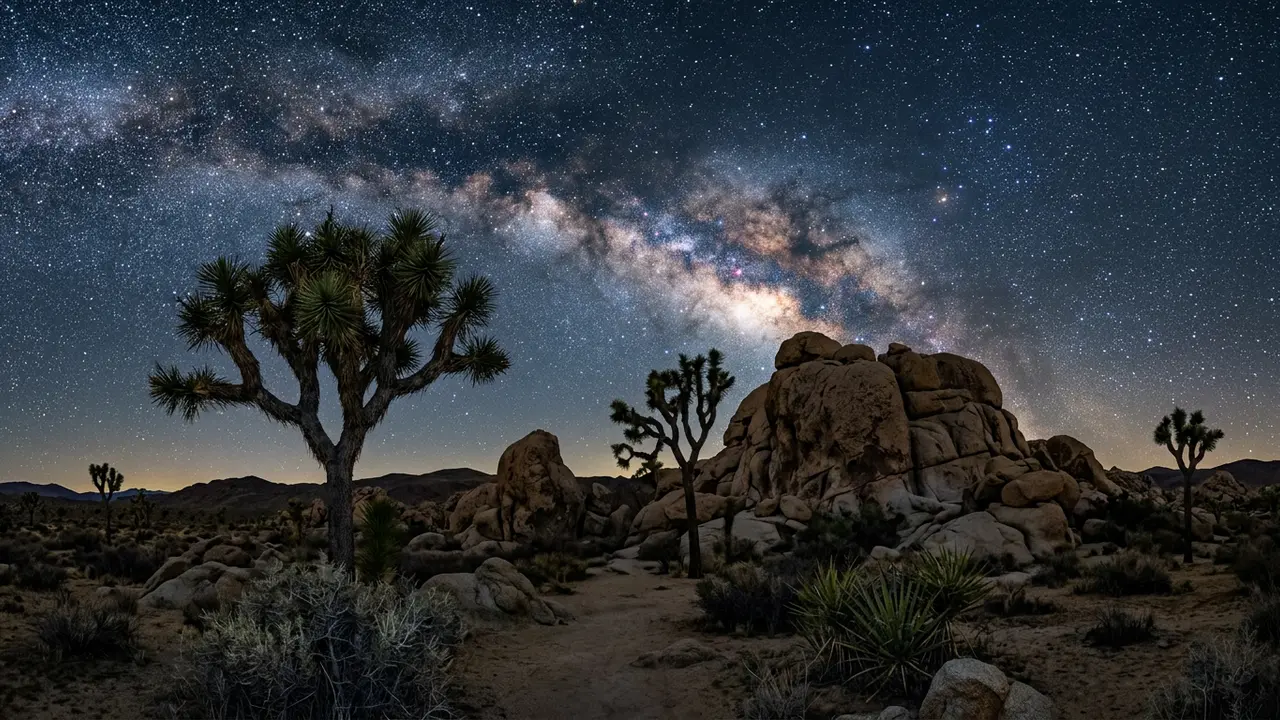
Joshua Tree earned International Dark Sky Park status in 2017, just two hours from LA. Here's where to see the Milky Way, dodge crowds, and stay the night.
Spain · Best Year-round
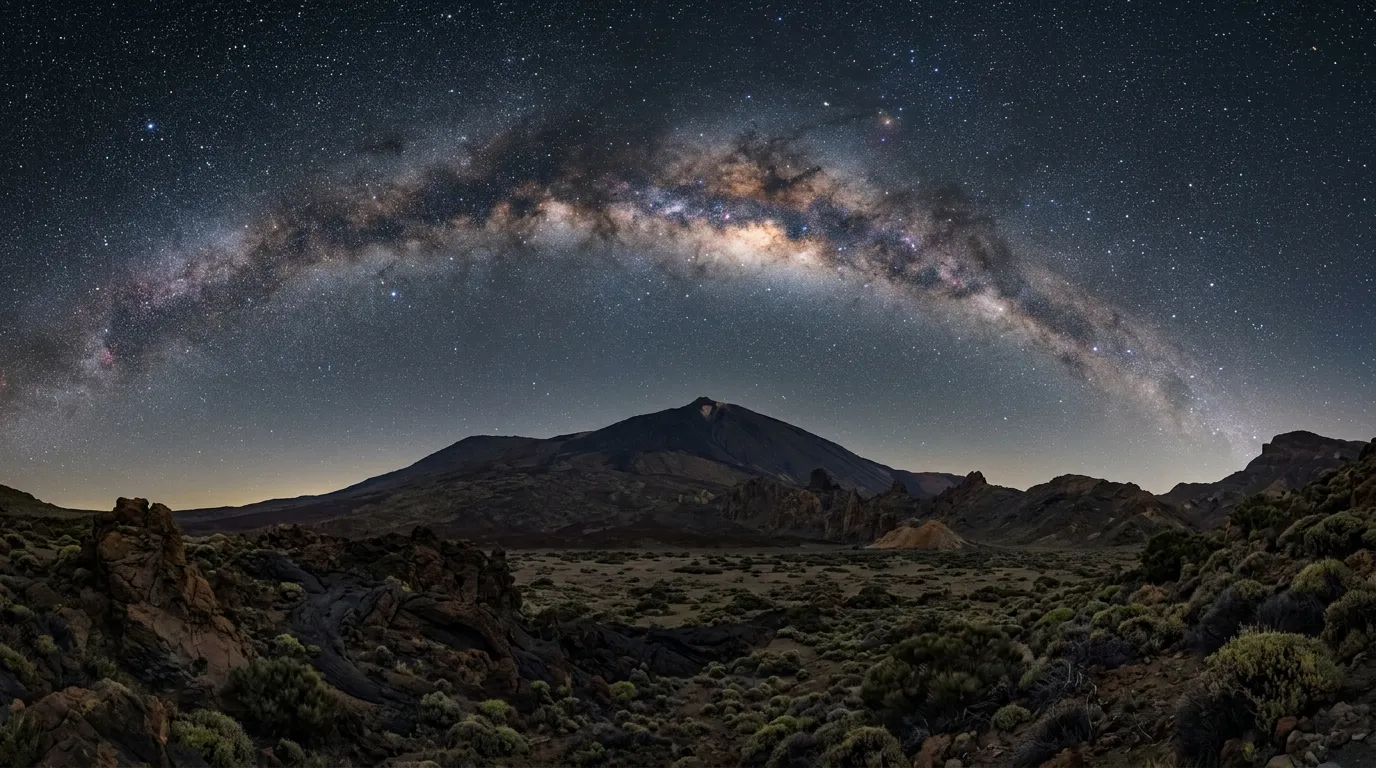
La Palma stargazing guide: the world's first Starlight Reserve since 2012, Bortle 1-2 skies above Roque de los Muchachos, plus where to stay and go year-round.