Wadi Rum's Dark Sky Case: UNESCO, Not a Designation
Four spots inside Wadi Rum's red-sand valley come up again and again when Bedouin guides and jeep-tour operators are asked where to take visitors after dark: Um Frouth Rock Bridge, Barrah Canyon, the ruin known as Lawrence's House, and the open dune fields where most overnight camps pitch their tents. None of the four carries a formal dark-sky rating, and neither does the desert around them. Wadi Rum holds no International Dark Sky Reserve or Sanctuary status from DarkSky International, whatever a camp's marketing page might imply. The certified Rum, if a search engine ever confuses you, is the Isle of Rum off Scotland's west coast, an island with nothing in common with this Jordanian desert but a name.
What Wadi Rum does carry is a UNESCO World Heritage inscription, granted in 2011 to the Wadi Rum Protected Area as a mixed cultural and natural site[1]. The cultural half of that listing rests on petroglyphs, inscriptions, and archaeological remains testifying to 12,000 years of human occupation[2], carved into the same sandstone that blocks ambient light after sunset. The natural half is simpler to state honestly: this is a huge, thinly populated stretch of desert with no city glow for miles in any direction, and that absence of nearby settlement, not a measured Bortle-scale reading, is the real basis for calling the sky here dark. The full UNESCO designation explainer walks through that designation and the Isle of Rum mix-up in full.
The certified Rum, if a search engine ever confuses you, is the Isle of Rum off Scotland's west coast, an island with nothing in common with this Jordanian desert but a name.
Elevation gets thrown around loosely in Wadi Rum write-ups. Figures for the valley floor and surrounding plateau vary by source, and no single authoritative number turned up while researching this piece. Treat any precise figure quoted elsewhere with a little skepticism, and lean on the more reliable fact instead: this is an elevated desert plateau, high, dry, and a long way from the nearest streetlight.
Getting into the Wadi Rum interior to reach any of the four spots below takes two practical steps, an entrance fee and, in effect, a guide. Both get covered in full toward the end of this guide; for now, know that none of the four spots that follow is a solo drive-up.
Um Frouth Rock Bridge: A Natural Arch Above the Valley Floor
Um Frouth Rock Bridge is the stop most Wadi Rum jeep tours build their sunset run around, and it earns that spot honestly. The bridge itself is a 20-meter-high natural arch, carved by wind and flash-flood erosion out of the same iron-rich sandstone that colors the whole valley red[3]. Reaching the top means a short, steep scramble up bare rock: no ropes, no railing, just hand-holds worn smooth by years of visitors doing the same climb before you.
What makes the climb worth it after dark isn't the arch so much as what it isn't blocking. Standing on top, the desert opens into a wide, mostly unobstructed horizon in every direction, which is exactly why jeep drivers time the stop for sunset and, for groups willing to linger, stay into the first hour of full dark. There's no canyon wall or rock ridge framing the view here the way there is at Barrah Canyon or Lawrence's House; it's just you, the arch underfoot, and open sky.
Featured · Destination
Wadi Rum
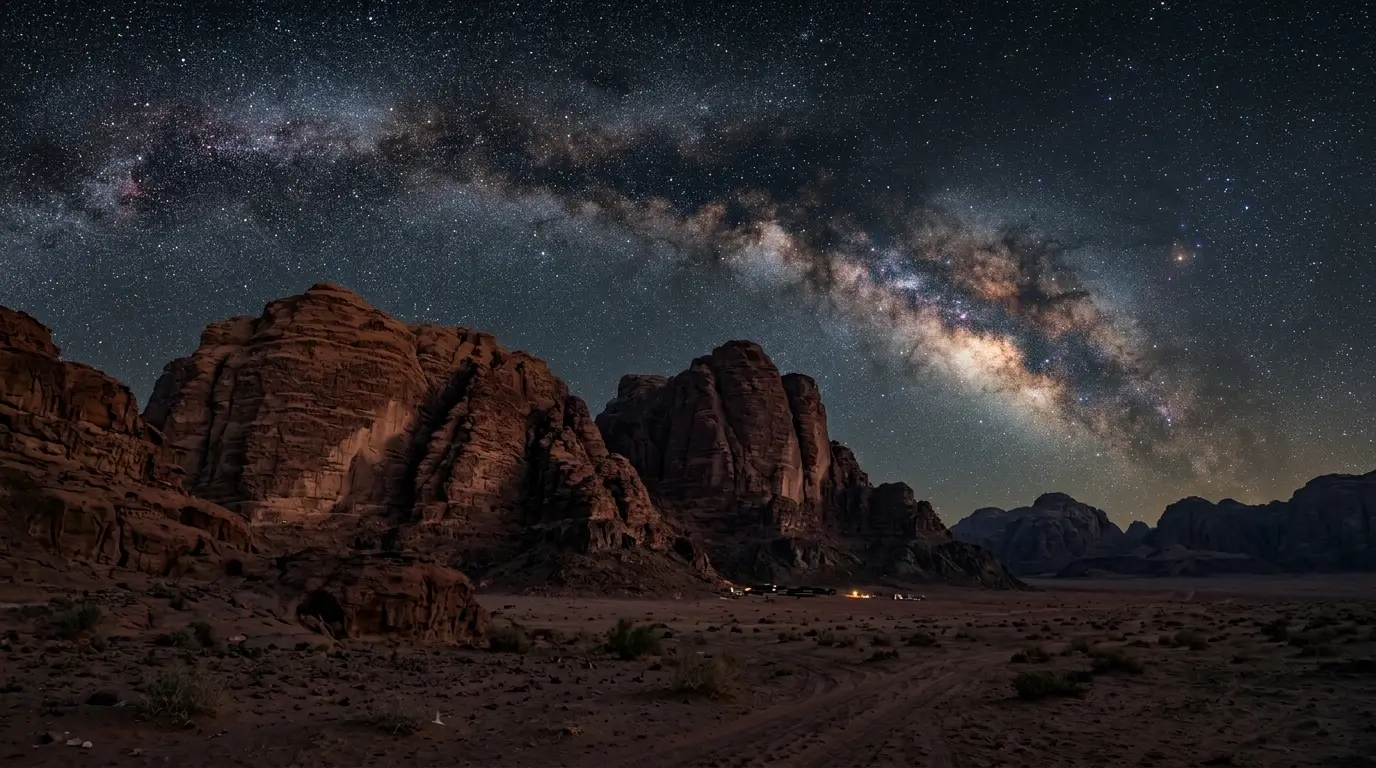
See the Wadi Rum night sky from a Zalabieh Bedouin camp in Jordan's UNESCO desert: bare tents to glass domes, Bortle 2-3 skies, and year-round stargazing.
Access runs one way: jeep tour, arranged through your camp or a Bedouin operator working out of Rum village. There's no separate ticket for the bridge itself beyond the general protected-area entrance permit, and no route in for a private vehicle. Budget the climb into your tour schedule with enough daylight left to manage the scramble safely, then ask the driver to linger if the group's willing.
Barrah Canyon: Walled-In Darkness Away from the Camps
Barrah Canyon, sometimes spelled Burrah Canyon on maps and tour itineraries, is known for towering sandstone walls and scenic hiking routes that draw both casual jeep-tour groups and serious hikers deeper into the protected area[4]. Unlike Um Frouth's open-horizon viewpoint, Barrah works as a stargazing stop precisely because of what it blocks rather than what it opens onto.
Walking the canyon floor, the rock walls on either side cut off the horizon at ground level, screening out any stray light from the direction of Rum village or a neighboring camp's fire pit, while the corridor still opens straight up to a full slice of sky overhead. Walled in on the sides and open above: a natural, if accidental, light shield in a desert that already has very little light to shield against.
Access is by hiking route, usually built into a multi-stop jeep tour or a guided desert trek rather than a standalone booking, and it sits far enough from the main cluster of camps near Rum village that it works as a genuine late-night or overnight stop rather than a quick sunset detour. The standard protected-area entrance permit covers it; there's no separate ticket.
Lawrence's House Ruins: Older Than the Name Suggests
The stone ruin every tour brochure calls Lawrence's House sits on a rocky rise overlooking a wide sand valley, the kind of raised, open vantage that puts you above camp lighting with a clean view down toward the dunes after dark. Its name promises a connection to T. E. Lawrence, of Lawrence of Arabia fame, and that promise is where most write-ups stop digging.
Most archaeological studies suggest the structure may have originally been a Nabataean or early desert caravan station, possibly used by traders or travelers passing through the region centuries before the First World War[5]. The building was not actually constructed by T. E. Lawrence himself[6], and the ruin's real age likely predates him by a very long stretch of desert history.
Recommended tours
Tours are selected for quality, not commission. I earn a small fee if you book — at no extra cost to you.
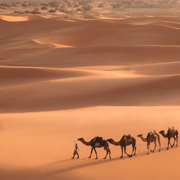
Visitors typically access the site through 4x4 jeep tours organized by local Bedouin guides from the nearby village of Wadi Rum[7], the same practical arrangement that gets you to Um Frouth and Barrah Canyon. The elevated setting doubles as a strong orientation point for night tours: guides use the ruin's height, and the story attached to it, as a natural stopping place before continuing to a camp or a dune site for the rest of the night. If you're weighing this desert against Morocco's dune-camp scene for a longer trip, see Merzouga vs Wadi Rum stargazing.
Open Red-Sand Dunes: The Widest Horizon in the Valley
Away from Rum village and the fixed camp clusters, Wadi Rum's open dune fields give the widest, least obstructed view in the entire protected area. No canyon wall, no rock ridge, nothing between you and a full 360-degree horizon at ground level, which is exactly why most overnight camps, fixed and mobile alike, including bubble-tent operations like Sun City Camp, are sited in or near the dunes rather than tucked against a canyon wall.
Tour operators market these dune camps as free of light pollution, and that phrase deserves a small caveat: the specific claim comes from operator marketing copy, not from any independent, measured dark-sky reading. What's verifiable is simpler and just as useful: there's no nearby town, no highway, and no large settlement close enough to wash out the sky here, and that remoteness alone gets you a genuinely dark view on most clear nights, once your eyes have had time to reach full dark adaptation after stepping out of a lit vehicle or dinner tent.
Featured · Article
What Is Astrotourism? The Complete Beginner's Guide
Astrotourism means travel built around dark skies: meteor showers, auroras, the Milky Way. What it means, where to go, and how to plan your first trip.
Because most camp packages already include a night in or near the dunes, this is the one spot on this list that rarely needs a separate plan. Book an overnight stay through any Bedouin-run camp and the wide-open sky comes with it; the only real choice left is whether you're staying at a shielded, low-light camp or one running a generator and string lights past midnight.
Getting There: Fees, Guides, and Picking Between the Four
Every one of these four spots sits inside the Wadi Rum Protected Area, and getting past the entrance means paying a fee at the Wadi Rum Visitor Center first, the gateway everyone passes through before reaching Rum village itself[8]. For how to actually reach that gateway from Aqaba, Amman, or Petra, see my guide to the flight and border-crossing options. Bring some flexibility on the exact amount; entrance fees at desert protected areas shift, and the visitor center is the only reliable place to confirm the current rate.
The second practical step is a guide. Private vehicles don't go past Rum village without a special permit, and while no source turned up in researching this piece cites an explicit law requiring a guide for every visitor, one local guide service puts the practical reality plainly: for most visitors, a guide is the best and most practical way to experience Wadi Rum properly[9]. Arrange one through your camp or a licensed Zalabieh Bedouin operator in Rum village rather than assuming a rental car and a downloaded map will get you there.
So which of the four should you actually pick? If you only get one clear night, Um Frouth's open horizon and easy jeep-tour access make it the safest single choice. Barrah Canyon rewards a longer stay or a genuine interest in hiking. Lawrence's House earns its stop as much for the history as the sky. The open dunes barely need choosing at all, since most camp stays, whether at a budget-tier operator like this Nomads-run desert camp or a pricier bubble-tent camp, already put you there for the night regardless of which other spot you visit first. For a month-by-month breakdown of when to go, see best time for stargazing in Wadi Rum.
| Spot | Best for | Access |
|---|---|---|
| Um Frouth Rock Bridge | Open horizon, easiest single stop | Jeep tour, short scramble to the top |
| Barrah Canyon | Hiking and walled-in darkness | Guided hike or multi-stop jeep tour |
| Lawrence's House ruins | History plus an elevated view | 4x4 jeep tour with a Bedouin guide |
| Open red-sand dunes | Widest 360-degree horizon | Included in most overnight camp stays |
What to confirm before you book
- Current entrance fee and permit requirements directly with the Wadi Rum Visitor Center, since posted rates change
- A guide arranged through your camp or a licensed Bedouin operator, not a rental car and a downloaded map
- Real cold-weather layers regardless of season, desert nights drop fast once the sun's down
- A backup night built into your itinerary, since one clear night rarely lines up exactly with your travel dates