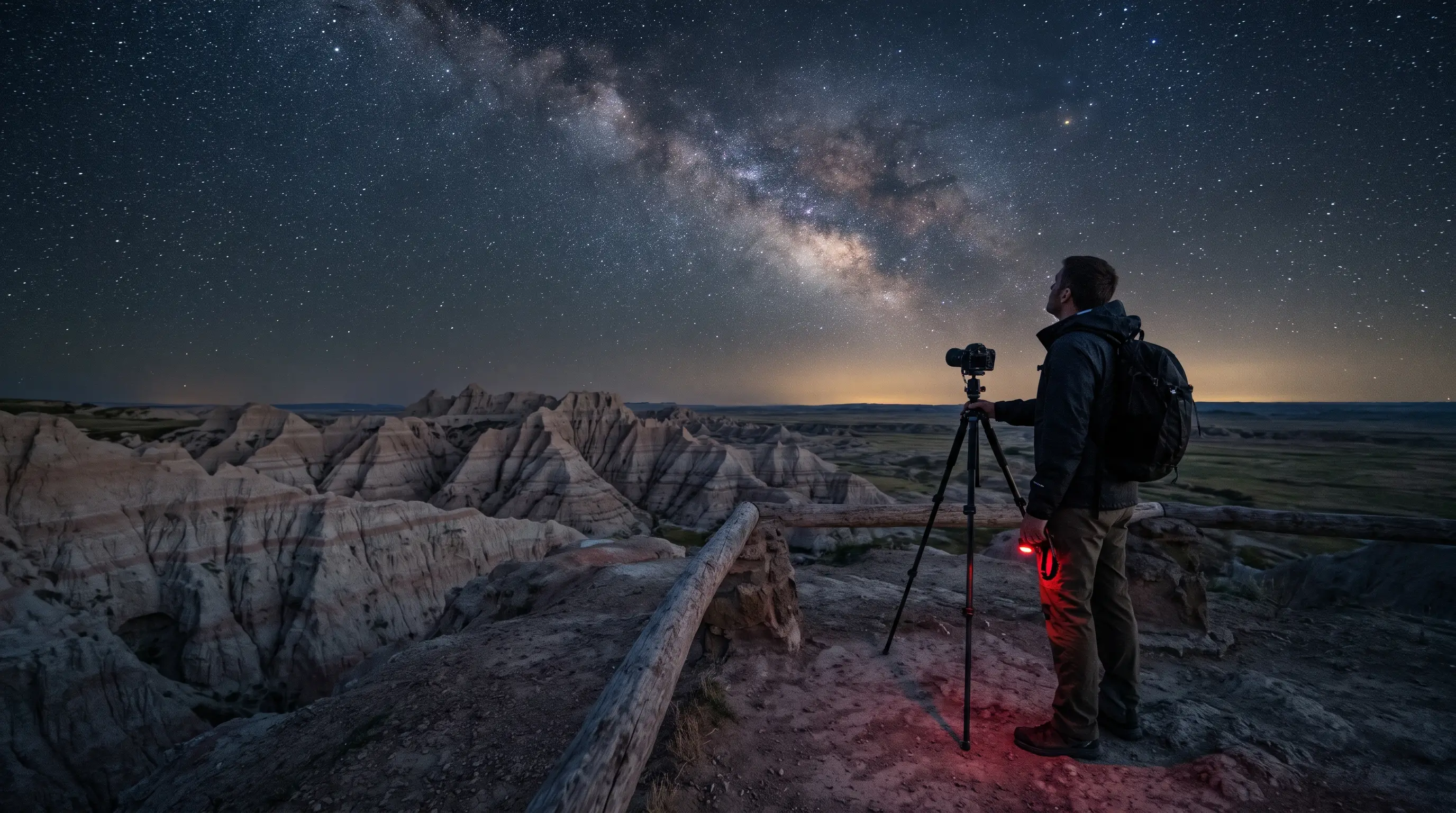
Milky Way arching over banded Badlands pinnacles and prairie at night, illustrating Badlands National Park as a dark sky park, faint warm horizon glow and star-dense sky

Badlands National Park Is Now a Dark Sky Park. Here's Why
Badlands National Park was announced as an International Dark Sky Park in July 2026. See the lighting retrofits, four sky monitors and what you see at night.

Portrait of Maya Okonkwo
Written by

I've seen dark skies firsthand in the Atacama altiplano, Namibia's NamibRand Nature Reserve, and Morocco's Merzouga dunes; every other destination I write about is built from measured Bortle and SQM data, cloud climatology, and primary sources like park services and the International Dark-Sky Association.

Published
Yes. Badlands National Park was certified as an International Dark Sky Park by DarkSky International, with the National Park Service announcing it on 17 July 2026.[1] What earned the badge was lighting retrofits, sky-quality monitoring and years of night programs, not any change in the sky itself. Treat it as a reason to plan a night here, and to check the moon phase first, because certification protects darkness and does nothing about clouds.
Park area
240,000+ acres
Eroded formations, mixed-grass prairie and rugged wilderness[2]
Astronomy Festival launched
2012
Annual festival celebrating the night sky and space exploration[3]
Standard entrance pass
$15–$30
Range listed by NPS; card only, no cash accepted[4]

What a Dark Sky Park badge means for your visit

Certification will not change the sky you get on any given night. What it changes is how likely the park's own lights are to get in the way next year and the year after, which is the only timescale a designation can honestly promise. If you are choosing between designated parks, ask what each one is monitoring, not just what it was awarded.
The badge comes from DarkSky International, the nonprofit formerly known as the International Dark-Sky Association, whose International Dark Sky Places Program started in 2001 as a non-regulatory and voluntary scheme.[5] Nothing in it forces a park to dim anything. A park applies, shows it has done the work, and agrees to keep doing it; how dark sky certification works in practice is mostly that loop of application and annual reporting.
Badlands now joins more than 250 places that have demonstrated robust community support for dark-sky advocacy,[6] and it is among forty National Park Service units carrying the designation.[7] That makes the badge a record of what management chose to do, which is why the retrofit and monitoring work below matters more than the logo.

Planning a night at Badlands

Stay at least one night, and pick a new-moon week. Moonlight washes out the Milky Way, and a ranger program fits an evening while the dark sky needs the hours after it. Ranger Lydia Jones says a lot of visitors drive through on their way to Mount Rushmore or Yellowstone, which is the habit to break.[8]

Before you drive out

  • Check the NPS calendar for the July festival; no 2027 dates yet.
  • Pick a new-moon week; moonlight washes out the Milky Way.
  • Stay at least one night so an evening program and the dark hours both fit.
  • Bring a card: the entrance pass does not take cash.
  • Treat the 7,500-star figure as a Conservancy claim, not a forecast.
  • Read dark sky etiquette: white light ruins night vision.
The park is open 24 hours a day, seven days a week, entrance fees are collected year round, and in winter or extreme weather the roads through the Badlands may be closed.[9][10] NPS lists the standard entrance pass as a $15.00–$30.00 range, card only with no cash accepted,[4] and the annual Badlands pass is $55 for one private vehicle and its occupants.[11]
Night Sky Viewings run every night in the summer, starting after sunset and usually right after the evening ranger program, so there is no fixed clock time to plan around.[12][13] The Astronomy Festival is the fixed date: a Friday-to-Sunday weekend in mid-July, with evening programs from 9 to 11:30 pm at the Cedar Pass Campground Amphitheater (18 to 20 July in 2025).[14] No 2027 dates are published, so check the NPS calendar before you book.
The park names only the amphitheater and the visitor center for organized viewing, so ask a ranger where to set up once the program ends. For a counterpart elsewhere in the U.S. park system, Organ Pipe Cactus shows how another certified park handles the same night-visit questions.

What you can see at Badlands after dark
DarkSky describes the view as the Milky Way, planets and deep-sky objects visible to the naked eye, under some of the darkest skies remaining in North America.[15] That is the certifying body's pitch, and it is fair to read it as one. The practical translation is that on a clear, moonless night the galaxy should be there without optical aid, and a telescope adds detail instead of being the price of entry.
The Badlands National Park Conservancy puts the count at more than 7,500 stars on any given night.[16] Treat that as a promotional ceiling, not a sky-quality reading, because no one sees every cataloged star from one spot and the monthly monitor data is what will actually track darkness over time.
The programming is where the designation turns into something you can attend. The park runs nightly astronomy programs and night sky tours and supports a growing team of astronomy volunteers.[17]
The Astronomy Festival concentrates that into one weekend. The 2026 edition ran 17 to 19 July, the same weekend the designation was announced, with guest speakers, evening programs and public stargazing; events needed no advance registration or tickets, and the schedule was posted at the Ben Reifel Visitor Center.[18]
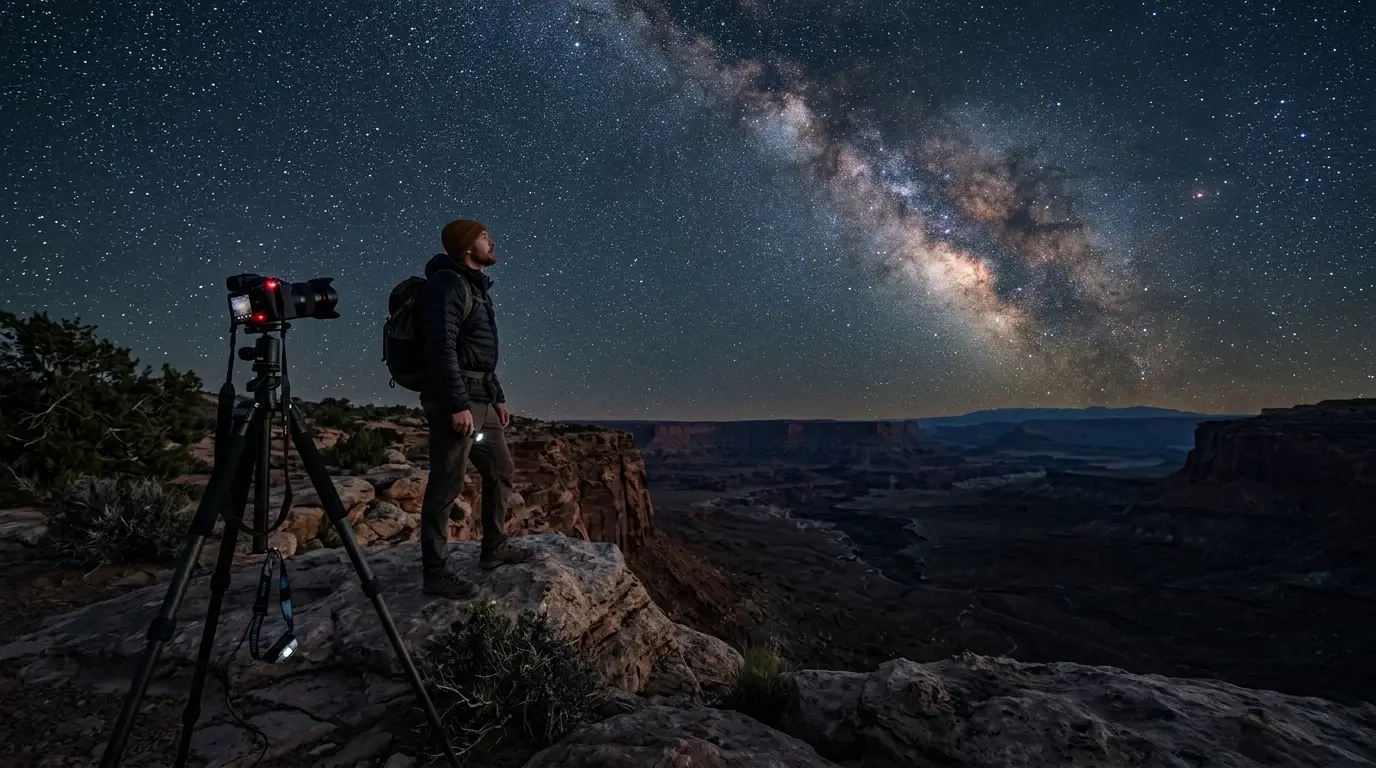
Traveler photographing the Milky Way arc above a dark desert horizon on an astrotourism trip, tripod-mounted camera capturing star trails against a certified dark-sky park backdrop

Featured · Article

What Is Astrotourism? The Complete Beginner's Guide

Astrotourism means travel built around dark skies: meteor showers, auroras, the Milky Way. What it means, where to go, and how to plan your first trip.

Two more layers sit on top. Interpretation includes Lakota Star Knowledge, which the park uses to connect people, landscape and stars,[19] and regional partners are exploring a public observatory that remains a plan rather than a building.[20] I would put the Lakota material ahead of the telescope time.
If I were sequencing a trip, I would take an evening program first for orientation, then spend the hours after it away from the amphitheater crowd. The programs show you what to look for, and the dark afterward is what you came for. Give your eyes at least twenty minutes without a phone screen before judging the sky.

What Badlands changed to earn the designation
The park began pursuing certification in 2018, after encouragement from the public and partners, and the work that followed came in two parts: major lighting retrofits and long-term monitoring.[21] The certifying body's own summary names the same pair and adds expanded ranger-led night programming and community engagement.[22]
The park and its nonprofit partners completed the major lighting retrofits,[23] with the park's maintenance division installing lighting approved by the International Dark-Sky Association, fixtures built to minimize light emissions. The park also placed four night sky monitors across its territory that log a light pollution index every month, with the data feeding the annual reports needed to keep the designation.[24]
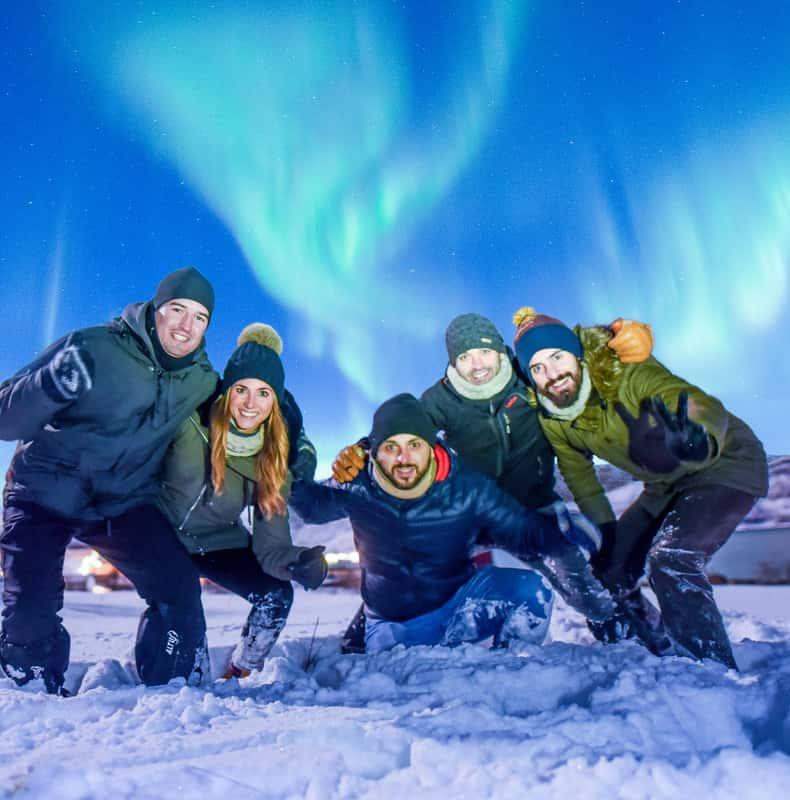
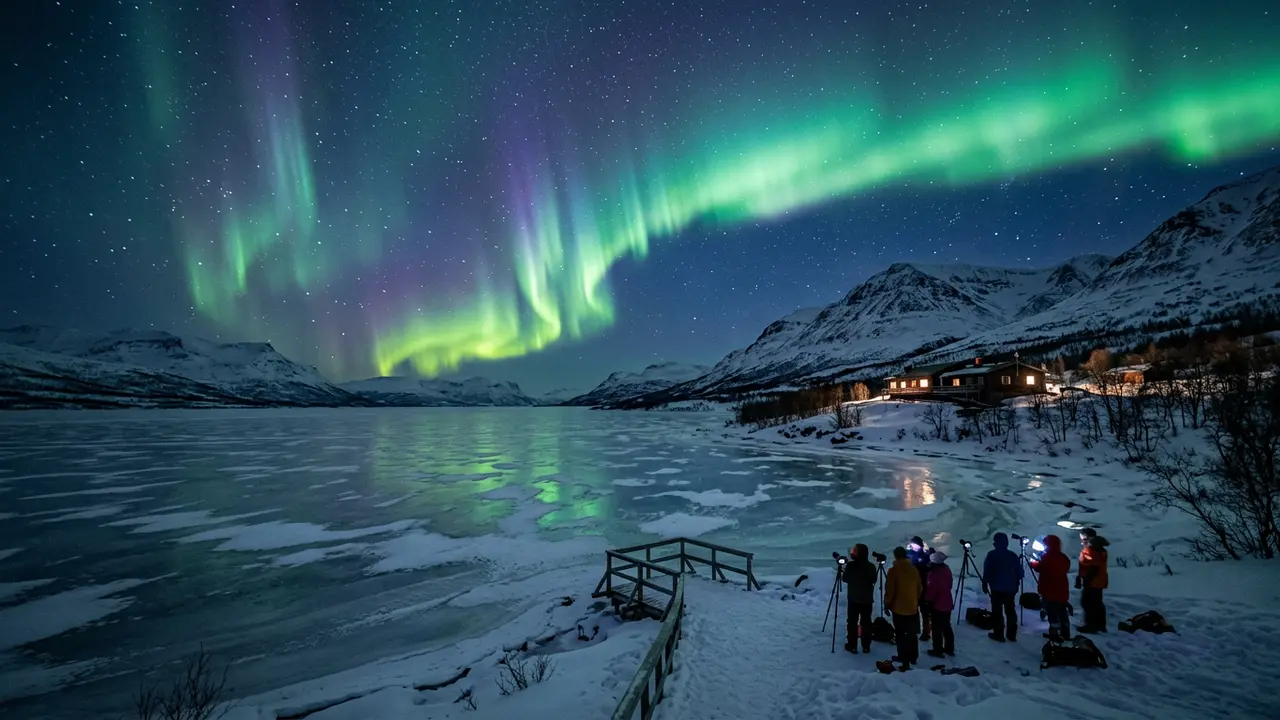
Aurora borealis over Lake Torneträsk near the Aurora Sky Station, Abisko stargazing destination in Swedish Lapland

Featured · Destination

Abisko Stargazing

Abisko's rain-shadow microclimate keeps skies clear when nearby Arctic spots cloud over. Aurora season, the Sky Station, ICEHOTEL, and getting there by train.

Monitoring is the part I would watch. A retrofit is a one-time job; a monitor is a commitment, because the numbers come back every month whether or not they flatter the park. A designation is evidence of management, the monthly readings are evidence of the sky, and the two are not the same thing.
Exterior lighting is the lever a park controls completely. Fixtures at its own buildings and campgrounds are the park's decision, unlike skyglow that drifts in from a distant town, so a retrofit is the fastest visible win a certification effort can deliver and the easiest one to verify with a monitor.

Why a remote park still had to retrofit its own lights

The National Park Service led the effort with the Badlands National Park Conservancy and regional partners, and the Conservancy prepared the certification paperwork.[25][26] The case was never that Badlands has a city to switch off: the NPS describes this corner of the Great Plains as a place where light pollution is not a prevalent issue,[27] so the work centered on the park's own exterior lighting and on monitoring.
Elsewhere the picture is bleaker, since roughly 80 percent of Americans can no longer see the Milky Way,[28] and that gap is what makes a park where the galaxy is an ordinary sight worth a detour. Compare Death Valley's certification, which leans on desert aridity and sheer size. Badlands leans on what the park did to its own lighting.

Recommended tours

Tours are selected for quality, not commission. I earn a small fee if you book — at no extra cost to you.
The Conservancy's executive director, Marissa Marshall, calls the designation the first step in what the group hopes to shepherd across the broader region and the state of South Dakota.[29] One park is certified, an observatory is only being weighed, and a wider astrotourism circuit is still to be built.

Frequently asked questions

Is Badlands National Park a dark sky park?

Yes. DarkSky International certified it as an International Dark Sky Park, and the National Park Service announced the designation on 17 July 2026. The program is voluntary and non-regulatory.

Is Badlands South Dakota's first International Dark Sky Park?

Officials and the Conservancy call it a milestone for South Dakota and a first step for the state. If you want to repeat a ranking, attribute it to news coverage rather than to the park.

What did Badlands change to earn Dark Sky status?

The park retrofitted exterior lighting to dark-sky standards, installed night sky quality monitors, expanded ranger-led night programming and engaged the community, with the Badlands National Park Conservancy handling the application.

What can you see at night in Badlands National Park?

DarkSky lists the Milky Way, planets and deep-sky objects visible to the naked eye. On a clear, moonless night that is the realistic expectation.

Can you visit Badlands National Park at night, and what does it cost?

The park is open 24 hours a day, seven days a week, and entrance fees are collected year round. NPS lists the standard entrance pass as a range from $15.00 to $30.00, card only, and the annual Badlands pass at $55.

Does Badlands offer ranger night sky programs?

Yes. The park offers nightly astronomy programs and night sky tours, supported by astronomy volunteers, and Night Sky Viewings run every night in the summer, usually after the evening ranger program. Check the park's current schedule before you go.

When is the Badlands Astronomy Festival?

It is a Friday-to-Sunday weekend in mid-July: 18 to 20 July in 2025 and 17 to 19 July in 2026, with evening programs and public stargazing at the Cedar Pass Campground Amphitheater. No 2027 dates are published, so confirm with the park.

Does the Dark Sky Park designation guarantee a clear night?

No. The designation protects darkness from light pollution and says nothing about cloud cover, so a new-moon week and a flexible schedule matter more than the badge.

Sources

30 references Show
  1. nps.gov — Badlands national park achieves dark sky park certification (opens in a new tab)

    “Badlands National Park has officially been certified as an International Dark Sky Park by Dark Sky International.”

  2. DarkSky International — Badlands national park earns international dark sky park designation (opens in a new tab)

    “Badlands National Park encompasses over 240,000 acres of striking geologic formations, mixed-grass prairie, and rugged wilderness.”

  3. nps.gov — Badlands national park achieves dark sky park certification (opens in a new tab)

    “The park launched its Annual Badlands Astronomy Festival in 2012 to celebrate the night sky and space exploration.”

  4. nps.gov — Fees (opens in a new tab)

    “Standard Entrance Pass $15.00–$30.00 Badlands National Park charges an entrance fee. No cash is accepted. Credit/debit card only.”

  5. nps.gov — Badlands national park achieves dark sky park certification (opens in a new tab)

    “The International Dark Sky Places Program was founded in 2001 as a non-regulatory and voluntary program”

  6. DarkSky International — Badlands national park earns international dark sky park designation (opens in a new tab)

    “Badlands National Park now joins more than 250 Places that have demonstrated robust community support for dark sky advocacy”

  7. sdpb.org — Badlands national park achieves international dark sky designation (opens in a new tab)

    “Badlands National Park is now among forty National Park Service units nationwide with the International Dark Sky Designation.”

  8. sdpb.org — Badlands national park achieves international dark sky designation (opens in a new tab)

    “We get a lot of folks that drive through on their way to Mount Rushmore or Yellowstone or other parks.”

  9. nps.gov — Hours (opens in a new tab)

    “Badlands National Park is open 24 hours a day, seven days a week.”

  10. nps.gov — Hours (opens in a new tab)

    “Entrance fees are collected year round. In the winter or in extreme weather events, roads going through the Badlands may be closed.”

  11. nps.gov — Fees (opens in a new tab)

    “Annual Entrance - Park $55.00 This pass admits a single, private, non commercial vehicle and its occupants into the park.”

  12. nps.gov — Night skies badl (opens in a new tab)

    “Badlands National Park offers stargazing events called Night Sky Viewings every night in the summer.”

  13. nps.gov — Night skies badl (opens in a new tab)

    “The time of this program changes based on the time of the sunset, but it typically follows the Evening Program for the night.”

  14. nps.gov — Badlands astronomy festival to be held july 18th 20th 2025 (opens in a new tab)

    “9pm - 11:30 pm (Fri, Sat, Sun) at the Cedar Pass Campground Amphitheater”

  15. DarkSky International — Badlands national park earns international dark sky park designation (opens in a new tab)

    “Visitors can enjoy expansive views of the Milky Way, planets, and deep-sky objects, visible to the naked eye under some of the darkest skies remaining in North America.”

  16. sdpb.org — Badlands national park close to achieving international dark sky certification (opens in a new tab)

    “According to the Badlands National Park Conservancy, more than 7,500 stars are visible on any given night in the Badlands.”

  17. nps.gov — Badlands national park achieves dark sky park certification (opens in a new tab)

    “Today, the park offers nightly astronomy programs and night sky tours and supports a growing team of astronomy volunteers.”

  18. nps.gov — Badl astronomy festival (opens in a new tab)

    “Astronomy Festival events do not require advance registration or tickets.”

  19. DarkSky International — Badlands national park (opens in a new tab)

    “Indigenous perspectives, including Lakota Star Knowledge, help deepen public understanding of the relationship between people, landscape, and the stars.”

  20. DarkSky International — Badlands national park (opens in a new tab)

    “regional partners are exploring opportunities to expand astronomy-based education and public access through future initiatives, including the development of a planned public observatory.”

  21. nps.gov — Badlands national park achieves dark sky park certification (opens in a new tab)

    “The park began pursuing Dark Sky certification in 2018 after encouragement from the public and partners.”

  22. DarkSky International — Badlands national park earns international dark sky park designation (opens in a new tab)

    “Key actions included retrofitting exterior lighting to meet dark sky standards, implementing night sky quality monitoring, expanding ranger-led night sky programming”

  23. nps.gov — Badlands national park achieves dark sky park certification (opens in a new tab)

    “established long-term monitoring efforts and completed major lighting retrofits.”

  24. sdpb.org — Badlands national park close to achieving international dark sky certification (opens in a new tab)

    “The park's maintenance division has also been installing lighting approved by the International Dark-Sky Association, which minimize light emissions.”

  25. DarkSky International — Badlands national park (opens in a new tab)

    “The designation of Badlands National Park as an International Dark Sky Park reflects years of collaborative conservation and advocacy efforts led by the National Park Service, the Badlands National Park Conservancy”

  26. sdpb.org — Badlands national park close to achieving international dark sky certification (opens in a new tab)

    “We've been working with the Badlands National Park Conservancy, which is one of our nonprofit partners.”

  27. nps.gov — Badl astronomy festival (opens in a new tab)

    “the Badlands are nestled in a corner of the Great Plains where light pollution is not a prevalent issue.”

  28. sdpb.org — Badlands national park achieves international dark sky designation (opens in a new tab)

    “roughly 80 percent of Americans can no longer see the Milky Way.”

  29. DarkSky International — Badlands national park earns international dark sky park designation (opens in a new tab)

    “This is just the first step in what we hope to shepherd across the broader region and the state of South Dakota.”

  30. nps.gov — Badlands national park achieves dark sky park certification (opens in a new tab)

    “Badlands National Park is home to many nocturnal species, such as owls, bats and the endangered black-footed ferret, that depend on dark skies for their survival.”