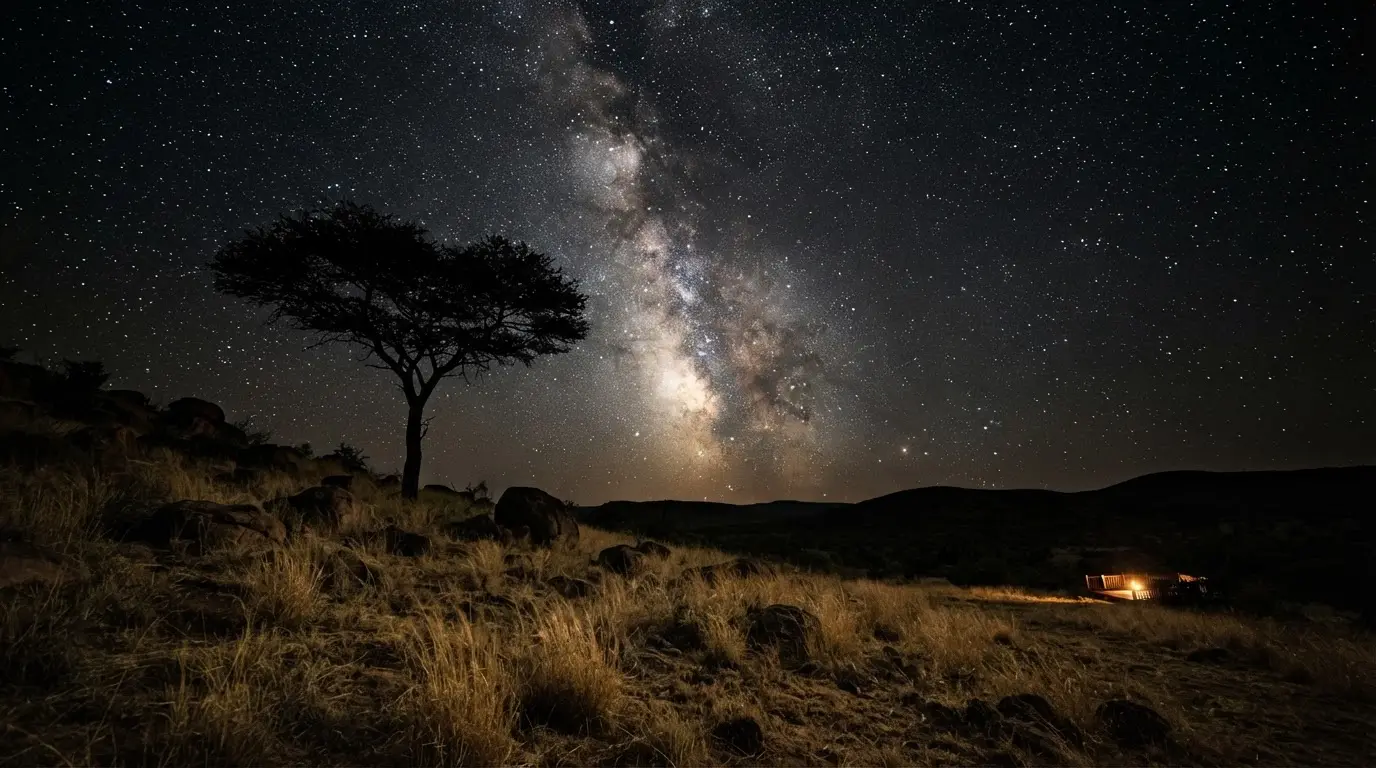
Why a Big Five reserve counts as a dark sky park
Lapalala Wilderness sits in Limpopo Province inside the UNESCO Waterberg Biosphere Reserve[6], on the R518 between Marken and Mokopane[7]. It is among the largest private Big Five reserves in South Africa[8], which is why the designation surprises people. DarkSky's Park category began in 2007 with Natural Bridges National Monument in Utah[29], a long way from a place where lodge guests go looking for lions.
The explanation is that DarkSky's International Dark Sky Places program, founded in 2001, is non-regulatory and voluntary[9]. Nothing obliges a safari reserve to switch off its lights. A reserve earns the label by doing the work and then proving the result, and Lapalala did both.
The category is International Dark Sky Park, and the word "first" in the headline needs careful reading. Lapalala is the first Park in South Africa, not the first dark sky place of any kind. It was also the 250th place on DarkSky's global list[1]. Treat the certificate as proof of effort, not a promise of a clear night: cloud cover and moon phase still decide what you see on any given evening, as they do everywhere.
What the lighting audit and Light Management Plan changed
Before Lapalala could apply, someone had to walk the property and count every outdoor light. The tally ran past 1,700 fixtures[10], a number that looks absurd for a reserve with only two lodges. Lights were then replaced or modified to limit glare, light trespass and skyglow, the three ways light pollution leaks into a night sky[10].
The result is a Light Management Plan, implemented to guide every future lighting decision on the reserve[26]. What is now standard across the property comes down to three rules[11]:
- Shielded fixtures, so light is thrown at the ground instead of out and up
- Warm-colour-temperature bulbs, which put far less blue light into the air
- Guidance on where and when any light may be used at all
Written rules outlast good intentions, and Lapalala has put its rules into writing. Dark-sky protection now sits inside the reserve's environmental management policies, development guidelines and building standards, so new construction falls under the same standards as the old[12].
DarkSky's Park criterion is a Milky Way visible on a typical night, which corresponds to roughly 21.2 magnitudes per square arcsecond or darker[20]. Lapalala's reported average of 21.41 clears that line by about 0.2[3]. Sky Quality Meter figures rise as the sky gets darker, so higher is better. A reading describes the sky itself, though, and says nothing about how lodge lighting behaves at nine in the evening. That gap is why the audit exists.
Why the lights matter beyond the stars
Skyglow is not only a stargazer's grievance. The reserve's own list of beneficiaries starts small: dung beetles on the ground, and overhead the Woodland Kingfisher, a migratory bird that travels the night sky[13].
That framing explains why a safari operator would take on a lighting audit of that size. Guests come for animals, and one lighting plan that protects the night and also sells a Milky Way is a single project with two payoffs. Guests gain something practical as well. Night vision leans on rhodopsin, which takes 20 to 40 minutes to start helping[27], and a few seconds of bright light undoes it[28]. A property that controls where and when lights are used gives that adaptation a chance to survive the walk back to your room.
Featured · Destination
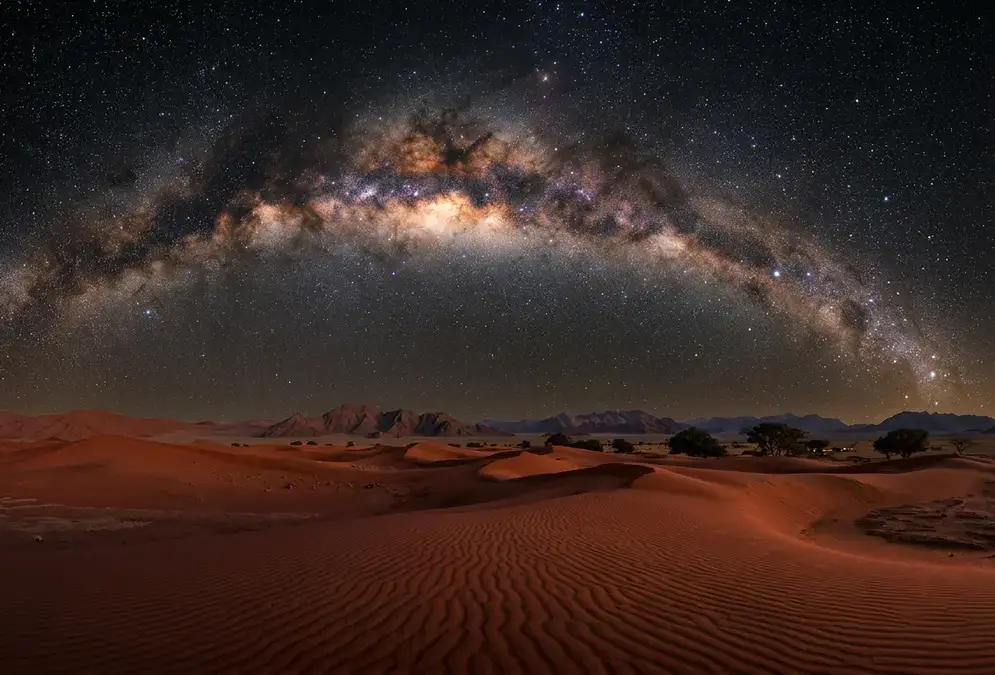
NamibRand Nature Reserve
NamibRand is Africa's only Gold Tier Dark Sky Reserve: extreme Namib Desert isolation, the Southern Cross, Magellanic Clouds, and luxury safari lodges.
The timing fits national policy too. The designation arrived as South Africa launched its National Astro-Tourism Strategy, which aims to make the country a global leader in nighttime travel[14]. For anyone new to the idea, astrotourism is simply travel planned around the night sky.
How Lapalala's Park category differs from NamibRand's Reserve
Lapalala is not the first African place on DarkSky's list. When it joined, the roster already included !Ae!Hai Kalahari Heritage Park, an International Dark Sky Sanctuary in South Africa, and NamibRand Nature Reserve, an International Dark Sky Reserve in Namibia[15]. South Africa therefore had a Sanctuary before it had a Park, and the two earlier places named in DarkSky's announcement belong to different categories from Lapalala's.
DarkSky defines a Park as a publicly or privately owned conservation area that implements good outdoor lighting and provides dark sky programs[22]. A Reserve is a dark core zone surrounded by a populated periphery where policy controls protect the core[23], and it needs lands of at least 700 square kilometers[24], well above Lapalala's 480. A Sanctuary is for the most remote and fragile places[25]. The NamibRand Nature Reserve was designated a Dark Sky Reserve in 2012[21], is among the biggest private reserves on the continent, and sits somewhere both naturally very dark and reachable by road[16]. There, isolation does much of the work behind Namib Desert dark sky conservation. At Lapalala the work was retrofit: counting, shielding and rewriting building standards on a property that already had lodges.
| Detail | Lapalala Wilderness | NamibRand |
|---|---|---|
| DarkSky category | International Dark Sky Park | International Dark Sky Reserve |
| Country | South Africa (Limpopo) | Namibia |
| Designated | 2025 | 2012 |
| Setting | Savanna and river valleys, Big Five reserve | Namib Desert |
For a traveler the difference is what you are buying. NamibRand is a dark-sky trip with wildlife attached, and Lapalala is a Big Five safari that has cleaned up its night. Judge each on its own terms, and be wary of ranking one above the other from a single SQM average. Neither category is a quality grade. A Park is not a lesser Reserve, just a different shape of protection.
Combining a safari and stargazing at Lapalala
Only two lodges operate on the whole reserve, Noka Camp and Melote House, both run by Lepogo Lodges[17]. That settles whether you can combine safari and stargazing here: the same operator runs the game drives and the night program, and it was part of the lighting project from the start[5].
Lepogo's night offer includes guided night drives, astronomy experiences and sleepout adventures under the stars[18]. The wider activity list shows how stargazing slots into an ordinary safari stay[19]:
Recommended tours
Tours are selected for quality, not commission. I earn a small fee if you book — at no extra cost to you.
- Game drives and night drives
- Walking safaris and boat safaris
- Conservation and veterinary activities
- Ancient rock art
Featured · Article
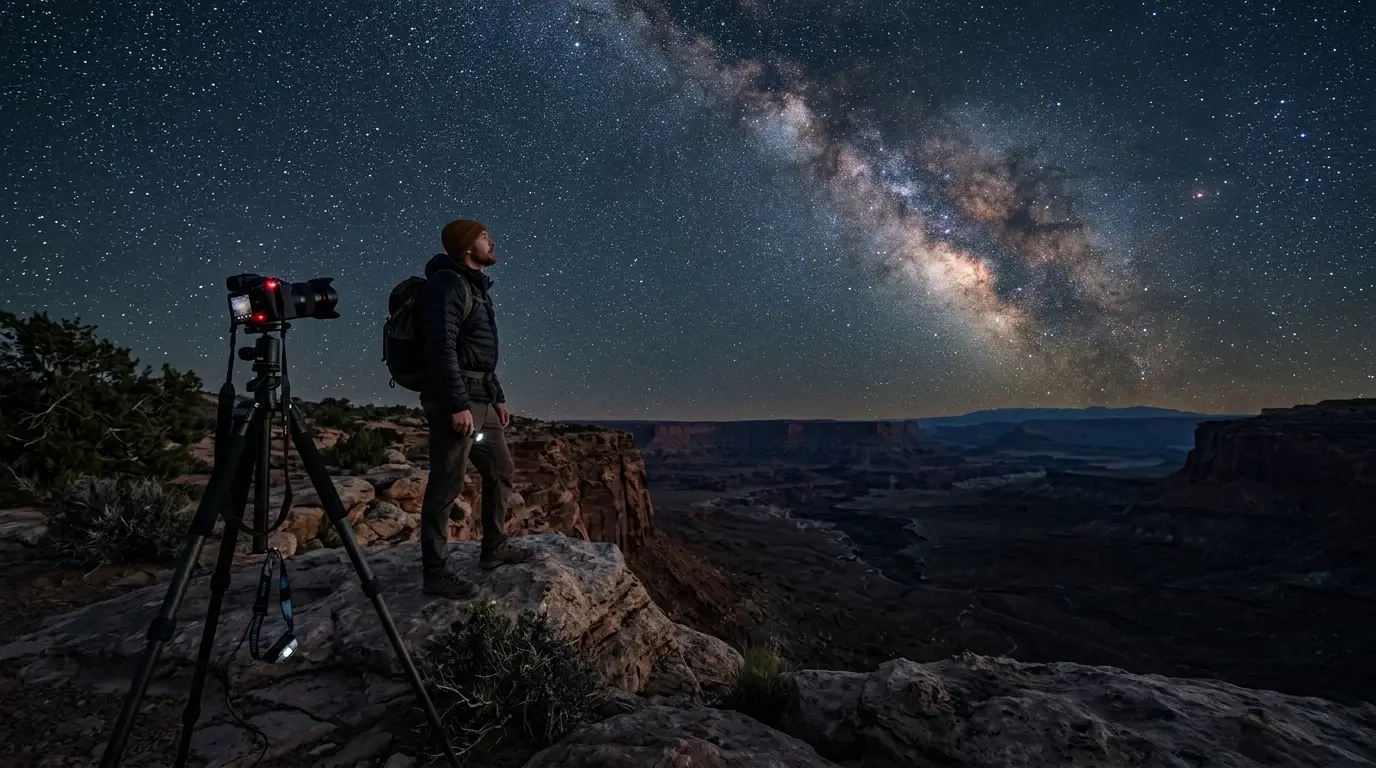
What Is Astrotourism? The Complete Beginner's Guide
Astrotourism means travel built around dark skies: meteor showers, auroras, the Milky Way. What it means, where to go, and how to plan your first trip.
I haven't been to Lapalala yet, so this is the booking advice I would follow rather than a report. Pick the new moon. Then ask whether the astronomy session and the sleepout fall on the nights you can book, and treat the night drive as a wildlife outing that happens to be dark rather than your stargazing plan. If a sleepout is offered for your dates, it is the most direct test of the whole lighting scheme, because nothing lit stands behind you.
If stargazing is the main event and the safari is the extra, Best Dark Sky Parks in the World compares a dozen certified parks and reserves across the inhabited continents.