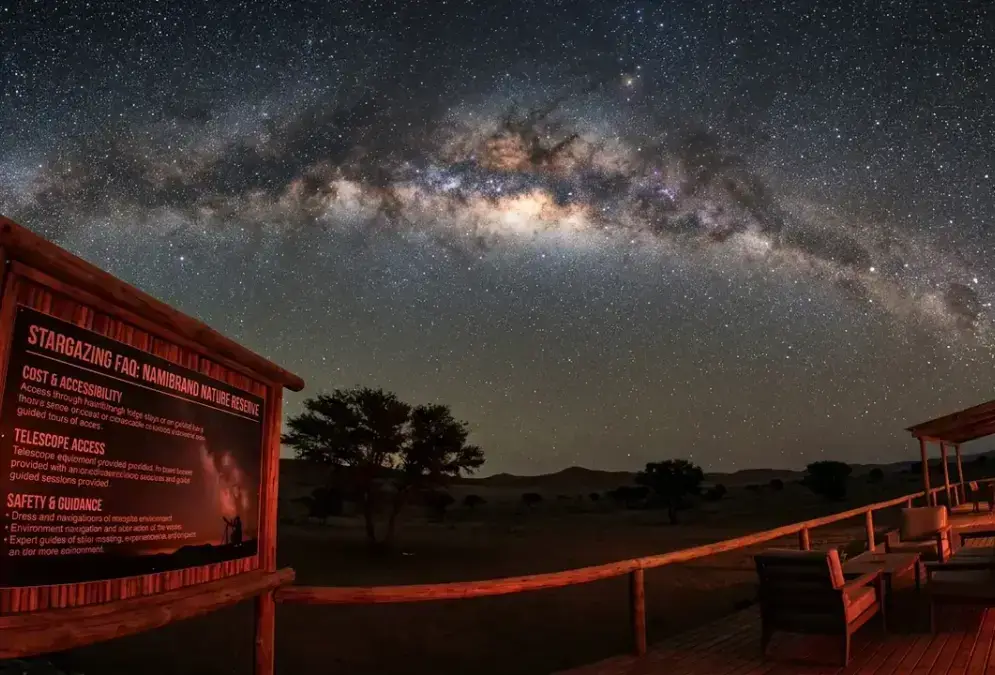
How much does a NamibRand stargazing trip actually cost
NamibRand has no budget tier of its own. Every lodge inside the private reserve runs on an all-inclusive nightly rate that covers meals, game drives, and, at most properties, an evening under the sky. At Kwessi Dunes, one of the reserve's stargazing-focused lodges, that rate runs from NAD 10,845 to NAD 20,495 a night[1], and other reserve properties price in the same ultra-premium range. There's no day-pass and no campsite; access is bundled into the room rate, not sold separately.
That number surprises first-time visitors who assume a stargazing trip should cost roughly what a national-park entry fee does. It doesn't, because NamibRand isn't run like a national park. It's a private conservation area funded entirely by its partner lodges, and the nightly rate is effectively the entry fee, whether or not you ever look through a telescope.
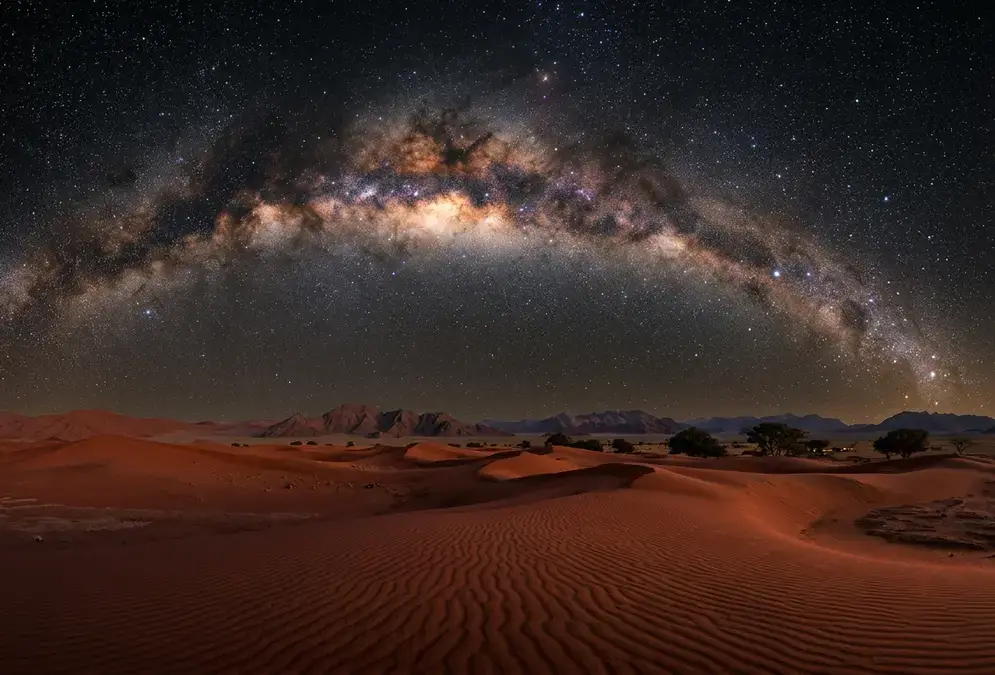
Featured · Destination
NamibRand Nature Reserve
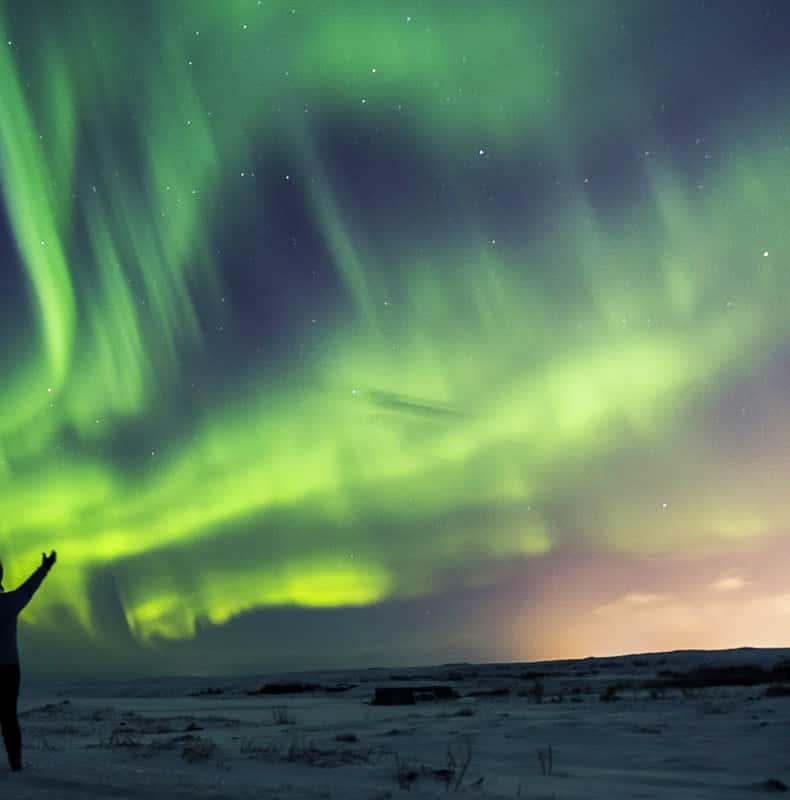
NamibRand is Africa's only Gold Tier Dark Sky Reserve: extreme Namib Desert isolation, the Southern Cross, Magellanic Clouds, and luxury safari lodges.
If the reserve's luxury lodge rates sit outside the budget, the honest workaround is basing just outside the reserve, in Sesriem or Solitaire, both a few hours south. You lose the Gold Tier certification and the dedicated stargazing decks, but you're still deep in the same desert, under close to the same sky, for a fraction of the price. For the full lodge-by-lodge breakdown, see the NamibRand Nature Reserve destination guide.
How remote is NamibRand, and how long does it take to get there
NamibRand covers roughly 215,000 hectares[2], one of the largest private nature reserves in Southern Africa, sitting just south of the Sossusvlei dune fields. Size alone explains the remoteness: there's no town inside the boundary, no fuel station, and no reliable cell signal at most lodges, with the nearest settlements tens of kilometres beyond the reserve's edge.
Getting there from Windhoek, Namibia's main international gateway, means committing to a genuine half-day of travel. The road runs good tar for most of the drive, then turns to gravel for the final stretch, and a 4x4 is the recommended vehicle for that last section[3], even though a standard car can sometimes manage it depending on the exact route and season. Budget five to six hours behind the wheel before reaching a lodge gate, longer with a fuel stop.
215,000 ha
A charter flight is the other option, cutting that half-day down to about an hour in the air plus a short road transfer. It costs more, but it's the practical choice for a shorter trip or for anyone who'd rather not drive gravel roads in a rental car after a long flight.
Is NamibRand safe for night drives and stargazing
The reserve itself is safe in the way most private conservation areas are: no meaningful crime risk, well-run lodges, and staff on hand at every property. The real safety consideration is driving after dark. Roads in and around NamibRand cross wildlife territory, and animals such as zebra and oryx can move onto a gravel road with no warning, so guides consistently recommend against covering the self-drive route once the sun is down[4]. If your flight or drive timing means arriving late, ask the lodge about a pickup rather than pushing on solo after dusk.
Stargazing itself carries no particular risk beyond ordinary desert-night caution: dress for the cold, stay near the lodge's marked paths after dark, and let staff know if you're heading out to a viewing deck alone.
Do you need a telescope, or is naked-eye enough
You don't need to bring a telescope, and most visitors don't. On a clear, moonless night, NamibRand's sky is dark enough that the Milky Way casts a faint shadow on the ground[5], the kind of naked-eye brightness most stargazers only read about. A blanket, a reclining chair, and ten minutes for your eyes to adjust get you further here than anywhere with a smaller reserve or brighter horizon. If you want a fuller primer on what to look for before you invest in gear, Stargazing for Beginners covers dark adaptation and what to spot first.
That said, not every lodge handles telescopes the same way. Natural Selection's Kwessi Dunes Lodge keeps guest telescopes on hand and builds each room around a private star-gazer space open to the sky[6], while Wolwedans' camps lean the other direction, with open-air sleeping decks and zero artificial light rather than an instrument to look through. Neither approach is better; they're just different bets on what a stargazing night should feel like.
Recommended tours
Tours are selected for quality, not commission. I earn a small fee if you book — at no extra cost to you.
Some properties in the wider NamibRand and Sossusvlei area also run occasional guided sessions with a visiting astronomer at an on-site observatory, using a computerized telescope for a structured tour of the constellations and planets[7]. Exactly which lodge hosts that observatory varies by source, so if a telescope-led session is the reason you're booking, confirm directly with the property rather than assuming every reserve lodge offers one.
In short:
- Naked-eye viewing is genuinely excellent everywhere in the reserve
- Some lodges (Kwessi Dunes) supply guest telescopes as standard
- Others (Wolwedans) prioritize dark, open-air sleeping decks instead
- A handful of properties run guided astronomer sessions, but availability varies, so ask before you book
NamibRand vs Sossusvlei: what's actually different
NamibRand and Sossusvlei sit right next to each other, and the names get used almost interchangeably by people who haven't been to either, but they're not the same place. NamibRand Nature Reserve is privately owned, built around lodge-based tourism, and certified as a Gold Tier Dark Sky Reserve. Sossusvlei is the specific clay-and-dune-pan landscape inside Namib-Naukluft National Park, a government-run park first established in 1907 as a set of German colonial game reserves and expanded to its current combined extent in 1979[8], and it isn't dark-sky certified in its own right, even though it shares the same desert darkness by location.
Access works differently too. Most of Namib-Naukluft National Park is closed to visitors: only the area north of the Kuiseb River, the Naukluft Mountains, and Sossusvlei itself are open to the public[9]. NamibRand's smaller, privately managed footprint is fully accessible to anyone staying at a partner lodge, with no separate park gate or day-visit restriction involved.
| Factor | NamibRand Nature Reserve | Sossusvlei / Namib-Naukluft |
|---|---|---|
| Ownership | Private reserve, run by a lodge consortium | Government-run national park, est. 1907, expanded 1979 |
| Dark-sky status | Gold Tier International Dark Sky Reserve | Not separately certified, though similarly remote |
| Access | Open to any guest staying at a partner lodge | Mostly closed to visitors outside the Sossusvlei area |
| Typical visit | Overnight lodge stay built around stargazing | Sunrise day-trip to see the dunes and Deadvlei |
Practically, that means Sossusvlei works as a sunrise day-trip, timed to beat the heat and the tour buses, while NamibRand is where you actually spend the night and do the stargazing. Most itineraries combine both: a NamibRand lodge stay for the dark sky, paired with a Sossusvlei/Deadvlei excursion on one of the mornings.
Planning the trip: timing, moon phase, and what to pack
Time the trip for Namibia's dry season, roughly May through October, when humidity drops and the sky stays clear night after night[10]. Pair those months with a new-moon window for the darkest possible sky, since a full moon mutes the same fine detail here that it does everywhere else. For the clearest view of the Milky Way's galactic core, aim for June through August: the core climbs high in the southern sky in the hours after sunset during that stretch, and desert nights drop close to freezing after dark even outside the coldest months, so pack real layers regardless of when you go[11]. For the fuller reasoning behind moon phase and season, When to Stargaze breaks down how the variables interact.
A short checklist for the night itself, with the full breakdown in the Stargazing Gear for Beginners guide:
- A warm jacket and layers, non-negotiable even in the dry season
- A red-light headlamp, to protect your night vision walking back from a viewing deck
- Binoculars, which resolve more of the Milky Way's structure than most people expect on a naked-eye-only trip; if you're buying a pair, the guide to which binoculars to bring for safari and stargazing settles the 8×42 versus 10×50 call
- A confirmed booking, since NamibRand has no walk-up option and every lodge works to its own nightly schedule
However you time it, build in a spare night if you can. A single scheduled evening is closer to a coin flip than a guarantee, and cloud cover, rare as it is here, can still cancel a night's stargazing regardless of season.