The Moon is the same size all night
The Moon always occupies roughly 0.52 degrees of sky, about a thumb tip held at arm's length, whether it is clearing a ridge or standing at the zenith.[3] A camera agrees with the geometry: photographs record the same width low and high, which is what makes the illusion so awkward to explain.[4] Only the human eye gets it wrong.
The extra distance at the horizon is real, but it points the wrong way. If distance governed size, the rising Moon should look slightly smaller, not like a dinner plate resting on the hills.
I think of the Moon mostly as a problem for dark skies, and Atacama's new-moon calendar is built around avoiding it. The rising Moon is the one night-sky object I would tell a beginner to stop for.
The effect is strongest at moonrise and moonset, when the Moon is low, and fades as it climbs, so the first hour after rise is the window to watch. Nothing about the Moon changes in that hour. What changes is where your brain thinks it is.
Two popular explanations that do not hold up
The explanation most of us absorbed as children is that air acts like a magnifying glass. Air does act as a weak lens, but the effect squashes the low Moon slightly in the vertical direction instead of enlarging it.[6] The refraction story nonetheless persists in folk science.[7]
The second favorite is comparison. Trees, rooftops and hills give the low Moon something to be measured against, and size contrast probably does add a little. It cannot carry the whole illusion: viewers sometimes describe the horizon Moon as doubled in size, yet the Ebbinghaus contrast illusion, the lab version of this idea, shifts judgments by only about 10 percent.[8]
Featured · Destination
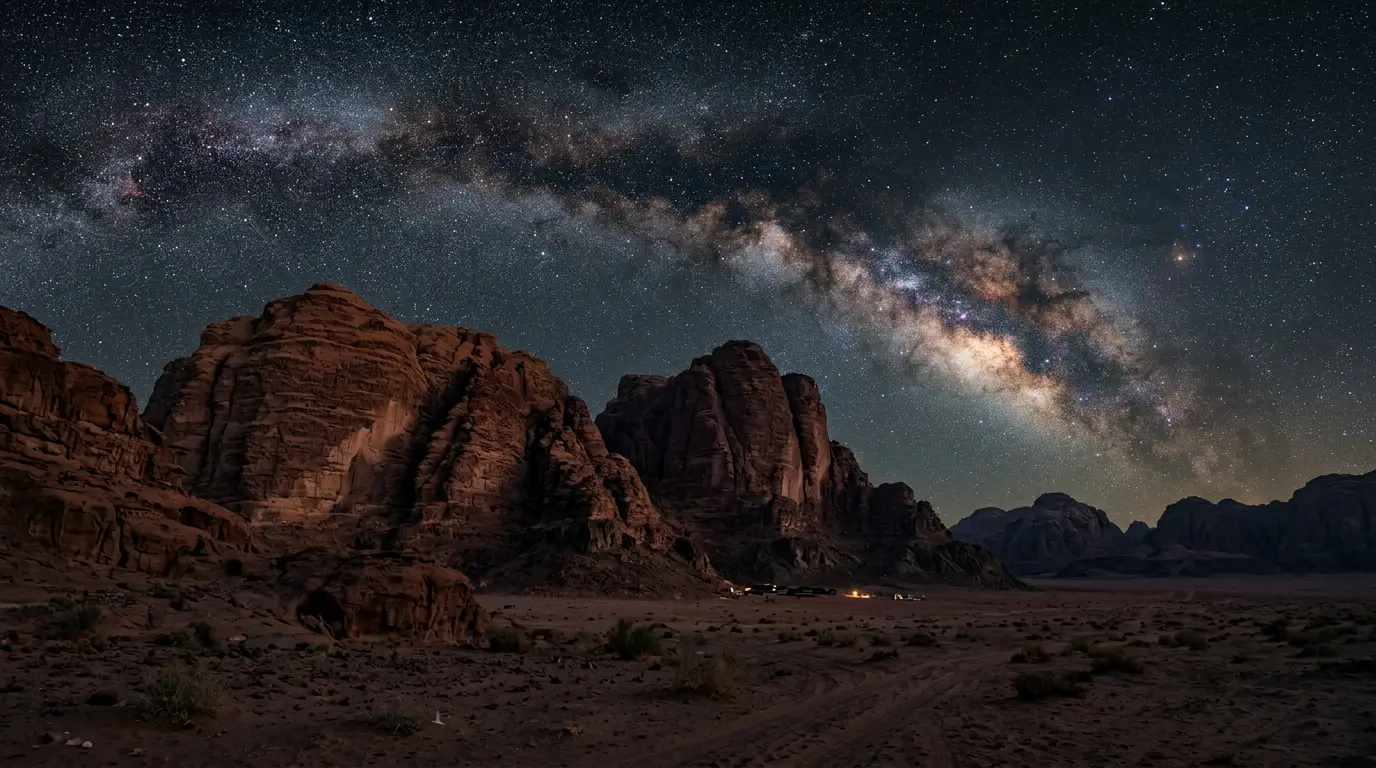
Wadi Rum
See the Wadi Rum night sky from a Zalabieh Bedouin camp in Jordan's UNESCO desert: bare tents to glass domes, Bortle 2-3 skies, and year-round stargazing.
Constellations swell near the horizon too, which tells you the trick lives in how we read the low sky and not in anything the Moon does.[9]
Both explanations survive because they sound right, and a confident explanation travels further than a correct one. Checking takes ten seconds with a pebble, which is worth more than any tidy story, mine included.
The flattened dome and other leading ideas
The leading idea, and the one with the longest pedigree, is the flattened dome. The sky feels like a shallow bowl, so the horizon seems farther away than the zenith, and the same angular size reads as a bigger object. Ibn al-Haytham described that account, and the thirteenth-century writers Roger Bacon, John Pecham and Witelo repeated it.[10]
The puzzle itself is old: Aristotle already mentions the effect, which puts it at roughly 2,000 years old.[11] In the early 11th century Ibn al-Haytham set out a plausible perceptual theory in his Book of Optics: the brain estimates how far away the Moon is and scales what it sees to match.[12] He argued that judging distance needs an unbroken run of objects between you and the thing you are looking at, and a Moon in an empty sky has none to offer.[13]
Every candidate has a hole. Foreground cues in the style of the Ponzo illusion, where two equal bars between converging lines look different sizes, cannot be the whole answer, because astronauts in orbit still see the Moon illusion with no foreground to lean on.[14] Antonides and Kubota at Susquehanna University suggest the brain receives two conflicting distance signals and settles the clash by inflating the Moon's angular size.[15] For now no single theory has won, and I would call it a draw between partial explanations.
Supermoon: a real change, but a smaller one
Measured against the smallest full Moon of the year, a supermoon at perigee can be up to 14 percent wider and 30 percent brighter.[16] Fourteen percent is a 25 mm coin set beside one of 28.5 mm: obvious side by side, hard to judge from memory across different nights.
Now compare that with the illusion. Psychologist Claus-Christian Carbon of the University of Bamberg calls the supermoon's 14 percent "ridiculously small" next to the psychological enlargement of the horizon Moon.[17] An ordinary rising Moon already swells more in your head than a supermoon does in the sky.
Supermoon night is therefore a decent natural test. The real effect is small, so what you notice at moonrise is almost entirely perception. Mark the dates from the full moon calendar, watch the Moon rise, then look again two hours later when it is high and looks small.
If you want a number for the illusion, there is no clean one. Lab results run from a modest ten percent up to the doubling some viewers describe, which is part of why it resists a tidy theory. Treat any single figure for "how much bigger" with suspicion.
Why photos never look as big as the Moon felt
Point a camera at the rising Moon and the enlargement disappears, because the illusion does not survive in photographs or video.[18] That is also why a straight phone snap of moonrise shows a small disc over the skyline.
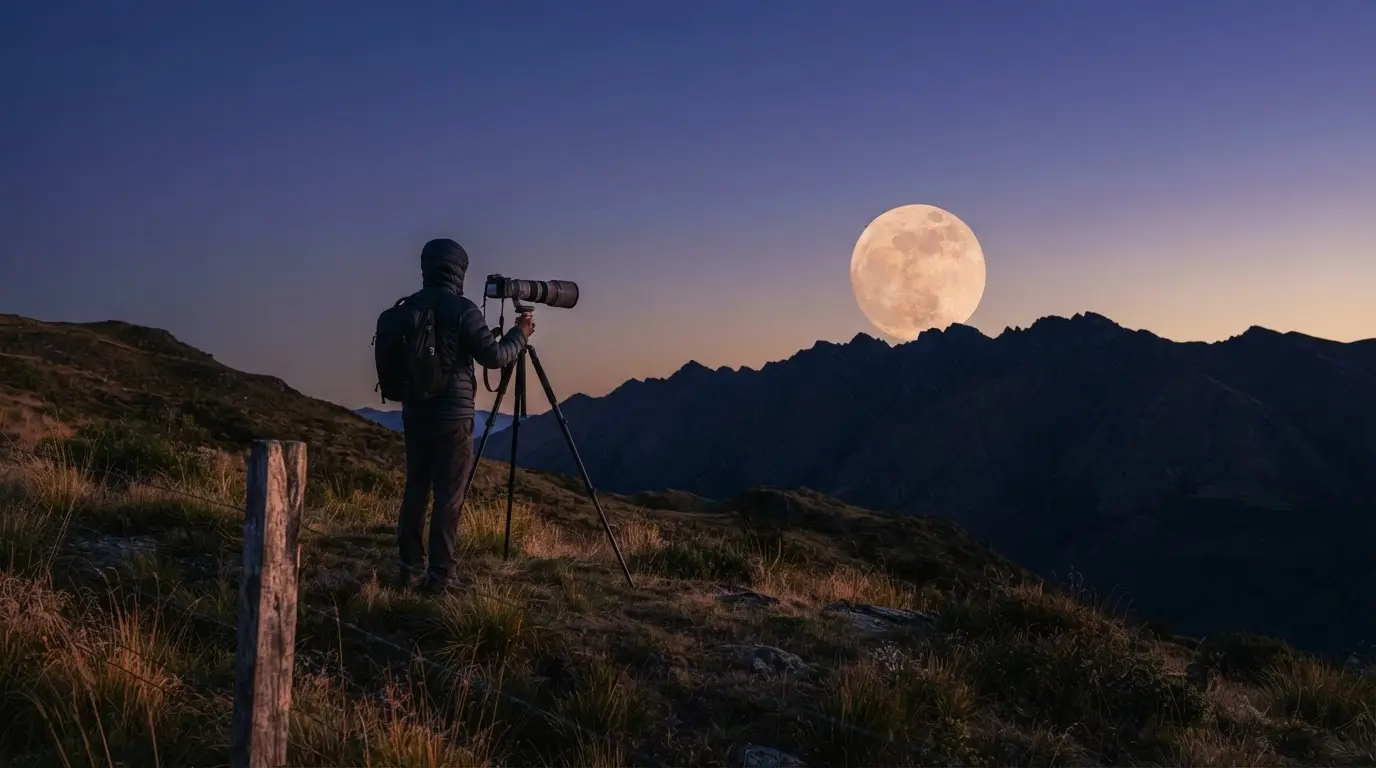
The giant-Moon images you see online are a different trick. They come from a long lens aimed at something distant, such as a tower or a ridgeline, and the Moon looks bigger because the shot is a zoomed-in view.[19] Stand far from the foreground subject and a long lens lets the Moon and a distant landmark share one frame at a similar scale.
Even a supermoon photographed on its own looks like any other full Moon; your exposure settings change the image more than the Moon's distance does.[20]
Recommended tours
Tours are selected for quality, not commission. I earn a small fee if you book — at no extra cost to you.
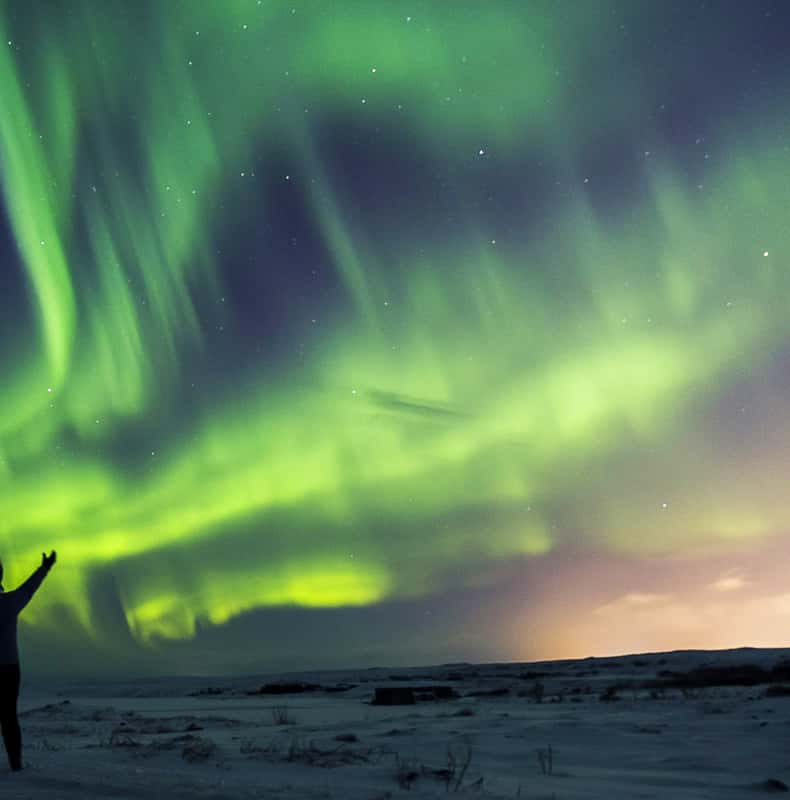

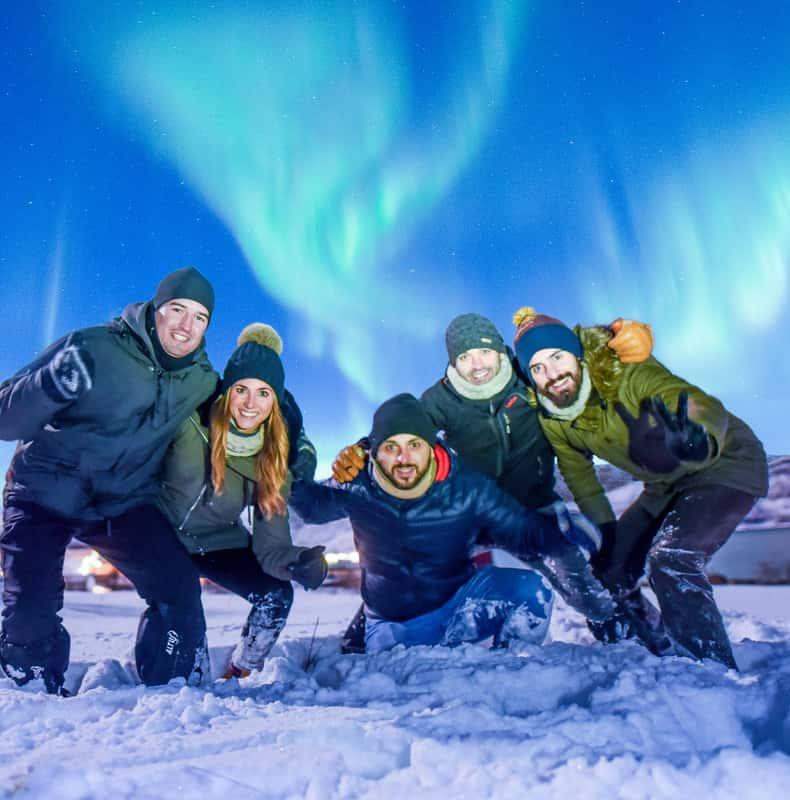
What makes a moon photo feel huge comes down to three choices:
- A long telephoto lens, which magnifies the Moon relative to everything else in the frame
- A distant foreground, such as a ridge, tower or tree line, so the Moon and the landmark appear at a similar scale
- Moonrise timing, so the Moon is still low enough to share the frame with that landmark
Featured · Article
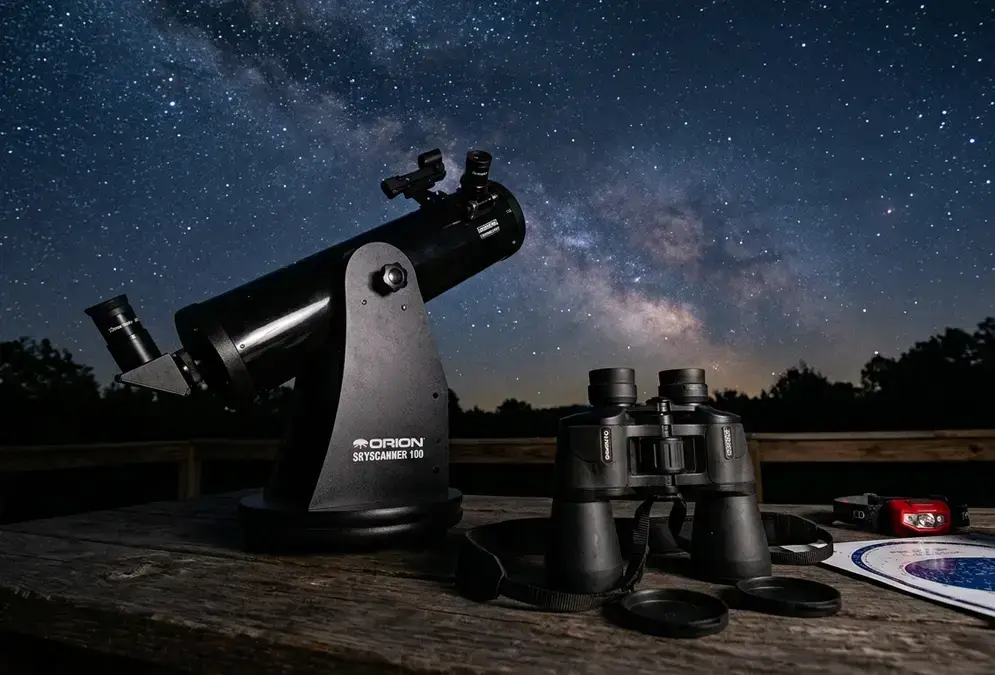
Stargazing Gear for Beginners: Binoculars to Telescopes
New to stargazing gear? This guide breaks down binoculars, telescopes, and smart telescopes, so you know what to buy first and what to skip for right now.
My rule for beginners is not to chase the giant-Moon look with a phone. Use the phone for the moment and your eyes for the Moon itself, then save the long lens for a night when you can plan the foreground.
The next supermoon peaks on 24 November 2026 at 14:54 UTC, so the moonrises on the evenings around it are the ones to plan for.[21] The same bright Moon is a nuisance for aurora watchers, which is why full-moon timing matters for northern lights in Lapland.