The short answer: strength decides it, not moon phase
Ask ten guides in Rovaniemi or Levi whether a full moon ruins the aurora and you'll get ten hedges. The honest answer is a threshold, not a vibe: a faint aurora gets washed out by a bright moon, and a strong aurora does not.
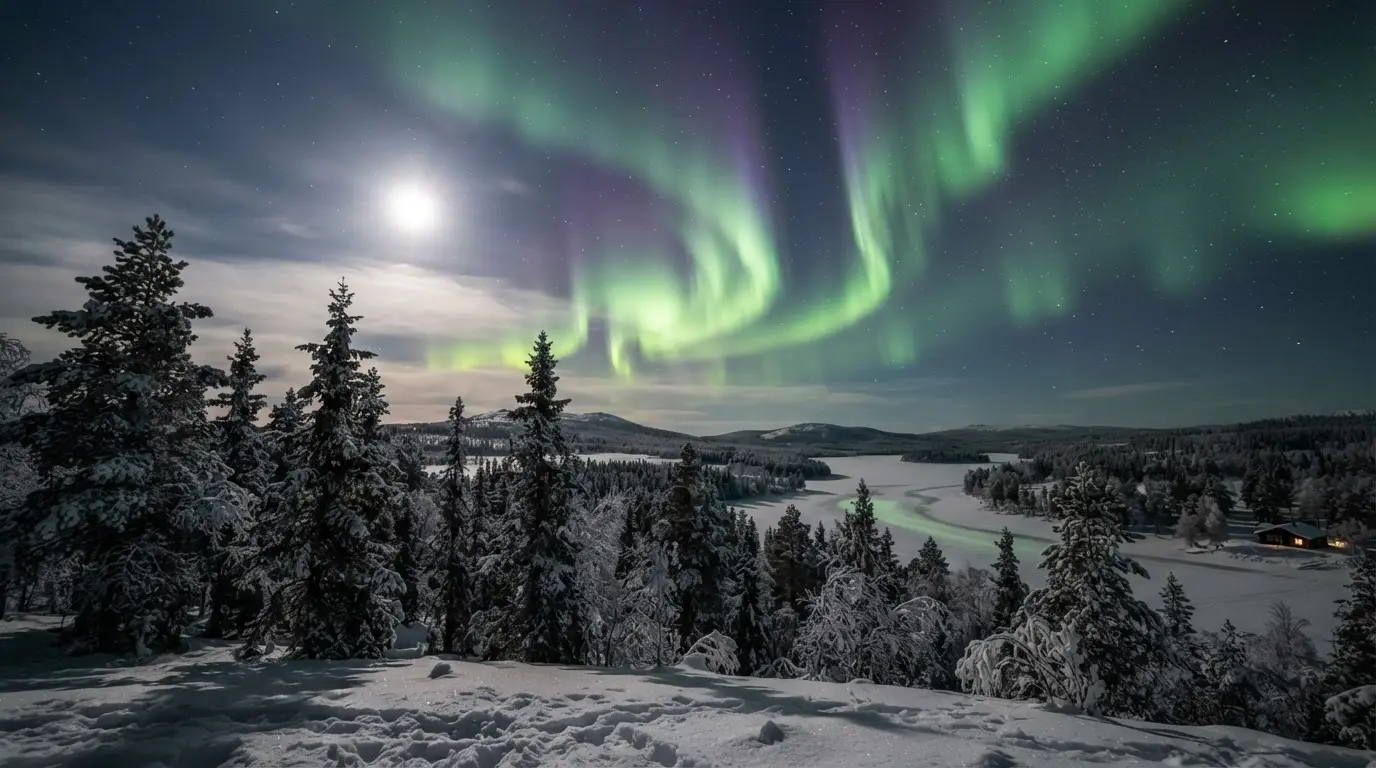
Aurora strength is usually described with the Kp index, a 0-to-9 scale for global geomagnetic activity. Once a display reaches roughly Kp 5 or higher, it counts as a strong show, and it stays clearly visible even with a full moon overhead[1]. Below that, in the Kp 1-2 range typical of a quiet night, moonlight is genuinely a problem.
So the real planning question isn't 'is it a full moon' — it's 'how strong is tonight's aurora expected to be, and does that number clear the threshold where the moon stops mattering.' That's a forecast question, and Finland's own forecast tool answers most of it, except for the one part it deliberately leaves out.
Why a full moon can wash out a faint aurora
A full moon is bright. Not campfire bright, but bright enough to change what your eyes can pick out against a dark sky. Measurements of night-sky brightness put a full moon in the same range as a light-polluted urban site, enough on its own to completely wash out a faint aurora[4].
That matters because a lot of nights in Finnish Lapland fall exactly at that faint end. A quiet aurora season produces plenty of Kp 1-2 nights: a pale, low arc hugging the northern horizon, more grey-green smudge than curtain. Under a new moon, that smudge is still visible if you know where to look. Under a full moon, it competes with a sky that's already lit up, and on a mild night the aurora usually loses[7].
This is the scenario that gives full moons their bad reputation. It's real, but it's specific: weak displays under bright moonlight, not aurora viewing in general.
Why a strong aurora barely notices the moon
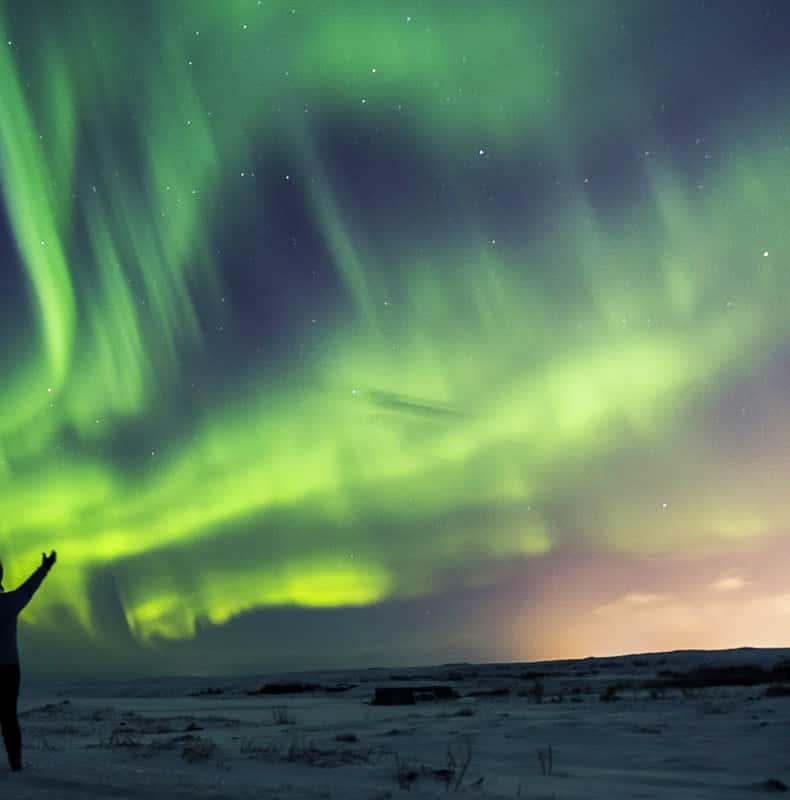
Push the same math the other direction and the full moon stops mattering almost entirely. Once a display clears roughly Kp 5, aurora chasers describe it as a strong show that stays plainly visible even with a bright moon up[1] — the light coming off the aurora itself simply outpaces what the moon is competing with.
Strength and reach move together, too. A higher Kp index corresponds to a wider auroral oval, the ring of aurora activity around the magnetic pole, which peaks around local midnight and expands further from the pole as the index climbs[11]. In Finnish Lapland that means a Kp 5+ night doesn't just deliver a brighter display, it delivers one positioned higher overhead and further south, exactly the kind of show a full moon isn't going to spoil.
Featured · Destination
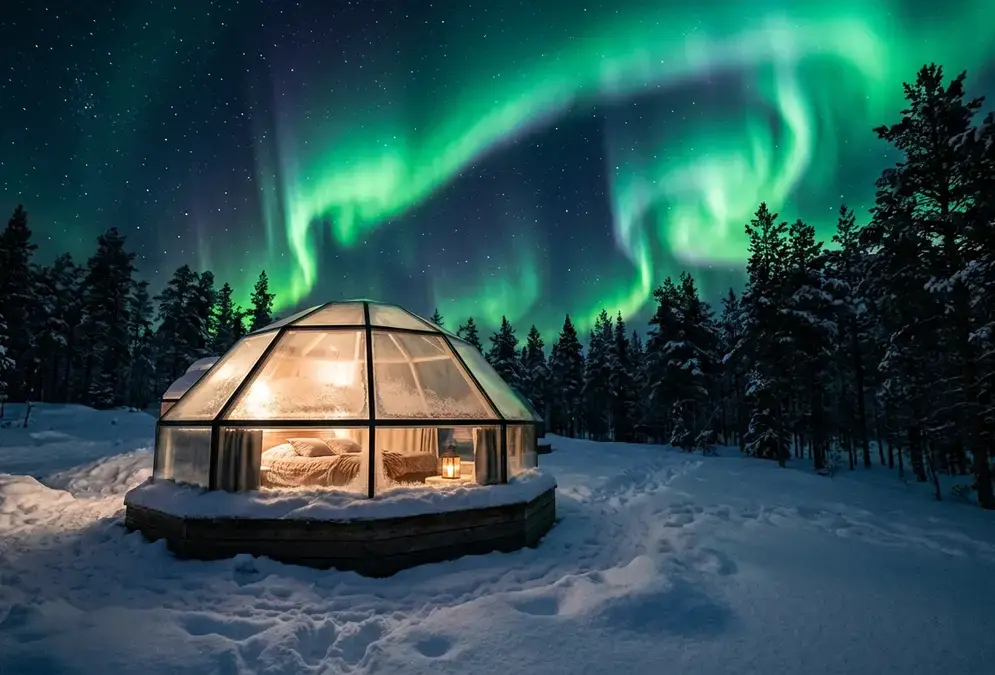
Northern Lights in Finnish Lapland
Finnish Lapland's whole-region aurora guide: glass igloos, Santa Claus Village, six bases from Rovaniemi to Inari, aurora season Sep–Mar, no road drama.
That's the real hinge in this whole question: is tonight's forecast a Kp 1-2 night or a Kp 5+ night. The moon-phase calendar answers one part of the planning; the space-weather forecast answers the part that actually decides whether you'll see anything.
FMI's own forecast doesn't factor in the moon — and that's on purpose
Finland's aurora forecast, run by the Finnish Meteorological Institute, is built on something called the R-index, which measures the rate of change of the magnetic field within a 10-minute interval[3]. Cross a lower threshold and dim auroras become possible; cross the upper one and auroras are very likely to be visible[5].
Here's the part that surprises people: that index says nothing at all about the moon. It's a pure read on geomagnetic activity, solar wind hitting Earth's field, tracked by ground-based magnetometer stations, with no moon-phase layer built in anywhere. FMI is telling you how likely a display is to happen and roughly how strong; it isn't telling you how visible that display will actually look from where you're standing on a given night.
That gap is deliberate, not an oversight, once you think about what the R-index is measuring: it's a physics reading, not a viewing-conditions forecast. For the full mechanics of how the R-index thresholds work and what a given reading means for your night, Lapland's aurora forecast covers the index itself in more depth than this piece needs to repeat.
Which leaves a gap a traveler has to close themselves: check the R-index reading, then separately check the moon phase and moonrise time for that same night, and weigh the two against each other. FMI hands you the first half of that judgment call; the moon calendar hands you the second.
Timing your Lapland trip around the moon, without obsessing over it
You don't need to build a whole trip around lunar phase, but it's a free variable worth checking once you already have travel dates. Moon illumination stays under 20% for roughly the 10 days surrounding new moon, and during that stretch, moonlight has minimal effect on either aurora viewing or stargazing[2]. That's your best-case window if the choice is genuinely yours.
The stretch either side of that, roughly the 10 days between the new-moon and full-moon windows, is also fine: the moon still has minimal effect on viewing during that middle period[6]. It's really only the few nights bracketing full moon itself where brightness becomes a factor, and even then only for the faint end of the Kp scale covered above.
| Moon window | Effect on viewing | What to do |
|---|---|---|
| New moon (~10 days) | Minimal, moon under 20% illumination | Best default window if dates are flexible |
| Mid-moon (~10 days) | Minimal effect on viewing | No real adjustment needed |
| Full moon (a few nights) | Washes out faint Kp 1-2 displays | Watch the R-index for a Kp 5+ night instead |
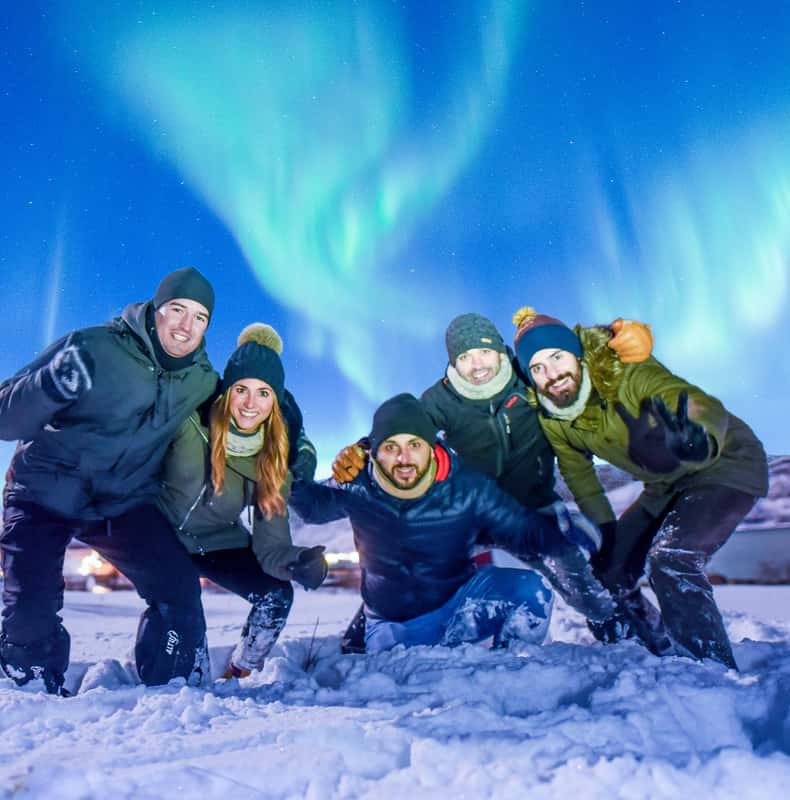
If your Lapland dates land on or near a full moon and you can't move them, that doesn't mean scrap the trip. It means:
Recommended tours
Tours are selected for quality, not commission. I earn a small fee if you book — at no extra cost to you.
- Check the R-index forecast for each night rather than assuming the worst
- Watch for a Kp 5+ prediction, which cancels out the moon's effect entirely
- Position yourself with the moon behind or to the side of you — aurora typically shows low on the northern horizon, and a moon high in the south does less damage to that view than one sitting near the aurora itself
- Treat a bright moon as a reason to hope for a stronger night, not a reason to stay in
For the broader planning questions this piece doesn't cover, best months, trip length, where to stand, Lapland's northern lights FAQ is the wider reference.
Photographing the aurora under a full moon
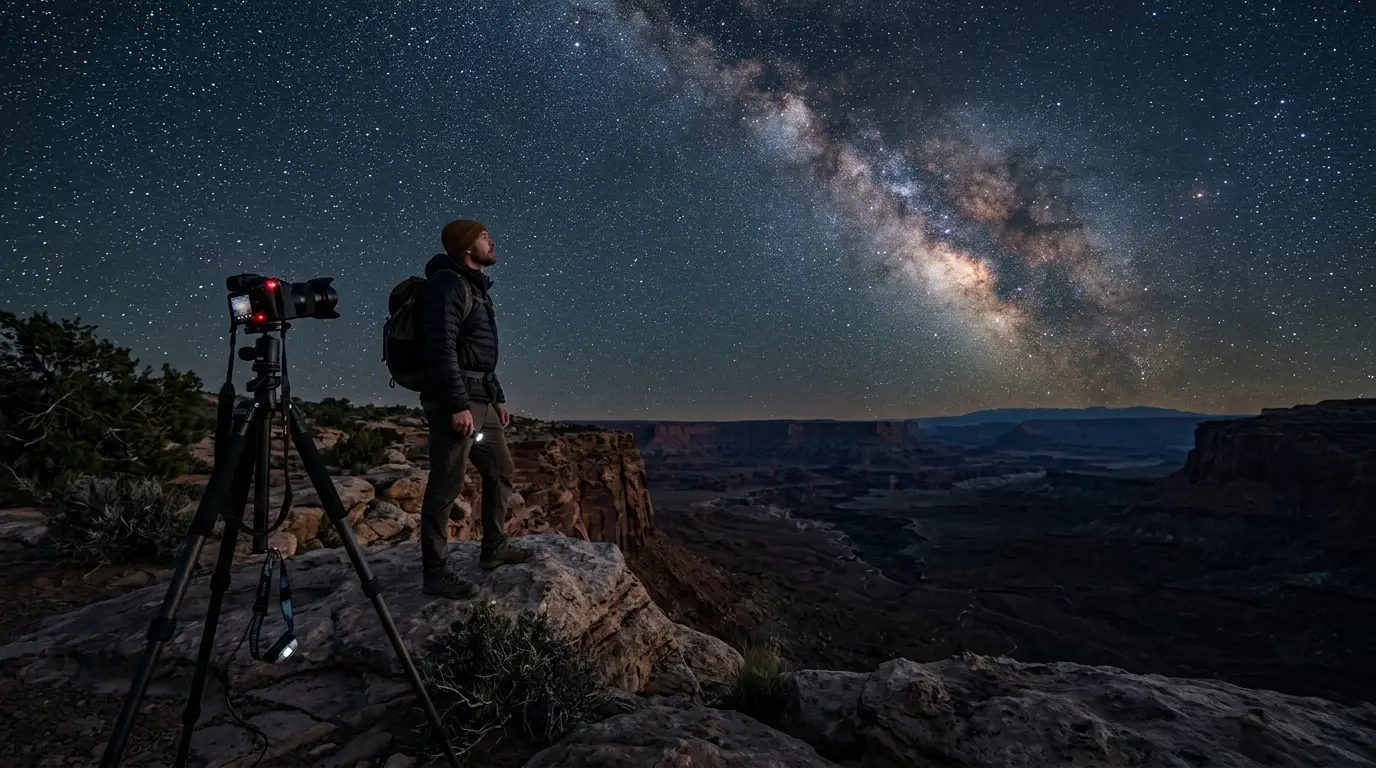
Moonlight isn't only a problem for photographers, it can genuinely help. A full moon lets your eyes and your camera pick up the aurora's true colors, the greens and pinks, more easily than they do in near-total darkness, because your eyes aren't straining against a black sky anymore[8].
The catch is the same one visual viewing has: bright moons require bright aurora displays. A subtle, low-Kp show can still get washed out in a long exposure the same way it washes out to the naked eye[9]. Point your camera at a strong Kp 5+ night, though, and moonlight becomes a lighting tool rather than a liability.
It changes your settings, too. Shooting under a bright moon typically means shorter exposures, in the 8-to-15-second range, rather than the longer exposures near-total darkness demands, and those shorter exposures render noticeably more detail in the snow-covered landscape around the aurora, not just the display itself[10]. For a full breakdown of camera settings across different aurora and moon conditions, Lapland's aurora photography gear guide goes deeper on the gear side than this piece needs to.
Featured · Article
What Is Astrotourism? The Complete Beginner's Guide
Astrotourism means travel built around dark skies: meteor showers, auroras, the Milky Way. What it means, where to go, and how to plan your first trip.
A full-moon night in Finnish Lapland, in other words, isn't a wasted trip for a photographer. It's a different shot: foreground detail instead of a black void, and colors that read clearly instead of a grey smudge in a long exposure, provided the display itself clears that same Kp 5 threshold everything else in this piece comes back to.