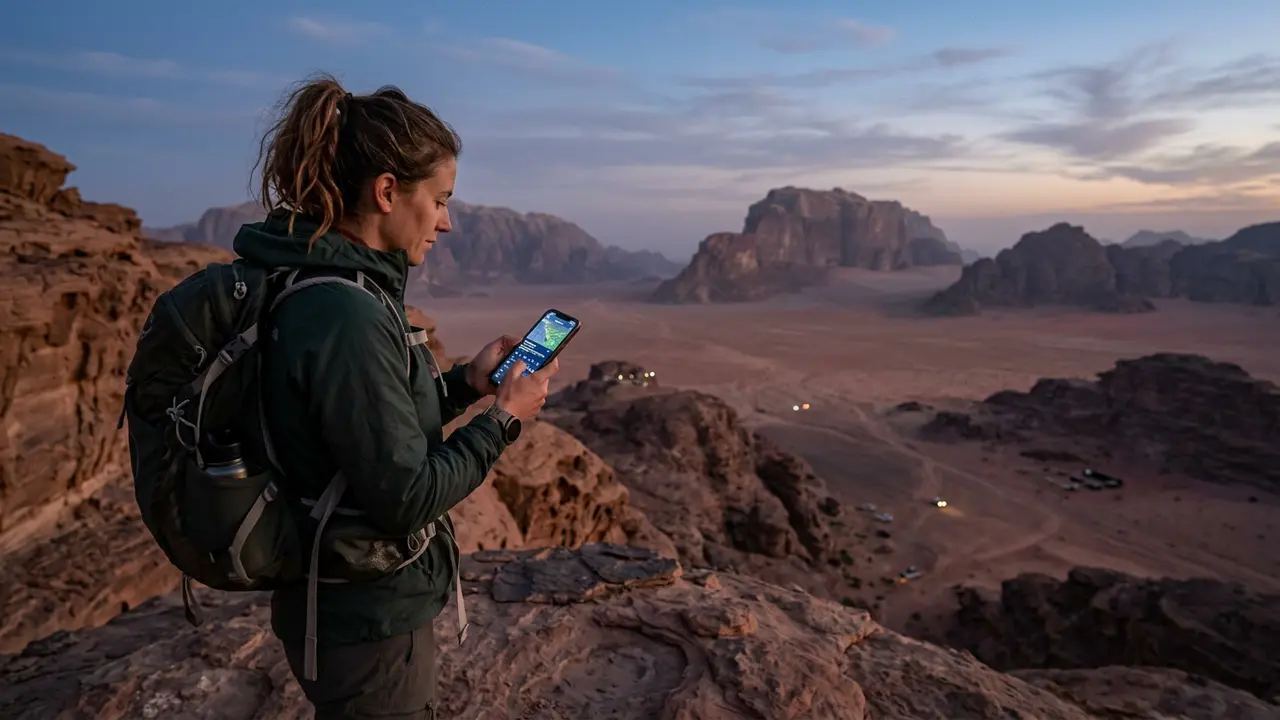
Why there's no dedicated Wadi Rum stargazing forecast tool
Search "Wadi Rum stargazing forecast" and you won't find a purpose-built tool waiting for you. Wadi Rum carries UNESCO World Heritage status, granted in 2011, not a certified International Dark Sky Reserve designation, so there's no accredited body running a dedicated sky-quality forecast for this stretch of Jordan's Hisma desert the way a handful of certified dark-sky places do elsewhere.
The tool most stargazers reach for first, Clear Sky Chart, doesn't help here at all. It's built specifically to forecast cloud cover, transparency, and astronomical seeing, the three parameters standard civil and aviation forecasts skip entirely[1]. That's exactly the data a night under the stars needs. The catch: its coverage area stops at Canada, the USA, and parts of Mexico and the Caribbean[2], because the whole system runs on Canada's CMC GEM weather model, which was never built to model anywhere outside North America[3]. Wadi Rum isn't an edge case Clear Sky Chart forgot about. It's simply outside the model's reach.
What Wadi Rum has instead is a forecast built from parts, not a dashboard: dust-storm season sets the baseline risk, moon phase decides how much of the sky you'll actually see, and a worldwide cloud tool, not an astronomy-specific North American one, fills the gap Clear Sky Chart leaves open. For the fuller destination picture, camps, and how to get there, see Wadi Rum Stargazing.
Dust and sandstorm season: Wadi Rum's real clarity risk window
Dust is the one variable a generic desert-weather chart won't flag, and it's specific to this exact stretch of Jordan. Most storms in the Wadi Rum area occur from October through May, with peak activity running February through May; April alone accounts for roughly 20% of all annual dust storms[4], making it the single riskiest month on the calendar for a clear night rather than a hazy one.
These aren't gentle haze days. Local operators typically define the trigger point at winds of at least 40 km/h, and once a storm sets in, it can run one to four days before it clears[5]. A documented storm in the area in 2015 restricted visibility so heavily that it disrupted travel and daily life across the area for days[6].
20%
None of this means writing off spring travel outright. A storm inside the peak window is a real risk, not a certainty, and outside the October-to-May window, Wadi Rum's dry desert air keeps clear nights the norm, though no independently verified cloud-cover percentage has been published for this exact stretch of desert, so treat any specific figure you see quoted elsewhere with skepticism. Check a short-range forecast in the days before you travel rather than trusting the calendar alone, and ask your camp host directly. People who watch this exact patch of desert every night read a hazy or clearing sky faster than any app.
Moon phase: the variable season alone can't fix
Even a dust-free night in the safest month of the year gets undone by one variable the calendar can't touch: a bright moon. A new-moon window produces the darkest sky and the boldest naked-eye Milky Way regardless of season, which is why moon phase belongs at the top of the planning list, not an afterthought once flights are already booked.
The mechanics of why new moon matters, and how to line it up with the best stargazing season for Wadi Rum specifically, are covered in full in When Is the Best Time to Stargaze in Wadi Rum. That piece is the one to read for the seasonal framework; this one is about the tools, not the calendar. What's specific to Wadi Rum is simple: pick a season first for dust risk and comfort, then slide the actual travel dates toward new moon within that window. A dust-free trip timed to a full moon still shows the sandstone formations and the brightest stars, it just won't show the fainter structure a genuinely moonless desert sky reveals.
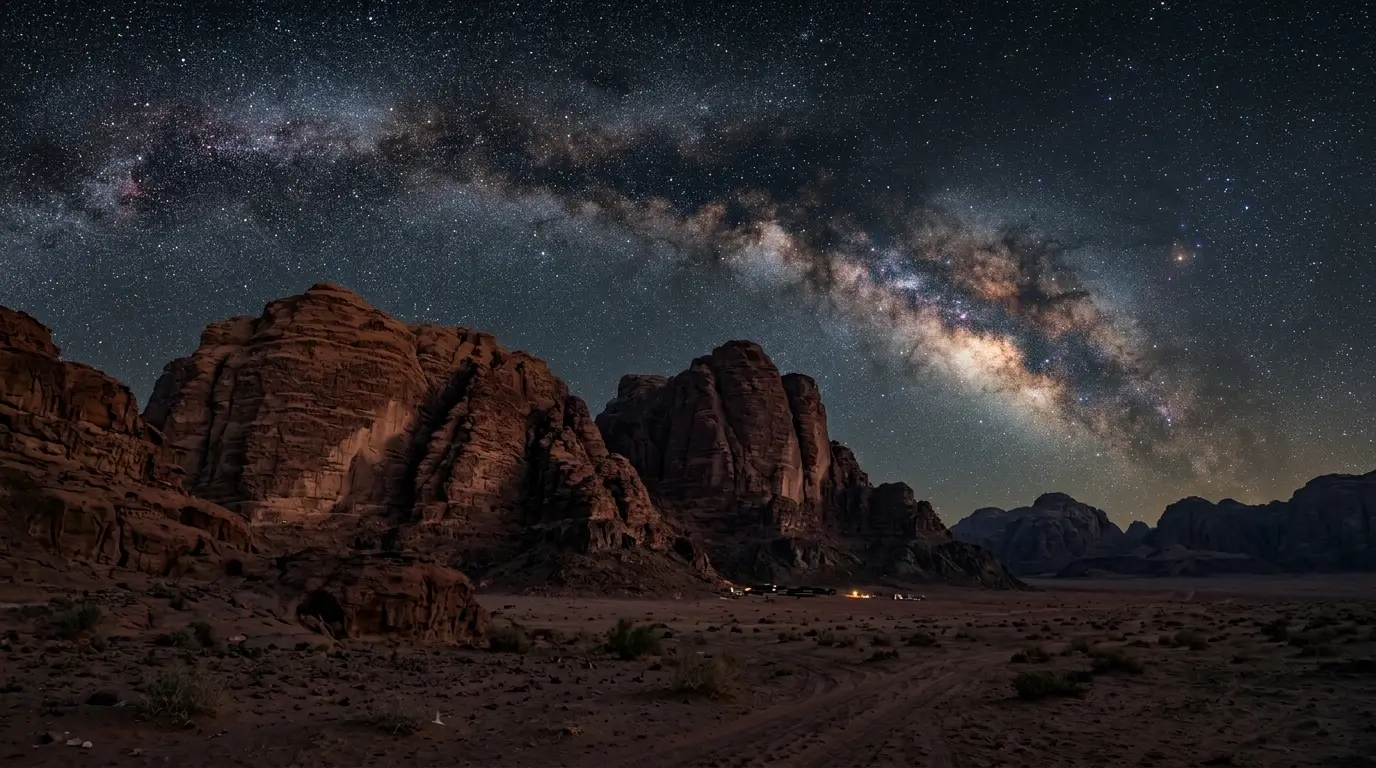
Featured · Destination
Wadi Rum
See the Wadi Rum night sky from a Zalabieh Bedouin camp in Jordan's UNESCO desert: bare tents to glass domes, Bortle 2-3 skies, and year-round stargazing.
Where you stand once the moon is out of the way changes what you see, too. The best stargazing spots in Wadi Rum breaks down which ridgelines and camps give the darkest, widest view of the horizon.
Worldwide tools that actually reach the Jordanian desert
With Clear Sky Chart off the table, a worldwide astronomy tool is the closest thing to a real forecast Wadi Rum gets. Clear Outside is the best fit: it's a free, astronomer-built forecast offering 7-day hourly cloud and weather data for any location on Earth, Jordan included, designed by astronomers for astronomers rather than pilots or farmers[7]. It breaks cloud cover into low, medium, and high layers, tracks moon phase and rise/set times, and marks out civil, nautical, and astronomical twilight windows, the exact detail a generic weather app skips.
ClearSkys is worth a second look alongside it. It scores stargazing conditions on a simple 0-100 scale by checking cloud cover, moon, wind, and humidity, giving a free tonight's-conditions score for any location worldwide[8]. It won't replace Clear Outside's hourly detail, but it's a fast, at-a-glance gut check before you dig into the full hourly breakdown.
Clear Sky Chart is worth naming explicitly, not because it works here, but because it's the tool most general astronomy content recommends by default. It has no chart for Jordan, none for anywhere outside North America, so don't waste time hunting for a Wadi Rum entry that doesn't exist.
| Tool | Coverage | Best for |
|---|---|---|
| Clear Outside | Worldwide | Hourly cloud layers, moon phase, twilight windows |
| ClearSkys | Worldwide | Quick 0-100 stargazing score |
| Clear Sky Chart | North America only | Not usable for Wadi Rum |
Turning this into a pre-trip forecasting routine
Put dust season, moon phase, and a worldwide cloud tool together and a Wadi Rum trip stops being a guess.
- Two to three months out, pick a season deliberately. Outside the October-to-May dust window is the safest bet, and inside that window, avoid April specifically if you can shift a week either direction.
- As soon as travel dates firm up, check the lunar calendar before locking anything else in. A trip landing on or near new moon outperforms a dust-free month with a full moon on the one thing that actually matters once you're out on the sand.
- A few days out, open Clear Outside, set it to Wadi Rum's coordinates, and start tracking the cloud and dust layers for your arrival window.
- The morning you're heading into camp, ask your host directly. Camp staff who watch this exact patch of desert every night read a hazy or clearing sky faster than any app, and they'll say plainly if the coming night looks thin.
Once you've settled on a clear-enough window, the best desert camps for Wadi Rum stargazing breaks down which camps sit furthest from the access-road light spill and which have staff who'll wake you for a clearing sky at 3am.
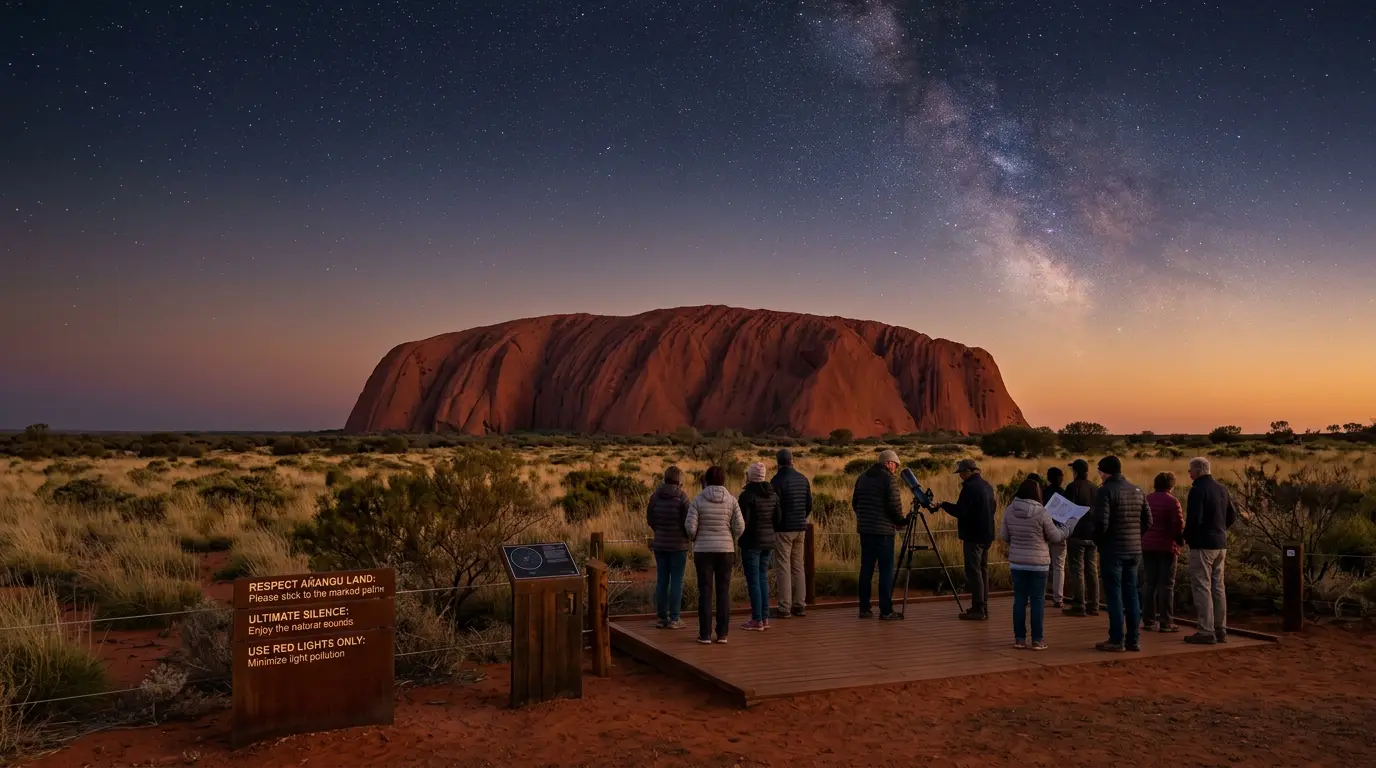
Featured · Article
Uluru Cultural Significance and Visitor Etiquette
Uluru is Anangu land under joint management. Here's why the 2019 climb closure is settled policy, what you can't photograph, and real visitor etiquette.
What to pack for a dust-prone night
Layers first, the same as anywhere in this desert: daytime highs and cold nights sit inside the same 24 hours regardless of season. Add a scarf or shemagh to that list specifically for Wadi Rum, since dust is as much a problem for your camera and your throat as it is a sky-clarity problem, and most camps hand out a head wrap for exactly this reason. A red-light headlamp protects night vision once you're away from the fire, where there's genuinely nothing else lighting the ground.
How many nights to build in
One full night in the desert is the minimum, not the goal. A single overnight leaves no room for a dust-hazy evening to wreck the only chance you booked. Most overnight camel and jeep packages are priced and structured for exactly one night, so building in a second, whether at the same camp or a different one, is a genuine hedge against the one weather variable a forecast tool can't fully rule out this far in advance.
Booking around the forecast: camps that read the sky nightly
A forecast only gets you so far in a desert this remote; the camp you book still matters. Camps set back from the main access road and away from vehicle headlights read a genuinely dark sky even on a so-so-clarity night, while camps closer to Rum village pick up more ambient light no forecast tool accounts for.
Sun City Camp, one of the longer-running stargazing-oriented camps in the valley, is a solid example of what to look for: distance from the access road, staff who'll flag a clearing sky, and a layout that doesn't point tent lighting at the horizon. It's not the only option, but it illustrates the trade-off worth checking before you book anywhere: ask about light spill and staff who watch the sky, not just star ratings.
None of the four variables in this guide, dust season, moon phase, a worldwide cloud tool, and a camp with genuinely dark surroundings, replaces the other three. Together, they're the closest thing to a real Wadi Rum stargazing forecast that exists.
Read next · Lodge
Sun City Camp
Ranked #1 of 348 specialty lodgings, Sun City Camp offers signature Martian Domes designed for in-bed stargazing in Wadi Rum's protected desert darkness.