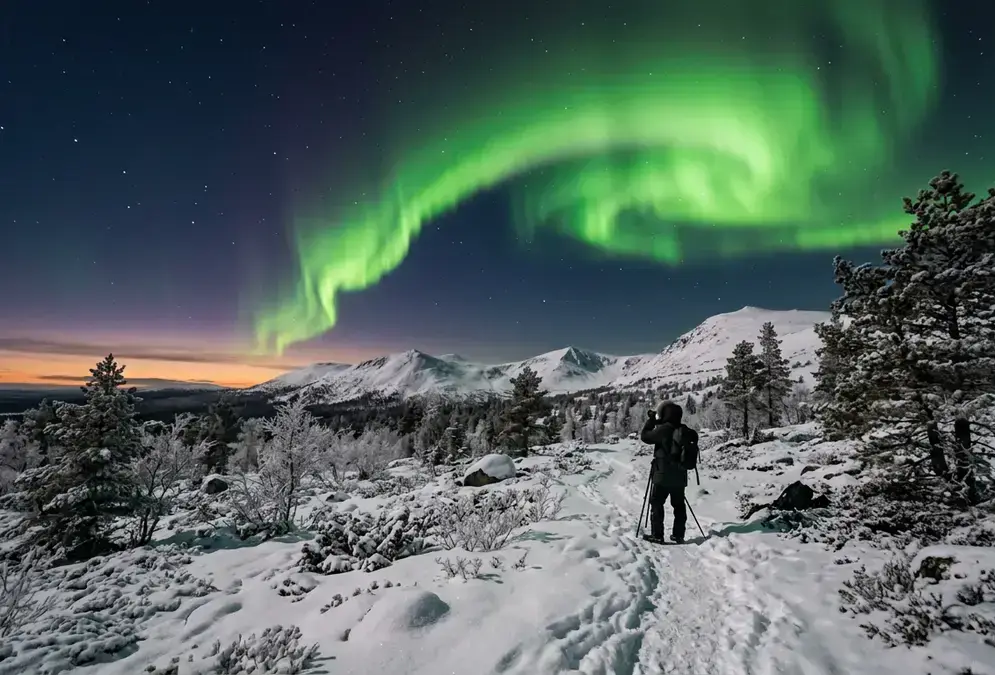

Lapland's Real Aurora Season: Late August Through April
Northern Lights become visible across Lapland as soon as the sky gets dark enough to see them, and that window runs from late August through early April, close to eight months out of the year[1]. Summer doesn't count at all: the midnight sun keeps the sky bright around the clock through June and July, and an aurora needs genuine darkness to register, no matter how active the geomagnetic storm driving it.
Inside that eight-month window, the aurora shows up on roughly every other clear night, which is a different number from every night, full stop. Clear skies are the gate the aurora has to pass through before activity level matters at all, a point worth sitting with before obsessing over Kp forecasts.
Featured · Destination
Northern Lights in Finnish Lapland
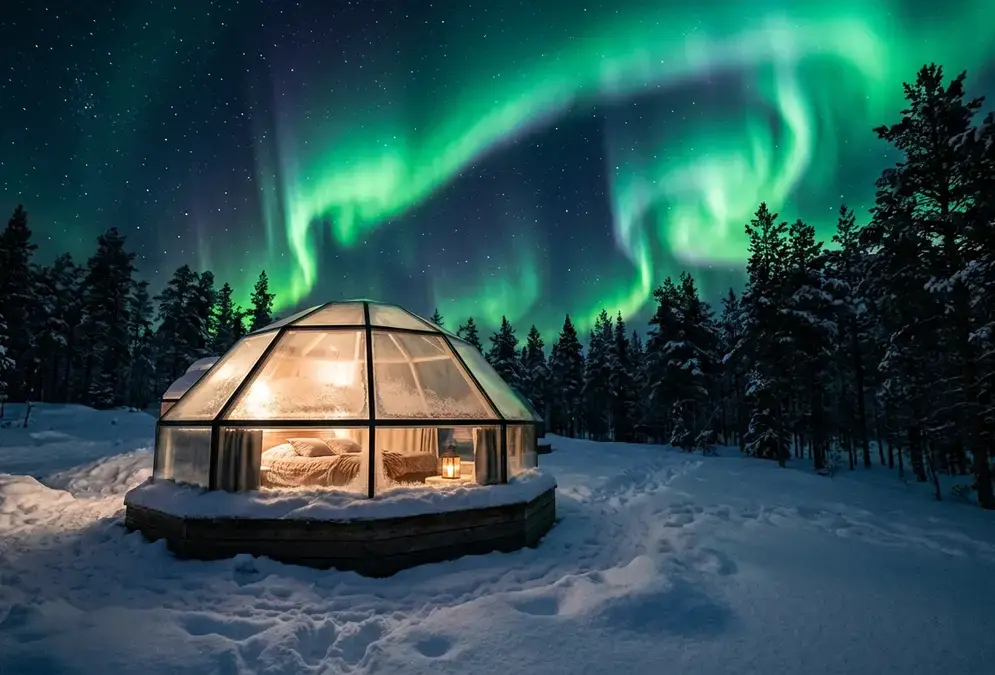
Finnish Lapland's whole-region aurora guide: glass igloos, Santa Claus Village, six bases from Rovaniemi to Inari, aurora season Sep–Mar, no road drama.
Not every month inside the window earns equal billing. Two stretches, September-October and February-March, do the heavy lifting for visitors who want both strong odds and a trip that doesn't feel like an endurance test. December and January belong to a different kind of traveler entirely, the one chasing the darkest sky Europe has to offer, cold be damned. Before locking in dates, it's worth reading Northern Lights in Finnish Lapland for the six regional bases these seasonal windows apply to.
Peak Months: Why September-October and February-March Win
Aurora activity isn't random throughout the season, and the reason has a name: the Russell-McPherron effect, sometimes called the equinox effect. Solar wind couples more efficiently with Earth's magnetic field near the spring and autumn equinoxes, and that coupling reliably lifts geomagnetic activity in the weeks surrounding both March and September[2]. It's not folklore. It shows up consistently enough in the data that Finnish forecasters treat it as a genuine seasonal pattern, not a coincidence.
September-October rides the autumn side of that effect. Temperatures stay in a manageable range, some daylight remains for travel and daytime activities, and the landscape carries its last color before snow buries it. Crowds are thinner too, since most visitors don't think to book an aurora trip before the snow arrives. October and November are statistically among the strongest months for aurora activity in Finland, and forecasters cite March specifically as the best month for seeing the lights in Northern Finland[3], which puts real data behind both ends of the peak-season claim.
Sept & Mar
February-March catches the spring equinox on the way up while holding onto everything winter is supposed to deliver: reliable snow, husky trails, and cold nights stable enough that skies stay clear more often than not. Days are noticeably longer than in December, long enough to fit a daytime activity in before the aurora hunt starts.
Neither window beats the other outright. September-October trades some snow-season spectacle for comfort and lower prices; February-March trades some of that comfort for guaranteed snow and a slightly longer proven track record.
The Kaamos Trade-off: Deep Polar Night in December-January
December and January are kaamos, the true polar night, when the sun doesn't rise above the horizon at all across the far north. Around the winter solstice, even midday delivers nothing more than a few hours of blue-grey civil twilight; there's no direct sunlight to speak of[4]. For aurora-hunting, that's about as good as darkness gets: with the sun barely threatening to show up, the viewing window can stretch across nearly the entire day rather than the tight after-dark slot September or March offers.
That advantage comes at a real cost. Temperatures commonly fall to -20°C to -30°C, colder on a bad night[5], and standing outside for an hour waiting on the sky stops being pleasant fast. Kaamos also lines up with Christmas-market season, Lapland's single busiest and most expensive stretch of the year, so visitors pay peak prices for a period that's genuinely harder on the body than either shoulder season.
None of this makes kaamos a mistake. If maximum darkness and the full polar-night experience matter more to you than comfort, this is the only window that delivers it. Just go in knowing what you're trading away, and dress like the forecast is a floor, not a target.
How Daylight Hours Change Across the Aurora Season
The clearest way to picture how Lapland's season shifts is by the clock, not the calendar. In Rovaniemi, daylight runs from roughly 15-16 hours in late August down to almost none in December, then climbs back through double digits by March[6]. That swing drives every seasonal trade-off in this guide: more daylight means more comfort and more daytime activities, less daylight means a longer aurora-hunting window each night.
The table below tracks that shift month by month, from the season's opening in August through its practical close in March. Use it to match your priorities, daylight for daytime activities against dark hours for aurora-hunting, to a specific month rather than a vague season name.
| Month | Daylight hours | Darkness hours | What it means |
|---|---|---|---|
| August | 15-16 | 8-9 | Season opens; still plenty of daylight for travel and settling in |
| September | 12 | 12 | Equinox effect begins; balanced day and night |
| October | 8-9 | 15-16 | Statistically the strongest aurora month; long dark nights |
| November | 4-5 | 19-20 | Darkness deepens fast; aurora activity stays strong |
| December | 0-2 (twilight only) | 22-24 | Kaamos; only civil twilight at midday; near round-the-clock viewing window |
| January | 2-4 | 20-22 | Kaamos continues; extreme cold typical |
| February | 6-7 | 17-18 | Spring equinox effect builds; excellent snow cover |
| March | 10-11 | 13-14 | Best month cited for Northern Finland aurora activity; daylight returns for daytime activities |
Clear Skies vs. Aurora Activity: Which Matters More
Every aurora guide obsesses over the Kp index, the 0-9 scale that measures geomagnetic activity, and for good reason: in northern Lapland, Kp 1-2 is already enough to produce a visible display, with Kp 3 and above delivering the stronger, more colorful shows that also become visible further south. Peak viewing hours cluster between 9 PM and 1 AM local time, though a strong display can start earlier or run well past that window[7].
Here's the part most forecast-chasing visitors get backwards: cloud cover matters more than Kp. A Kp 6 storm behind a solid cloud deck delivers exactly nothing, while a quiet Kp 1 night under a genuinely clear sky can still produce a faint but real curtain of green. Finland's continental interior actually works in your favor compared to coastal Norway or Iceland: Lapland's inland climate, far from ocean moisture, tends to deliver more stable clear-sky odds. Kilpisjärvi in the far north sees roughly three clear nights out of four during peak season; resort towns like Ylläs, Levi, and Saariselkä run closer to one in two[8].
Recommended tours
Tours are selected for quality, not commission. I earn a small fee if you book — at no extra cost to you.

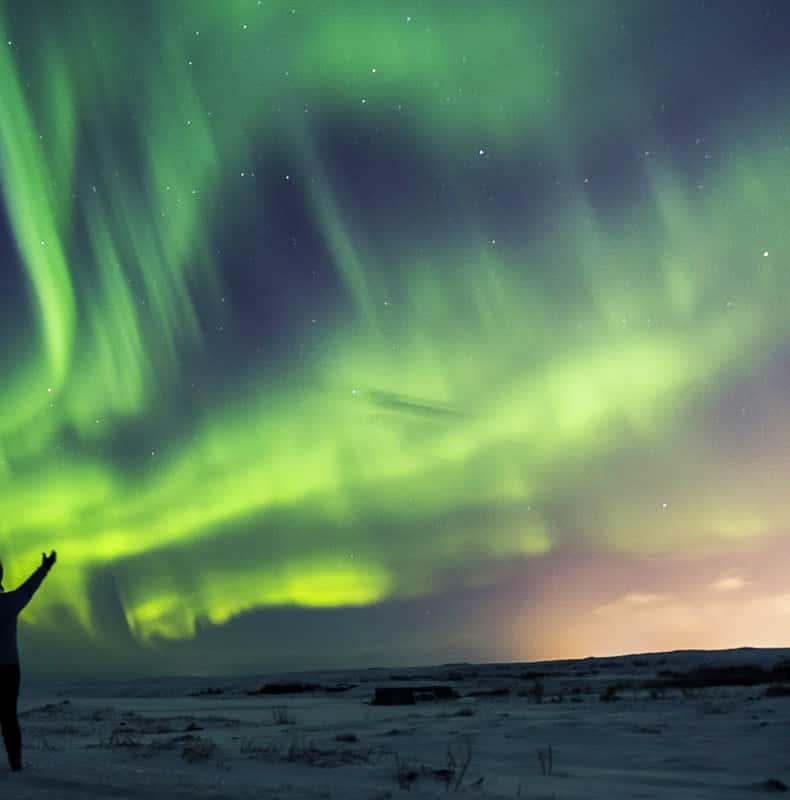

The practical takeaway: check the weather forecast before the Kp forecast. A strong geomagnetic storm forecast is worthless information on a night with total cloud cover, and a quiet solar-activity night under a clear sky beats an active night you can't actually see through.
Read next · Guide
Best Glass Igloos in Lapland for Northern Lights
Six Finnish Lapland glass igloos ranked for northern lights: aurora-view roofs, dark-sky access, and authenticity, with Kakslauttanen the clear leader.
One more variable worth a glance once you've picked your dates: the moon calendar. A bright moon can wash out a faint, low-Kp display the same way light pollution would, though it barely touches a strong Kp 5+ show. Does a full moon ruin the northern lights in Lapland covers how to weigh moon phase against the forecast without rebuilding your whole trip around it.
Matching Your Trip to Snow Season and Winter Activities
If part of the appeal is husky sledding, snowmobiling, or a night inside a glass igloo, snow reliability deserves as much weight in your date-picking as aurora odds do. February-March delivers the season's most reliable, deepest snow cover, the safer bet if winter activities are non-negotiable. October often has snow arriving in the high north by month's end, patchy earlier on, useful if a mix of aurora-hunting and non-snow daytime options fits your trip better.
January typically holds the deepest, most stable snowpack of the whole season, bundled with kaamos's cold and short days as a package deal. By April, melt season is already underway and snow cover thins fast, part of why the practical aurora season closes out around early April even though the sky technically stays dark enough a little longer.
A trip built around snow-heavy activities, a husky tour, an ice-hotel night, a snowmobile safari, works best anchored to February or March if snow depth matters more to you than shoulder-season crowds and prices. If the trip centers on one specific stay, Kakslauttanen Arctic Resort is worth checking regardless of which window you pick, and the best glass igloos in Lapland roundup covers the alternatives if it's booked out for your dates.