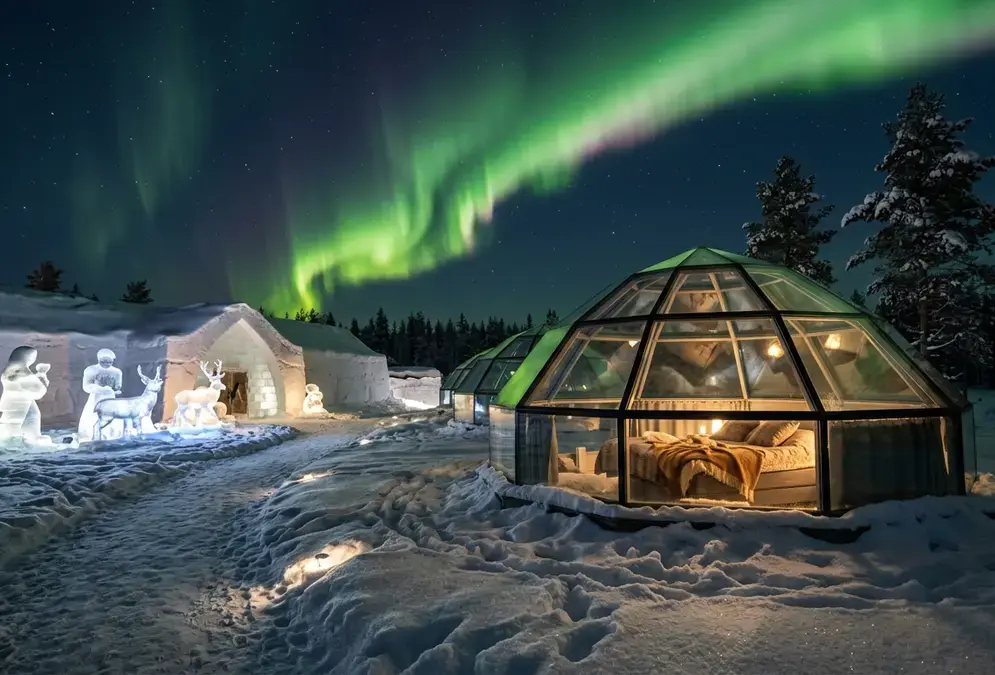
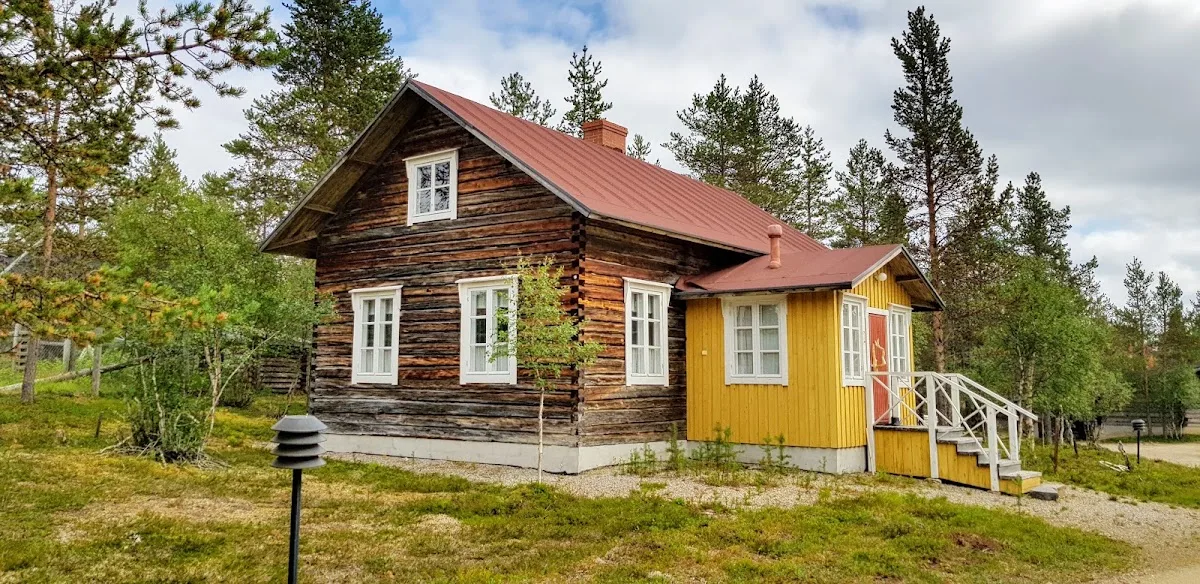
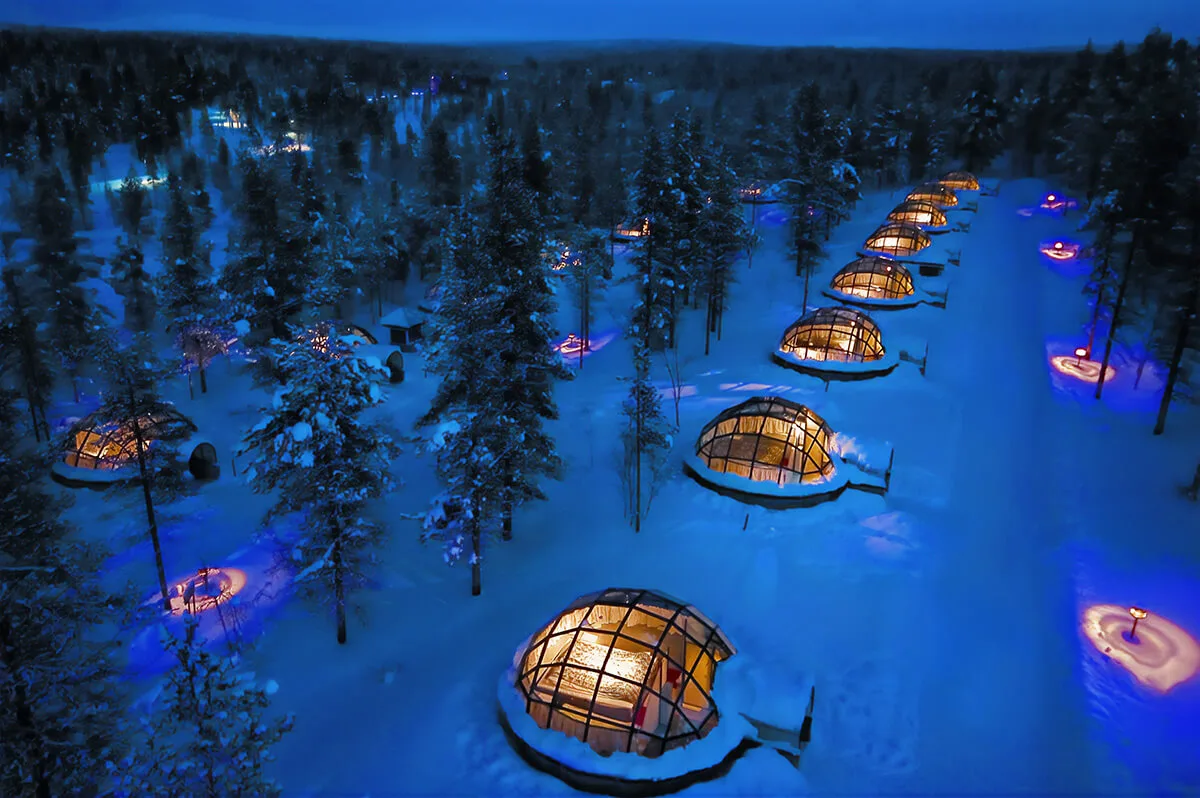
Kakslauttanen didn't join the glass igloo trend, it started it. In 1973, the resort put up the first four glass-roofed rooms in a forest clearing at Saariselkä, 250 km above the Arctic Circle, decades before Iceland's bubble hotels or the glass-cabin properties scattered across the rest of Lapland existed. Every hotel that now sells "watch the aurora from your bed" owes something to this one. Fifty-plus years later, it's still the property every other Finnish glass igloo gets measured against, and still the one with the deepest guest history: a Booking.com score of 8.0 from 746 reviews, and rooms from €424 a night.
The Kelo-Glass Igloo: the signature unit
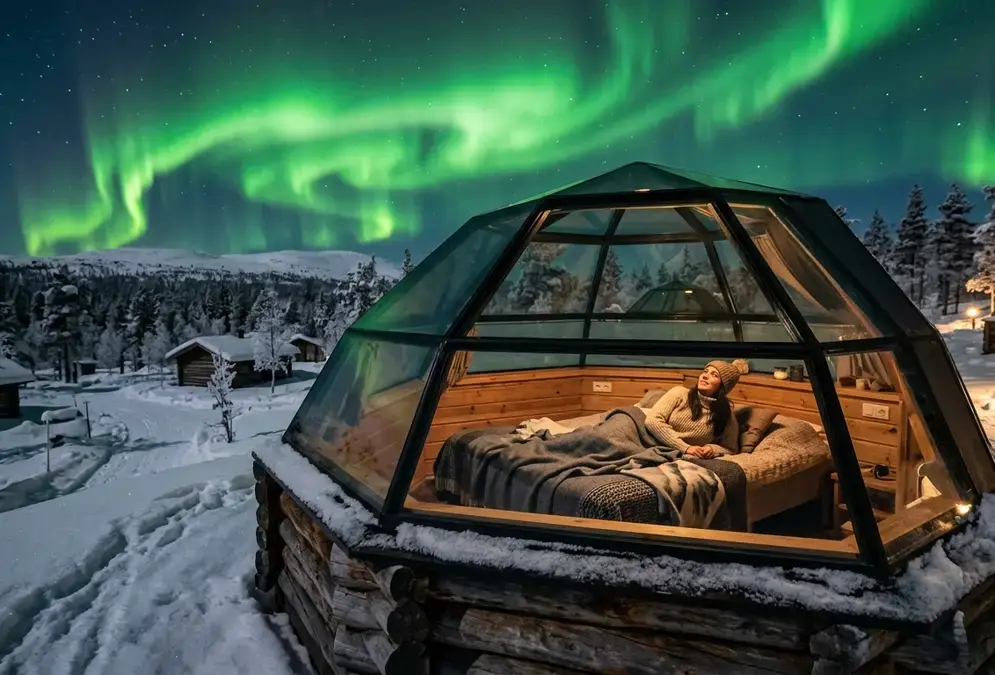
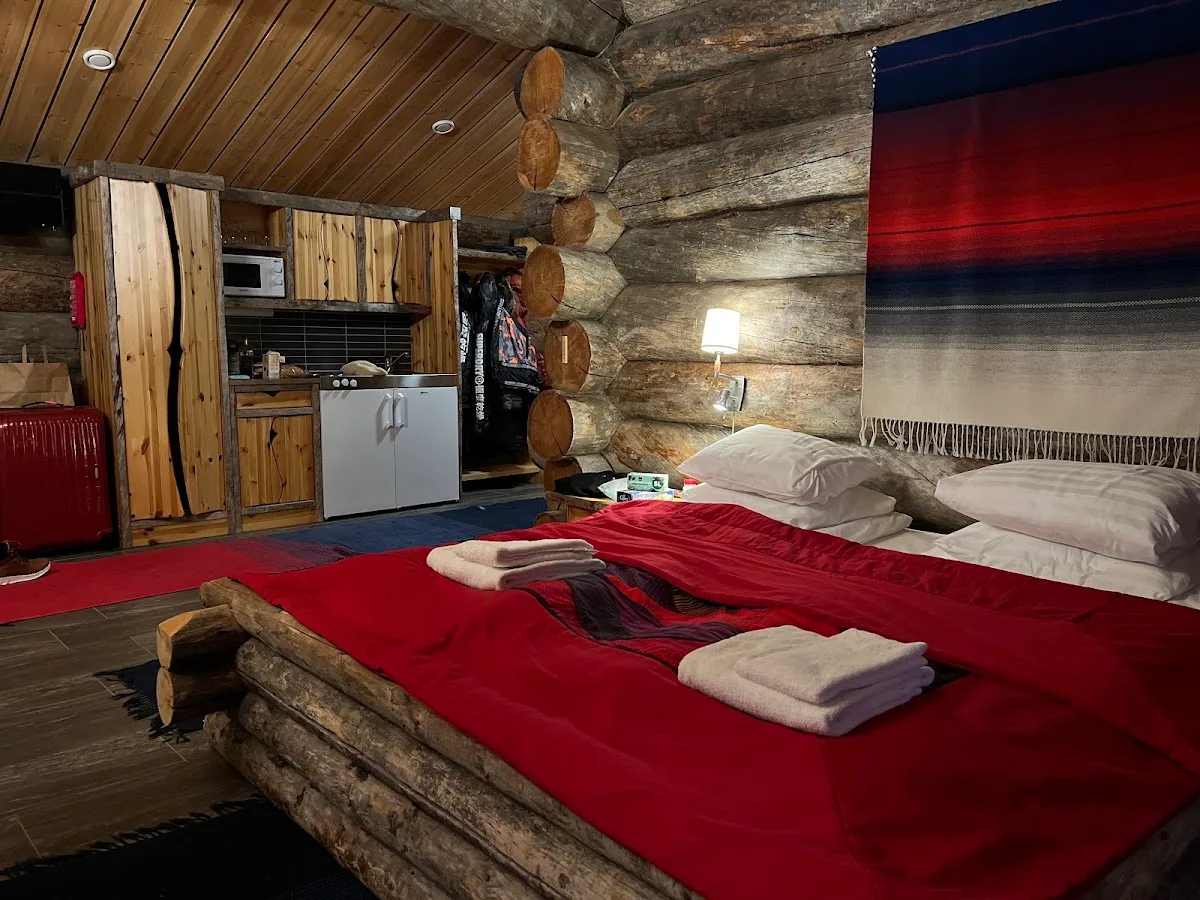
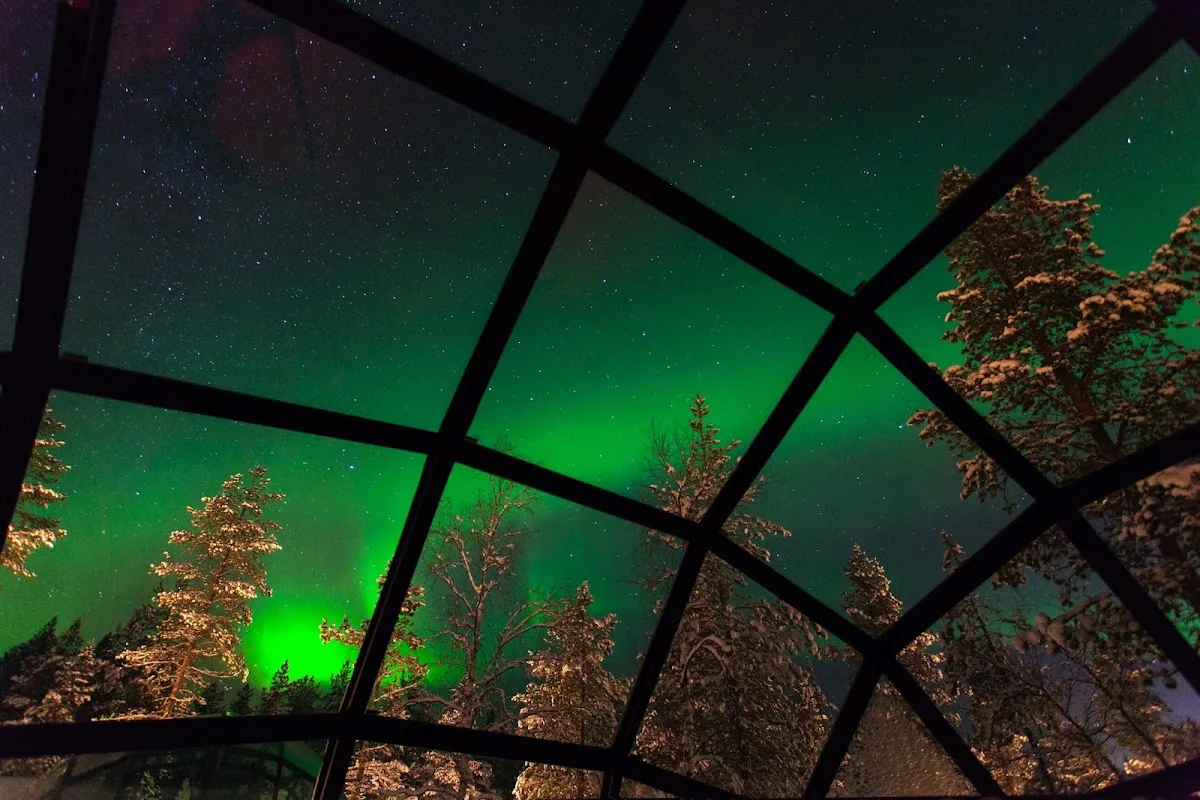
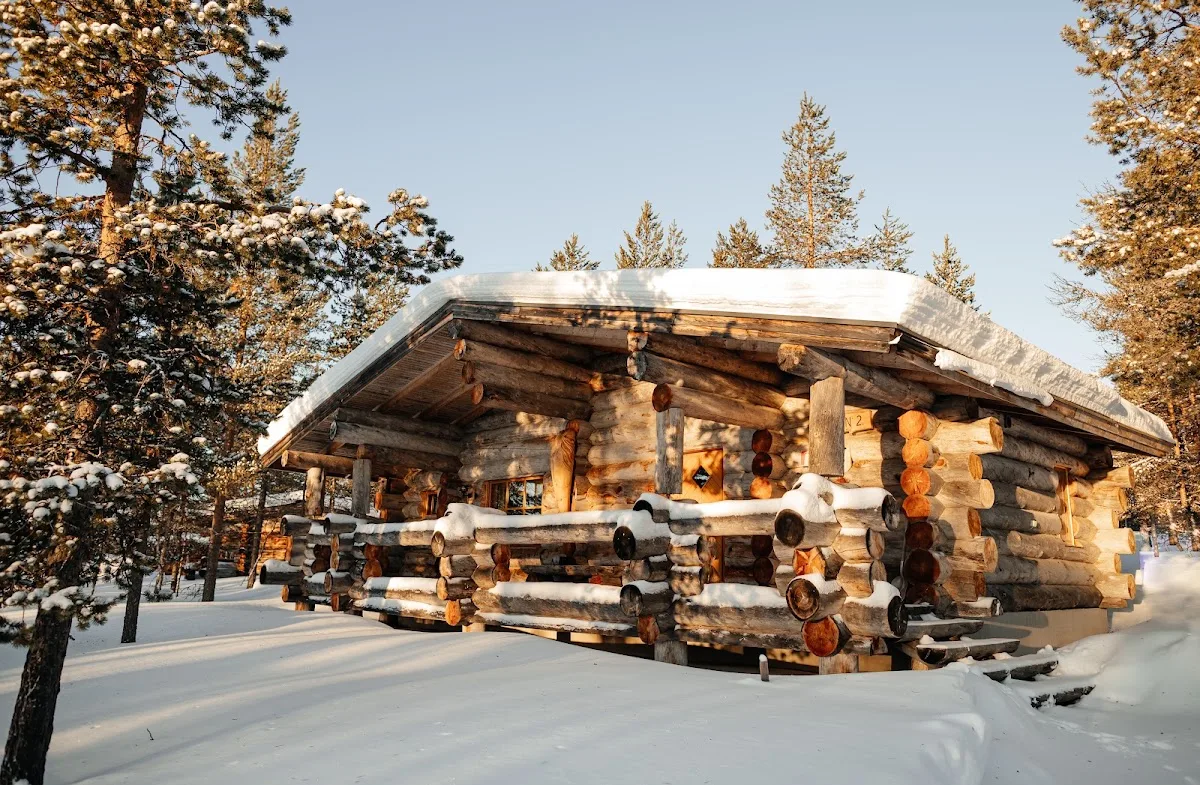
Kakslauttanen runs four tiers of glass-roofed room. The Small Glass Igloo and Large Glass Igloo are the entry points: a thermal glass dome over a heated bed, nothing between you and the sky. The Kelo-Glass Igloo is the one worth booking if you can. It's built from kelo, wind-weathered Arctic pinewood that can stand dead on the tundra for a century before it's cut, so the log walls carry a silvered, driftwood-like grain you won't find in an ordinary cabin. A Luxury Kelo-Glass tier adds more space and a private sauna. All four share the same core idea: a thermal glass roof engineered to stay clear and warm in Arctic cold, so you watch the aurora borealis without getting out from under the duvet. Some units add a private sauna and bathroom; heated beds run throughout the property.
Why the location matters more here than at most igloo hotels
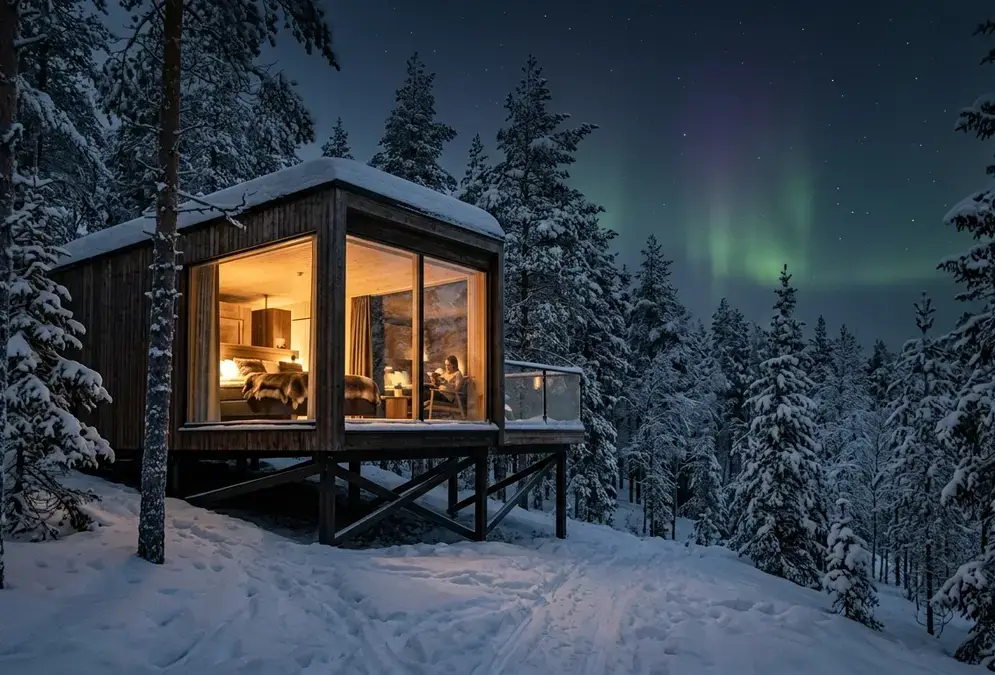
Saariselkä sits roughly three hours by bus or car from Rovaniemi, deep enough into the fells that light pollution is close to nonexistent. That remoteness is the whole point. Rovaniemi's other glass properties, like Arctic TreeHouse Hotel and Arctic SnowHotel & Glass Igloos, sit close to the city and Santa Claus Village, trading dark sky for convenience. Kakslauttanen trades the other way: a three-hour transfer in exchange for meaningfully darker skies and a genuine wilderness setting. If the aurora itself is the priority, not a day trip to Santa's village, that trade is worth making.
What's on site, beyond the igloo
You don't need a car once you arrive. The resort runs:
- Two à la carte restaurants serving Lappish cuisine
- The world's largest smoke sauna, heated the traditional way over several hours
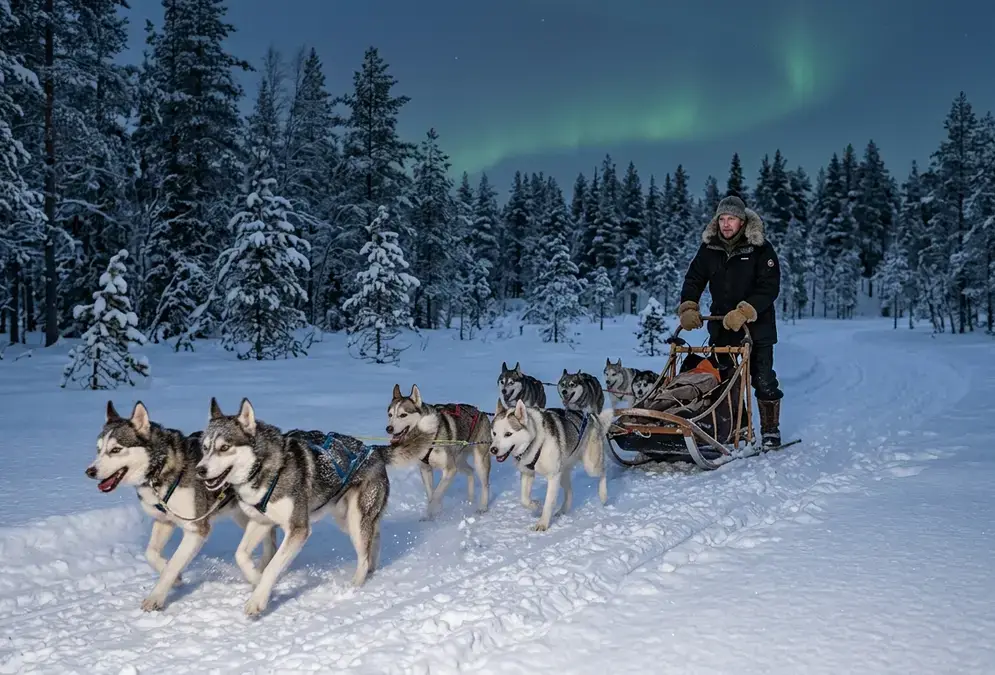
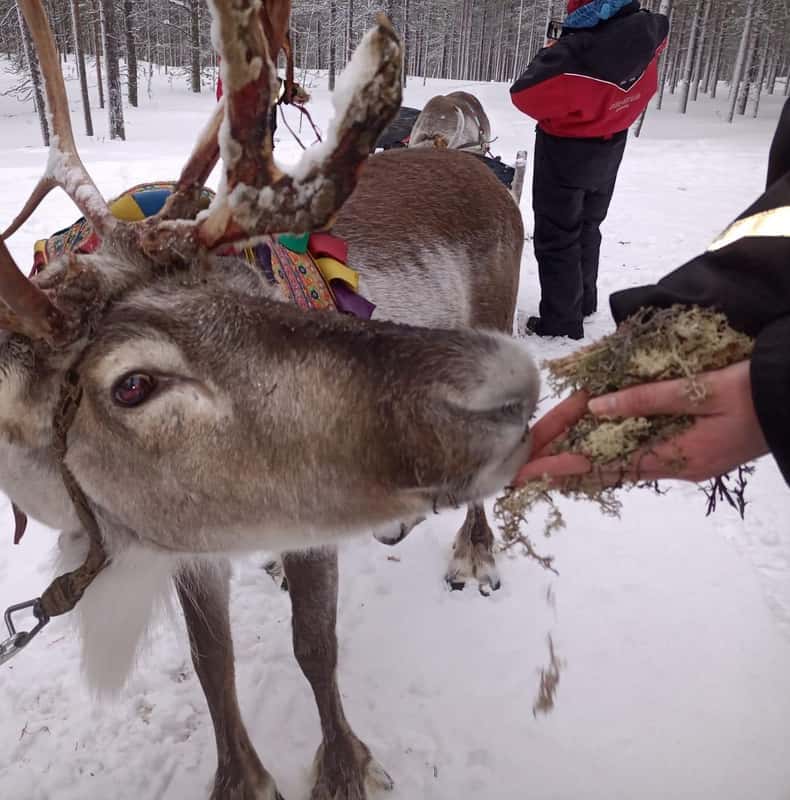
- On-site husky and reindeer safaris
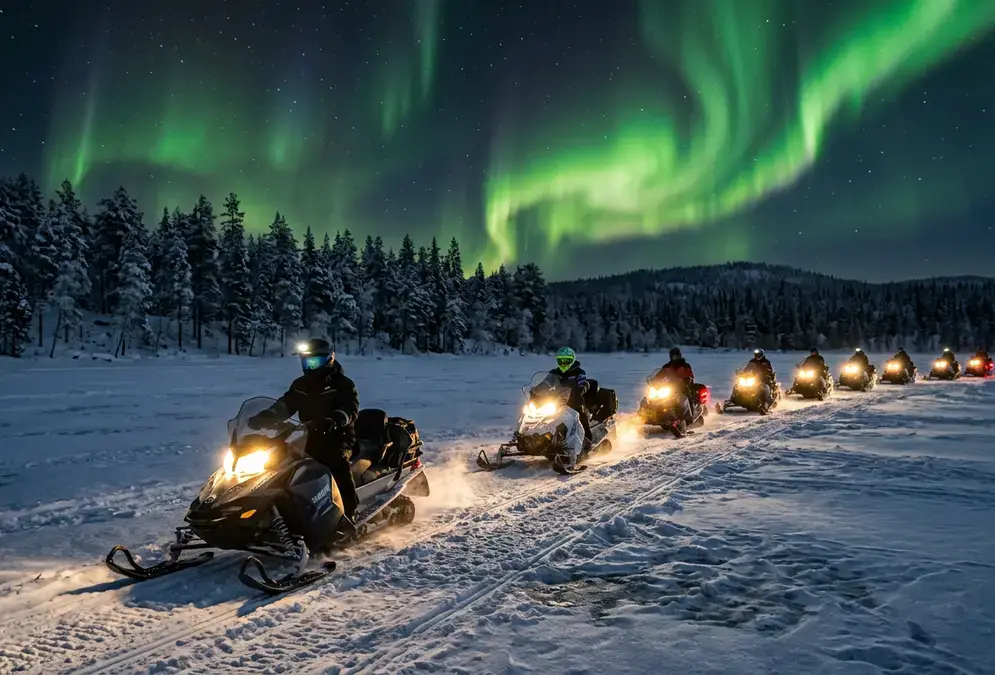
- Snowmobile excursions into the surrounding tundra
All-inclusive packages bundling breakfast and dinner are available if you'd rather not plan meals during a short stay. None of it is required. A Kelo-Glass Igloo booking and a walk to the smoke sauna makes a complete two-night trip on its own, and that smoke sauna is exactly the setup behind Lapland's sauna, ice swimming, and aurora-watching ritual: heat up, dunk in the cold, check the sky, repeat.
Price and what you're actually paying for
Rates start from €424 a night for the entry-tier igloo; the Kelo-Glass and Luxury Kelo-Glass units run higher. That's a step up from Rovaniemi-based glass hotels, and the premium buys two things: the heritage, this is the original, not an homage, and the remoteness, a genuinely dark sky rather than a city-adjacent approximation of one. If budget is the deciding factor, closer-in properties cost less. If the point of the trip is the best possible aurora conditions in a room built for exactly that, this is what you're paying to book.
Aurora conditions, and what money can't buy
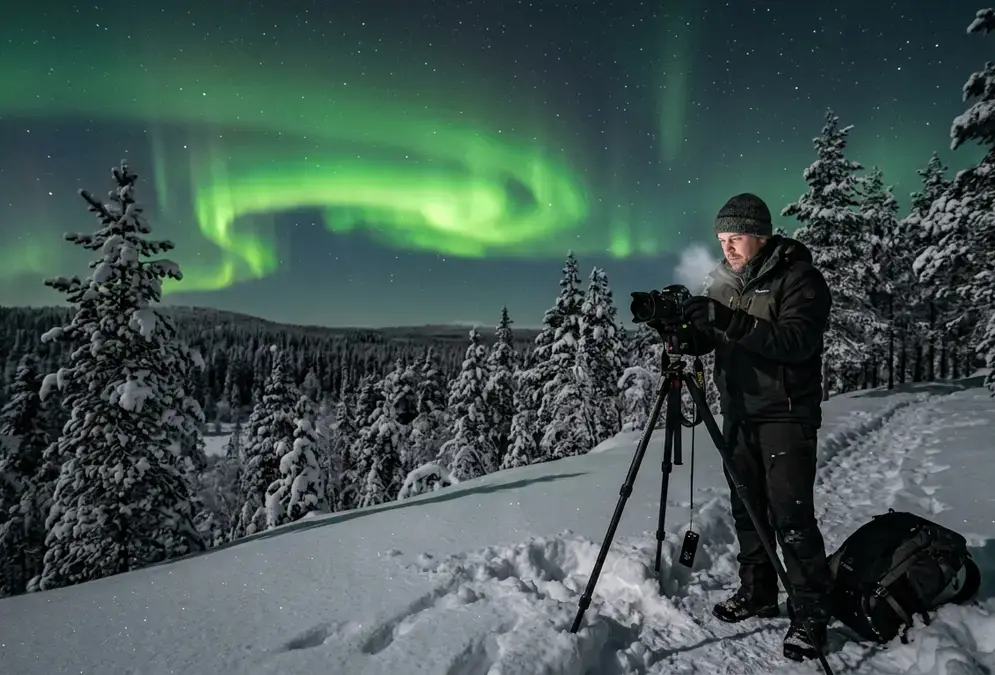
Even 250 km above the Arctic Circle, under a purpose-built glass roof, the northern lights are never guaranteed. Visibility depends on cloud cover and the Kp index, and no amount of remoteness changes that on a quiet geomagnetic night. The clearest windows fall in September–October and February–March, when the equinoxes tend to drive more solar activity and the weather is milder than deep winter. December and January bring kaamos, the polar night, with the longest dark windows of the year, but temperatures that can fall to −30°C and only a couple of hours of daylight for anything else you'd planned to do. Book the season that matches what you actually want from the trip, not just the one with the most hours of darkness.
Getting there
Most visitors fly into Rovaniemi via Helsinki, then continue to Saariselkä by scheduled bus, roughly a three-hour ride, or by rental car along a route without the closure risk that complicates Icelandic itineraries in winter. A rental car gives you the flexibility to explore Inari and the wider Saariselkä fell region between aurora nights; the resort itself doesn't require one. For the full picture on flights and the Rovaniemi leg of the journey, see getting to Rovaniemi.
Before you book
The Kelo-Glass Igloo, the unit worth the trip, is a limited-availability tier at the best-known glass igloo hotel in the country, so book it well ahead for the September–October and February–March windows. If Santa Claus Village and a shorter transfer from the airport matter more to your itinerary than the darkest possible sky, Rovaniemi-based alternatives like Arctic TreeHouse Hotel or Arctic SnowHotel & Glass Igloos are worth comparing before committing to the extra travel time out to Saariselkä. See the full glass igloo ranking for how all five compare side by side.