
Why sauna and ice swimming solve the real problem of aurora hunting
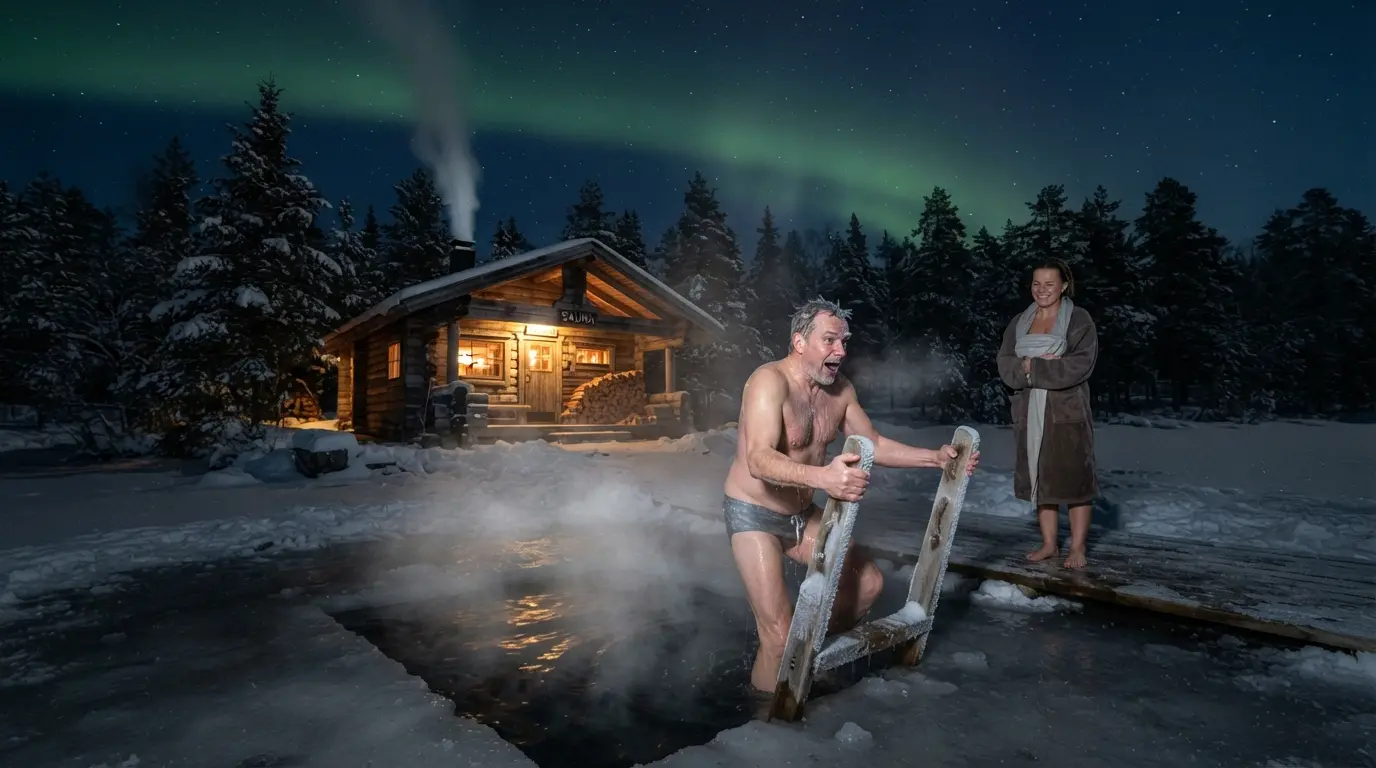
Waiting for the aurora forecast to spike in Lapland usually means standing outside in temperatures well below −20°C, checking a KP index app every twenty minutes while your fingers stop cooperating. The obvious fix isn't to retreat indoors and risk missing a burst of activity; it's to have somewhere warm within a few steps of the dark. Finland has run that exact routine for centuries: a wood-fired sauna paired with a hole cut into the lake ice, the avanto.
The sequence is simple and repeatable. Heat up in the sauna for ten to twenty minutes, step out into the cold for a dunk in the avanto or a roll in the snow, then rewarm and check the sky again. It maps neatly onto the rhythm of aurora hunting in Finnish Lapland, where geomagnetic activity can flare and fade inside an hour, and the difference between seeing it and missing it often comes down to whether you stayed outside or went in to defrost.
This isn't a tourist gimmick bolted onto stargazing. Sauna bathing in Finland is believed to date back as far as 7,000 BC[1], long before anyone needed a KP index for anything. What's changed since then is the reason people step back outside afterward.
Inside Finland's sauna culture: history, löyly, and etiquette
With 3.3 million saunas in a country of 5.5 million people[2], Finland has more saunas than cars, and nearly every home, apartment block, and lakeside cottage has one. In 2020, Finnish sauna culture was inscribed on UNESCO's Representative List of the Intangible Cultural Heritage of Humanity[3], recognition usually reserved for something rarer than a room with a wood stove.
That's the point, though: accessibility is the culture. Traditionally the sauna was treated as a sacred space, a "church of nature," where rank and formality dropped the moment clothes came off. It wasn't always private, either. Public saunas were common in Finnish cities until they almost disappeared after the 1950s, when home saunas took over[4] and the communal version faded from daily life.
Featured · Destination
Northern Lights in Finnish Lapland
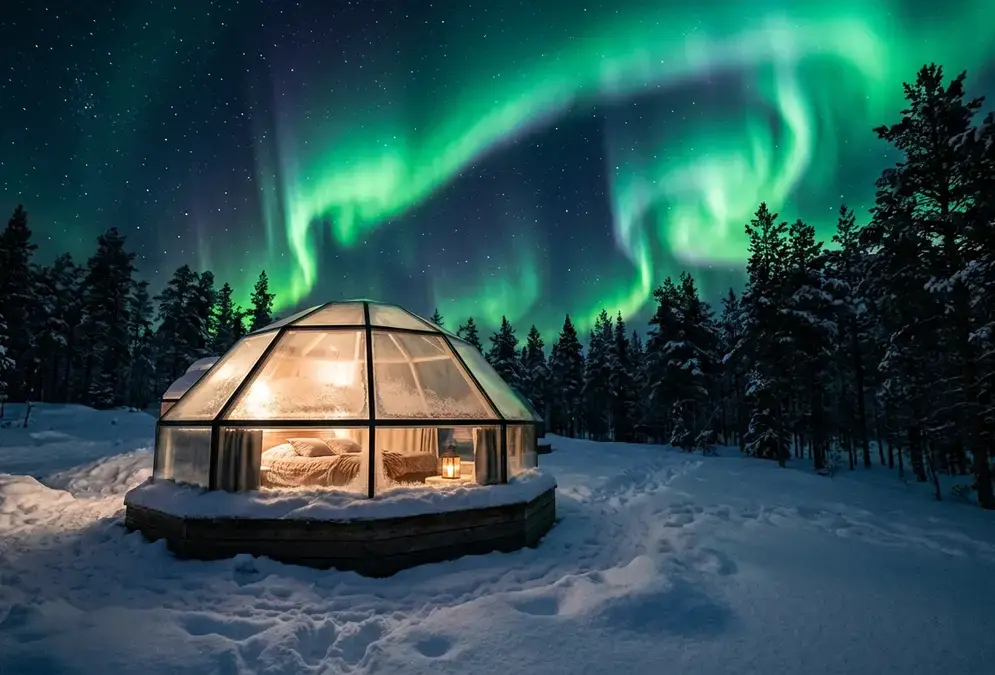
Finnish Lapland's whole-region aurora guide: glass igloos, Santa Claus Village, six bases from Rovaniemi to Inari, aurora season Sep–Mar, no road drama.
A few terms are worth knowing before you book a cabin. Löyly is the steam that rises when water hits the hot stones of the kiuas, the sauna stove; Finns treat it as the soul of the sauna, and dumping too much water too fast is the fastest way to mark yourself as a first-timer. Etiquette runs quiet: sit, don't perform, and don't talk over the hiss of the löyly. Nudity is standard in a private or family sauna; mixed public saunas typically expect swimwear, and it's worth checking which applies before you assume either way.
- Heat first for 10 to 20 minutes, sitting rather than lying near the stove
- Löyly in short bursts, a ladle of water on the kiuas, not a flood
- Quiet etiquette, since the sauna is not the place for a loud conversation
- Cool down gradually if skipping the ice hole, a lukewarm shower before the cold shock, not straight from 80°C into sub-zero air
Avanto: the ice-swim half of the ritual, and what the science actually says
The second half of the ritual has its own name: avantouinti, ice swimming, taken from the avanto, the hole cut through lake ice. Finns traditionally alternate hot sauna sessions with cold water dips or a roll in the snow[5], and the appeal isn't really about enduring the cold. It's about the jolt of relief that follows it.
Physiologically, what happens is straightforward. Skin contact with near-freezing water triggers a cold shock response: a sharp gasp, a spike in heart rate, and immediate vasoconstriction as blood vessels near the skin narrow to protect the core. Step back into warm air or the sauna and the reverse happens. Vasodilation floods the skin with blood again, which is where the flushed, tingling feeling after an avanto dip actually comes from. Finns have a word for the willpower this takes on a bad night: sisu, a gritted-teeth resilience that shows up in plenty of Finnish life beyond the edge of an ice hole.
Where the claims get shakier is what happens next. Wellness sites routinely credit ice swimming with boosting immune function or firing up brown fat to burn calories. Brown adipose tissue thermogenesis is real physiology, but the evidence for meaningful immune or metabolic benefit from occasional cold plunges in humans is thin, and most of what circulates online traces back to marketing copy rather than peer-reviewed research. Treat avantouinti as a genuinely enjoyable, centuries-old ritual with a real physiological kick, not a health intervention with proven numbers behind it.
Checking the aurora forecast between rounds: KP index and timing
None of this works as a waiting strategy unless you're watching for the right signal. The standard tool is the KP index (planetary K-index), a 0-9 scale and the most widely used measure of geomagnetic activity and aurora strength[6]. It updates as data comes in from a global network of magnetometers, and most aurora-forecast apps display it alongside a countdown to the next update.
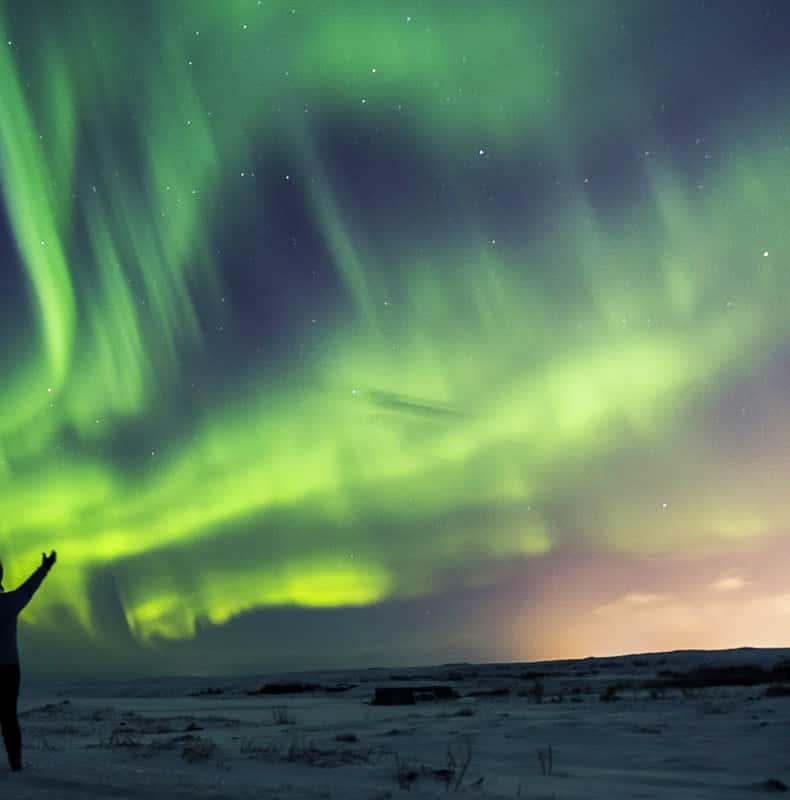
The number that matters for Finnish Lapland is lower than most visitors expect. A KP index of 3 to 4 is generally enough to produce good-to-excellent aurora visibility across the 60-70°N aurora zone, a band that covers Reykjavik, Tromsø, and Finnish Lapland[7], so you don't need the KP 7+ storms that lower-latitude sky watchers chase. That's the practical read: check the app between sauna rounds, and a KP3 reading is worth stepping back outside for, not something to hold out for a bigger number.
KP 3-4
What sits behind that number is the aurora oval, the ring of geomagnetic activity around the pole that expands and contracts with solar wind intensity and the occasional geomagnetic storm. On a quiet night the oval stays tight around the pole and Lapland sits south of it; on an active one it swells far enough south to put the lights directly overhead. Lapland's daytime activities beyond aurora-watching is worth planning around too, since a KP2 night still leaves the rest of the evening, and the sauna, free.
Where to do this in Lapland: saunas, ice holes, and glass-igloo bases
Most lodges built around aurora-watching in Lapland already understand this rhythm, which is why sauna access sits next to the best rooms rather than tucked away as an afterthought. Kakslauttanen Arctic Resort, three hours north of Rovaniemi, runs the world's largest smoke sauna, built so a full group can warm up together between forecast checks instead of queuing for a cabin sized for four.
Recommended tours
Tours are selected for quality, not commission. I earn a small fee if you book — at no extra cost to you.
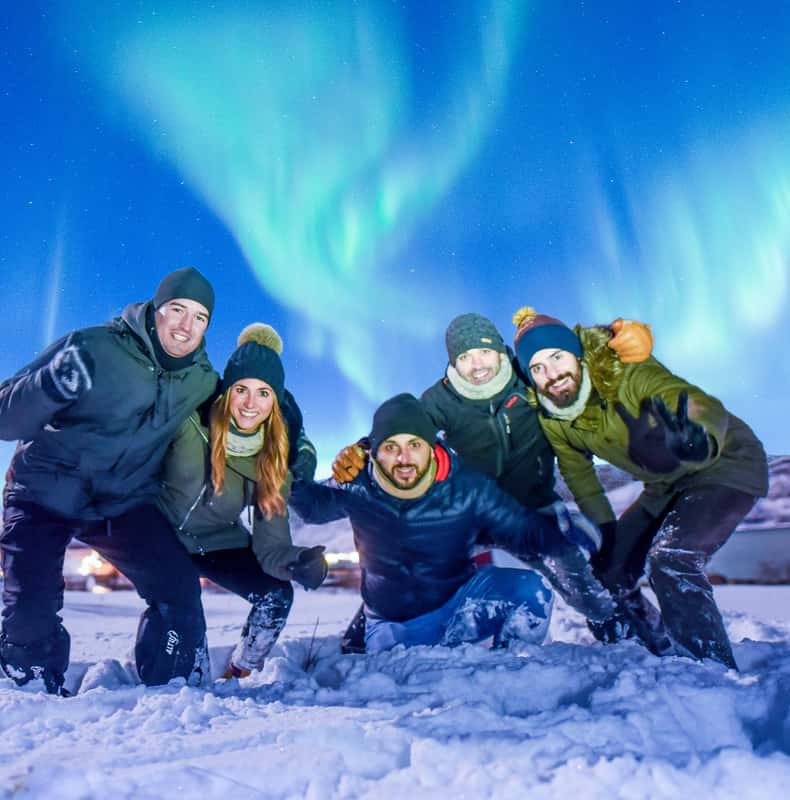
If a glass ceiling matters more to you than a sauna bench, the best glass igloos in Lapland put the aurora directly over the bed, solving the waiting problem a different way: you don't have to go outside to check the sky, though you'll still want the sauna afterward to get feeling back in your fingers. Either way, getting to Rovaniemi is the first logistics question worth answering, before the sauna-and-ice-hole one.
A few practical notes before booking:
Featured · Article
What Is Astrotourism? The Complete Beginner's Guide
Astrotourism means travel built around dark skies: meteor showers, auroras, the Milky Way. What it means, where to go, and how to plan your first trip.
- Book the sauna slot in advance at busier lodges; smoke saunas in particular run on a schedule, not a walk-in basis
- Bring or rent a towel and sandals, since stone and ice floors are unforgiving on bare feet
- Don't dip alone at night, however confident you feel; cold shock can disorient even experienced swimmers
- Check with a doctor first if you have a heart condition or high blood pressure; the sudden vasoconstriction is a real cardiovascular event, not just a bracing feeling