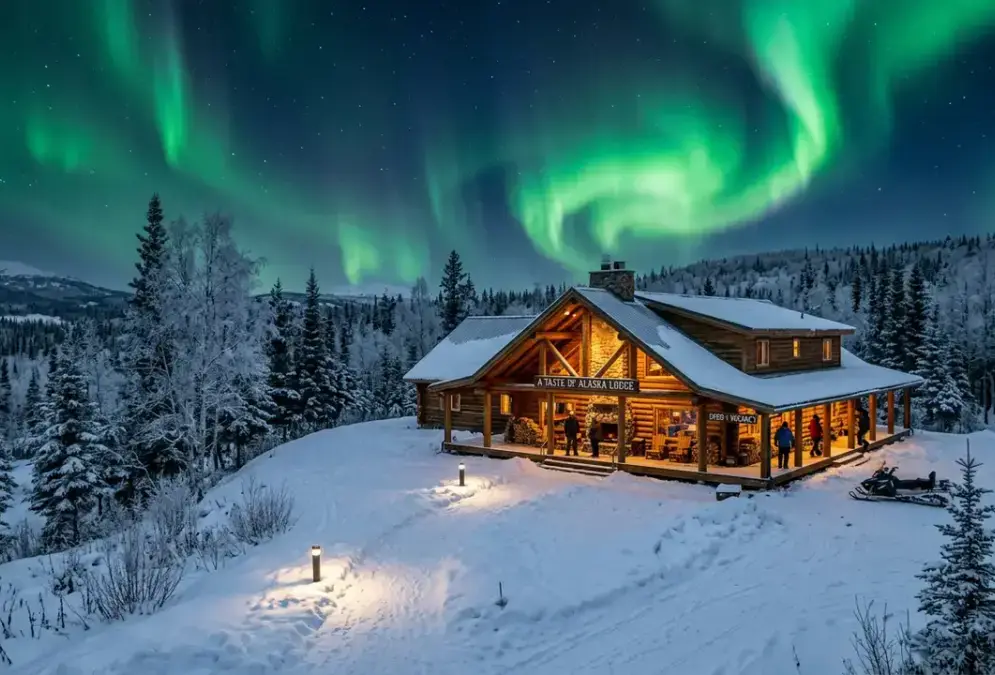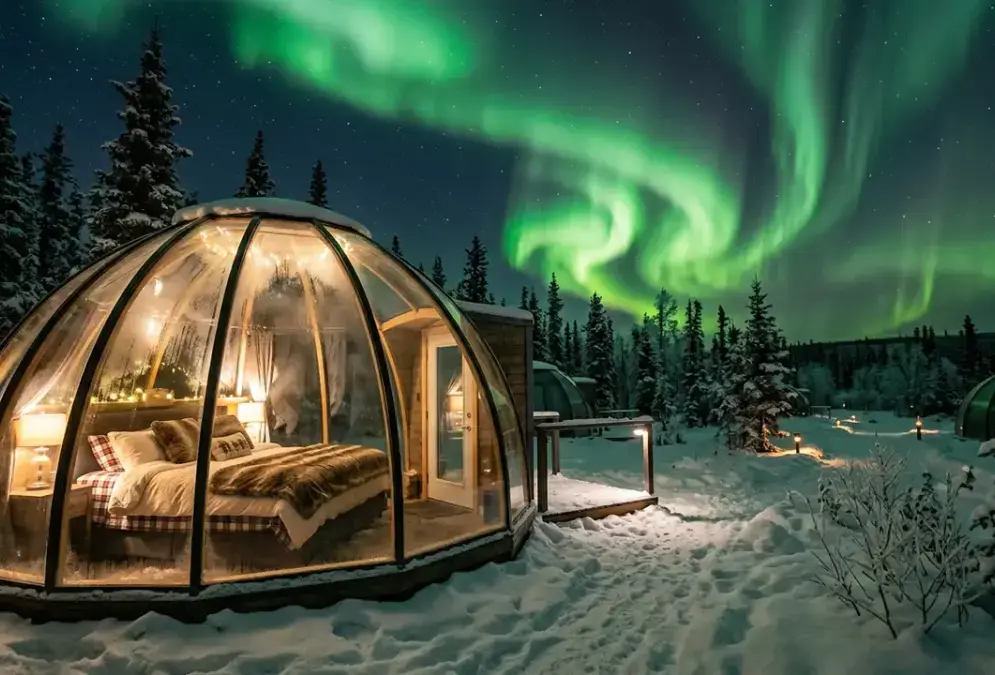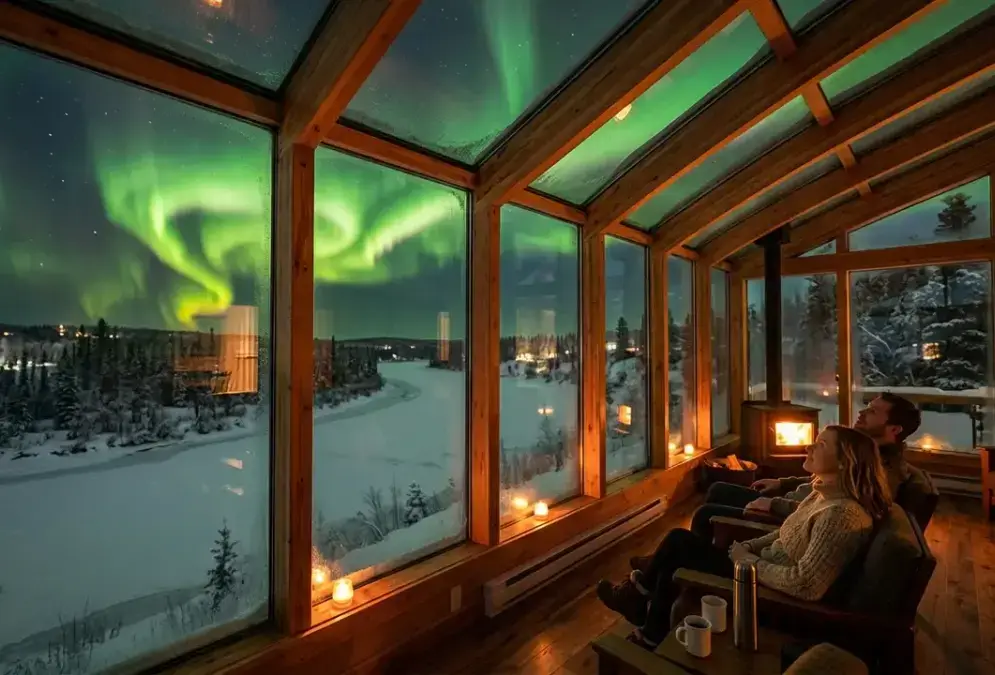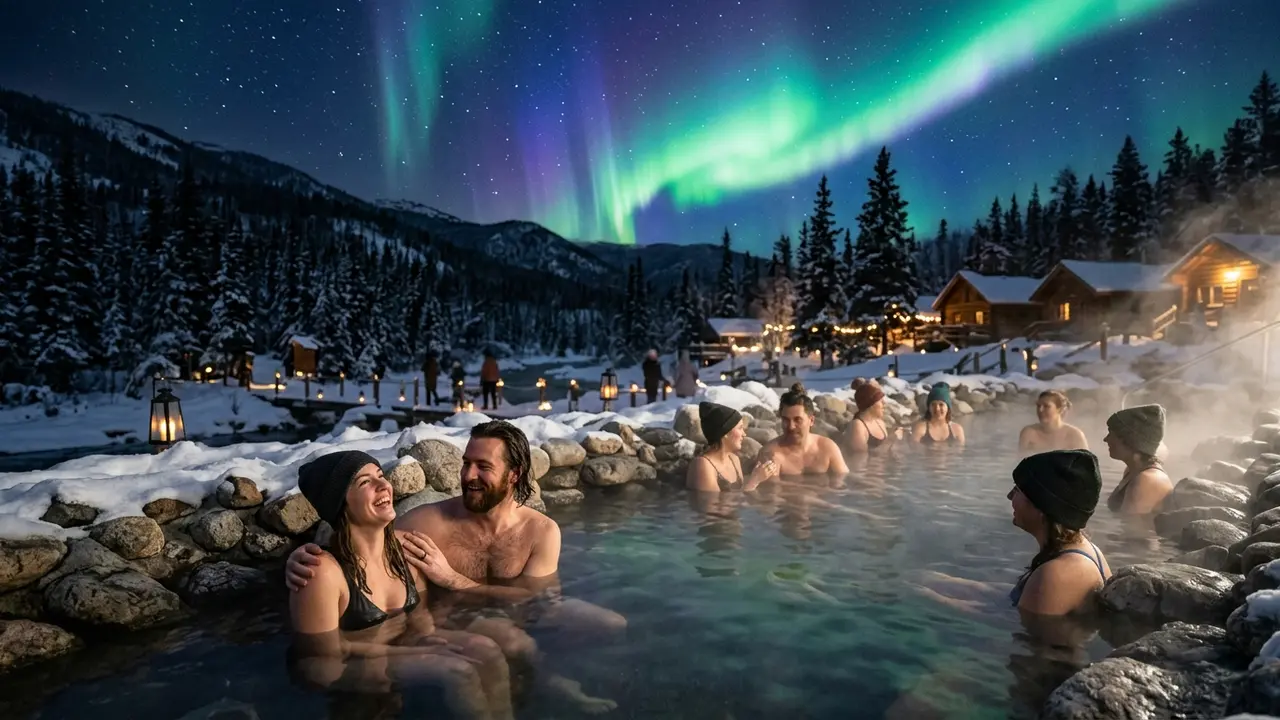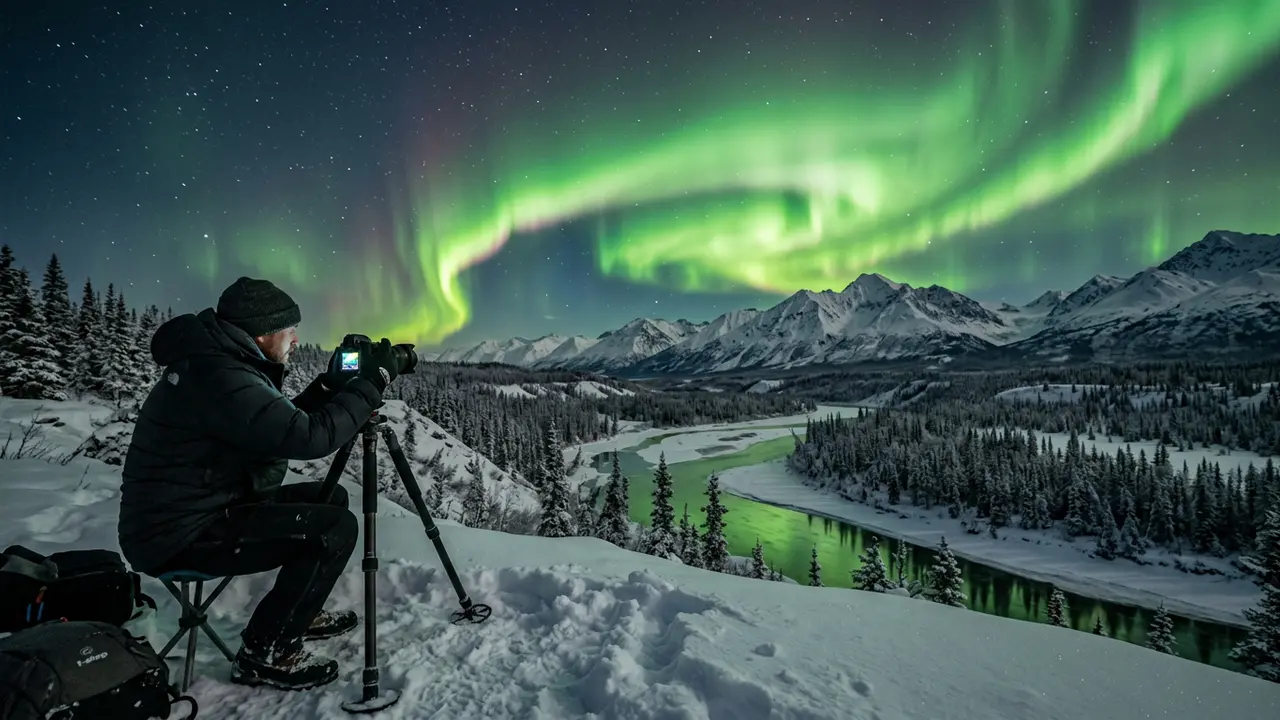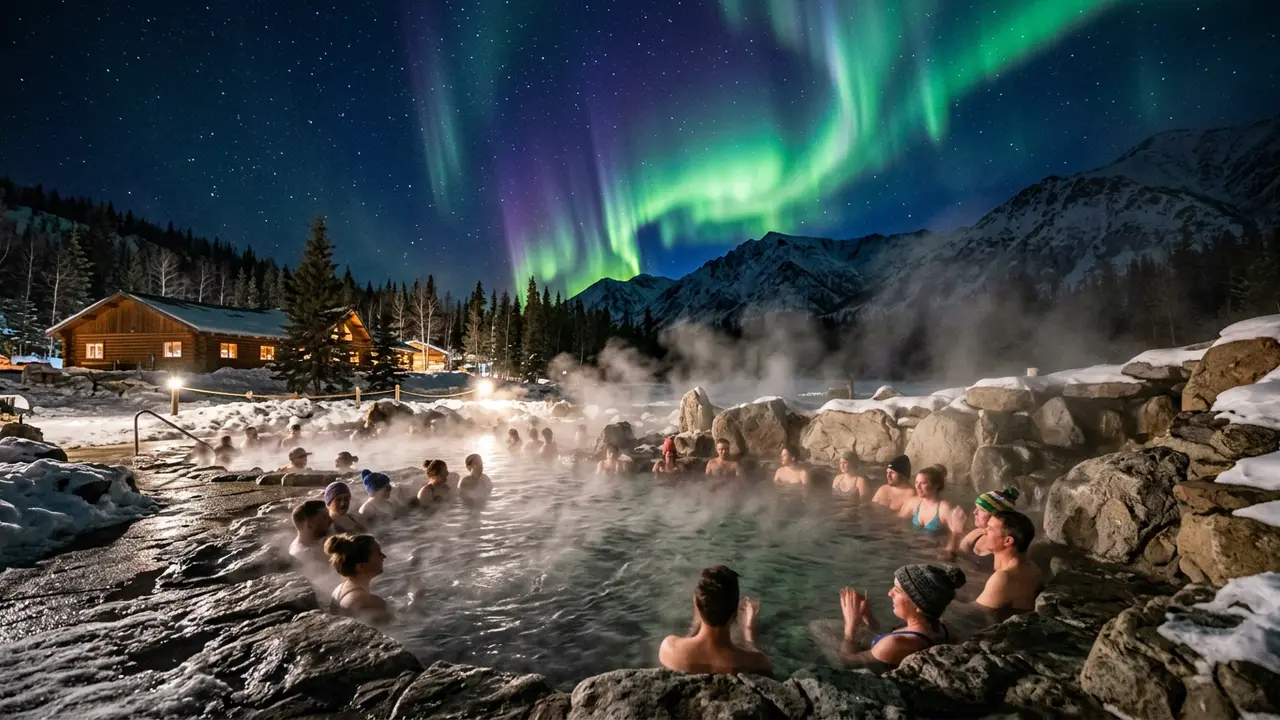
The night temperatures in Fairbanks drop to -20°F by November and hold there through March. Aurora hunts run until 2 AM. Standing still in that cold is the part most visitors don't prepare for. The aurora and hot springs combo package addresses this practically: between displays you retreat to a 90–110°F geothermal pool fed by natural mineral water, not a heated van.
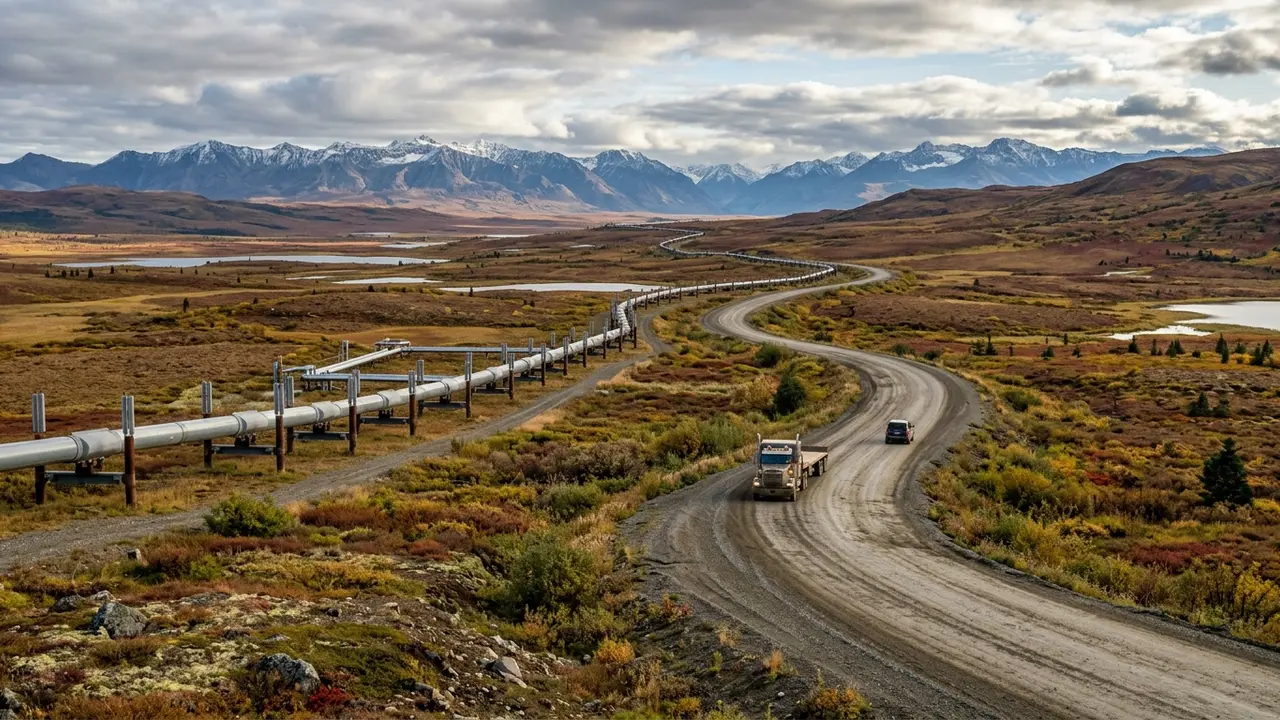
This geothermal springs property sits 60 miles (97 km) northeast of Fairbanks on Chena Hot Springs Road. The road is paved and maintained year-round. Combo tour operators pick up at Fairbanks hotels between 4:00 and 5:30 PM, reaching the resort around dusk. That arrival window gives time for dinner at the resort restaurant, a first soak in the outdoor mineral pools, and an optional pass through the Aurora Ice Museum before the watching starts.
How the package is structured
The night alternates between two modes: warmth and observation. When the sky is quiet or overcast, the group soaks. When the Kp index climbs and guides spot a display developing at the resort's dark-sky viewing areas, the call goes out. Fairbanks sits at 64.8°N, inside the auroral zone when geomagnetic activity reaches Kp 3 or above. A Kp 4–5 storm at this latitude produces full-curtain displays overhead, not a horizon glow.
Group sizes run 6–15 people, small enough that guides can pivot quickly between pool and viewing site as conditions shift.
What's included
Most combo packages cover: round-trip hotel pickup from Fairbanks, access to Chena's outdoor and indoor hot springs pools, a guided aurora expedition, and hot drinks through the night. Dinner at the resort restaurant and Aurora Ice Museum entry vary by operator. The price gap between an all-inclusive and a bare-bones combo can reach $40–60. Verify inclusions before paying.
Aurora cannot be guaranteed. Some operators offer a rebooking credit if no display appears; that clause only has value if you have a spare evening in Fairbanks to use it. Book two consecutive nights if you want the insurance to mean anything.
When to go
February is the target month. The temperature gap between pool (90–110°F) and outdoor air (-20°F to -30°F) is widest in deep winter, and February hits a statistical peak for clear skies across interior Alaska. Steam columns rise from the outdoor pools, visible across the resort grounds at night. That thermal contrast between mineral pools and frozen air is something a standard van tour cannot replicate.
December and January are colder but carry higher cloud cover rates. October and March work but the contrast is less dramatic. The current solar cycle sits near its activity peak, meaning more nights cross the Kp 3 threshold than a decade ago.