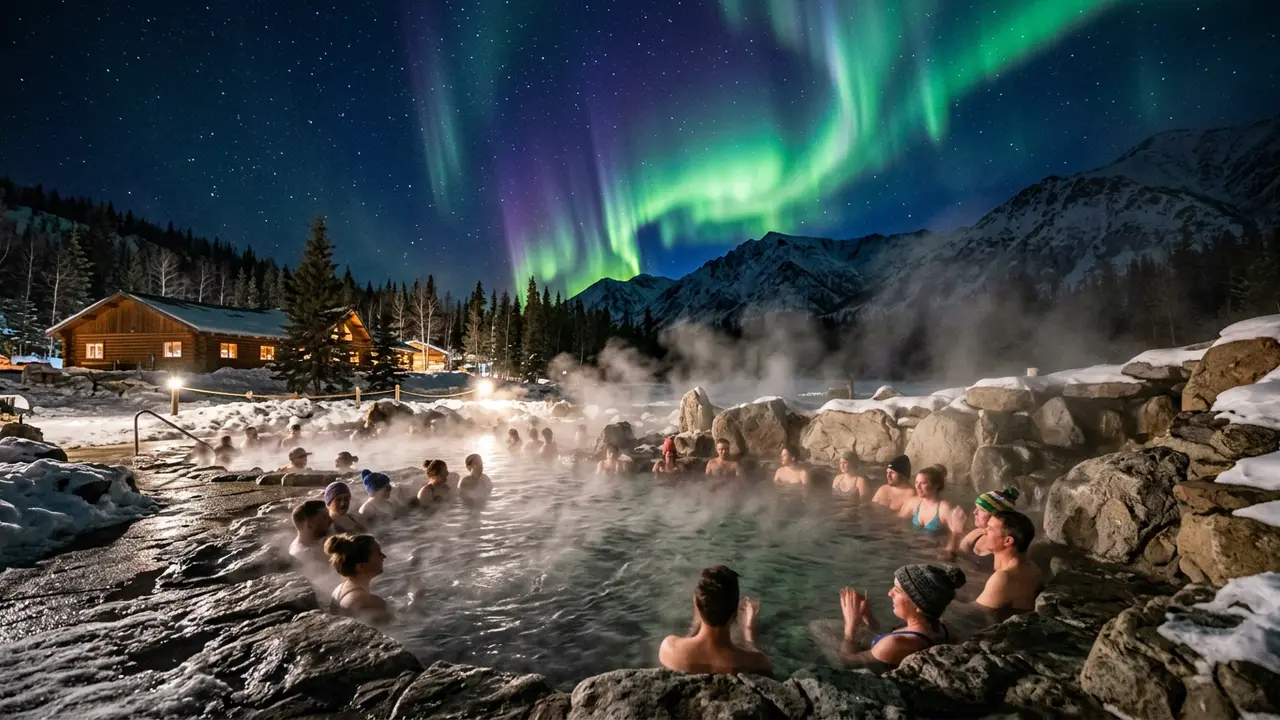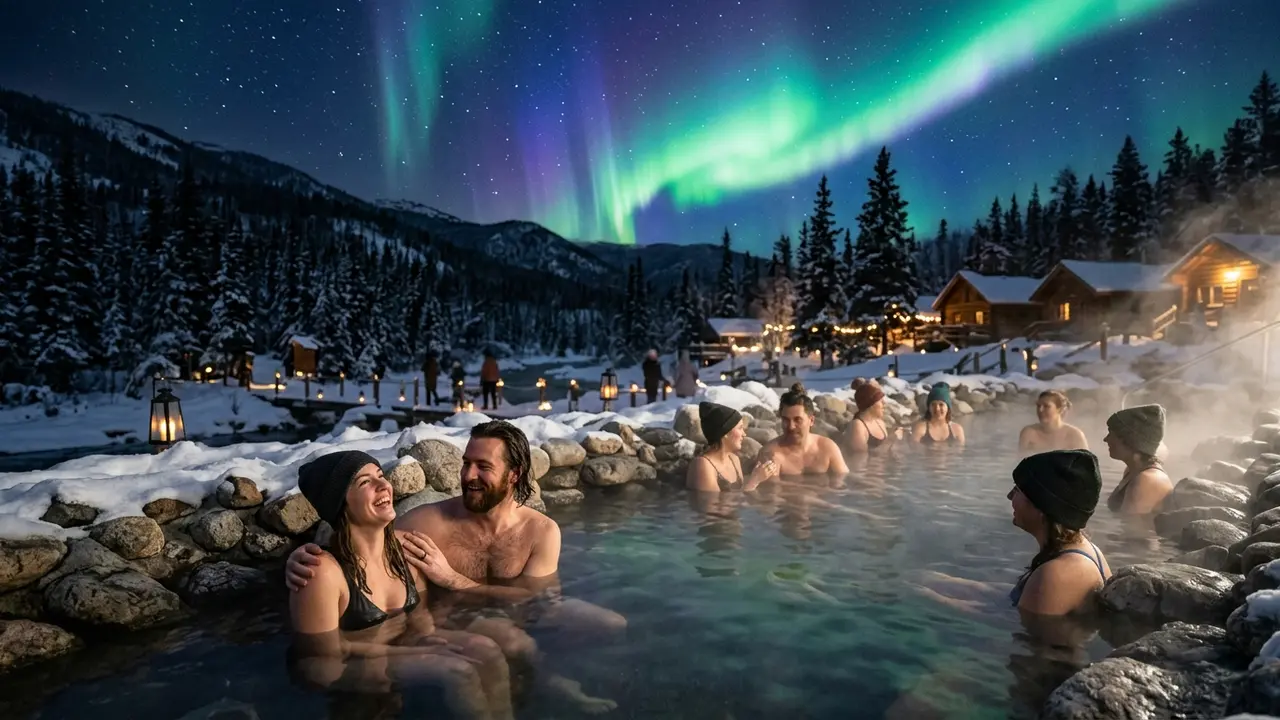
Visitors soaking in outdoor hot springs pool under the Northern Lights at Chena Hot Springs Resort, Alaska
Northern Lights

Aurora viewing at Chena Hot Springs Resort, 60 miles northeast of Fairbanks

8–10 hours
Evening departures, late August through mid-April. Hotel pickup in Fairbanks approximately 4–5 PM; return around 2–4 AM. Tour timing adjusts to live aurora forecast and Kp index conditions.
Hotel pickup from downtown Fairbanks and major hotels. Confirm exact pickup location with your operator at booking; departure typically 4–5 PM.
All activities

The combination sounds gimmicky. It doesn't need to be both things at once. Chena Hot Springs Resort earns it.

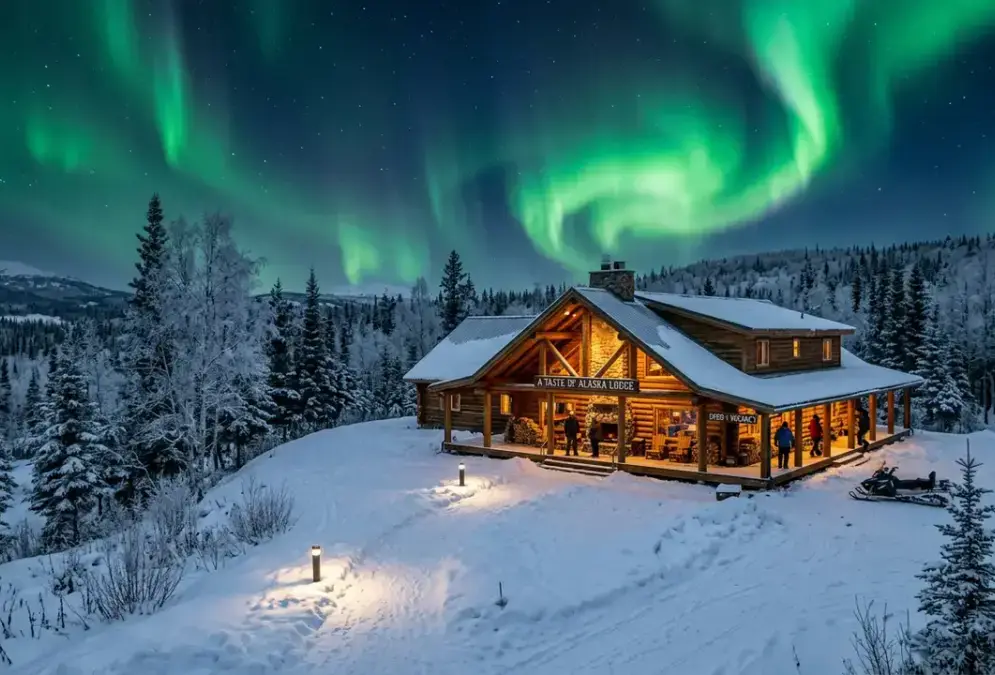
Chena Hot Springs Resort sits 60 miles northeast of Fairbanks at the end of Chena Hot Springs Road, in a dark corridor that reads Bortle Class 2–3 on clear nights. The outdoor pools stay at 90–110°F year-round from natural geothermal heating. When aurora moves overhead, you're already outside, already warm, and already dark-adapted. That particular setup is rare.

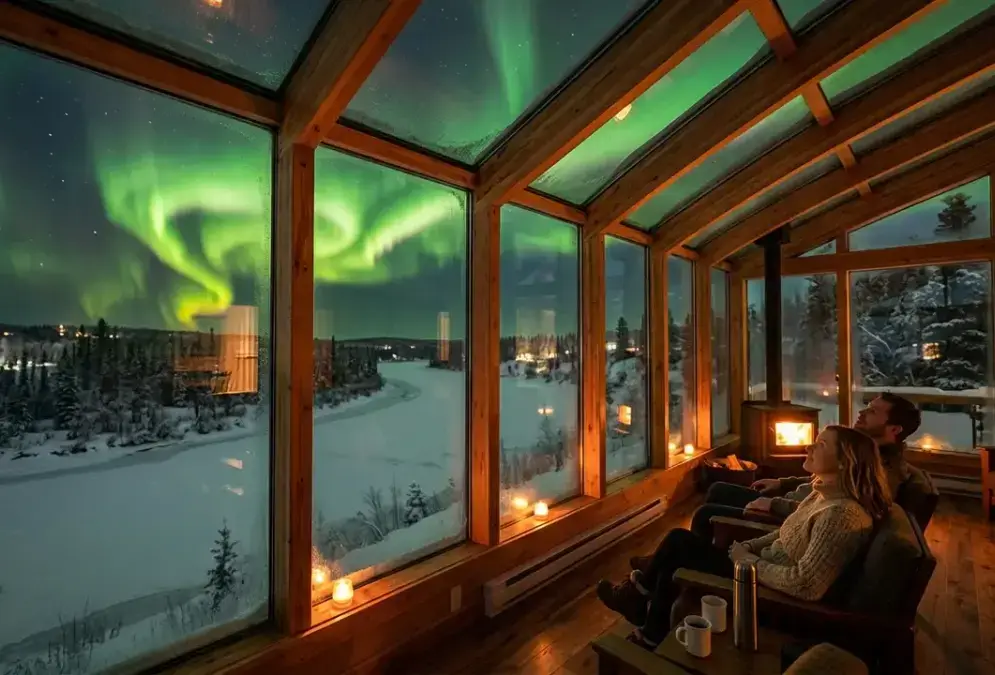
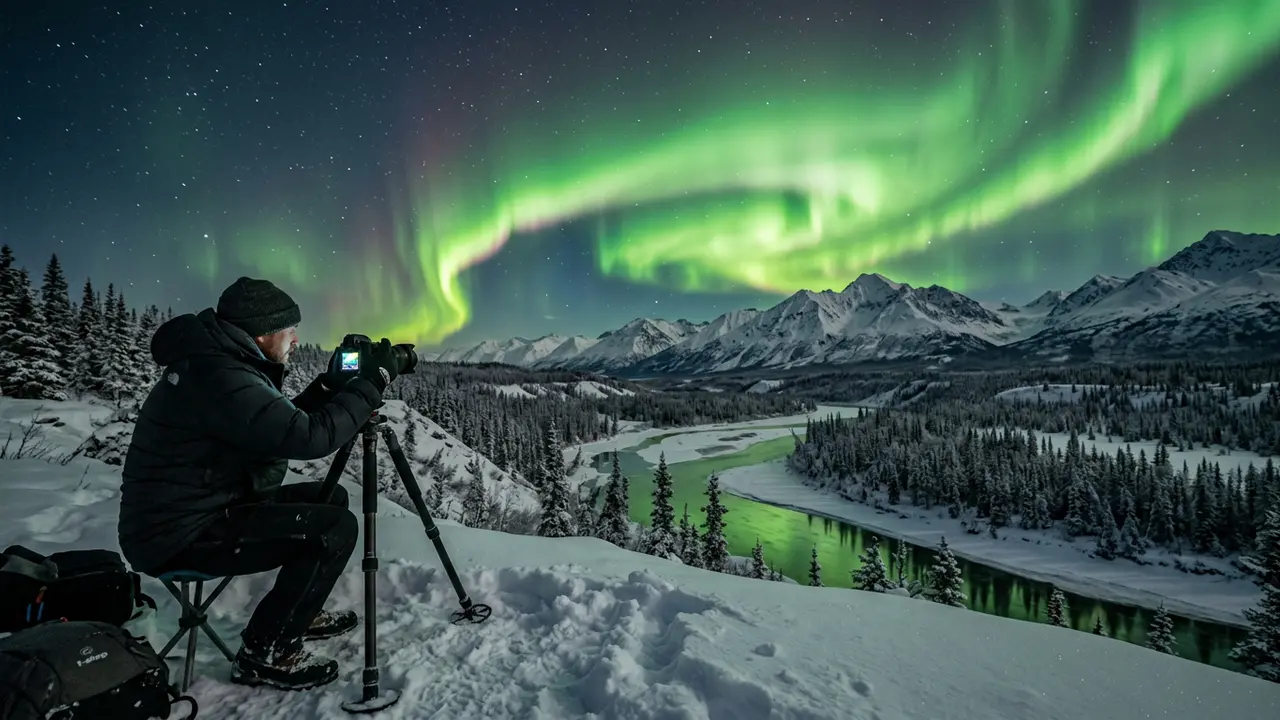
The tour departs Fairbanks around 4–5 PM with hotel pickup, covering 1.5 hours each way through the Alaska interior. On site, the evening runs in two segments: admission to the Aurora Ice Museum (hand-carved sculptures, an ice bar, kept permanently below freezing) and access to the outdoor hot springs. Aurora viewing happens from the resort grounds and heated yurts between pool sessions. Operators track live Kp index data throughout the night. At 64.8°N latitude, Fairbanks needs Kp 3 or above for overhead aurora rather than a faint horizon glow.

What's included

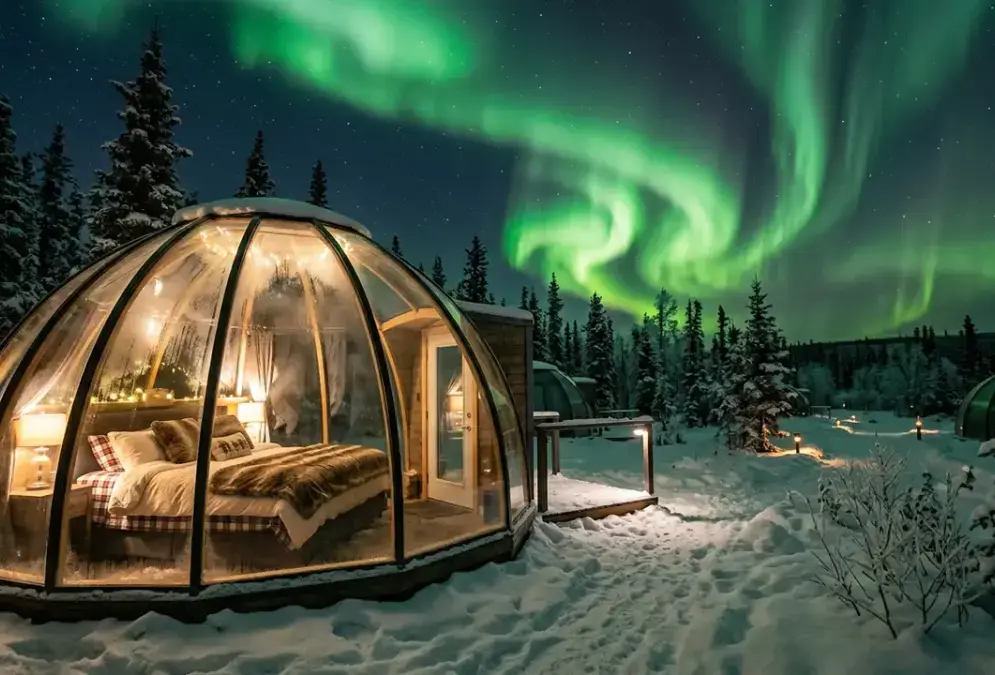
Round-trip transport from Fairbanks hotels, Aurora Ice Museum admission, hot springs access, hot beverages, and heated yurts are standard inclusions. Some operators add SUSV (Small Unit Support Vehicle) access to elevated terrain for unobstructed sky views. Photography guidance on long-exposure settings is informally available on most tours; formal workshops run as a paid add-on.

Aurora timing and honest odds

The viewing window centers on 10 PM–3 AM when geomagnetic activity typically peaks. Cold nights from December through February produce the clearest air and most vivid displays. Tours run 8–10 hours total. If the aurora doesn't show, the pool and ice museum absorb the wait.

Aurora is not guaranteed here, and no operator controls cloud cover or solar wind. Check the Fairbanks forecast the afternoon before your tour and watch for Kp 3 or higher. The cloudiest months are December and January. Late February, March, and mid-August through September give better odds of clear skies while still offering enough astronomical darkness for serious aurora viewing. If you can choose your dates, late February or early March balances usable darkness with a better-odds weather window.
Highlights

  • Soak in 90–110°F geothermal pools with direct aurora views overhead
  • Aurora Ice Museum: hand-carved sculptures and ice bar, kept below freezing year-round
  • Bortle Class 2–3 dark sky, 60 miles from Fairbanks light pollution
  • Live Kp index monitoring — guides position the group for best geomagnetic viewing
  • Heated yurts and waiting areas between outdoor aurora sessions
  • Optional SUSV elevated terrain access for unobstructed sky views

Included

  • Round-trip transport from Fairbanks hotels
  • Aurora Ice Museum admission
  • Outdoor hot springs pool access
  • Hot beverages during viewing sessions
  • Heated waiting yurts

Not included

  • Meals (hot beverages included; dinner not provided)
  • Photography equipment rental
  • Paid photography workshops
  • Geothermal tour add-on
  • Tips and gratuities
  • Travel insurance

Practical information

Languages

English

Group size

Typically 8–15 people per tour vehicle

Good to know before booking

  • Heavy insulated parka, thermal base layers, insulated boots, and gloves — temperatures often reach –20°C (–4°F) overnight
  • Waterproof outer layer for cycling between hot springs and cold outdoor air
  • Physical ability to enter and exit outdoor pools

Prices & Booking

Info & booking via operator

From €165 approx.

From USD 179 per person

Evening departures, late August through mid-April. Hotel pickup in Fairbanks approximately 4–5 PM; return around 2–4 AM. Tour timing adjusts to live aurora forecast and Kp index conditions.

Tags

aurora northern lights alaska fairbanks hot springs guided tour night tour winter

Frequently asked questions

Is the aurora guaranteed on Chena Hot Springs tours?

No. Aurora depends on geomagnetic activity and clear skies, neither of which any operator controls. Most reputable operators offer a free return visit if conditions prevent viewing; check the specific terms before booking. A Kp reading of 3 or higher gives the best odds at Fairbanks latitude.

How far is Chena Hot Springs from Fairbanks?

About 60 miles (96 km) northeast on Chena Hot Springs Road, roughly 1.5 hours each way. Tours depart Fairbanks in the late afternoon and return in the early hours of the morning.

What temperature are the outdoor hot springs pools?

The outdoor pools stay at 90–110°F (32–43°C) year-round from natural geothermal heating. The contrast between pool temperature and sub-zero outdoor air is part of what makes aurora viewing here different from standing in a field.

What is the Aurora Ice Museum at Chena?

A year-round facility at the resort kept permanently below freezing, with hand-carved ice sculptures, an illuminated ice bar, and ice chandeliers. Admission is included in most tour packages. Plan 30–45 minutes to walk through it properly.

What should I wear on a Chena Hot Springs aurora tour?

Heavy insulated parka, thermal base layers (wool or synthetic), insulated waterproof boots, warm hat, and gloves. You'll cycle between hot springs and cold outdoor air multiple times. Bring a towel — some operators provide them, others don't. A red-light headlamp is useful for camera adjustments without destroying your dark adaptation.

What are the best months for northern lights at Chena Hot Springs?

December and January have the longest darkness but also the cloudiest nights in Fairbanks. February, March, and mid-August to September offer statistically better odds of clear skies. February–March also falls in a strong phase of the current solar cycle, which increases geomagnetic activity.

Can I bring a camera for aurora photography?

Yes. Bring a DSLR or mirrorless camera with manual mode and a sturdy tripod. The resort's Bortle Class 2–3 dark sky makes it a serious photography location. Some operators offer paid workshops; basic long-exposure guidance is usually available informally.

Further reading

Sources