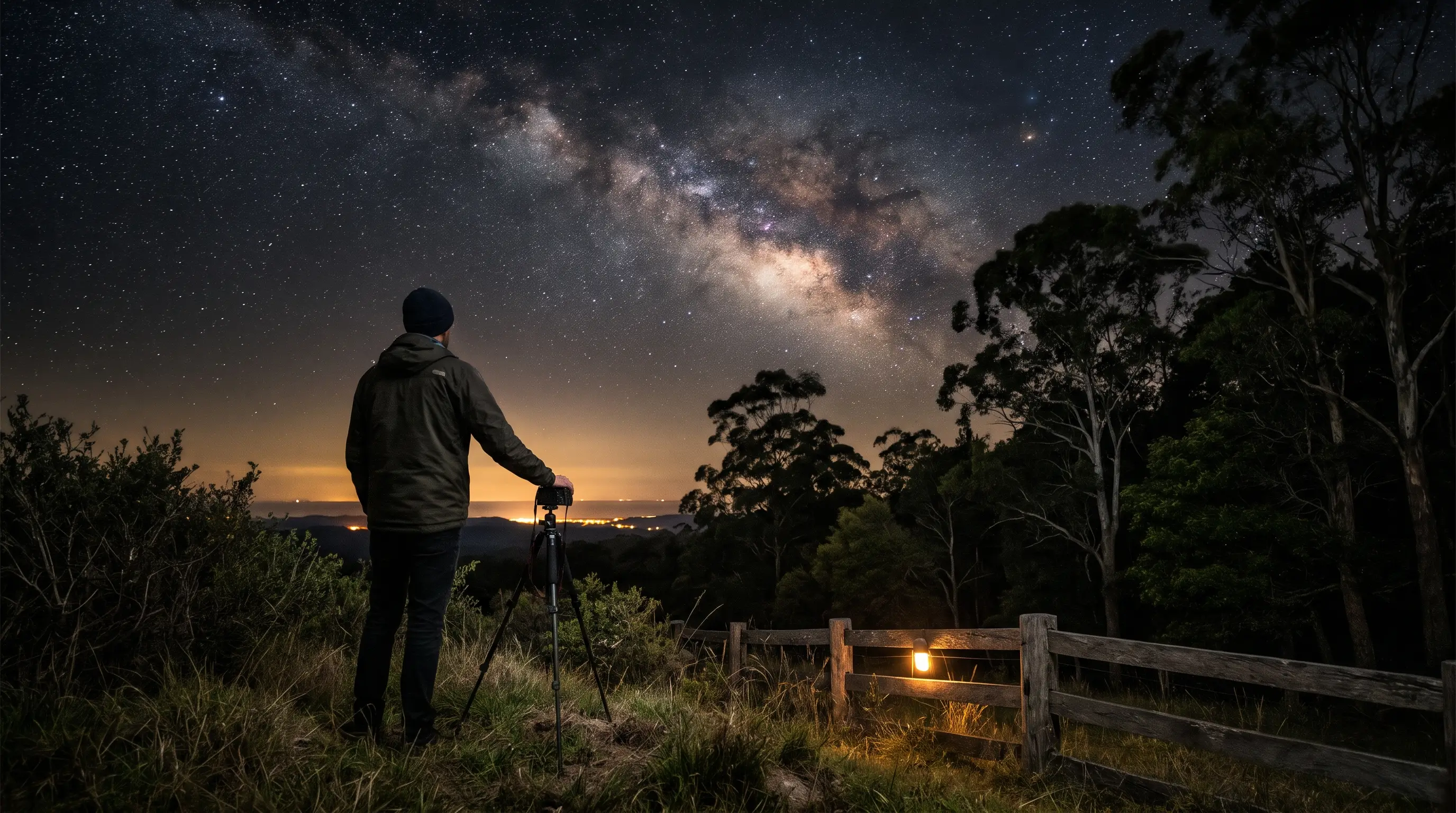
Queensland's First Dark Sky Reserve Sets Hard Lighting Limits
I've seen dark skies firsthand in the Atacama altiplano, Namibia's NamibRand Nature Reserve, and Morocco's Merzouga dunes; every other destination I write about is built from measured Bortle and SQM data, cloud climatology, and primary sources like park services and the International Dark-Sky Association.
In this article
Jump to a section
A reserve is a small dark core inside a large protected ring
- A 7.41 km² core zone at the centre, made up of Kirbys Road Environment Reserve and Maleny National Park.[9]
- A peripheral zone formed by the Mary River catchment and adjoining State Protected Areas,[10] among them Conondale, Mapleton, Maleny and Kondalilla National Parks.[11]
- Around 13,500 residents in towns such as Maleny, Mapleton, Montville, Witta, Kenilworth, Flaxton and Conondale.[12]
The Blackall Range is the first layer of shielding
Featured · Destination
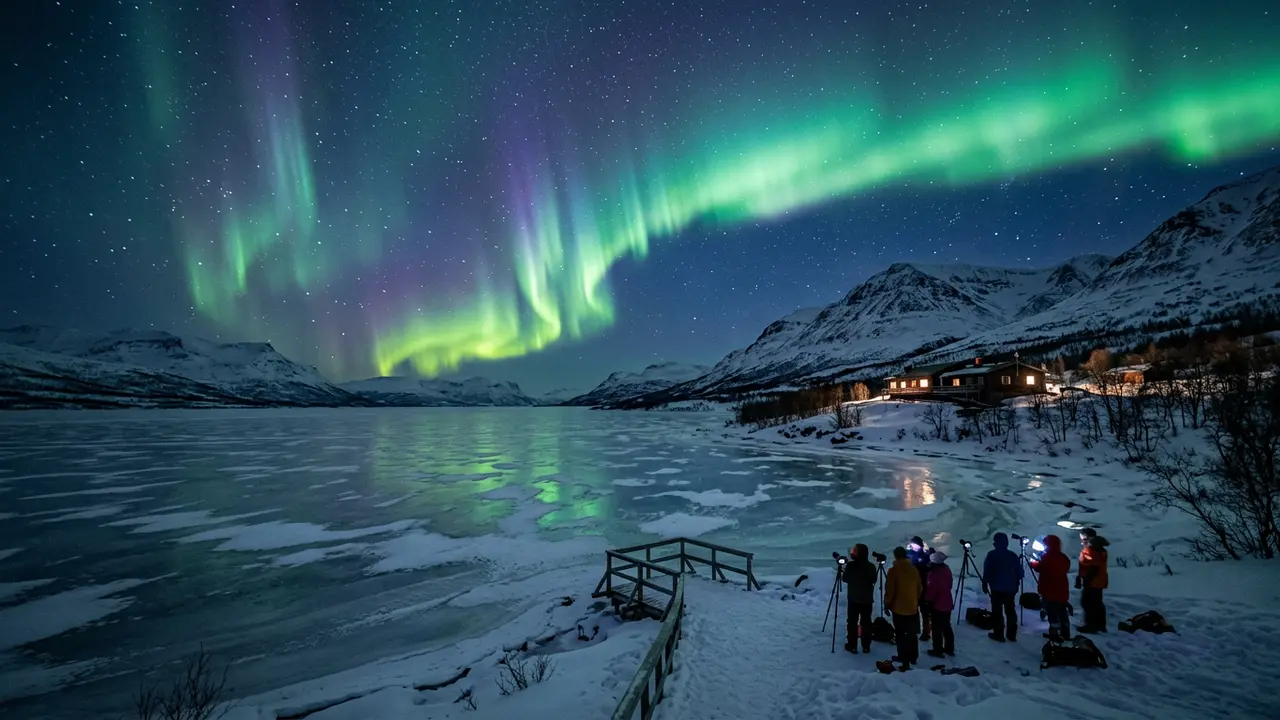
Abisko Stargazing
Abisko's rain-shadow microclimate keeps skies clear when nearby Arctic spots cloud over. Aurora season, the Sky Station, ICEHOTEL, and getting there by train.
The lighting plan puts numbers on the night
The council's home-lighting principles
- Useful
- Targeted
- Low level
- Controlled
- Warm coloured: blue light creates more light pollution[20]
Featured · Article
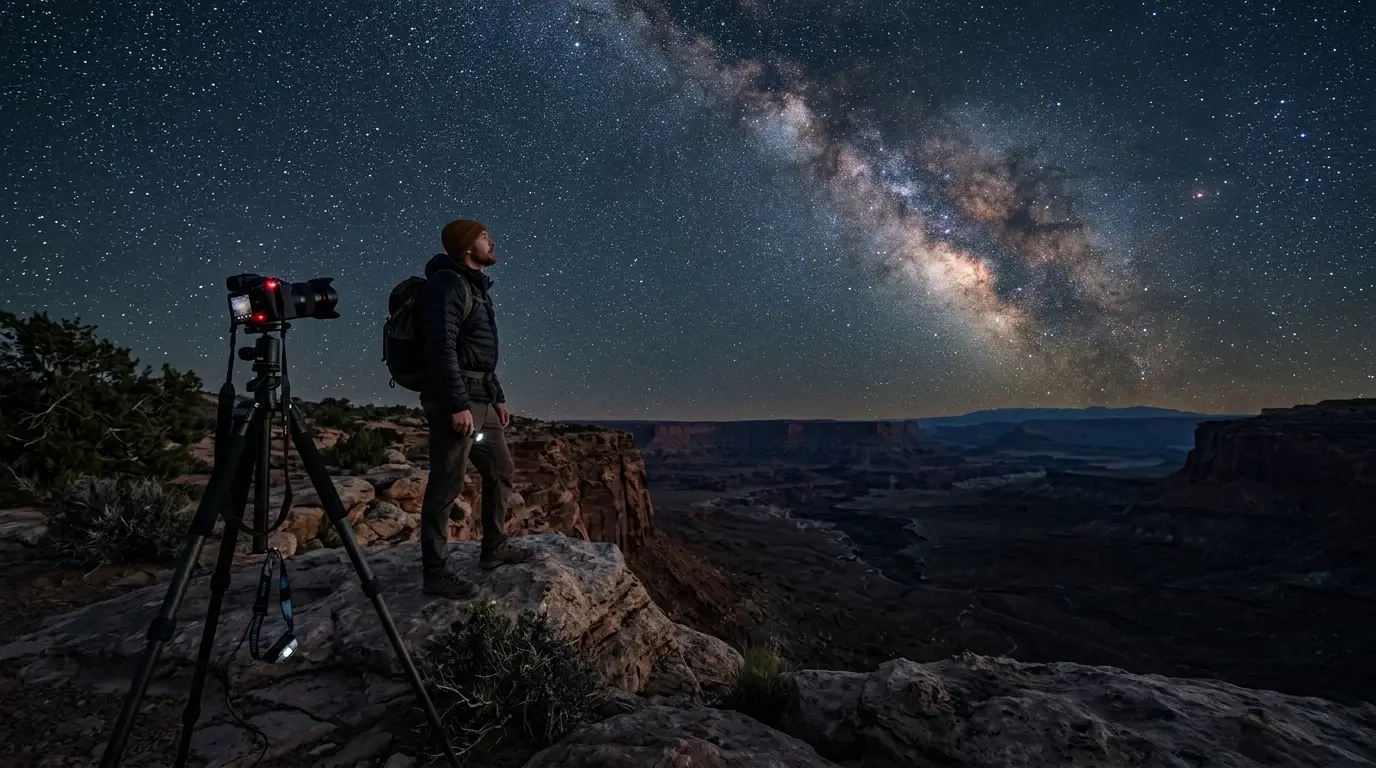
What Is Astrotourism? The Complete Beginner's Guide
Astrotourism means travel built around dark skies: meteor showers, auroras, the Milky Way. What it means, where to go, and how to plan your first trip.
What a weekend visit can realistically be
Recommended tours
Tours are selected for quality, not commission. I earn a small fee if you book — at no extra cost to you.
Sources
29 references Show Hide
- sunshinecoastnews.com.au (opens in a new tab)
“The Sunshine Coast hinterland has been officially recognised as Queensland’s first international dark sky reserve, protecting star-filled views across about 870 square kilometres.”
- timeout.com (opens in a new tab)
“In June 2026, the Sunshine Coast Hinterland officially secured this prestigious global title, marking it as Queensland’s first Dark Sky Reserve and only the second in Australia, following South Australia’s River Murray.”
- parks.desi.qld.gov.au (opens in a new tab)
“About 103km north of Brisbane, near Montville, in the Sunshine Coast hinterland.”
- assets-au-scc.kc-usercontent.com (opens in a new tab)
“All outdoor lighting fixtures emitting greater than 500 initial lumens must be fully shielded.”
- DarkSky International (opens in a new tab)
“Reserves consist of a core area meeting minimum criteria for sky quality and natural darkness, and a peripheral area that supports dark sky preservation in the core.”
- DarkSky International (opens in a new tab)
“A certified **Dark Sky Park** is land possessing an exceptional or distinguished quality of starry nights and a nocturnal environment that is specifically protected for its scientific, natural, or educational value, its cultural heritage, and/or public enjoyment.”
- sunshinecoast.qld.gov.au (opens in a new tab)
“A Dark Sky Reserve is one of the six designation types offered under the International Dark Sky Places Program”
- sunshinecoast.qld.gov.au (opens in a new tab)
“The minimum area of a Dark Sky Reserve is 700 km2.”
- sunshinecoast.qld.gov.au (opens in a new tab)
“At the centre of the Reserve is a core zone of 7.41 km², which includes Kirbys Road Environment Reserve and Maleny National Park (Lot 728 NPW787).”
- sunshinecoast.qld.gov.au (opens in a new tab)
“The Reserve is made up of the Mary River catchment and adjoining State Protected Areas located within the Sunshine Coast local government area.”
- assets-au-scc.kc-usercontent.com (opens in a new tab)
“The peripheral zone encompasses a number of State Protected Areas including the Conondale, Mapleton, Maleny and Kondalilla National Parks.”
- sunshinecoast.qld.gov.au (opens in a new tab)
“Around 13,500 residents live within the Reserve across hinterland towns such as Maleny, Mapleton, Montville, Witta, Kenilworth, Flaxton and Conondale.”
- sunshinecoast.qld.gov.au (opens in a new tab)
“The Blackall Range acts as a natural barrier, shielding the Reserve, creating exceptional night sky conditions with minimal artificial light intrusion, from more populated urban areas.”
- visitsunshinecoast.com (opens in a new tab)
“The Blackall Range – where much of the Dark Sky Reserve sits - naturally provides a buffer from the skyglow of surrounding coastal and urban areas.”
- australiantraveller.com (opens in a new tab)
“Elevated along the Blackall Range and largely free from light pollution, it’s long been one of the country’s best stargazing spots”
- insidelocalgovernment.com.au (opens in a new tab)
“The Reserve is the last place in coastal South East Queensland that has starry night skies free of light pollution.”
- travelweekly.com.au (opens in a new tab)
“visitors can be in the surf by evening and under the Milky Way less than 40 minutes later.”
- assets-au-scc.kc-usercontent.com (opens in a new tab)
“The correlated colour temperature (CCT) of the light source must not exceed 3000K.”
- assets-au-scc.kc-usercontent.com (opens in a new tab)
“the curfew within the Sunshine Coast Dark Sky Reserve should be interpreted as between the hours of 11:00PM and 6:00AM.”
- sunshinecoastnews.com.au (opens in a new tab)
“warm coloured (blue light creates more light pollution, so choose lights that are warm in colour).”
- insidelocalgovernment.com.au (opens in a new tab)
“Council developed a lighting management plan and worked in partnership with Energex, Queensland Government agencies and others managing public lighting across the reserve area”
- sunshinecoastnews.com.au (opens in a new tab)
“The work needed to develop and adopt the thorough lighting management plan was well noted by the Dark Sky Committee, and we hope it will serve as an inspiration for others to follow.”
- visitsunshinecoast.com (opens in a new tab)
“The Dark Sky Reserve is also easily accessible from the state’s capital Brisbane, making it the perfect spot for a weekend with the stars.”
- assets-au-scc.kc-usercontent.com (opens in a new tab)
“The Mapleton Observatory, located at the Mapleton School and has been operating since 2002.”
- australiantraveller.com (opens in a new tab)
“Maleny and Mapleton observatories host regular astronomy sessions throughout the year, alongside workshops and masterclasses.”
- travelweekly.com.au (opens in a new tab)
“Priced at $160 per person, the experience includes refreshments and a take-home gift.”
- australiantraveller.com (opens in a new tab)
“It now joins South Australia’s River Murray International Dark Sky Reserve, which received accreditation back in 2019.”
- sunshinecoastnews.com.au (opens in a new tab)
“The region joins reserves including Aoraki Mackenzie (New Zealand), Mont-Megantic (Canada) and River Murray (Australia).”
- insidelocalgovernment.com.au (opens in a new tab)
“more than 80% of the world’s population living under skyglow: light pollution that eliminates any visible stars.”