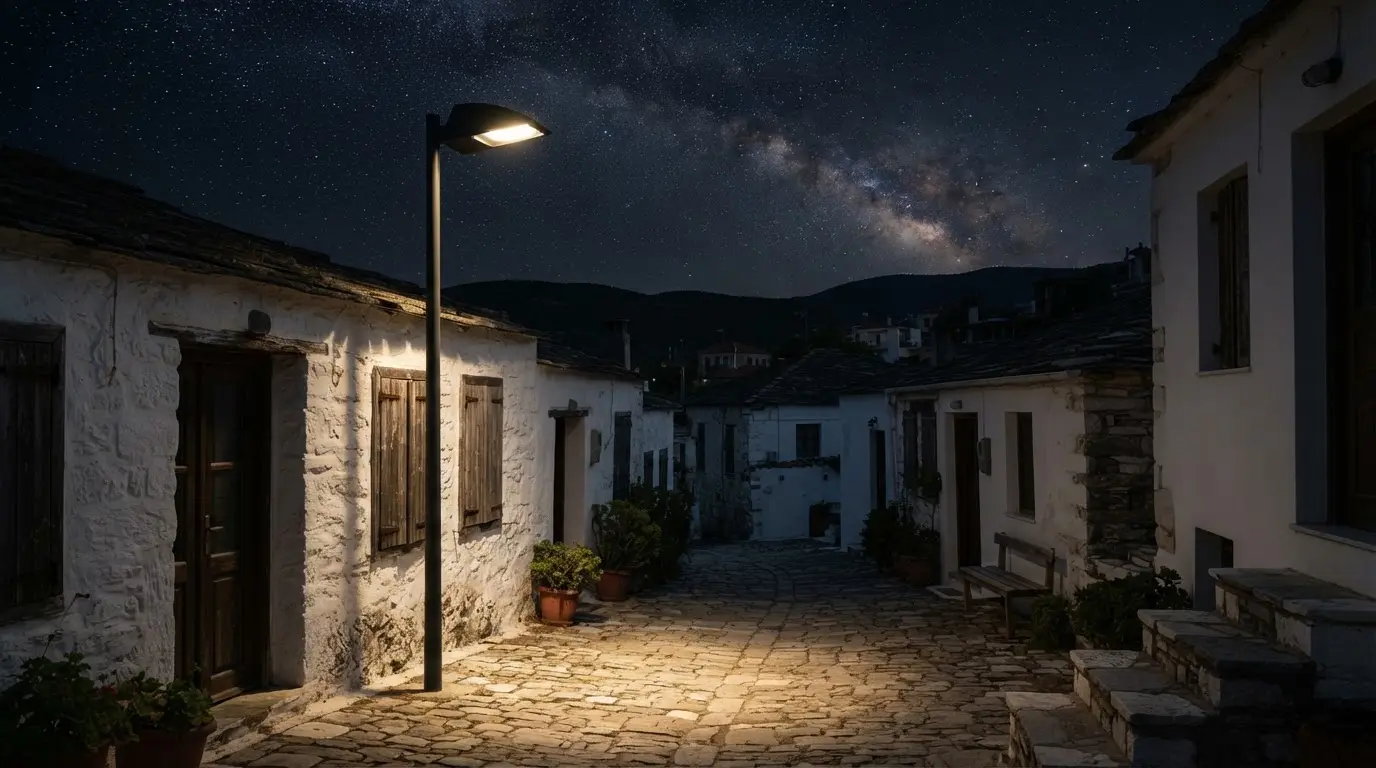

Binding law, regional law, guidance and nuisance claims
When someone says a country has a light pollution law, check which of four things they mean. They are not interchangeable, and the difference is where most headlines go wrong.
- A national statute or decree binds every municipality and lamp owner, and usually carries fines
- A regional law binds one part of a country and leaves the rest untouched
- Guidance sets out good practice that nobody is obliged to follow
- Nuisance law lets a neighbour complain about light spilling into their home, and does nothing for the sky above the street
I rank them in that order for a reason. A decree with a deadline and a fine changes lamps; a guideline mostly changes press releases. Almost every strong statute goes after the same mechanisms behind light pollution: light thrown above the horizontal, cold blue-white colour, and fixtures left burning all night.
Europe shows the gap clearly. The EU has no unified light pollution policy[4], so everything below is national or regional. The nearest thing is the European Light Pollution Manifesto, adopted during Spain's 2023 EU Council Presidency[5], which is a statement of intent rather than a regulation.
| Country | Main instrument | Binding on lamp owners? |
|---|---|---|
| Croatia | Act NN 14/2019 | Yes, nationwide |
| France | Arrêté of 27 December 2018 | Yes, nationwide |
| Slovenia | Decree of 2007 | Yes, nationwide |
| Chile | DS 1/2022 emission norm | Yes, nationwide |
| Czechia | Ministry of the Environment standard | Guidance for now |
| Italy | Regional laws | Only where a region has one |
| Spain | Regional laws | Only where a community has one |
| United Kingdom | Statutory nuisance | After a complaint |
| Ireland | Guidelines | No |
| Australia | Federal wildlife law and guidelines | Varies by state; check locally |
| South Africa | Astronomy Geographic Advantage Act | Designated areas |
| United States | State laws and municipal codes | Varies; check locally |
| New Zealand | District plans, e.g. Mackenzie | Local; check the district |
| India | Police nuisance powers | No direct law |
Croatia, Slovenia and France: binding national rules
These three have written rules that bind lamp owners, and they got there by different routes. Croatia zoned its territory, Slovenia wrote hard physical limits into a decree, and France regulated by product specification and by the clock.
What they share is what the rules measure: what a fixture does and when it runs, not how dark a place feels. That is a more enforceable question, and it is the one that decides your sky.
Featured · Destination
Stargazing in Bryce Canyon National Park
Bryce Canyon earned Gold-Tier Dark Sky Park status in 2019 after 50 years of astronomy programs. Drive in from Vegas or Salt Lake City to see it for yourself.
Croatia: lighting zones and a long runway
Croatia's Act on Protection against Light Pollution (NN 14/2019) took effect on 1 April 2019[6]. Its implementing Pravilnik on lighting zones was published in NN 128/2020[7] and came into force on the eighth day after publication, about 28 November 2020[8]. The act names the night sky and observatories among the things it protects[9].
The mechanism is zoning. Every region falls into one of five lighting zones, from E0, pristine night skies with only natural light, to E4, high artificial lighting, each with a maximum vertical illuminance[10]. Local governments and outdoor-lighting operators have 12 years from the implementing ordinances taking effect to bring existing lighting into line[11], so full compliance is a project for the 2030s. A legal-entity investor who commissions outdoor lighting in breach of Articles 8 and 11 faces a fine of 25,000 to 50,000 kuna[12]; the act predates Croatia's switch to the euro, so check the current figure before you quote it.
Slovenia: physical limits and a midnight curfew
Slovenia adopted a country-wide light pollution regulation in 2007[13]. It is the Decree on limit values due to light pollution of environment, issued that March and amended in November 2007, July 2010 and May 2013[14]. The 31-article text pairs lighting thresholds with inspection plans and penalties[15].
Its technical core is a ban on lamp luminous flux above the horizontal[16], the single line that does most to stop skyglow at the source. The clock rule is narrower: illuminated boards larger than 20 m² must have their external luminaires off from 24:00 to 5:00[17], and any operator running more than 10 kW of lighting must hold a light plan[18].
France: product limits and a switch-off hour
France's Arrêté of 27 December 2018 is a binding national policy with high standards[19], built on a 2010 law and a 12 July 2011 decree that already provided for measures against light pollution[20].
The numbers are specific. The nominal upward light proportion of any luminaire a manager buys must be strictly below 1 percent, inside and outside built-up areas[21]. Outdoor installations are capped at 3000 K colour temperature to limit blue light[22]. Shop-window lighting must go off by 1 a.m. at the latest, or an hour after the business stops trading if that is later[23]. The 3000 K cap is the one rule on this list a homeowner can check in a hardware store aisle.
The text was shaped in close collaboration with ANPCEN, the national association for the protection of the sky and the nocturnal environment[24].
Czechia: first in the EU, then a cautionary tale
Czechia's 2002 law is the best argument that legislating early is not the same as legislating well. The act let municipal authorities impose fines from CZK 500 to 150,000[25], and from 2002 street lamps had to be shielded to direct light down, not above the horizon[26], though the light provisions did not survive later amendments.
What replaced the missing statute is softer. A newer Ministry of the Environment standard is not legally binding and acts as a guide for municipalities, for example when they rebuild public lighting[27], with a binding decree as the ministry's stated aim. It applies only to new installations, so lighting already in the ground does not have to change[28].
I read Czechia as a warning about headlines. A country can lead in 2002 and rely on guidance two decades later, so a traveller choosing a dark-sky base should weigh the local lighting policy at least as heavily as the national statute.
Italy, Spain and the rest of Europe
Italy shows what having no national law looks like in practice. There is no national law regulating light pollution there[29], so the rules come from regions, and Sardegna, Sicily, Calabria, Trentino-Alto Adige and Molise still lack one[30].
Spain is the same story: only eight of its seventeen autonomous communities have specific light pollution regulations[31]. Check the community before the country. La Palma is the Spanish island I would put at the top of a cheap-and-accessible shortlist, and its local rules are worth reading before you book.
Three smaller cases fill in the map:
English-speaking countries, India, South Africa and Chile
Among the places travellers ask about, national rules written for the night sky are rare. What exists is mostly nuisance law, guidance, or protection tied to particular areas.
Featured · Article
What Is Astrotourism? The Complete Beginner's Guide
Astrotourism means travel built around dark skies: meteor showers, auroras, the Milky Way. What it means, where to go, and how to plan your first trip.
United Kingdom, Ireland, Australia and India
- United Kingdom: light pollution is a statutory nuisance under the Clean Neighbourhoods and Environment Act 2005[35], so the remedy is a complaint about a particular light
- Ireland: no specific national legislation[36], and the guidance written for Mayo Dark Sky Park sets no specific limits, only guidelines[37]
- Australia: the Environment Protection and Biodiversity Conservation Act of 1999 sits beside the 2020 National Light Pollution Guidelines for Wildlife[38], which are guidance; the Australian Capital Territory has designated light pollution a form of pollution since its 1997 Environment Protection Act[39]
- India: no binding law directly prevents light pollution, and Mumbai police act under the Bombay Police Act's public-nuisance provisions[40]
South Africa and Chile
South Africa works through designated areas rather than a nationwide lamp rule. The Astronomy Geographic Advantage Act (Act 21 of 2007), in operation since 24 April 2009[41], underpins two declared areas, Sutherland Central and Karoo Central, which the Astronomy Management Authority manages and protects[42]. Anyone who wants to conduct activities or services inside them has to apply for an AMA permit[43].
Chile has moved furthest from the older rules. DS 1/2022, published in the Diario Oficial on 18 October 2023, was set to take effect twelve months after publication and to supersede Decree 43 of 2012[44]. It applies nationwide[45], and existing light sources inside astronomy areas were given a maximum of five years from entry into force to comply[46]. Law 21162 requires an environmental impact study for projects that may cause light pollution in designated zones[47], and Decree 2 of 2023 declares whole communes across the Antofagasta, Atacama and Coquimbo regions, including Calama and San Pedro de Atacama, as astronomy areas[48], drawn from 150 km circles around astronomical sites[49]. The live test of all this is the mining light pollution threat in the Atacama.
United States, New Zealand, Canada and Namibia
In the United States, lighting rules come from state laws and municipal codes. DarkSky publishes free policy templates for drafting state laws and local codes[50], and its Dark Sky Database lists lighting statutes state by state; Minnesota's entry cites Minn. Stat. § 16B.328[51]. New Zealand works at district level: Mackenzie District Plan Change 22 applies to artificial lighting across the entire district around the Aoraki Mackenzie Dark Sky Reserve[52]. Canada and Namibia vary, so ask the local authority or the reserve before you assume a rule applies. Check the local ordinance before assuming a country-level answer holds where you are going.
How to use this when you plan a trip
A national law tells you what the lamp owner in the next village may do. It says nothing about cloud, altitude, or whether the one lodge you have booked uses shielded fixtures, which is why I would never choose a destination on legislation alone.
The tiebreaker rule from the top holds, with one addition. Between two sites of similar darkness, prefer a DarkSky-certified Place, since certified Places are required to use quality outdoor lighting and effective policies to reduce light pollution[53]. A country with no statute but a managed dark-sky reserve beats a country with a statute and nobody policing it.
Recommended tours
Tours are selected for quality, not commission. I earn a small fee if you book — at no extra cost to you.
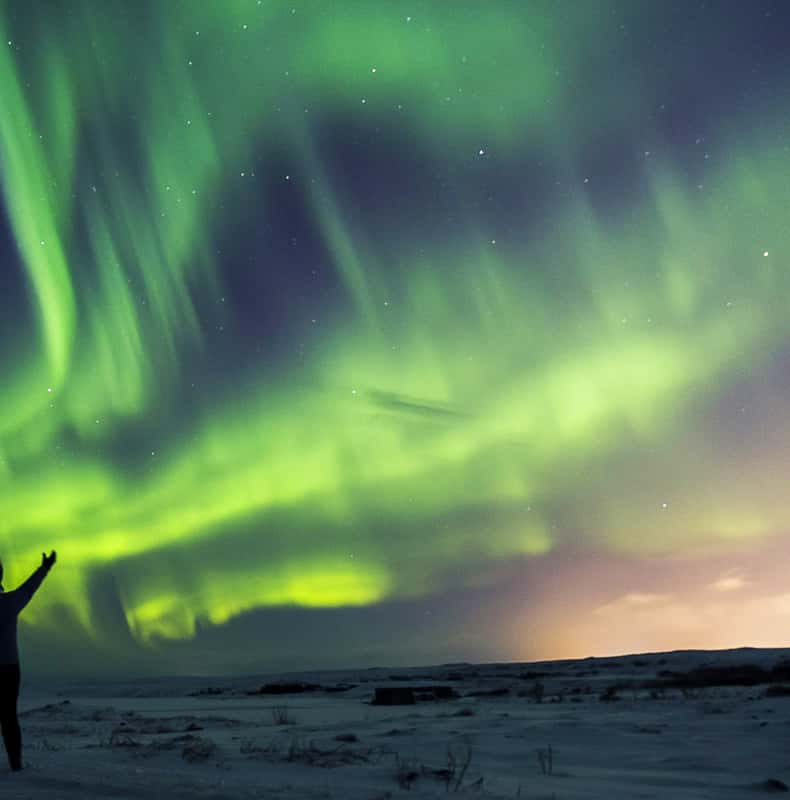
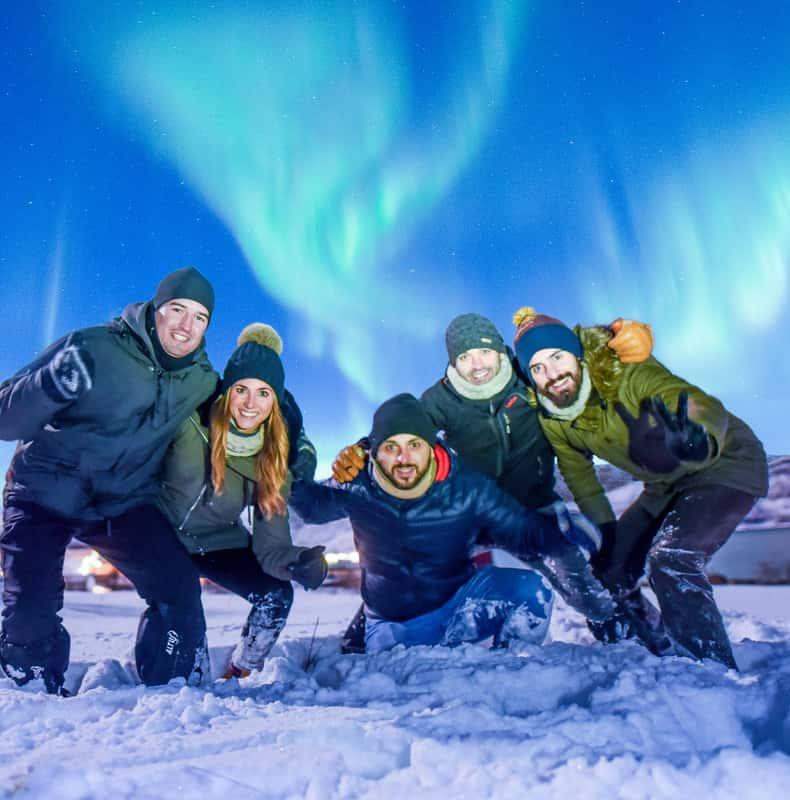
Croatia pairs a binding national law with a certified place: Petrova gora-Biljeg is its first International Dark Sky Place[54]. A good lodge answers the three fixture questions in a sentence.
Before you trust a country's lighting law
- Is it national, regional, guidance or nuisance law?
- Does it cover existing lighting, or only new installations?
- Is there a curfew, zone map or colour-temperature cap you can check?
- Are the lodge's own lights shielded, warm-toned and off late at night?
- Does the site hold a DarkSky Place certification, which requires lighting policies?