Petoskey's Dark Sky Law Regulates Fixtures, Not the Sky
Petoskey, Michigan set a 3000 K color cap, shielding and an 11 p.m. dimming rule. See what its ordinance covers, what it leaves out and what towns can copy.

Ordinance No. 811 was adopted May 7, 2026, and sets a 3000 K general cap on outdoor fixtures.
In this article
Jump to a section
What Petoskey adopted in May 2026
How warm, how bright, and where the light goes
Featured · Destination
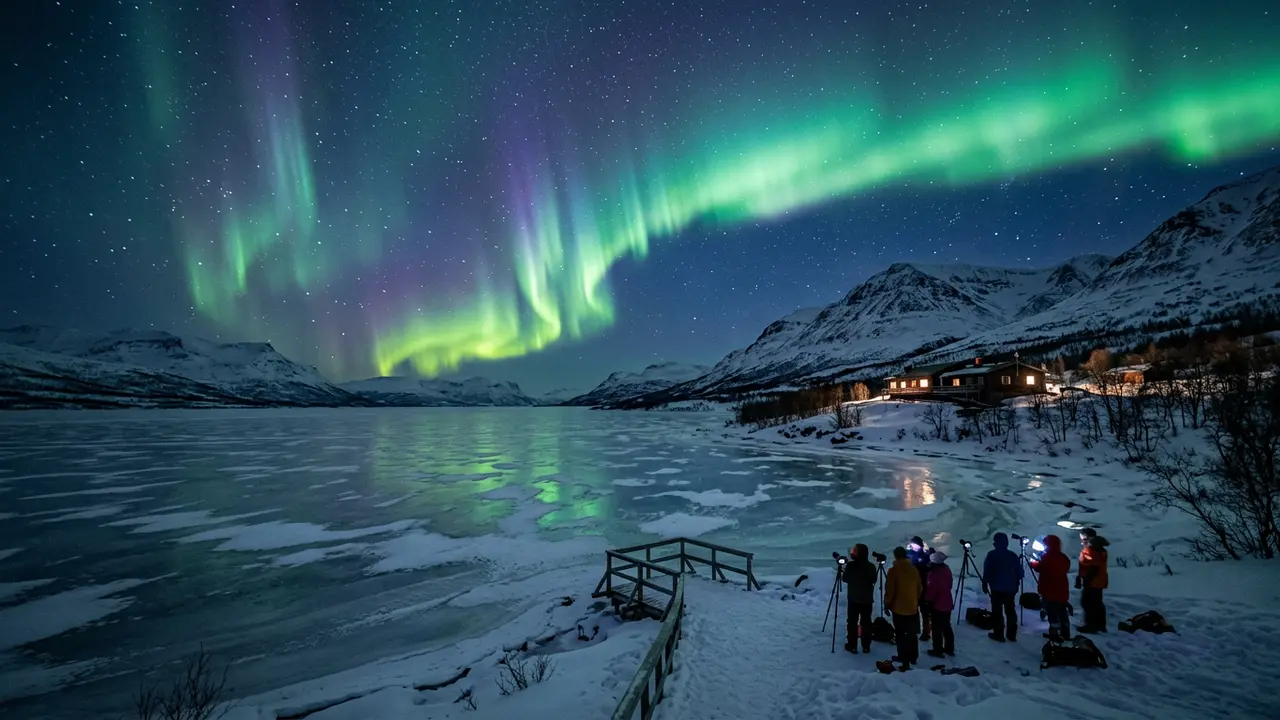
Abisko Stargazing
Abisko's rain-shadow microclimate keeps skies clear when nearby Arctic spots cloud over. Aurora season, the Sky Station, ICEHOTEL, and getting there by train.
- Luminaires above 1,000 lumens must be fully shielded and emit no more than 5% of their output above 80 degrees from nadir, with stated exceptions[3]
- Fully shielded means no light is emitted at or above a horizontal plane through the fixture's lowest light-emitting part[11]
- Festoon string lights escape the shielding rule only if each lamp emits no more than 50 lumens and the string stays at or under 25 lumens per foot[12]
- Light trespass may not exceed 0.1 foot-candles on residential property[13] or on Waters of the United States[14]
What the 11 p.m. curfew covers
| Lighting | Shutoff rule |
|---|---|
| Site and area lighting, all zones | Off by 11 p.m. nightly, unless open later or approved security lighting[4] |
| Landscape and accent, zone LZ1 | Automatically off before 11 p.m. nightly[18] |
| Landscape and accent, zone LZ2 | Off before 11 p.m. nightly, or within 30 minutes of closing, whichever is later[19] |
Who has to change existing lighting
Recommended tours
Tours are selected for quality, not commission. I earn a small fee if you book — at no extra cost to you.



How the city enforces it and what other towns can copy
What a council can copy
- Limits an inspector can measure, not adjectives
- Exceptions that name who approves them
- A lighting plan attached to permits the city already issues
- Triggers for old lighting, such as a reconstruction threshold, instead of a retrofit date
- A named enforcer and a named appeals body
- Draft review by an outside lighting group before adoption
What recognition tells a stargazer
Featured · Article
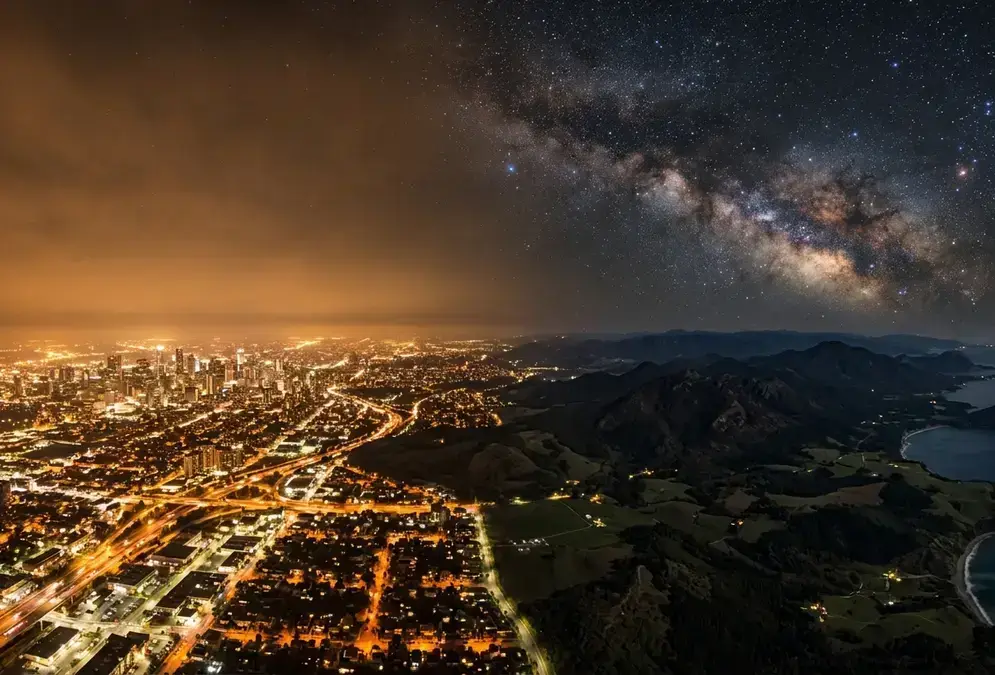
What Is Light Pollution? Definition, Types, and Solutions
Light pollution is artificial light brightening the night sky, affecting 80% of the world. Learn the 4 types, wildlife and health effects, and how to fix it.
Sources
41 references Show Hide
- petoskey.us — Council minutes 05.07.26.pdf (opens in a new tab)
“Adopted, enacted and ordained by the City of Petoskey City Council this 7 th day of May, 2026.”
- petoskey.us — Council minutes 05.07.26.pdf (opens in a new tab)
“Unless otherwise specified in this ordinance, the maximum allowable correlated color temperature (CCT) for outdoor Luminaires is 3000K.”
- petoskey.us — Council minutes 05.07.26.pdf (opens in a new tab)
“Unless otherwise specified in this ordinance, Luminaires emitting more than 1,000 Lumens (60 watts incandescent) shall be Fully Shielded and shall emit no more than 5% of their total Lumen output above 80 degrees from Nadir.”
- petoskey.us — Council minutes 05.07.26.pdf (opens in a new tab)
“Site and area lighting in all zones shall be turned off by 11 PM nightly, with the following exceptions:”
- petoskey.us — Council minutes 05.07.26.pdf (opens in a new tab)
“Adopt Ordinance 811 Adding Appendix D Outdoor Lighting Ordinance to the Zoning Ordinance”
- petoskey.us — Council minutes 05.07.26.pdf (opens in a new tab)
“This ordinance applies to all sources of outdoor lighting installed or replaced within the City of Petoskey after the effective date of this ordinance.”
- petoskey.us — Council minutes 05.07.26.pdf (opens in a new tab)
“Consistent with City Charter Sec. 6.3, the effective date of this Chapter shall not be less than fourteen (14) days after enactment and shall be published once within seven (7) days after its enactment as provided by City Charter.”
- petoskey.us — Council packet 05.07.26.pdf (opens in a new tab)
“As part of this process, several iterations of the proposed exterior lighting ordinance were reviewed by the Committee and the Planning Commission, and each version was sent to the DarkSky Association for technical review and comment.”
- petoskey.us — Council minutes 05.07.26.pdf (opens in a new tab)
“Exception: CCT exemptions are allowed if a public safety need is documented”
- petoskey.us — Council minutes 05.07.26.pdf (opens in a new tab)
“Unless otherwise specified in this ordinance, lighting installed for an outdoor use shall not exceed 50% more than the Light Level recommended by the applicable ANSI/IES Lighting Standard, or enumerated in Table 3.4.1, whichever is more restrictive.”
- petoskey.us — Council minutes 05.07.26.pdf (opens in a new tab)
“A Luminaire designed or shielded in such a manner that no light is emitted, either directly or indirectly, at or above a horizontal plane running through the lowest light-emitting part of the luminaire.”
- petoskey.us — Council minutes 05.07.26.pdf (opens in a new tab)
“Festoon string lighting where no individual lamp emits more than 50 lumens, and the lumen density of the string is no greater than 25 lumens per foot.”
- petoskey.us — Council minutes 05.07.26.pdf (opens in a new tab)
“Light Trespass onto Residential Use property shall measure no greater than 0.1 foot candles.”
- petoskey.us — Council minutes 05.07.26.pdf (opens in a new tab)
“Light Trespass onto Waters of the United States shall measure no greater than 0.1 foot candles.”
- petoskey.us — Council minutes 05.07.26.pdf (opens in a new tab)
“Operations that are open later than 11 PM. These shall be shut off within one (1) hour of closing or at dawn, whichever is earlier.”
- petoskey.us — Council minutes 05.07.26.pdf (opens in a new tab)
“Security lighting as approved by the Planning Commission. Such lighting shall still comply with Section E(5).”
- petoskey.us — Council minutes 05.07.26.pdf (opens in a new tab)
“Site and area lighting in all zones shall have output reduced at least 50% by 11 PM nightly. Luminaires required to satisfy code-required illumination at exit discharge or path of egress shall be exempted from this requirement.”
- petoskey.us — Council minutes 05.07.26.pdf (opens in a new tab)
“Landscape and accent lighting in zone LZ1 shall be automatically shut off before 11 PM nightly.”
- petoskey.us — Council minutes 05.07.26.pdf (opens in a new tab)
“Landscape and accent lighting in zone LZ2 shall be automatically shut off before 11 PM nightly, or within 30 minutes of closing, whichever is later.”
- petoskey.us — Council minutes 05.07.26.pdf (opens in a new tab)
“Existing outdoor lighting lawfully installed prior to the effective date of this ordinance that does not meet the requirements of this ordinance shall be considered non-conforming and may continue to be used and maintained until one of the following occurs:”
- petoskey.us — Council minutes 05.07.26.pdf (opens in a new tab)
“A determination by the City that an outdoor light source constitutes a hazard to public safety or constitutes a nuisance.”
- petoskey.us — Council minutes 05.07.26.pdf (opens in a new tab)
“When a property is re-zoned for a new land use or an existing building is reconstructed, all outdoor lighting on the property shall meet the requirements of this ordinance before the new use commences.”
- petoskey.us — Council minutes 05.07.26.pdf (opens in a new tab)
“Reconstruction means the rebuilding, re-erection, or replacement of a structure following damage, demolition, decay, or destruction when the cumulative extent of the reconstruction equals sixty percent (60%) or more of the replacement cost, exclusive of the foundation.”
- petoskey.us — Council minutes 05.07.26.pdf (opens in a new tab)
“Whenever a building permit, subdivision, site plan, or zoning permit is applied for, an outdoor lighting plan must be submitted along with a compliance statement that the proposed work will comply with all ordinance requirements.”
- petoskey.us — Council minutes 05.07.26.pdf (opens in a new tab)
“Unless otherwise noted in this ordinance, the Zoning Administrator, or designee, shall be responsible for implementing, administering, and enforcing this ordinance, including investigations of alleged violations.”
- petoskey.us — Council minutes 05.07.26.pdf (opens in a new tab)
“Any appeals related to decisions regarding outdoor lighting shall be made to the Zoning Board of Appeals.”
- petoskey.us — Council minutes 05.07.26.pdf (opens in a new tab)
“Any violation of this ordinance shall be a municipal civil infraction. The fee of the civil infraction will be established by City Council in the fee schedule.”
- petoskey.us — Council minutes 05.07.26.pdf (opens in a new tab)
“Any person, firm, or corporation found to have violated any portion of this ordinance shall correct the violations within ninety (90) days of the citation date. Each day a violation continues beyond ninety (90) days of the citation date without having been corrected shall be a separate offense.”
- petoskey.us — Council minutes 05.07.26.pdf (opens in a new tab)
“In addition to issuing a municipal civil infraction, the City may seek injunctions, damages, or other equitable relief to enforce this ordinance.”
- DarkSky International — Become darksky recognized (opens in a new tab)
“To submit an ordinance for review, click the link below to access the submission portal and pay the $250 review fee.”
- DarkSky International — Become darksky recognized (opens in a new tab)
“To begin, click the link below to access the application portal, where you can submit your documents and pay the $750 application fee.”
- DarkSky International — Darksky recognized codes (opens in a new tab)
“Recognition status through this program validates that a municipal outdoor lighting code meets or exceeds provisions within the DarkSky Template and has been enacted or adopted.”
- DarkSky International — Darksky recognized codes (opens in a new tab)
“DarkSky Recognition has no enforcement of law; it simply recognizes laws that follow DarkSky principles and guidelines, as adopted by DarkSky International and published in their DarkSky International Policy Templates.”
- DarkSky International — Darksky recognized codes (opens in a new tab)
“Recognition does not mean DarkSky endorses the municipality for any purpose.”
- DarkSky International — Dark sky place types (opens in a new tab)
“A certified **Dark Sky Park** is land possessing an exceptional or distinguished quality of starry nights and a nocturnal environment that is specifically protected for its scientific, natural, or educational value, its cultural heritage, and/or public enjoyment.”
- DarkSky International — Dark sky place types (opens in a new tab)
“The land may be publicly or privately owned, provided that the landowner(s) consent to the right of permanent, ongoing public access to specific areas included in the DarkSky Park designation.”
- wcmu.org (opens in a new tab)
““We're not going to see this make a significant impact probably for several years as lighting continues to get cycled out,” Horn said.”
- petoskey.us — Council packet 05.07.26.pdf (opens in a new tab)
“current Section 1711 provides only general guidance without measurable standards”
- petoskey.us — Council packet 05.07.26.pdf (opens in a new tab)
“The metrics used in the ordinance are from the ANSI (American National Standards Institute) and the IES (Illuminating Engineering Society).”
- petoskey.us — Council packet 05.07.26.pdf (opens in a new tab)
“Lastly, the proposed ordinance sets exterior lighting levels based on three Lighting Zones (LZs) that reflect the community's underlying land use and zoning. The least intensive are the residential zoning districts, and the most intensive are the primary traffic corridors and retail areas.”
- DarkSky International — Darksky recognized codes (opens in a new tab)
“For example, the Templates state that light levels may not be more than 50% above recommended standards, and therefore the statute may not allow more light than this provision in order to be DarkSky Recognized.”