All articles
Written by Maya Okonkwo
  • 6 min
  • 32 sources

Atacameño Astronomy: How the Desert's Stargazers Read the Sky

Atacama indigenous astronomy: how the Lickanantay read star signs, a six-part day and mountain shadows, and how to vet a San Pedro de Atacama sky tour.
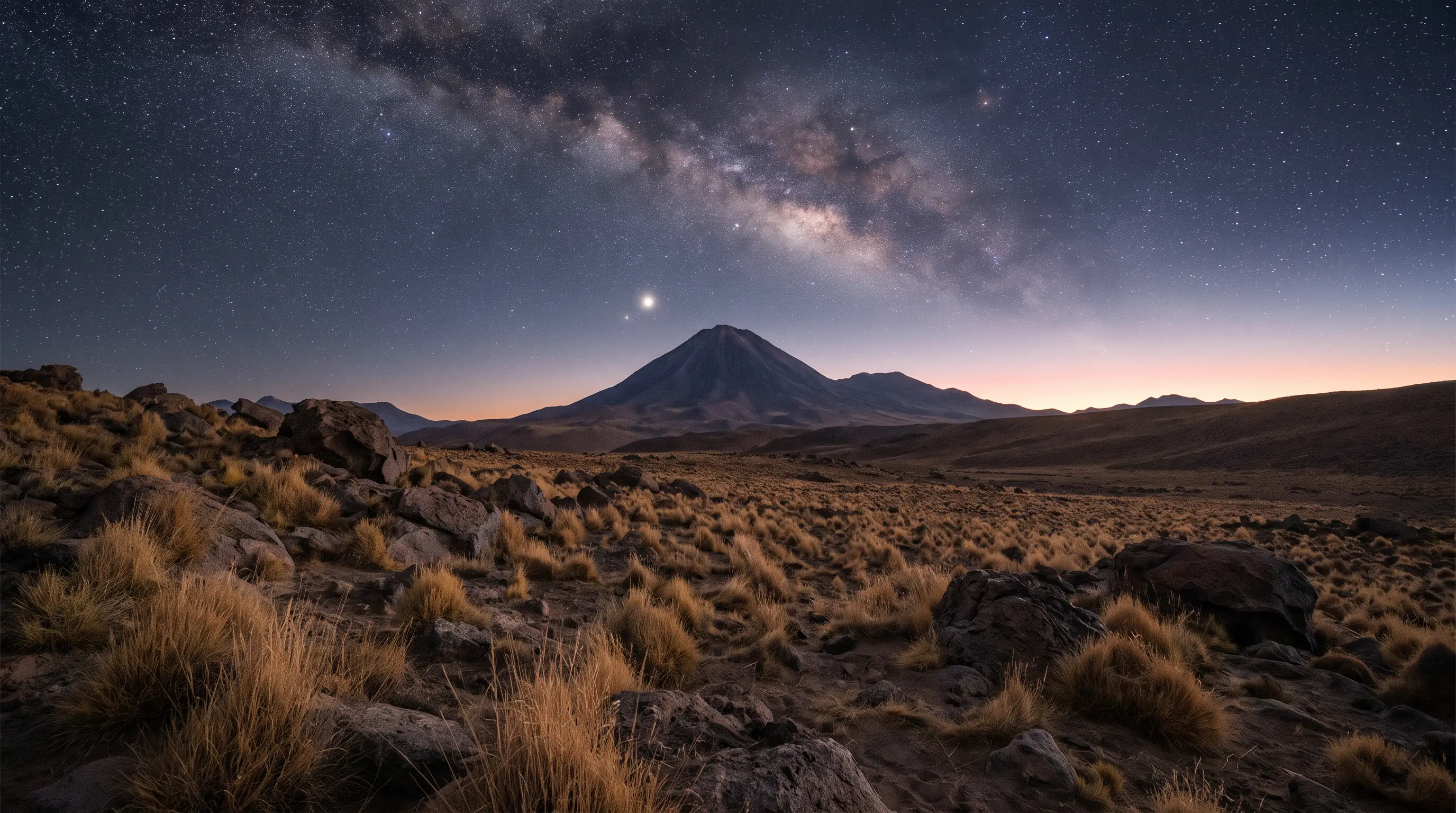
Milky Way and its dark dust lanes over the Licancabur volcano near San Pedro de Atacama at night, the sky of Atacama indigenous astronomy and Licanantay sky knowledge

Contreras records Licancabur's morning shadow reaching the summit of Quimal on 29 June, a date tied to the Atacameño agricultural cycle.

Atacameño oasis farmers read the sky as part of the weather forecast: the brightness and clarity of named constellations such as Suri and Revolcadero, and how sharply the Milky Way's dark patches show, sit on a list of astronomical indicators recorded in a 1994 Estudios Atacameños study[1]. Those signs fed daily and farming decisions[2], and the sky also served the desert's peoples as compass and story[3]. Several famous Andean sky names are pan-Andean, not Atacameño, so the useful skill for a visitor is telling the two apart.
Licancabur-Quimal shadow
29 June
Contreras records Licancabur's dawn shadow touching Quimal's summit[12]
Atacameño day division
6 parts
Marked by the Sun and the morning and evening lucero stars[9]
Valle de Jere observers
About 70
Joined the Toconao night observation; a ceremony opened the day[20]

The sky as calendar, compass and story

The desert peoples of the Atacama used the sky as calendar, compass and story at once[3]. That only works inside a worldview where nothing is separate, and Contreras (1994) describes exactly that for the Andean world: natural phenomena are bound closely to mythical ones[4], and through them to social life.
An elder quoted in an ALMA/ESO ethnoastronomy booklet of elders' accounts for San Pedro ties Sky and Earth together: "If there were no Sky perhaps there would be no Earth either", and without the Sky the Earth would have no protection, no trees, no animals and no planting[5].
This is not a closed chapter. Researcher Sebastián Pérez says Lickanantay culture developed deep astronomical knowledge woven into daily life, and that it is still alive in the territories where Atacama's observatories now observe[6]. The clear, dry air that draws telescopes to the driest desert on Earth is the same sky Atacameño farmers have read for their weather.

What Atacameño farmers watched for in the sky

Atacameño oasis dwellers read a defined set of astronomical indicators for the weather and the season, and a 1994 study in Estudios Atacameños lists them[1]:
  • the horns (cachos) of the moon, its colour and the angle at which it rises
  • the brightness and clarity of named constellations, among them the Suri and the Revolcadero
  • the clarity of the dark patches of the Milky Way
Two of those names can be placed in the sky. Socaire fieldwork recorded in a thesis chapter describes the suri, the Andean rhea, as a figure projected from the Milky Way, and the revolcaderos, the wallows where llamas roll, as the Magellanic Clouds[24]. The Southern Cross is also read as a suri, and the positions of its legs and head help tell the phases of the night[25]. The Magellanic Clouds lie near the south celestial pole, and the suri's head sits between the revolcaderos[26]. Informants in the alto Loa, a Quechua-Aymara area, instead put a llama wallow between alpha and beta Centauri and the Southern Cross, a spot the same source says may be the Coalsack[27].
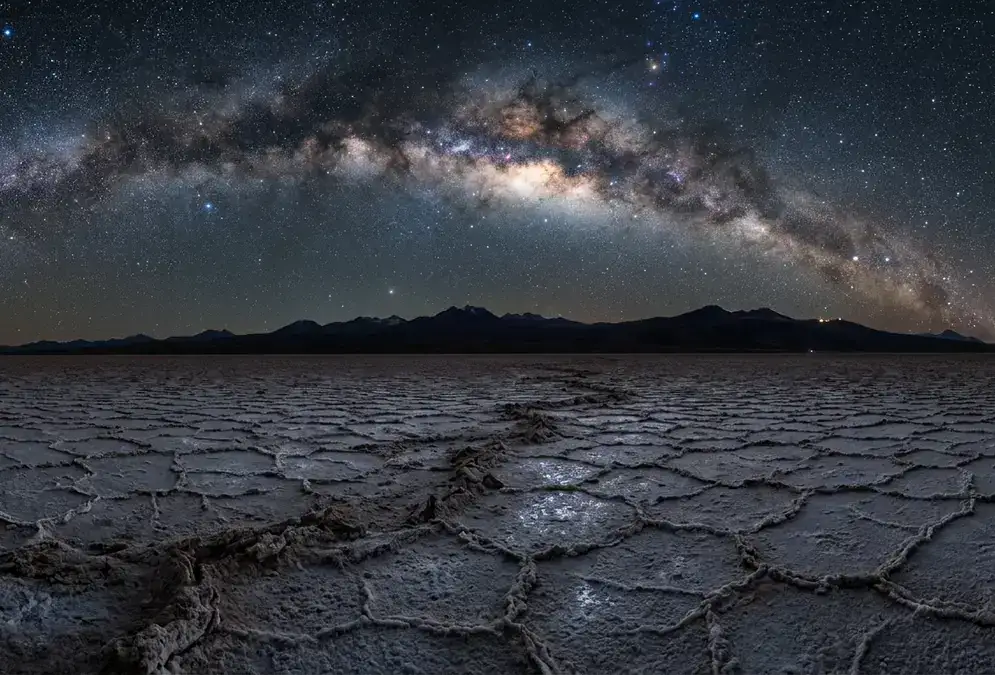
Milky Way arch over the Atacama Desert salt flat at new moon, galactic core high overhead with the Andes silhouetted against star-filled sky

Featured · Destination

Atacama Desert Stargazing

Earth's driest desert delivers Bortle 1–2 skies, 330+ clear nights a year, and the galactic core almost overhead. Guide: tours, lodges, season, getting there.

Contreras sets these beside physical, biological and animal signs. Together they announced everything from cold and rain to heat and earthquakes, and each was tied to the decisions people made in daily and productive life[2]. One sign is specific: when the moon's horns point north, San Pedro farmers take quick precautions to protect their crops[31].
The last indicator is the one a visitor can test. The Milky Way's dark patches read clearly only under a properly dark sky, which is where the best stargazing spots in the Atacama Desert earn their reputation.

Circular time, a six-part day and the 29 June shadow

Among the Atacameños, time is conceived as circular, an idea they share with Aymara and Mapuche peoples[7]. Grebe and Hidalgo (1988) describe the circle as oriented against the clock hands, following the Sun and the stars, and divided from east to west by the positions of the Sun and other stars that serve as time markers[8].
The day itself has six parts[9]: dawn, tied to the morning lucero and the cock's crow; sunrise, when the Sun comes up in the east[28]; midday, when the Sun is "in the middle of the world" and objects cast no shadow; sunset, when it disappears in the west[29]; dusk, tied to the appearance of the lucero chico, the evening star[10]; and midnight. Night is also measured by the two luceros (Venus and Jupiter), the Tres Marías (Orion's Belt) and the Cabrillas (Pleiades)[30].
Direction matters as much as the hour. Across Atacama ethnography, ceremonies asking for rain, livestock and mineral wealth are all oriented east, toward the Sun[11]. Hour, direction and season form one system here, an agricultural sky calendar as much as a ritual map.
Mountains keep time as well. One of the most powerful myths of the Salar de Atacama region is the fertilisation of the earth by Licancabur and his partner Quimal, timed to a shadow event: Contreras records that very early on the morning of 29 June, the shadow of Licancabur, the people's lord mountain, falls across the summit of Quimal[12].
The Catholic calendar lands on the same date. The 29th is the feast of San Pedro, the town's patron saint and the main festival tied to preparing and closing the agricultural cycle in San Pedro de Atacama[13].
The June solstice has its own marker five days earlier, though this one comes from a neighbouring tradition. Ethnography of the alto Loa, a Quechua-Aymara area north of Socaire and not specifically Atacameño, records an informant saying that on San Juan, 24 June, the sun "stops" and starts to "walk back" toward the south[32].

Mayu, Yakana and the Chakana belong to the wider Andes

Mayu, Yakana and the Chakana are names from the wider Andean tradition, so none of them should be passed off as an Atacameño term. They still matter, because they show what the dark patches of the Milky Way meant across the highlands.
  • Mayu: to Andean peoples the Milky Way is the Heavenly River, home to the fox, the llama and its offspring, the tinamou, the frog and the snake[14]
  • Yakana: the Celestial Llama, whose appearance in the night sky coincides with the arrival of summer[15]; in one highland reading she sits with the Fox (Atoq) and the Shepherd (Michiq) in the dark regions, and her emergence signalled when to move animals to new grazing land[16]
  • Chakana: the Andean cross, identified today with the Southern Cross, which guided ancestral navigation across the altiplano and indicated south[17]
Astronomer Patricio Lagos describes two kinds of constellation among Andean highland communities: bright ones, and dark ones formed by the gas and dust regions of the Milky Way[18]. Both his account and the Chakana reading come from Quechua and Aymara framing, not from Atacameño sources in particular.
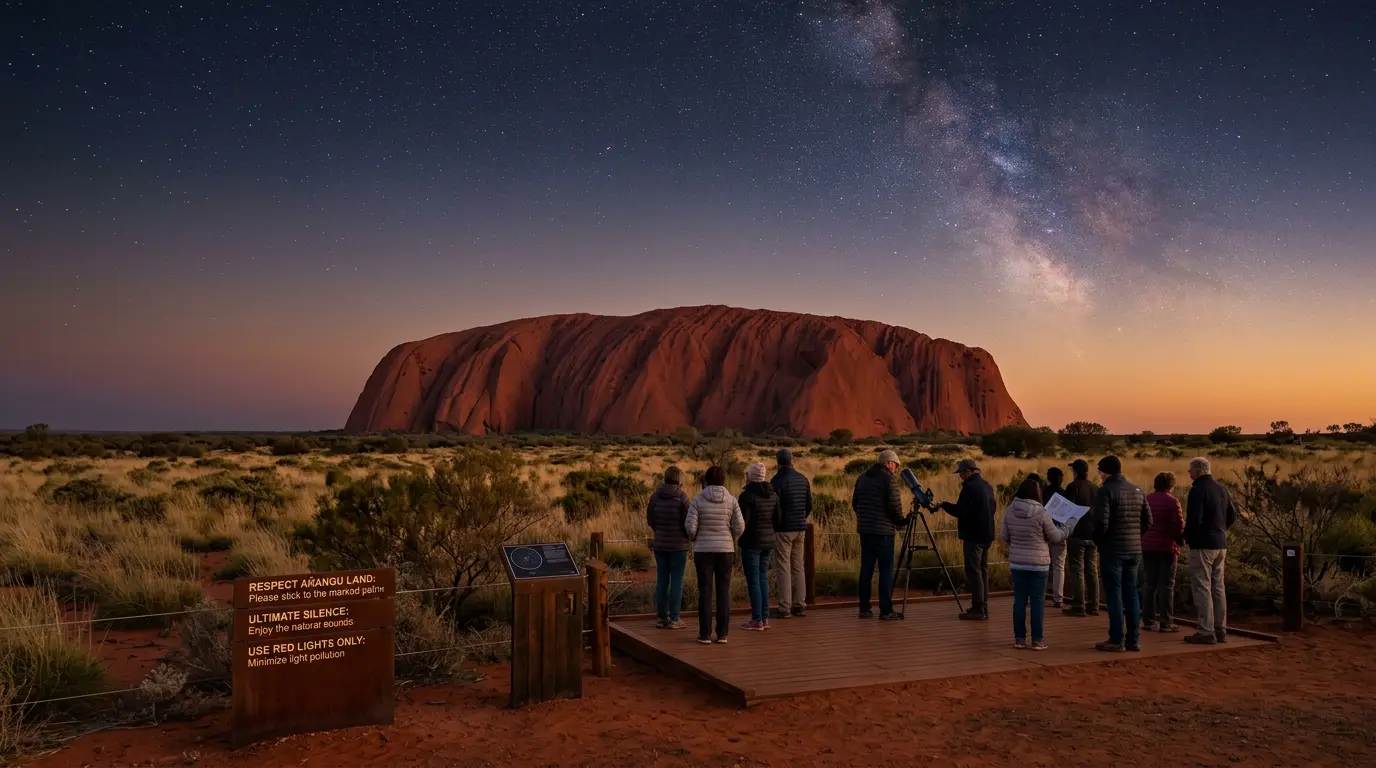
Wide, respectful photograph of Uluru glowing red at dusk under a star-filled sky on Anangu land, capturing Uluru's cultural significance and the visitor etiquette every stargazer should know

Featured · Article

Uluru Cultural Significance and Visitor Etiquette

Uluru is Anangu land under joint management. Here's why the 2019 climb closure is settled policy, what you can't photograph, and real visitor etiquette.

The documented Atacameño overlap is narrower and more practical: the clarity of the Milky Way's dark patches is one of Contreras's weather indicators[1], while the llama, fox and shepherd belong to the wider highland reading. Say Andean when you mean Mayu, and Atacameño only where the record names the Atacameños.

Meeting Lickanantay sky knowledge around San Pedro today

The best-documented way into this knowledge is community work, not a generic observatory slot. A University of La Serena project funded by the ESO regional committee in 2023 worked with the Lickan Antay community of Toconao to document and value its ancestral sky knowledge, with a book of the community's own astronomical stories as the stated final aim[19].
The exchange included a night observation at Valle de Jere that drew about 70 people, and the community opened the day with a ceremony[20]. A Toconao community leader said the relationship lets the University of La Serena team learn about the community's territory, worldview and "very pure sky"[21].

Recommended tours

Tours are selected for quality, not commission. I earn a small fee if you book — at no extra cost to you.
Language is part of the work. Ckunza is a Lickanantay word for "our", and the Ckunza Universo virtual-reality experience on Lickanantay culture and astronomy launched in Calama on 19 July 2024 as part of an ALMA Fund project[22]. A Lickan Antay educator from Coyo said it helps advance the mother tongue, long denied, and the passing of the grandparents' words and messages to new generations[23].
Listings for the Observatorio Etno-Astronomico Licanantay near San Pedro de Atacama come from third-party booking sites, and prices and operator names vary between them. Confirm the address, price, hours and booking route with the operator or the San Pedro de Atacama tourism office before building a night around it, and fit any session into a 3 to 5 day Atacama itinerary only once it is confirmed.

Before you book a sky session

  • Who runs the session, and do Lickanantay people lead it?
  • Which star names are Atacameño, and which are wider Andean?
  • Address, price, hours and booking route confirmed directly
  • Stories credited to the community, not retold as generic folklore

Frequently asked questions

What is Atacama indigenous astronomy, and is the Observatorio Etno-Astronomico Licanantay the place to learn it?

Atacama indigenous astronomy is the Lickanantay (Atacameño) way of reading the sky as calendar, compass and story: weather signs from the constellations, a six-part day, and mountain-and-shadow events such as the Licancabur shadow on 29 June that Contreras records. The Observatorio Etno-Astronomico Licanantay near San Pedro de Atacama is listed on third-party booking sites, so confirm who runs it and every practical detail with the operator or the tourism office. Community-led work around Toconao is better documented.

Who are the Lickanantay people?

The Lickanantay, also written Lickan Antay or Likan Antai, are the Atacameño people of the Salar de Atacama region. They are a living community: Toconao and Socaire appear in research and community projects on their sky knowledge, from fieldwork in Socaire in 2008-09 to the Toconao exchange, and a Lickan Antay educator from Coyo spoke at the Ckunza Universo launch. Ckunza, meaning "our", is a word from their language.

Did the Atacameño people read dark constellations in the Milky Way?

The Atacameño record documents the clarity of the Milky Way's dark patches as a weather indicator. The named dark figures, such as Yakana the llama, Atoq the fox and Michiq the shepherd, come from wider Andean sources and should not be labelled Atacameño.

What is Mayu, the Andean Milky Way?

Mayu is the Heavenly River, the Andean name for the Milky Way, home to the fox, the llama and its offspring, the tinamou, the frog and the snake. It is a pan-Andean name, not one documented as specifically Atacameño.

How did Atacameño farmers use the sky as a calendar?

They read astronomical indicators such as the moon's horns and the clarity of the Milky Way's dark patches for weather and season, divided the day into six parts marked by the Sun and the morning and evening lucero, and, as Contreras records, watched the 29 June shadow of Licancabur reach Quimal, the same date as the feast of San Pedro.

Can visitors learn Lickanantay sky knowledge in San Pedro de Atacama?

Partly. Community-led work around Toconao has included a night observation at Valle de Jere and a virtual-reality project in the Lickanantay language, but neither is a ready-made tour. Ask any operator who leads the session and which names are Atacameño, and confirm details directly before you plan around it.

Sources

32 references Show
  1. estudiosatacamenos.ucn.cl (opens in a new tab)

    “los “cachos” de la luna, su color, su inclinación naciente, el brillo y nitidez de las constelaciones del Suri, del Llamo y del Revolcadero, así como la nitidez de las manchas oscuras de la Vía Láctea”

  2. estudiosatacamenos.ucn.cl (opens in a new tab)

    “Todos estos signos referenciales están directamente asociados con las decisiones que los poblado-res atacameños tomaran en su vida cotidiana y productiva.”

  3. reporteminero.cl (opens in a new tab)

    “donde el cielo funcionaba como calendario, brújula y relato.”

  4. estudiosatacamenos.ucn.cl (opens in a new tab)

    “En el mundo andino nos encontramos con una cos-movisión integrada, donde los fenómenos naturales están íntimamente ligados con los fenómenos míticos”

  5. issuu.com (opens in a new tab)

    “If there were no Sky perhaps there would be no Earth either... because both the Sky and the Earth must exist.”

  6. elmostrador.cl (opens in a new tab)

    “Culturas ancestrales como la Lickanantay desarrollaron profundos conocimientos astronómicos que integran en su vida cotidiana”

  7. circuloastronomico.cl — CAPITULO2.pdf (opens in a new tab)

    “Entre los atacameños, la concepción del tiempo es circular, idea que comparten con aymaras y mapuches.”

  8. circuloastronomico.cl — CAPITULO2.pdf (opens in a new tab)

    “Este círculo tiene una división vertical, de naciente a poniente, divido por las posiciones de Sol y otros astros que sirven como indicadores de tiempo”

  9. circuloastronomico.cl — CAPITULO2.pdf (opens in a new tab)

    “En este contexto, el día se divide seis partes”

  10. circuloastronomico.cl — CAPITULO2.pdf (opens in a new tab)

    “vinculado con la aparición el “lucero chico” o de la tarde”

  11. circuloastronomico.cl — CAPITULO2.pdf (opens in a new tab)

    “hacia donde se orientan todas las ceremonias de petición de lluvias, el ganado y riquezas minerales en general”

  12. estudiosatacamenos.ucn.cl (opens in a new tab)

    “la sombra matinal del Licancabur (señor o cerro del pueblo) se proyecta y toca con su cono la cumbre del Quimal muy temprano en la mañana del 29 de junio”

  13. estudiosatacamenos.ucn.cl (opens in a new tab)

    “El 29 de junio, el calendario litúrgico de San Pedro de Atacama destaca la principal festividad que viene asociada con la de preparación y clausura del ciclo agrícola: la del santo patrono del pueblo.”

  14. precolombino.cl (opens in a new tab)

    “To Andean peoples, the Milky Way is Mayu, the Heavenly River that is home to the fox, the llama and its offspring, the tinamou, the frog and the snake.”

  15. precolombino.cl (opens in a new tab)

    “One of these constellations is the Celestial Llama or Yakana, whose appearance in the night sky coincides with the arrival of summer.”

  16. reporteminero.cl (opens in a new tab)

    “El surgimiento de la constelación de la llama indicaba el momento de trasladar los animales hacia nuevas tierras de pastoreo.”

  17. reporteminero.cl (opens in a new tab)

    “La Chakana, la cruz andina, identificada hoy como la constelación del Cruz del Sur, orientaba los desplazamientos por el altiplano e indicaba el sur.”

  18. reporteminero.cl (opens in a new tab)

    “Una característica destacada de estas culturas andinas es la descripción de dos tipos de constelaciones: las brillantes (…) y las oscuras, formadas por las regiones de gas y polvo de la Vía Láctea”

  19. mediabanco.com (opens in a new tab)

    “el objetivo final es co-construir un libro de relatos astronómicos, propios de la comunidad, con los que se pueda llegar a distintos actores”

  20. mediabanco.com (opens in a new tab)

    “durante la actividad de observación nocturna participaron alrededor de 70 personas”

  21. mediabanco.com (opens in a new tab)

    “nuestro territorio, nuestra cosmovisión y nuestro cielo tan puro”

  22. elmostrador.cl (opens in a new tab)

    “La palabra “Ckunza” viene de la lengua lickanantay (atacameños) y significa “nuestro”.”

  23. elmostrador.cl (opens in a new tab)

    “permite avanzar sobre todo con nuestra lengua madre que durante mucho tiempo ha sido negada”

  24. circuloastronomico.cl — CAPITULO4.pdf (opens in a new tab)

    “animales en sectores oscuros y brillantes de la Vía Láctea, como son los revolcaderos de las llamas (Nubes de Magallanes), el suri (proyección de la Vía Láctea) y el río Jordán (la Vía Láctea).”

  25. circuloastronomico.cl — CAPITULO2.pdf (opens in a new tab)

    “También por la Cruz del Sur, cuya forma representa al suri (avestruz andina), que ayuda a calcular las fases de tiempo nocturno por sus desplazamientos y posiciones de patas y cabeza”

  26. circuloastronomico.cl — CAPITULO4.pdf (opens in a new tab)

    “así como la cabeza de un suri (especie de avestruz andina), ubicada entre los revolcaderos (Josefa Cruz, comunicación personal 2009)”

  27. circuloastronomico.cl — CAPITULO4.pdf (opens in a new tab)

    “el revolcadero de la llama, mancha en la vía láctea, se ubica entre las estrellas alfa y beta de centauro y Cruz del Sur.”

  28. circuloastronomico.cl — CAPITULO2.pdf (opens in a new tab)

    “se vincula con el amanecer y con el lucero de la mañana, cuando canta el gallo, b) “naciente”, corresponde cuando sale el Sol por el este”

  29. circuloastronomico.cl — CAPITULO2.pdf (opens in a new tab)

    “c) “cuando el sol está en el medio del mundo” vinculado con el medio día, cuando los objetos “no proyectan sombra”, d) “entrante o cuando el sol se entra” que corresponde cuando el Sol desaparece por el poniente”

  30. circuloastronomico.cl — CAPITULO2.pdf (opens in a new tab)

    “El tiempo nocturno también se mide por relaciones posicionales entre: los dos luceros (Venus y Júpiter), las Tres Marías (Cinturón de Orión) y las Cabrillas (Pléyades).”

  31. estudiosatacamenos.ucn.cl (opens in a new tab)

    “la luna “tiene sus cachos hacia el norte”, para tomar rápidas precauciones para la protección de sus cosechas.”

  32. circuloastronomico.cl — CAPITULO4.pdf (opens in a new tab)

    “Para San Juan, según un informante, el sol se “detiene” y comienza a trasladarse o a “desandar” hacia el sur.”