What Matariki Means and How to Watch It from Aoraki Mackenzie
Matariki marks the Māori New Year when the Pleiades return before dawn. Learn the nine stars, why the holiday moves, and how to watch from Aoraki Mackenzie.
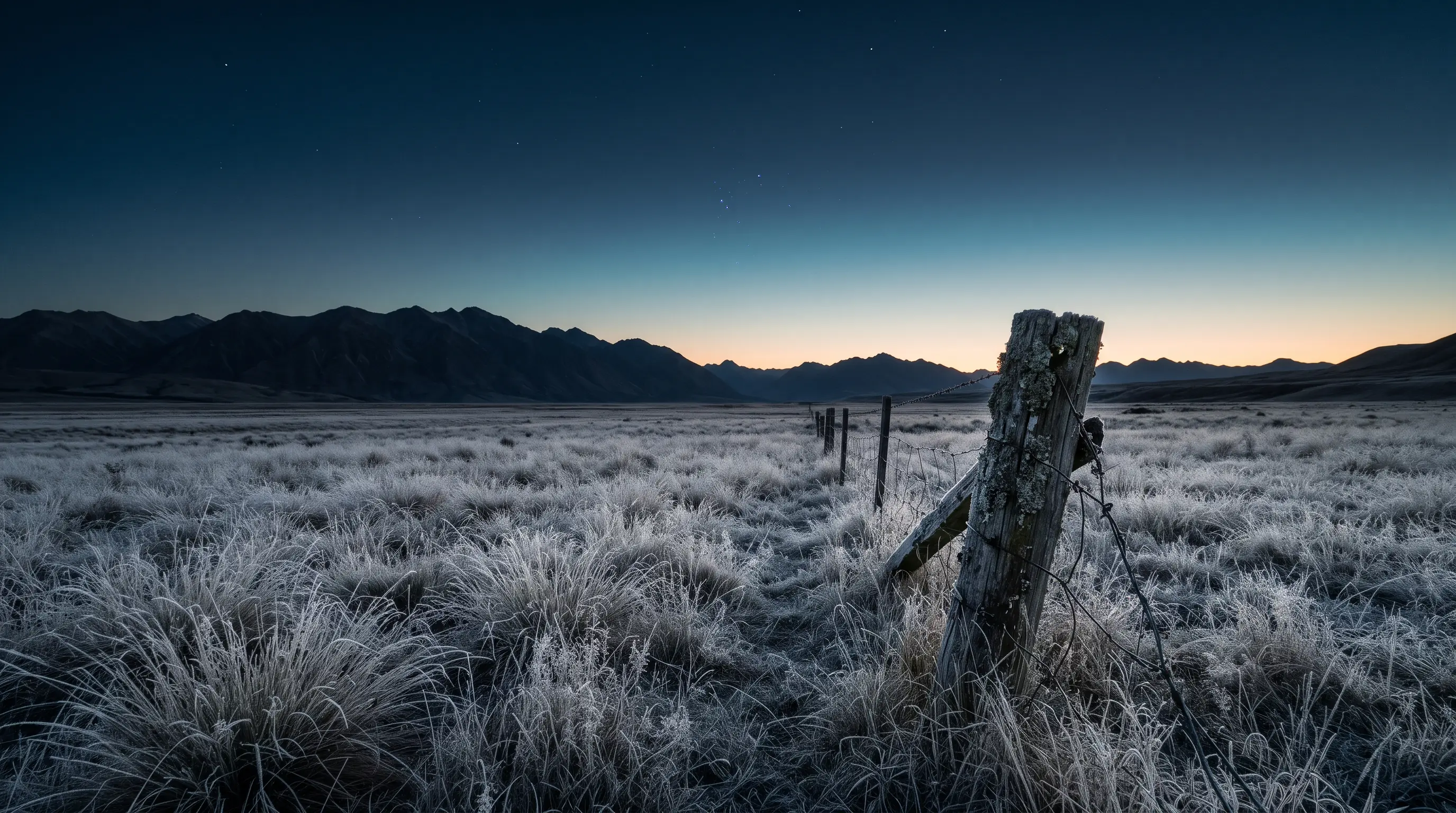
The Pleiades rise low in the north-east before sunrise in June or July, the return that marks the Māori New Year.
- Stars in Te Papa's account
- 9 stars
- Te Papa acknowledges the nine stars of Matariki in its account[9]
In this article
Jump to a section
What the return of Matariki marks
The nine stars and what each one looks after
- Matariki, the star that shares the cluster's name, signifies reflection, hope, the gathering of people and connection to the environment, and is tied to health and wellbeing[11]
- Pōhutukawa connects people with loved ones who have died[12]
- Tipuānuku is linked with food that grows in the ground, kūmara among it[13]
- Tipuārangi is linked with birds and with food from above ground, such as fruit and berries from trees[14]
- Waitī is associated with freshwater and the food those waters sustain[15]
- Waitā is associated with the ocean and the life in it[16]
- Waipunarangi is associated with rain in all its forms[17]
- Ururangi is associated with the winds[18]
- Hiwa-i-te-Rangi is the star that receives people's dreams and desires for the year ahead[19]
Why the Matariki public holiday moves each year
| Aspect | Public holiday | Heliacal rising |
|---|---|---|
| What it is | A Friday set by rule, with dates agreed by the Matariki Advisory Committee | The cluster's appearance on the eastern horizon just before sunrise |
| What sets it | The closest Friday to the Tangaroa lunar period in the lunar month of Pipiri | The cluster's position against the rising sun, in mid-winter |
| Where to look | Nowhere; it is a date on the calendar | North-east, before sunrise |
The sky above Te Manahuna
Featured · Destination
Aoraki Mackenzie Stargazing
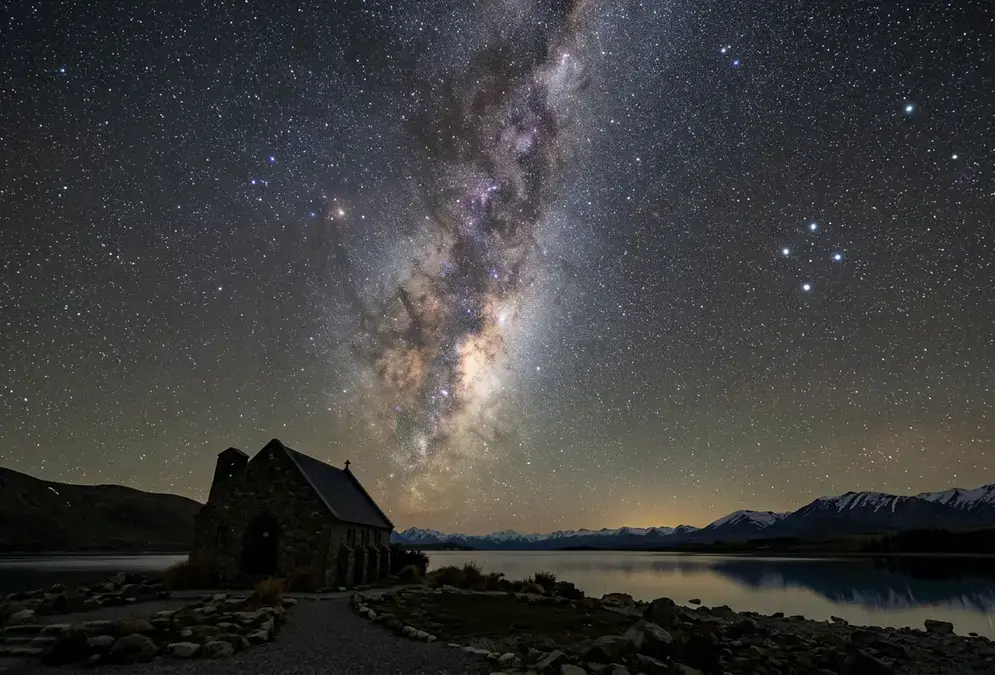
Aoraki Mackenzie is one of only four Gold Tier Dark Sky Reserves on Earth: Bortle 2 skies over Lake Tekapo, the Southern Cross, and Mount John Observatory tour.
Watching the return before dawn
Featured · Article
What Is Light Pollution? Definition, Types, and Solutions
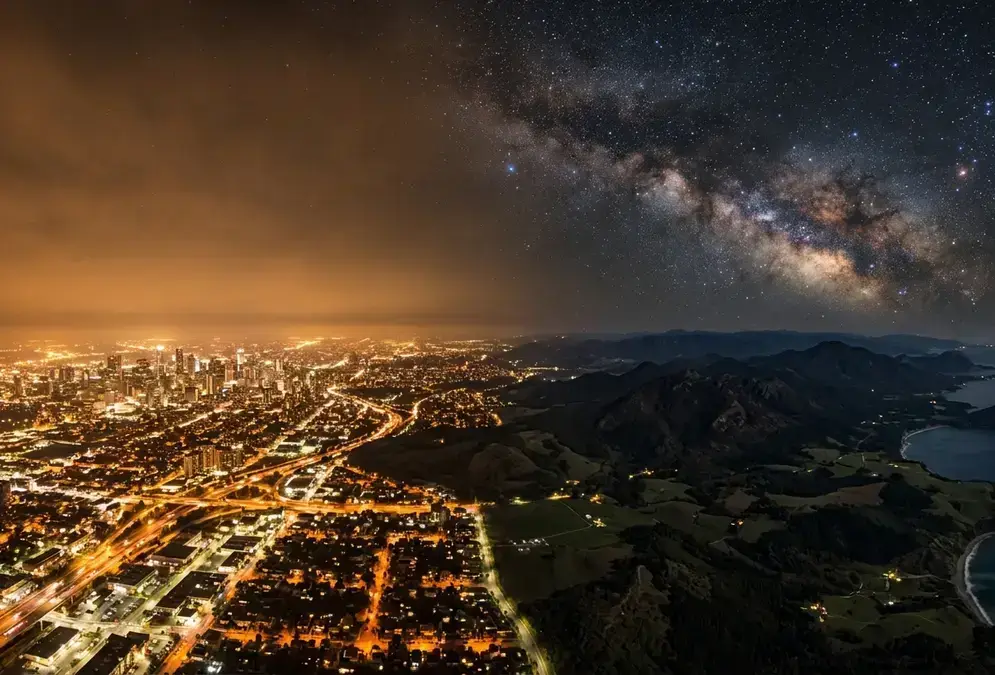
Light pollution is artificial light brightening the night sky, affecting 80% of the world. Learn the 4 types, wildlife and health effects, and how to fix it.
Taking part respectfully
Recommended tours
Tours are selected for quality, not commission. I earn a small fee if you book — at no extra cost to you.

- Ask before recording or sharing what you are told, since some of the night-sky stories were not shared outside the iwi until recently[34]
- Follow your host's instructions on participation and photography
- Share kai if you are invited to, since Matariki is a time for it
- Do not climb Aoraki: Ngāi Tahu consider it inappropriate to climb onto what is effectively an ancestor's head[40]
A booking is not a ceremony pass
Frequently asked questions
What does Matariki mean, and is it the Pleiades?
What do the nine stars of Matariki represent?
Why does the Matariki public holiday change date each year?
Do all iwi mark Matariki in the same way?
Can I watch Matariki at Aoraki Mackenzie without a telescope?
How can visitors engage respectfully with Matariki in Mackenzie?
Does Dark Sky Project hold Matariki events?
Sources
46 references Show Hide
- tepapa.govt.nz — Dates for matariki public holiday (opens in a new tab)
“The Matariki public holiday dates fall on the closest Friday to the Tangaroa lunar period during the lunar month of Pipiri.”
- tepapa.govt.nz — Matariki star (opens in a new tab)
“Matariki is visible to the naked eye from most parts of our planet, and is known by many different names.”
- tepapa.govt.nz — What matariki (opens in a new tab)
“Matariki is the star cluster most commonly known across the world as Pleiades. This cluster is part of a larger constellation of stars called Taurus.”
- tepapa.govt.nz — What matariki (opens in a new tab)
“For Māori, the rising of Matariki signals te Mātahi o te Tau, the Māori New Year.”
- tepapa.govt.nz — What matariki (opens in a new tab)
“The appearance of Matariki in the morning sky is a sign for people to gather, to honour the dead, celebrate the present, and plan for the future.”
- tepapa.govt.nz — What matariki (opens in a new tab)
“However, the name comes from the phrase ‘Ngā mata o te ariki Tāwhirimātea’, ‘the eyes of the god Tāwhirimātea’.”
- tepapa.govt.nz — What matariki (opens in a new tab)
“In 2022 Matariki became an official public holiday in Aotearoa New Zealand.”
- tepapa.govt.nz — Matariki star (opens in a new tab)
“The Te Kāhui o Matariki Public Holiday Act 2022 came into effect in April 2022.”
- tepapa.govt.nz — Matariki (opens in a new tab)
“As such, we acknowledge the nine stars of Matariki.”
- tepapa.govt.nz — Stars matariki (opens in a new tab)
“Image and text derived from Matariki: The Star of the Year by Rangi Matamua and reproduced by permission of Huia Publishers.”
- tepapa.govt.nz — Stars matariki (opens in a new tab)
“Matariki signifies reflection, hope, the gathering of people, and our connection to the environment. Matariki is also connected to the health and well-being of people.”
- tepapa.govt.nz — Stars matariki (opens in a new tab)
“Pōhutukawa connects us to our loved ones that have passed on.”
- tepapa.govt.nz — Stars matariki (opens in a new tab)
“In particular the star Tipuānuku determines the bounty of foods such as kūmara and the name Tipuānuku means to grow in the ground.”
- tepapa.govt.nz — Stars matariki (opens in a new tab)
“Tipuārangi is linked to birds and other elevated foods such as fruits and berries from trees.”
- tepapa.govt.nz — Stars matariki (opens in a new tab)
“Waitī is associated with all freshwater bodies and the food sources that are sustained by those waters.”
- tepapa.govt.nz — Stars matariki (opens in a new tab)
“Waitā is associated with the ocean and all life within this domain.”
- tepapa.govt.nz — Stars matariki (opens in a new tab)
“Waipunarangi is associated with the various forms of rain that we experience throughout the year as it falls from the sky and washes over the earth, nourishing all living things.”
- tepapa.govt.nz — Stars matariki (opens in a new tab)
“Ururangi connects us to the different winds and this whetū determines the nature of these winds.”
- tepapa.govt.nz — Stars matariki (opens in a new tab)
“It is to Hiwa that Māori would send their dreams and desires for the year in the hope that they would be realised.”
- tepapa.govt.nz — Matariki (opens in a new tab)
“For some people the Matariki star cluster is made up of seven stars, while for others it’s nine. So which is it? Both.”
- tepapa.govt.nz — Matariki (opens in a new tab)
“Some iwi are unable to see Matariki from their rohe, while some iwi herald the new year with a star named Puanga – kōrero tuku iho passed down will differ between iwi, hapū, and whānau.”
- tepapa.govt.nz — Dates for matariki public holiday (opens in a new tab)
“Tangaroa is not a single phase of the moon but rather the last quarter period of the lunar calendar.”
- tepapa.govt.nz — Dates for matariki public holiday (opens in a new tab)
“Below are the dates agreed upon by the Matariki Advisory Committee for the Matariki holiday beginning in 2022.”
- tepapa.govt.nz — Dates for matariki public holiday (opens in a new tab)
“Because Māori follow an environmental calendar system that takes into account the sun, various stars, the moon, and other ecological indicators”
- tepapa.govt.nz — Matariki star (opens in a new tab)
“The heliacal rise is when a star or planet is seen on the eastern horizon just before the rising of the sun.”
- tepapa.govt.nz — Matariki star (opens in a new tab)
“When Matariki rises during mid-winter (June/July), look towards the eastern horizon before the sun rises”
- darkskyreserve.org.nz (opens in a new tab)
“It is the largest reserve in the Southern Hemisphere and the third largest in the world at 4,367sqkm.”
- ngaitahu.iwi.nz — Dark sky project celebrates 20 years of astrotourism this matariki (opens in a new tab)
“Te Manahuna (Mackenzie Basin) was traditionally a gateway for Ngāi Tahu ancestors to connect and trade as they travelled around Te Waipounamu.”
- darkskyreserve.org.nz (opens in a new tab)
“The dark sky reserve was the third to be recognised in the world when it was created in 2012 with accreditation from the DarkSky International in Arizona.”
- doc.govt.nz (opens in a new tab)
“To Ngāi Tahu, Aoraki represents the most sacred of ancestors, from whom Ngāi Tahu descend and who provide the iwi with its sense of communal identity, solidarity and purpose.”
- ngaitahu.iwi.nz — Tatai aroraki (opens in a new tab)
“So, we have the whetū, mahika kai practices, the people and the moon (our maramataka) all moving in relationship with one another.”
- ngaitahu.iwi.nz — Tatai aroraki (opens in a new tab)
“Then the birders come back around the end of May, following Puaka as it rises back up in the East.”
- ngaitahu.iwi.nz — Dark sky project celebrates 20 years of astrotourism this matariki (opens in a new tab)
“Dark Sky Project (formerly Earth and Sky) is a joint venture between Ngāi Tahu Tourism and co-founders, Graeme Murray and Hide Ozawa.”
- ngaitahu.iwi.nz — Dark sky project celebrates 20 years of astrotourism this matariki (opens in a new tab)
“Its stargazing tours are now woven with tātai arorangi (Ngāi Tahu astronomy), as well as cultural stories about the night sky that had never been previously shared outside of the iwi.”
- ngaitahu.iwi.nz — Dark sky project celebrates 20 years of astrotourism this matariki (opens in a new tab)
“Ōtehīwai (University of Canterbury Mt John Observatory)”
- odt.co.nz — 20th year for dark sky project n6n902n9 (opens in a new tab)
“A celebration was held last month, featuring the screening of a documentary exploring the Dark Sky Project’s origins.”
- tepapa.govt.nz — How celebrate (opens in a new tab)
“Matariki is a time to share kai that has been harvested and stored throughout the year.”
- tepapa.govt.nz — How celebrate (opens in a new tab)
“Māori give thanks to Matariki by offering up kai to the stars connecting us to our environment.”
- tepapa.govt.nz — How celebrate (opens in a new tab)
“Matariki reminds us of our connection to the environment and our responsibilities to look after it.”
- doc.govt.nz (opens in a new tab)
“Ngāi Tahu believe that it is not appropriate to climb onto what is effectively the head of an ancestor.”
- ngaitahu.iwi.nz — TeKaraka43.pdf (opens in a new tab)
“The Ngäi Tahu New Year has arrived with the rise of Puaka (the star Rigel) marking 2009 as a year of meager harvest and concern for future generations.”
- odt.co.nz — Puaka the real star of southern skies f039j00l (opens in a new tab)
“When it rises with Matariki in our pre-dawn sky, it reminds us of our connection to the environment and also to look forward to the onset of spring.”
- niwa.co.nz (opens in a new tab)
“Cloud cover allowing, Matariki comes into view as a small pulsating collection of stars just above the northeastern horizon. This happens shortly before sunrise.”
- legislation.govt.nz (opens in a new tab)
“10 July 2026”
- legislation.govt.nz (opens in a new tab)
“25 June 2027”
- ngaitahu.iwi.nz — Dark sky project celebrates 20 years of astrotourism this matariki (opens in a new tab)
“A celebration will be held this Thursday, featuring the screening of a documentary exploring Dark Sky Project’s origins.”