Why Aoraki Mackenzie takes more planning than Tromsø or Iceland
Most guides to reaching a dark-sky destination assume you're already close to the right hemisphere: a short domestic hop from Oslo to Tromsø, or a train from Helsinki up to Rovaniemi. Aoraki Mackenzie doesn't work that way. This is one of only four Gold Tier International Dark Sky Reserves on Earth[1], and it sits at the bottom of the South Pacific, further from most travelers' home airports than any other reserve this site covers.
Getting here always starts with an international flight into New Zealand, then a genuine road trip once you land: no exceptions, no shortcuts. Christchurch and Queenstown are the two realistic gateway airports, and neither one drops you at Lake Tekapo's doorstep: both routes mean two to three hours of driving after you land[2]. That's the honest trade against a short regional hop to Tromsø or an international-airport-to-aurora-zone drive in Iceland: the payoff is a sky nobody in the Northern Hemisphere sees from home, but the travel day is real, and it's worth knowing before you book flights, not after. For the destination itself, from the Bortle rating to what's actually up there once you arrive, see Aoraki Mackenzie stargazing.
Flying in: Christchurch or Queenstown
New Zealand's South Island has two realistic gateway airports for Aoraki Mackenzie, and neither is a household name the way Auckland is. Christchurch Airport (CHC) is the bigger of the two, with more long-haul and regional connections, and it's roughly three hours from Lake Tekapo via State Highway 1 and State Highway 8. Queenstown Airport (ZQN), tucked into the Southern Alps on the island's south-west side, is smaller and more weather-sensitive, but roughly two hours closer via the Lindis Pass, one of the more scenic mountain routes on the South Island[2].
Neither airport is a bad choice, and the right one usually comes down to what else is on the itinerary. Christchurch suits a trip that starts or ends on the east coast, or connects onward to Wellington and the North Island. Queenstown suits a trip built around Central Otago and the Southern Alps, since it puts Wanaka, Milford Sound, and the Aoraki/Mount Cook approach closer before you've even reached Lake Tekapo.
| Gateway airport | Drive to Lake Tekapo | Route | Best for |
|---|---|---|---|
| Christchurch (CHC) | ~3 hours | State Highway 1 to State Highway 8 | More flight options, flatter drive |
| Queenstown (ZQN) | ~2 hours | Lindis Pass (State Highway 8) | Shorter drive, mountain scenery, pairing with Central Otago |
The drive in: two routes through the Mackenzie Basin
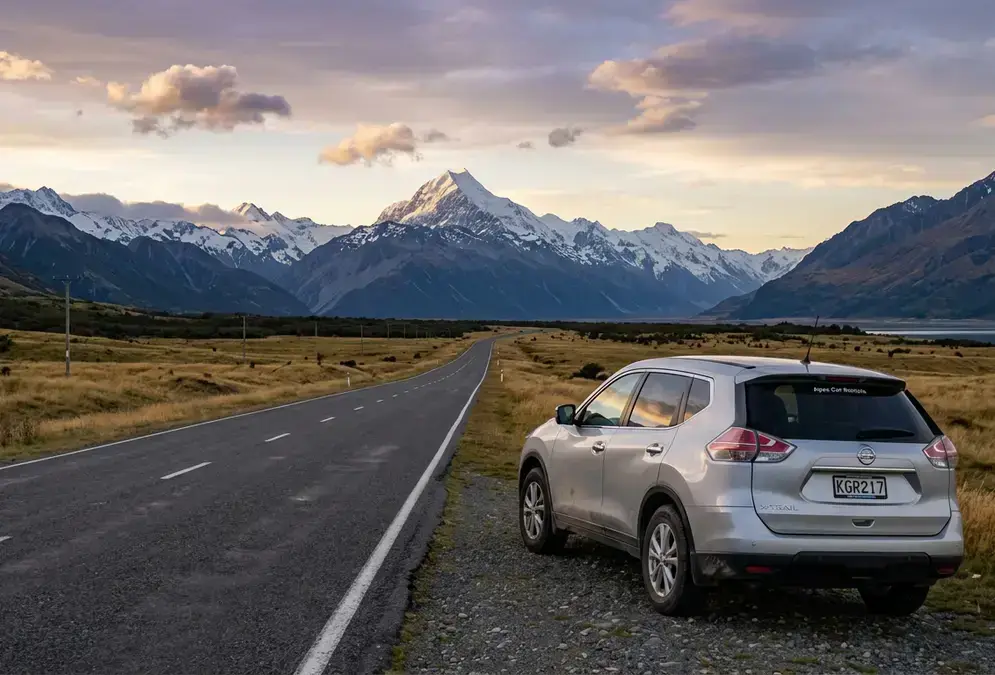
Once you're on the ground, the drive itself is simple: sealed highway the whole way, nothing off-road or four-wheel-drive required, though the two routes in feel like different trips entirely. Fill the tank before you leave either airport city. Services thin out fast once you're deep in the Mackenzie Basin, and there's no reason to test how far a rental car's reserve tank stretches on an unfamiliar alpine road at dusk.
Featured · Destination
Aoraki Mackenzie Stargazing
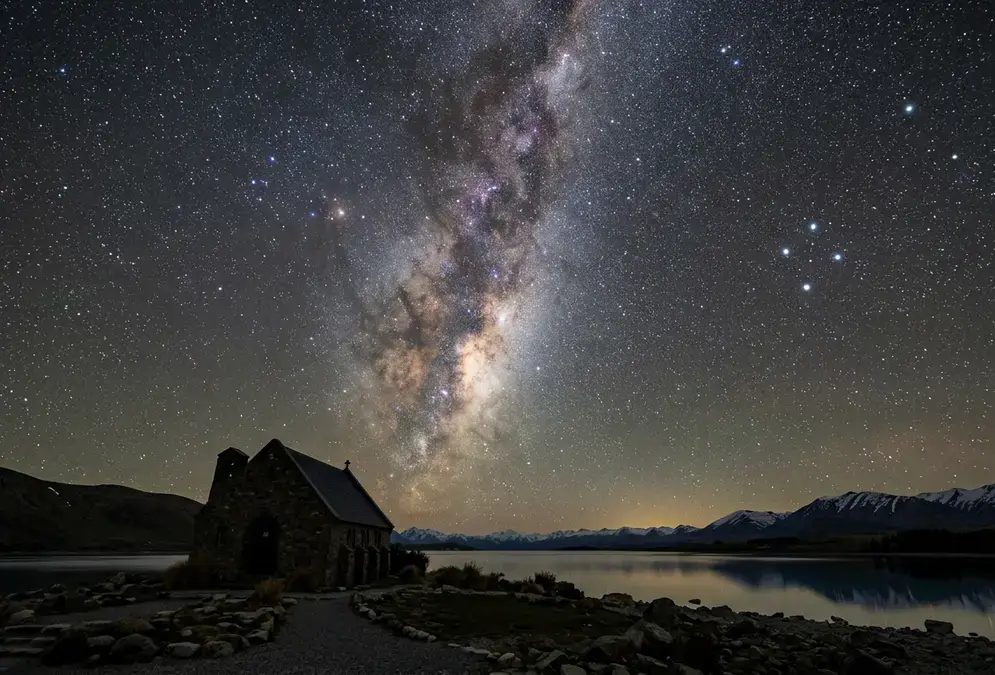
Aoraki Mackenzie is one of only four Gold Tier Dark Sky Reserves on Earth: Bortle 2 skies over Lake Tekapo, the Southern Cross, and Mount John Observatory tour.
From Christchurch: State Highway 1 to State Highway 8
Leaving Christchurch, State Highway 1 runs south along the Canterbury Plains before State Highway 8 cuts inland toward the Mackenzie Basin. It's a flat, straightforward drive for the first two hours, farmland and long straight roads, before the Southern Alps rise into view and the road climbs toward Lake Tekapo. Budget the full three hours and don't rush it in winter: black ice on the inland stretches is the main hazard on this route, not traffic.
From Queenstown: the Lindis Pass
The Queenstown route is shorter and more dramatic. State Highway 8 climbs over the Lindis Pass, a high, tussock-covered mountain crossing that's a scenic drive in its own right, before dropping into the Mackenzie Basin and Lake Tekapo, roughly two hours in total. It's a genuine mountain road, not a technical one, but winter conditions can still mean snow chains in the boot and a slower pace than the map suggests.
No trains, no buses: why a rental car isn't optional
Aoraki Mackenzie has no rail line and no scheduled bus service reaching Lake Tekapo, Twizel, or Aoraki/Mount Cook Village[2]. That's not an oversight in this guide: it's the honest state of public transport in the Mackenzie Basin. A rental car is the only practical way to reach any of the reserve's stargazing bases, and it stays the only practical way to move between them once you're there.
The flexibility matters more here than it would on a fixed sightseeing itinerary. The Aoraki/Mount Cook region is known for weather that shifts fast, strong wind, heavy rain, and rapid temperature swings are possible at any time of year, even when the forecast looked settled that morning[3]. A car means acting on a clearing sky the same evening, driving the twenty minutes from Twizel to a darker pull-off, or rerouting around a socked-in valley: options a bus timetable simply doesn't give you.
Where to base yourself: Lake Tekapo, Twizel, or Mount Cook Village
Where you land the rental car matters almost as much as which airport you flew into. Lake Tekapo township is the reserve's obvious hub: it's where Dark Sky Project's tours depart from, and it puts you within walking distance of the Church of the Good Shepherd for a pre- or post-tour look at New Zealand's most photographed foreground. This Lake Tekapo property, 500 metres from the lakeshore, is the one to book if a skylight over the bed is part of the plan.
Twizel, a quieter town roughly forty minutes south, is the practical alternative when Tekapo is booked solid or the daytime tour-bus crowds aren't your idea of a good time. It sits closer to the Aoraki/Mount Cook approach road than Tekapo does, and has its own rural stargazing options nearby.
Aoraki/Mount Cook Village, deeper inside the national park itself, is the right call if hiking beneath New Zealand's tallest peak matters as much as the night sky. The only hotel inside the national park, located inside Aoraki/Mount Cook National Park[4], runs its own on-site stargazing sessions, though it sits some 60 kilometres from Mount John Observatory, too far for an easy same-night visit to the Summit Experience if that specific tour is the priority.
Whichever town you choose, book early. Rooms across all three fill fast in the December-to-February peak, and the observatory tours sell out separately from the accommodation, so don't assume booking one secures the other. For a full rundown of all five reserve lodges ranked by feature, price, and proximity, see best places to stay for Aoraki Mackenzie stargazing.
Timing your arrival: booking sequence and the weather wildcard
Book in this order once your dates are fixed:
- Flights first: fares into Christchurch and Queenstown swing with season and school holidays
- Accommodation second: Tekapo's small hotel stock and the reserve's five partner lodges fill fastest in the December-to-February peak
- The Summit Experience last, only if your dates are flexible: it sells out independently of any hotel booking and shifts around the sunset schedule
Then work backward from the sky itself. Cloud cover is the biggest single reason a booked stargazing tour gets cancelled or shifted to a backup night, and the odds swing with the season, generally better in autumn and winter, considerably more changeable through summer. A single night in the itinerary is closer to a coin flip than a plan, so build in at least two nights before you lock in a return flight. Check the moon phase before you check the calendar month too: a full moon washes out the Magellanic Clouds and mutes the Milky Way's dense core regardless of how clear the sky is that night, whatever season brought you here. Best Time for Stargazing at Aoraki Mackenzie covers which months to fly in for, once the flights and the rental car are sorted.
None of this is complicated, it's just sequential: land in Christchurch or Queenstown, drive two to three hours into the basin, rent the car for the whole stay rather than day by day, and build the extra night into the plan before the weather makes that decision for you. Still have questions once the flights and dates are locked in? The Aoraki Mackenzie stargazing FAQ works through the rest, from tour pricing to what you'll actually see.
Cloud cover is the biggest single reason a booked stargazing tour gets cancelled or shifted to a backup night, and the odds swing with the season, generally better in autumn and winter, considerably more changeable through summer.