
Mt John Observatory: New Zealand's largest research observatory
Mount John Observatory sits on a summit high above Lake Tekapo, and it's the reason this guide leads with a mountaintop instead of a lakeshore. It's New Zealand's largest professional research observatory, built on Mount John itself, inside the Aoraki Mackenzie International Dark Sky Reserve[2]. Working astronomers use the dome for real research by day. After dark, Dark Sky Project runs public sessions inside the same building, and a guide walks visitors from a naked-eye orientation of the southern sky through to views built around a research-grade telescope.
A scenic access road climbs from the base of the mountain to the summit car park, and from there it's a short walk to the observatory buildings. A standard rental car manages the drive without trouble outside of winter ice. Headlights sweep across other visitors' night vision on the way up though, so slow down and dim your beams once you're close to the top, and expect to share the road with other cars making the same climb around dusk.
What you get here that nothing else on this list offers is a guide trained to point a serious instrument at something specific, rather than an open patch of sky and your own eyes. Book ahead. Sessions fill out fast during the Southern Hemisphere winter, and cloud cover cancels a real share of nights regardless of season, so treat one booking as a genuine chance rather than a guarantee. For the reserve's broader numbers, lodging options, and full seasonal breakdown, see Aoraki Mackenzie Stargazing.
Church of the Good Shepherd: the reserve's most photographed foreground
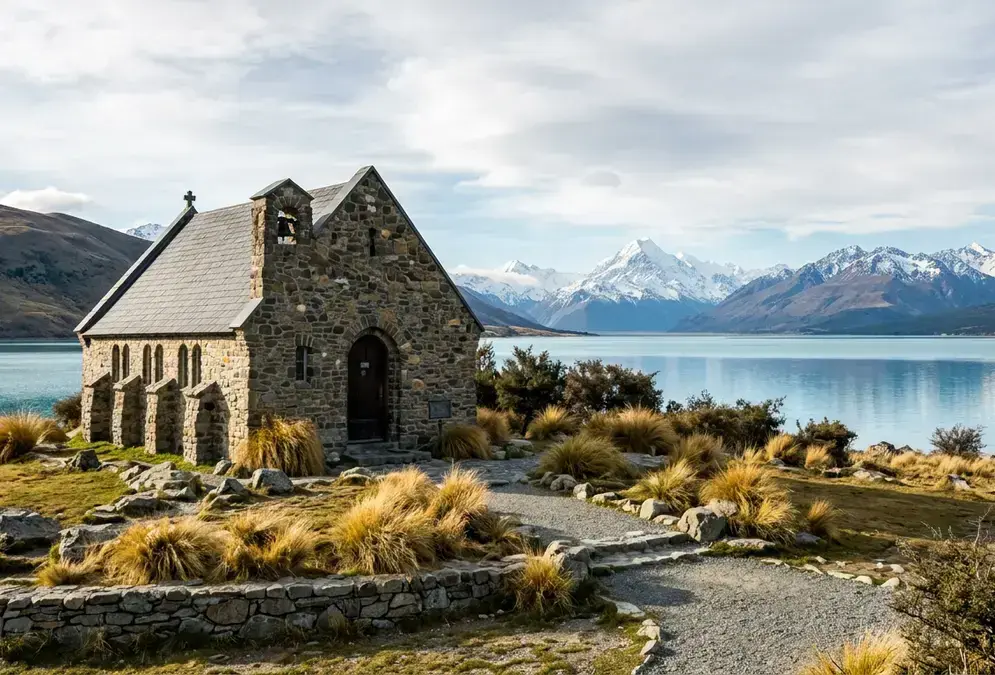
The Church of the Good Shepherd, a small stone chapel on the shores of Lake Tekapo, is the single most photographed building in this reserve, and quite possibly in the country[3]. It draws tour buses and day-trip photographers by the hundred in daylight, all working the same three angles from the same stretch of shoreline. None of that daytime traffic matters once the sun goes down, which is exactly when this spot earns its place on the list.
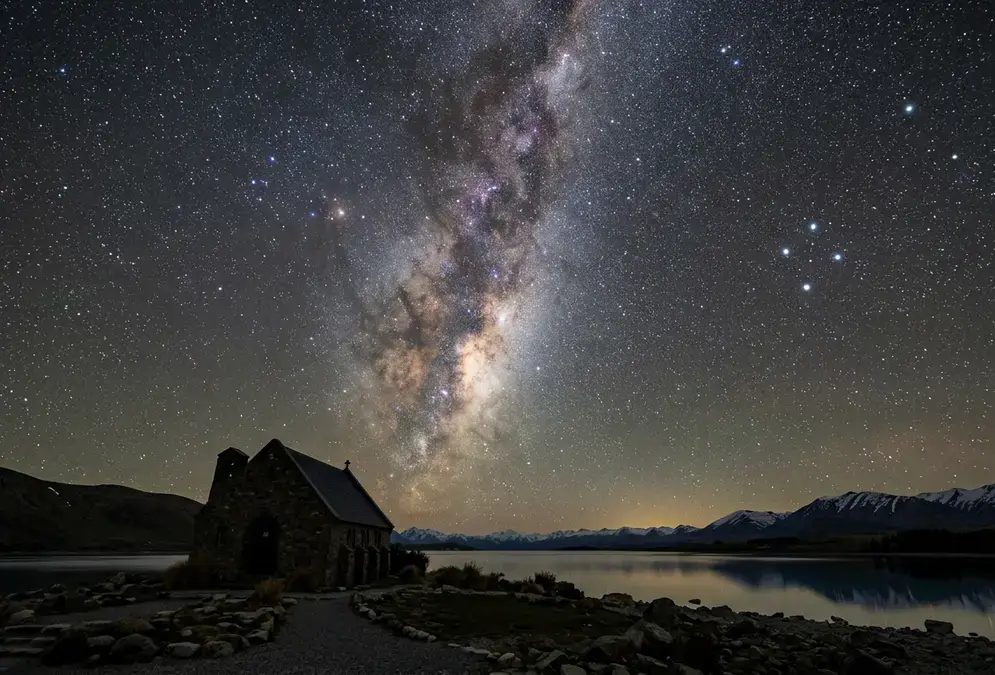
Come back after dark, ideally within a few nights of new moon, and the lake does something the daytime crowd never sees: on a genuinely still night, the calm surface holds a faint mirror image of the sky, so a clear night here effectively doubles itself[4]. Wind kills the effect fast, so check the forecast for a calm evening rather than just a clear one, and give your eyes ten or fifteen minutes to adjust before judging how dark it actually is.
- Public parking sits close to the church, an easy walk from Lake Tekapo township and its skylight-room hotel
- No entry fee, no booking, and no tour required
- Arrive at sunset for the golden-hour version, or well after full dark for the reflection everyone's actually chasing
on a genuinely still night, the calm surface holds a faint mirror image of the sky, so a clear night here effectively doubles itself
Cowan's Hill: the quieter self-guided alternative
Cowan's Hill is the pick when the church parking lot is full of tour buses and Mt John's sessions are booked solid. It sits a short drive from Lake Tekapo township, at a dedicated viewing area with minimal obstructions, and it draws a fraction of the crowd either of the first two spots gets on a clear night.
There's no facility here: no ticket booth, no guide, no scheduled session to catch. That's the entire appeal. Self-guided stargazers and smaller groups get a real dark patch of open sky without competing for a parking space or a tripod angle, and the reserve's protected lighting rules keep the gap between this spot and the township itself smaller than you'd expect, though it's still noticeably darker at the margins where the township's glow fades out.
Featured · Destination
Aoraki Mackenzie Stargazing
Aoraki Mackenzie is one of only four Gold Tier Dark Sky Reserves on Earth: Bortle 2 skies over Lake Tekapo, the Southern Cross, and Mount John Observatory tour.
Treat Cowan's Hill as the fallback for a second or third night of a longer stay, once the postcard spots have already had their turn and you just want an open patch of sky without anyone else's headlights nearby.
Recommended tours
Tours are selected for quality, not commission. I earn a small fee if you book — at no extra cost to you.
Pukaki Observatory and Twizel: the darkest sky in the reserve
Pukaki Observatory, set inside the Mt Cook Lakeside Retreat property near Lake Pukaki, is the darkest sky on this list. It sits in a quiet rural setting with no light pollution nearby: roughly 30 minutes from Lake Tekapo, 40 minutes from Aoraki/Mt Cook National Park, and about 10 minutes from Twizel[5].
That last distance is the reason to consider Twizel as a base rather than just a drive-through gateway town. It sits closer to Pukaki Observatory than either Lake Tekapo or Mt Cook Village does, carries more affordable lodging than the busier Tekapo township, and works as a genuine day-trip hub for reaching the other spots on this list without committing to the alpine remoteness of Mt Cook Village itself.
10 minutes
Pukaki Observatory's rural seclusion is also its one real limitation: there's no walk-up option here the way there is at the Church of the Good Shepherd. Sessions run through the retreat property itself, so check ahead and book rather than turning up expecting an open gate after dark.
Aoraki/Mt Cook Village: alpine stargazing beneath the country's highest peak
Aoraki/Mt Cook Village is the only settlement sitting inside Aoraki/Mt Cook National Park's boundary itself, tucked beneath New Zealand's tallest peak at the head of the valley. On a clear night, the Milky Way here is genuinely overwhelming, the kind of sky that stops visitors mid-sentence[6].
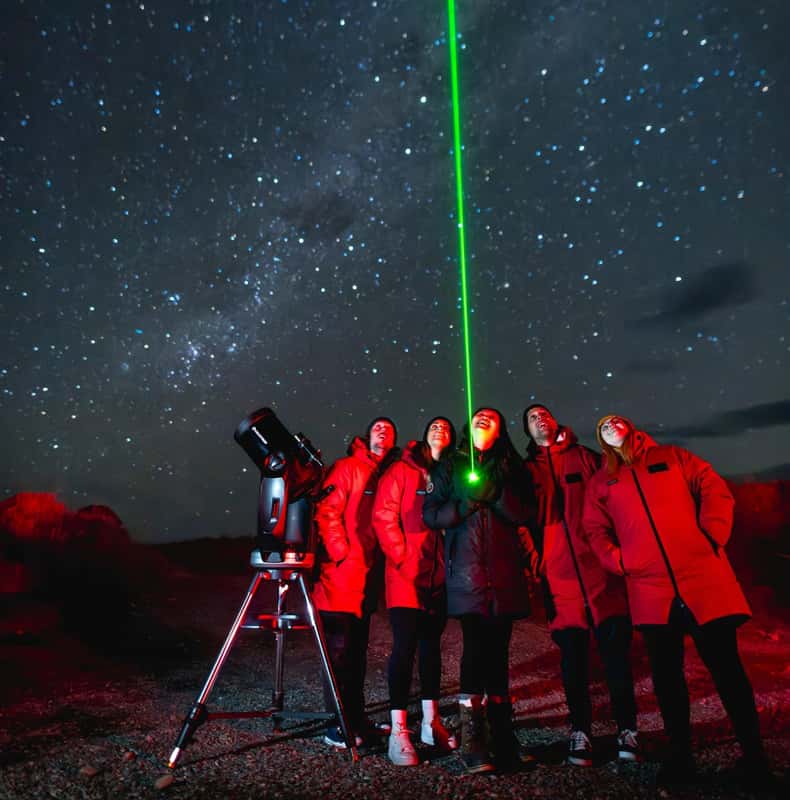
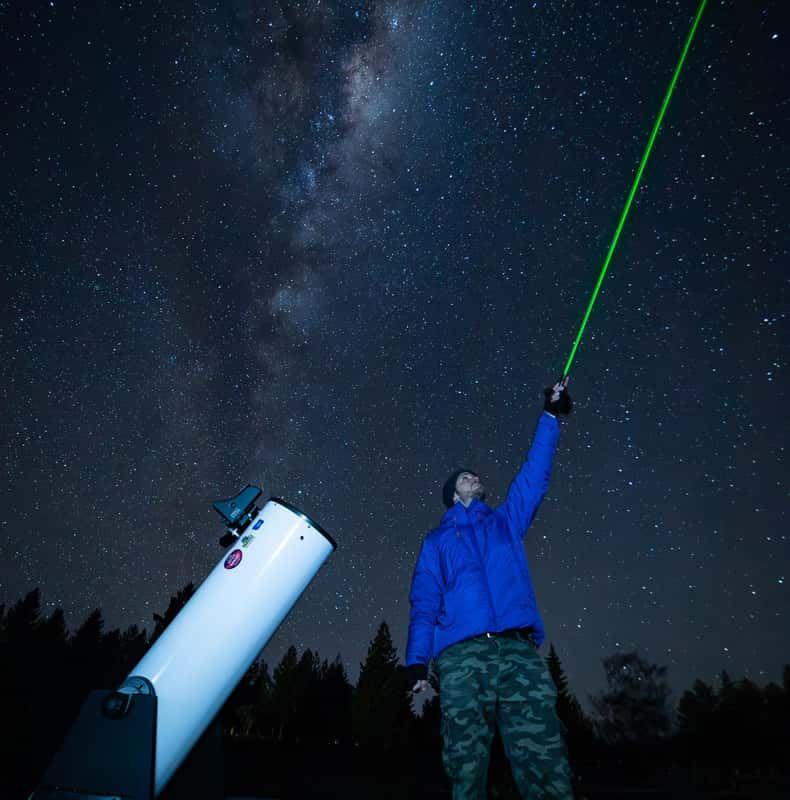
The village is also home to The Hermitage Hotel's Big Sky Stargazing program, which shuttles guests to Star Base, a private observatory a short drive away. Guides walk visitors from a naked-eye orientation through to telescopic views, including 14-inch and 11-inch telescopes inside the dome[7], a different setup entirely from Mt John's research facility above Lake Tekapo.
Getting here takes more commitment than any other spot on this list. State Highway 80 is the only road in, and winter conditions sometimes call for chains or a 4WD vehicle. Standard cars manage the drive in most conditions outside deep winter, and on-site parking is available at the Hermitage Hotel and the village campgrounds.
Which of these five spots suits a given night comes down mostly to how far you're willing to drive and what kind of evening you actually want:
| Spot | Distance from Tekapo | Setting | Best for |
|---|---|---|---|
| Mt John Observatory | At Lake Tekapo | Guided, research-grade dome | A guided session with a real astronomer |
| Church of the Good Shepherd | At Lake Tekapo | Self-guided, lakeside | Photography and lake reflections |
| Cowan's Hill | Short drive from Tekapo | Self-guided, open sky | A quiet, uncrowded fallback night |
| Pukaki Observatory | About 30 minutes | Guided, rural seclusion | The darkest sky in the reserve |
| Aoraki/Mt Cook Village | About 1 hour | Guided or self-guided, alpine | Pairing stargazing with the highest peak |
Planning your night: timing, access, and gear
None of the five spots above demand anything beyond whichever tour you've booked. What decides whether the trip actually pays off is timing, not location. June and July, New Zealand's winter, are widely considered the strongest months for stargazing here, with the longest nights and the clearest air of the year[8]. For the full seasonal mechanics, including why New Zealand's calendar runs opposite to Europe's, Best Time for Stargazing at Aoraki Mackenzie covers more ground than this guide needs to.
Whichever month you land in, check the new-moon window before you check the season. A bright moon washes out the fainter detail at every spot on this list, from the church's lake reflection to Pukaki Observatory's rural dark.
Build at least two nights into the plan, not one. Cloud cover over the Mackenzie Basin cancels a real share of stargazing sessions regardless of month, and a single scheduled evening is closer to a coin flip than a guarantee — see the Aoraki Mackenzie stargazing forecast for the specific tools that tell you which night to spend at which spot.
Getting between the spots
Rent a car. There's no meaningful public transport linking Lake Tekapo, Twizel, Pukaki Observatory, and Mt Cook Village, and the flexibility to chase a clearer patch of sky if the forecast shifts is worth more than the cost of the rental. State Highway 8 connects Tekapo, Twizel, and the Pukaki area, and State Highway 80 branches off toward Mt Cook Village, where winter conditions can call for chains or 4WD.
What to bring
Pack layers regardless of season. Alpine lake country gets cold fast once the sun is down, colder again past midnight, at every spot on this list. A red-light headlamp protects your night vision, and everyone else's, at the darker, unlit spots like Cowan's Hill and Pukaki Observatory. Binoculars are a better first purchase than a telescope if you're building a kit from scratch; Stargazing Gear for Beginners breaks down what actually matters for a first trip.