
Two nights is the floor, three to four is where the trip actually works
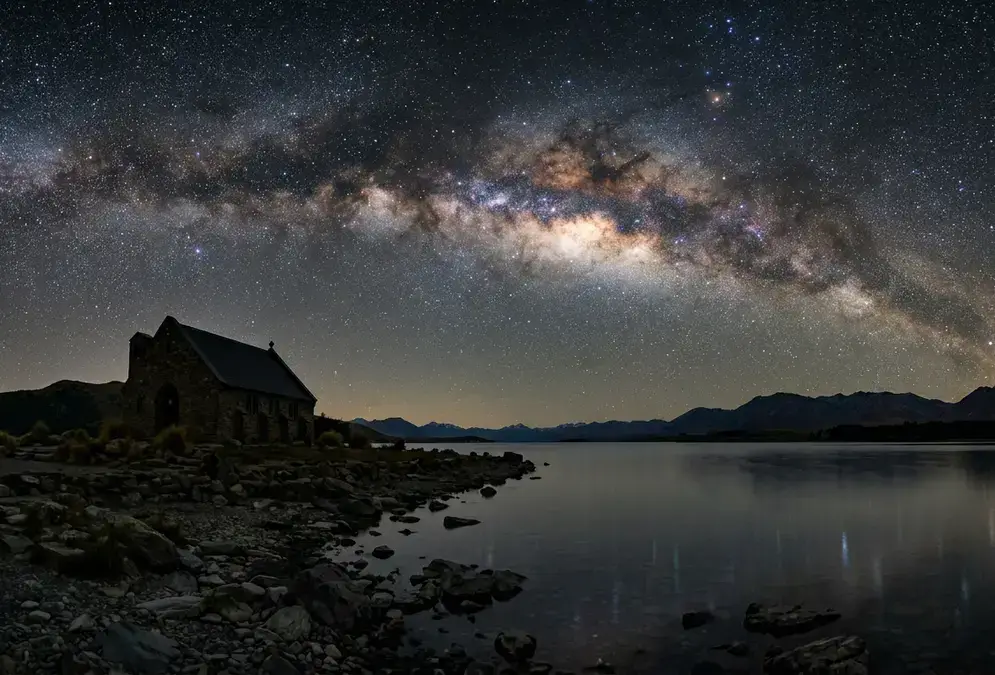
Start with the reality that should worry you a little. Cloud cover regularly cancels stargazing tours at Lake Tekapo, depending on the season[1]. Treat a single booked night as a real gamble rather than a sure thing, even inside a reserve that holds Gold Tier status and a Bortle Class 2 sky[3]. Run the numbers over two nights as a planning exercise and the odds improve fast: at an illustrative 50 percent per-night clear-sky estimate, the chance of at least one clear session across two nights works out to 75 percent. Add a third night and it climbs to roughly 87 percent. That is the real argument for staying longer here, and it has nothing to do with running out of things to do.
Three to four nights is a sensible target for this reserve, timed to the new-moon window, the week either side of a new moon when the sky is at its darkest[2]. A four-night stay gives you enough slack to land inside that window even if your flights were booked around work schedules rather than lunar phases, and it absorbs one cancelled session without forcing everything onto a single evening. Anything shorter than two nights only really makes sense if you are already on the South Island for other reasons and treating a clear sky as a bonus rather than the point of the trip. For the reserve's full profile, from getting here to where to stay, see Aoraki Mackenzie stargazing.
87%
Why the stakes are higher here than a weekend dark-sky trip
Someone weighing a long weekend at Tromsø or a same-country hop to a Northern Hemisphere dark-sky park can eat a cancelled night and simply rebook next month, sometimes even the following weekend. Aoraki Mackenzie does not work that way. Getting here means a long-haul flight into Auckland or Christchurch, a domestic connection or a multi-hour drive south, and by the time you are standing on the Lake Tekapo shoreline you have already spent a full travel day or two just arriving, jet-lagged and running on airline food. If your one scheduled stargazing session gets rained out, there is no casual second attempt the following weekend, no quick redo before the school run. The trip-length math above matters more here than it would for a destination two hours from home, because every night you don't book in advance is a night you can't simply add once you land.
It is also worth being honest about what this reserve is not. Chile's Atacama Desert is the only other Southern Hemisphere cluster in this class, and it earns its reputation from bone-dry, high-altitude air that rarely clouds over at all. Aoraki Mackenzie earns its Gold Tier status a different way: an alpine lake district that simply never grew the light pollution to lose its sky, real weather systems rolling through the Mackenzie Basin on nobody's schedule. That difference is exactly why an extra night or two matters more here than it would in the driest deserts on Earth. For the full picture of how season and moon phase interact across the year, see Best time for stargazing at Aoraki Mackenzie.
Featured · Destination
Aoraki Mackenzie Stargazing
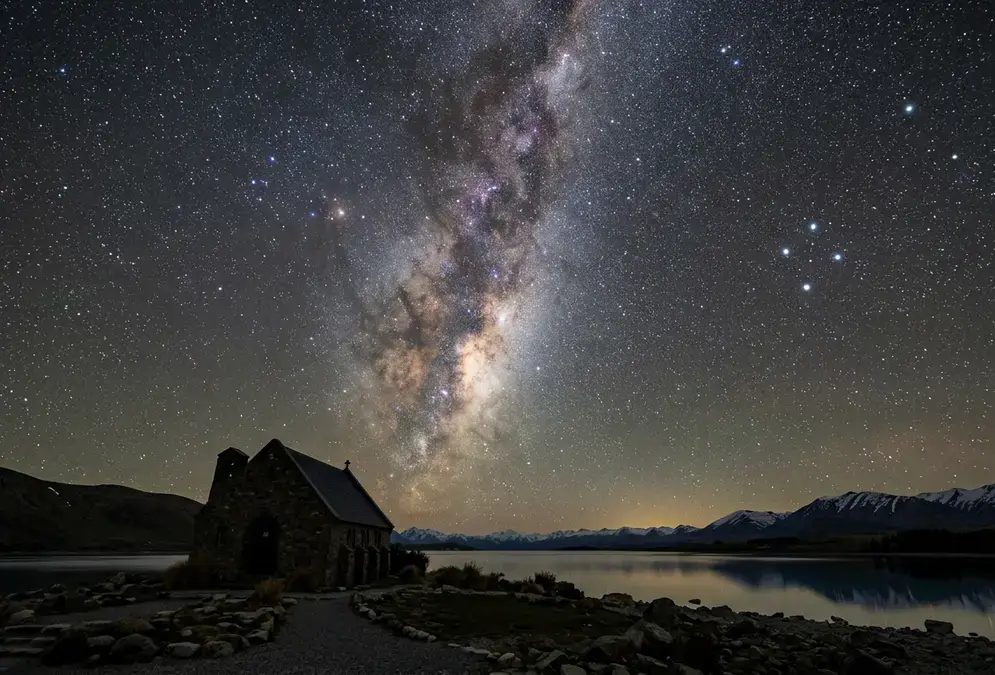
Aoraki Mackenzie is one of only four Gold Tier Dark Sky Reserves on Earth: Bortle 2 skies over Lake Tekapo, the Southern Cross, and Mount John Observatory tour.
Where you sleep decides how many nights you actually need
Base decides logistics as much as the calendar does. Lake Tekapo township puts you within walking distance of the Church of the Good Shepherd and a short drive from Mount John Observatory, and it is where every Dark Sky Project tour departs from. Twizel, further south, is quieter and cheaper, and works well if Tekapo is booked out during peak season. Aoraki/Mount Cook Village, much deeper into the national park, is a different base entirely: it runs its own 90-minute guided session, Big Sky Stargazing, independent of the Lake Tekapo tours and roughly 75 minutes from them by road[4], and it is the only sensible base if hiking matters as much as the sky.
A four-night trip has room to use two of these bases instead of forcing a compromise. Two nights in Lake Tekapo, anchored around Galaxy Boutique Hotel, whose Deluxe Lake View rooms put a skylight directly above the bed, covers the Church of the Good Shepherd and the Mount John tours. One or two nights in Mount Cook Village, based at the in-park hotel, covers Big Sky Stargazing and puts you at the trailhead for the Hooker Valley Track the next morning. Try to squeeze all of that into two nights total and you end up choosing between the sky and the mountain instead of getting both.
Budget and taste shift the number too. Distinction Mackenzie Country Hotel in Twizel runs roughly NZD 204 a night in winter (about USD 120), the cheapest bed in the cluster, and works fine for a shorter trip built around the tours rather than a specific lodge experience[5]. Night Sky Cottages, also near Twizel, trades hotel convenience for a private cedar hot tub with a straight-up sky view, worth the extra planning if the point of the trip is a slower, less scheduled kind of stargazing. Either way, check the full spread in best places to stay for stargazing in Aoraki Mackenzie before deciding how many nights to split across how many towns.
Astrophotographers and dedicated observers need five nights, not three
Three nights is enough for a first look. It is tight for anyone bringing a camera and a tripod. Alpha Crux, a Lake Tekapo-based operator with a Department of Conservation concession covering Twizel, Tekapo, and Mount Cook, runs a private astrophotography session of up to three hours for $590 NZD, covering camera settings, composition, and equatorial tracking equipment[6]. That single session is not enough to work through the compositions this reserve actually offers: the Church of the Good Shepherd as a foreground against the galactic core, a wider shot from the Mount John access road, a different angle entirely from Lake Pukaki roughly 30 minutes north[7]. Each of those wants its own clear, moonless night, and cloud cover does not care which one you had planned to shoot.
Recommended tours
Tours are selected for quality, not commission. I earn a small fee if you book — at no extra cost to you.
The practical split on a five-night astrophotography trip: one scouting night to work out where the wind and light pollution actually sit, two nights booked for specific compositions, one held in reserve for whichever session gets rained out[1], and the Alpha Crux private lesson slotted into whichever night carries the steadiest forecast. If budget rules out a private session altogether, the Southern Sky Guided Tour runs a beginner-friendly 75 minutes from $57[8] and still gets you oriented to the Southern Cross and Magellanic Clouds before you go shoot on your own for the rest of the trip. Treat the guided session as orientation, not the whole trip; the real photography happens on the nights you book for yourself.
Add two or three more days and the Mackenzie Basin becomes the whole trip
None of the trip-length math above accounts for daylight. The Hooker Valley Track, the signature walk in Aoraki/Mount Cook National Park, is normally a 10 km round trip that takes three to four hours, crosses three swing bridges, and passes two glacial lakes on a gentle grade with only about 124 metres of elevation gain over the first 5 km[9]. Check the current trail status before you build a day around it: DOC has closed sections of the track for erosion and bridge repair work, with a replacement bridge targeted for late July/August 2026[9], so confirm how much of the loop is open before you commit. When fully open it is an easy trail by New Zealand standards, but it eats most of a day once you count the drive to the trailhead and the stops for photos of Mueller Glacier and Aoraki/Mount Cook itself. The region is also known for fast-changing alpine weather, strong wind, sudden rain, and rapid temperature swings possible on any day of the year, one more reason not to schedule the hike for your only clear-sky evening.
Add a turquoise-lake day: Lake Tekapo and Lake Pukaki sit roughly 30 minutes apart[7], both fed by glacial meltwater that gives them their colour, and Peter's Lookout on State Highway 8 is the classic stop for Aoraki/Mount Cook framed behind Pukaki's water. Tekapo Springs' hot pools, held between 36.5 and 38 degrees Celsius, are the obvious way to recover after a full day on the Hooker Valley Track[10], and a combined stargaze-then-soak tour exists if you would rather not plan the two separately. None of this changes the two-to-four-night core recommendation for the sky itself. It is the reason travellers who fly this far often stretch the trip to a week.
Match your trip length to your goal: a decision framework
The right number depends on what you actually came for, not a blanket rule. Use the table below as a gut check once you know your priority: the sky alone, the sky plus a couple of iconic day hikes, or a dedicated photography project.
| Trip length | Best for | Clear-sky odds | What you get |
|---|---|---|---|
| 2 nights | Quick look, already on the South Island | ~75% (conservative estimate) | One tour, minimal buffer, no daytime extras |
| 3-4 nights | First dedicated stargazing trip | ~87-93% (conservative estimate) | Room for one cancelled session, the new-moon window, one town |
| 5 nights | Astrophotography with your own gear | Near-certain across the stay | Scouting night, two shoot nights, a backup, the Alpha Crux lesson |
| 7+ nights | Full Mackenzie Basin trip | Weather stops being the deciding factor | Two towns, the Hooker Valley Track, the lakes, hot pools, and the sky |
Whatever you land on, book the nights before you book a specific tour. Dark Sky Project's sessions and Big Sky Stargazing both sell out first during the December-February peak season, and a fixed flight home is the one thing none of this probability math can fix. Decide the trip length first, then work the tours, the towns, and the moon phase around it, not the other way round. Get that order right and Aoraki Mackenzie stops being a gamble and starts being a plan.