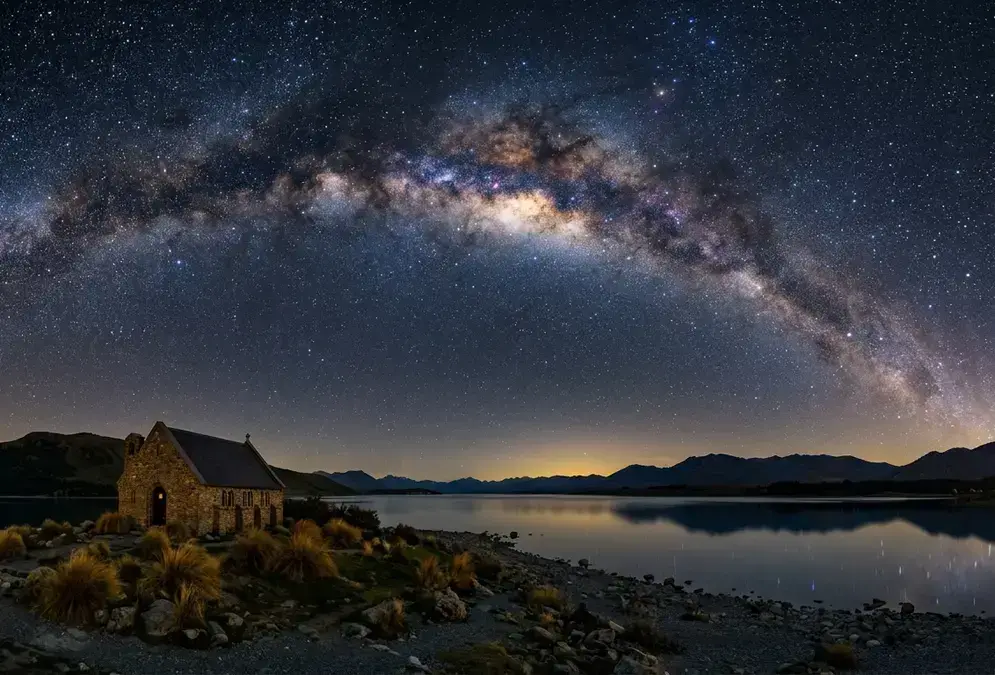

What you're actually signing up for
Lake Tekapo is a small township on the shore of a glacial lake in the Mackenzie Basin, on New Zealand's South Island. Reaching it takes real commitment: a long-haul flight into Auckland or Christchurch, then either a domestic connection or a three-hour drive from Christchurch via State Highway 1 and State Highway 8, or roughly two hours from Queenstown over the Lindis Pass[1]. There's no train and no meaningful public transport into the basin. Rent a car, or you're stuck wherever a shuttle drops you.
What you get in exchange is one of only four Gold Tier International Dark Sky Reserves on the planet, alongside NamibRand in Namibia, Kerry in Ireland, and Central Idaho in the US, the highest classification the International Dark-Sky Association awards, granted in November 2013 to a reserve that was, at its June 2012 designation, already the largest dark-sky reserve in the world[2]. Gold Tier isn't a label the local tourism board bought. It tracks measured sky darkness, and this basin has kept it since.
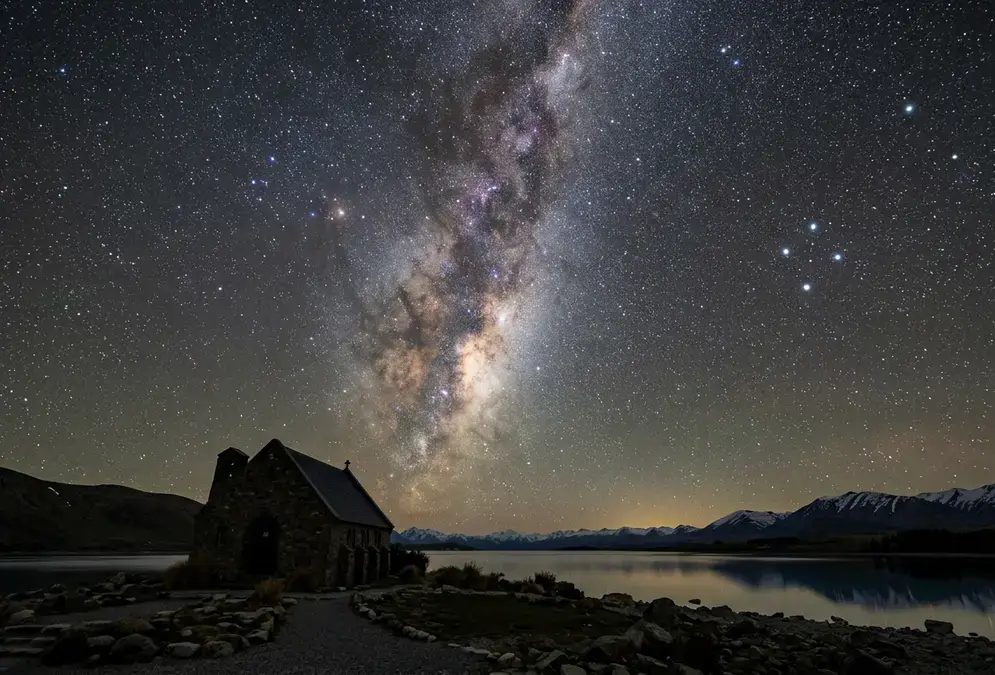
Featured · Destination
Aoraki Mackenzie Stargazing
Aoraki Mackenzie is one of only four Gold Tier Dark Sky Reserves on Earth: Bortle 2 skies over Lake Tekapo, the Southern Cross, and Mount John Observatory tour.
Then there's the part no calendar fixes. Cloud cover regularly forces Dark Sky Project to cancel or reschedule Summit Experience tours at Mount John Observatory, and a full moon washes out the same fine detail here as it would anywhere else. Book one night at Aoraki Mackenzie and you're gambling on a single roll of weather, not locking in a guaranteed view. For the basics of the reserve itself, from access to accommodation, see the full Gold Tier reserve guide.
The skies: what actually separates Aoraki Mackenzie
This reserve's sky rates Bortle Class 2 on the nine-level Bortle Dark-Sky Scale[3], a genuinely dark site where the unaided eye resolves detail most travelers have never seen. The number alone undersells what's different about looking up here, though. This is the Southern Hemisphere, and several things are up there that never clear the horizon north of the equator.
- The Large Magellanic Cloud, a companion galaxy roughly 170,000 light years away, bright enough to see with the naked eye
- The Small Magellanic Cloud, its smaller companion, visible year-round from the reserve
- The Southern Cross (Crux), the sky's most recognized shape, circumpolar here and up on every night of the year
- Omega Centauri, the sky's most striking globular cluster, a spherical mass that resolves into individual points through even a modest telescope
The Large Magellanic Cloud alone holds an estimated 10 billion stars, and Omega Centauri packs roughly 100,000 into its cluster; from Aoraki Mackenzie during the New Zealand winter, the galactic core itself climbs directly overhead rather than skimming the horizon the way it does from Northern Hemisphere latitudes[4]. You're not craning toward a horizon glow. You're looking straight up into the densest part of our own galaxy, and that's the one experience genuinely worth crossing the world for. It's also why this reserve sits in a short list of its own among the best dark sky parks in the world[2].
10 billion
The landscape: more than one reason to go
Aoraki Mackenzie works as a trip even for someone who isn't chasing the Milky Way specifically, because the daytime landscape here holds its own. The Hooker Valley Track, the region's signature walk, covers 10 km round trip in 3 to 4 hours, crossing three swing bridges and passing Mueller and Hooker Lakes on a gentle, well-maintained path toward Aoraki/Mount Cook itself[5]. Check the Department of Conservation's track status before you go, since sections beyond the swing bridges have been closed for erosion repair, with a replacement bridge not expected until later in the year[5].
Lake Tekapo and Lake Pukaki, both turquoise from glacial rock flour, sit roughly 30 minutes apart and work as a single day out: Pukaki for the postcard view of Aoraki/Mount Cook from Peter's Lookout, Tekapo for restaurants, accommodation, and the Church of the Good Shepherd[6], the stone chapel that ends up in nearly every Milky Way photograph taken here. Visit it in daylight for the mountain backdrop, then come back after dark for the shot it's actually known for.
After a day on the trail, Tekapo Springs keeps its pools between 36.5 and 38 degrees Celsius[7], filled from an underground source rather than true geothermal wells. It's a genuinely good way to end a long hiking day before a night of stargazing, not after one.
The real costs and friction points
Price is the honest objection most people raise before they raise the travel time. Dark Sky Project's flagship Summit Experience at Mount John Observatory runs $219 NZD per adult and $169 NZD per child (ages 10 and up), a 1-hour-45-minute session inside the observatory dome using a 16-inch telescope[8]. Book well ahead; popular new-moon dates sell out.
Accommodation spans a real range across the cluster. Distinction Mackenzie Country Hotel in Twizel is the budget entry point at roughly $204 NZD a night[9]; Galaxy Boutique Hotel, the only property with a skylight built directly above the bed, starts around NZD 380 to 655 a night (roughly USD 230 to 400-plus) for its Deluxe Lake View rooms[10]; and Lake Tekapo Lodge runs NZD 255 to 360-plus depending on room and season[11]. For the full breakdown across all five properties in the reserve, Best Places to Stay for Stargazing in Aoraki Mackenzie is worth reading before you book, since location and included extras vary more than the sky quality does.
| Accommodation tier | Example property | Typical rate |
|---|---|---|
| Budget | Distinction Mackenzie Country Hotel | ~$204 NZD/night |
| Sky feature | Galaxy Boutique Hotel | ~NZD 380-655+/night |
| Group / family | Lake Tekapo Lodge | NZD 255-360+/night |
| Alpine isolation | The Hermitage Hotel | USD 330-450+/night |
Add the long-haul flight itself, and a genuinely thorough trip, two or three nights, the Summit Experience, a mid-tier room, adds up faster than a short-haul dark-sky weekend closer to home. None of that makes it a bad trip. It makes it a trip worth planning on purpose rather than booking on a whim.
Who Aoraki Mackenzie suits, and who it doesn't
This reserve delivers best for a specific traveler: someone who wants a genuinely different sky than anything visible from home, cares enough about the Magellanic Clouds and an overhead galactic core to plan around the new-moon window, and treats the long-haul flight as part of the trip rather than an obstacle to it. For that person, Aoraki Mackenzie is one of the most accessible Gold Tier skies in the world, with a working public observatory and organized tours built into the destination itself.
It also works well for general South Island travelers who want stargazing as one strong component of a bigger itinerary rather than the entire reason for the trip. Pair a clear night at Mount John Observatory with the Hooker Valley Track the next morning, and even a cloud-cancelled evening won't feel like a wasted visit.
Recommended tours
Tours are selected for quality, not commission. I earn a small fee if you book — at no extra cost to you.
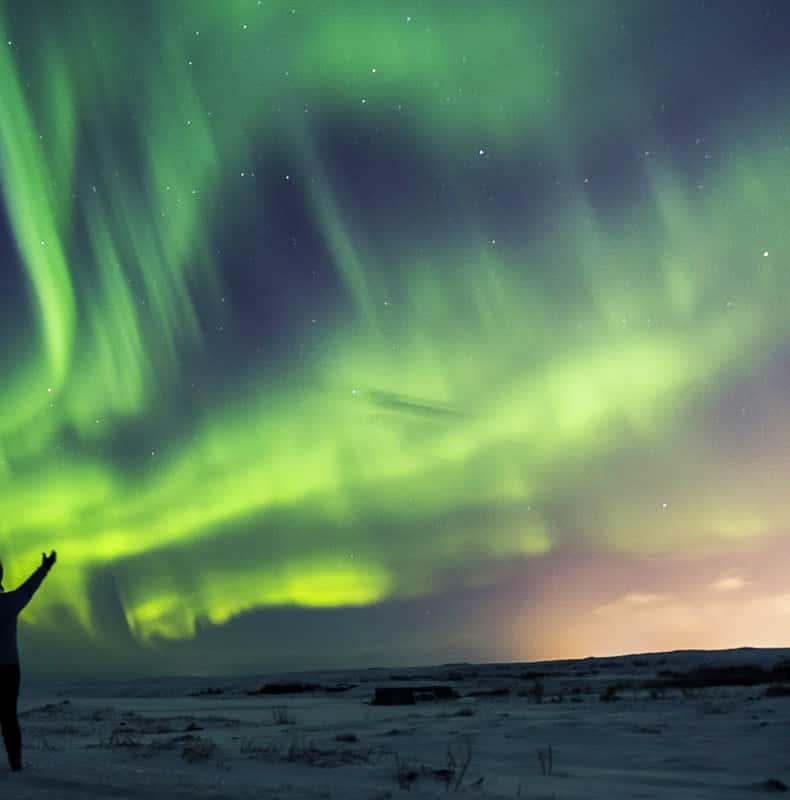
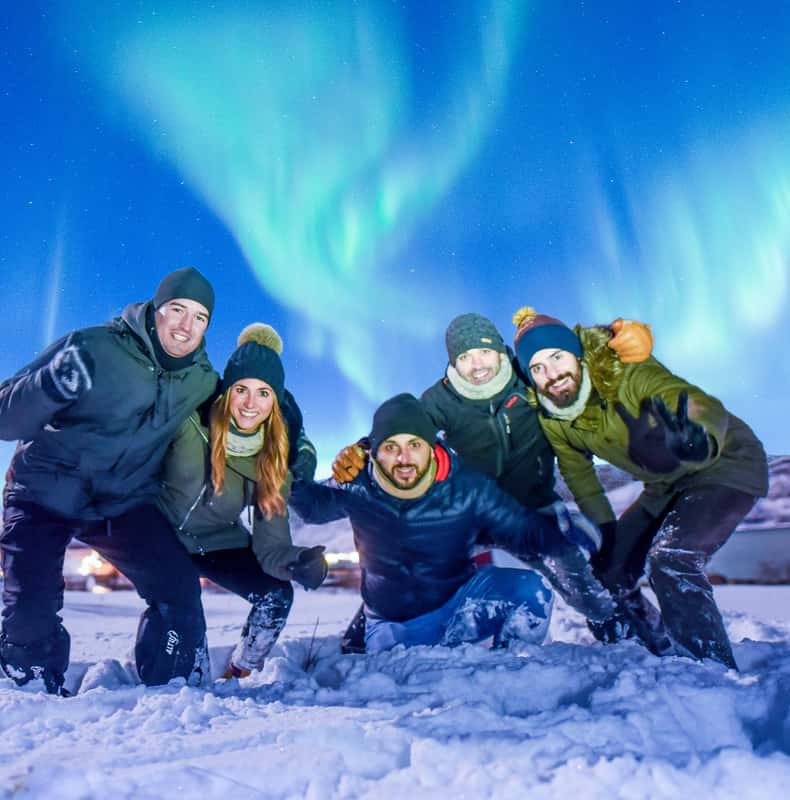
Who should think harder before booking: anyone chasing the aurora specifically. Aoraki Mackenzie sits too far north on the South Island for reliable aurora sightings; this reserve is Milky Way and southern-sky territory, not an aurora destination, and confusing the two leads to disappointment regardless of season. Budget travelers weighing a short-haul dark-sky weekend against a long-haul flight to New Zealand should think it through honestly too, and so should anyone unwilling to build a second or third night into the schedule against the odds of a cloudy sky.
Compared with Atacama, the other major Southern Hemisphere dark-sky cluster, the choice comes down to landscape as much as sky. Atacama is a bone-dry, high-altitude desert with observatory-grade infrastructure; Aoraki Mackenzie is alpine lake country that never lost its dark sky to development, with turquoise lakes and glacier hikes standing in for Atacama's geysers and salt flats. Neither is a lesser version of the other.
The verdict on Aoraki Mackenzie
Aoraki Mackenzie is worth it for the traveler who plans around the two variables that actually decide the trip: the new-moon window and the season. Align your dates with New Zealand's winter for the darkest, driest nights and an overhead galactic core, or accept summer's shorter darkness in exchange for easier travel and milder nights. Either way, check the best time for stargazing at Aoraki Mackenzie before you book flights, not after.
What you get in return is a sky most Northern Hemisphere travelers never see: the Magellanic Clouds as naked-eye galaxies, a circumpolar Southern Cross, and a galactic core directly overhead instead of skimming the horizon. That's not a marginally better version of a dark-sky trip closer to home. It's a genuinely different category of night sky, in a genuinely different hemisphere.
The cost is real, the flight is long, and the weather will cancel more nights than you'd like. But book two or three nights instead of one, plan around the moon rather than the calendar month alone, and Aoraki Mackenzie earns the trip most travelers only half-commit to planning for.