What Happened to Roald Amundsen After Tromsø?
On 18 June 1928 Roald Amundsen flew out of Tromsø to rescue Italia survivors and vanished into the Barents Sea. What was found, and where Tromsø remembers him.
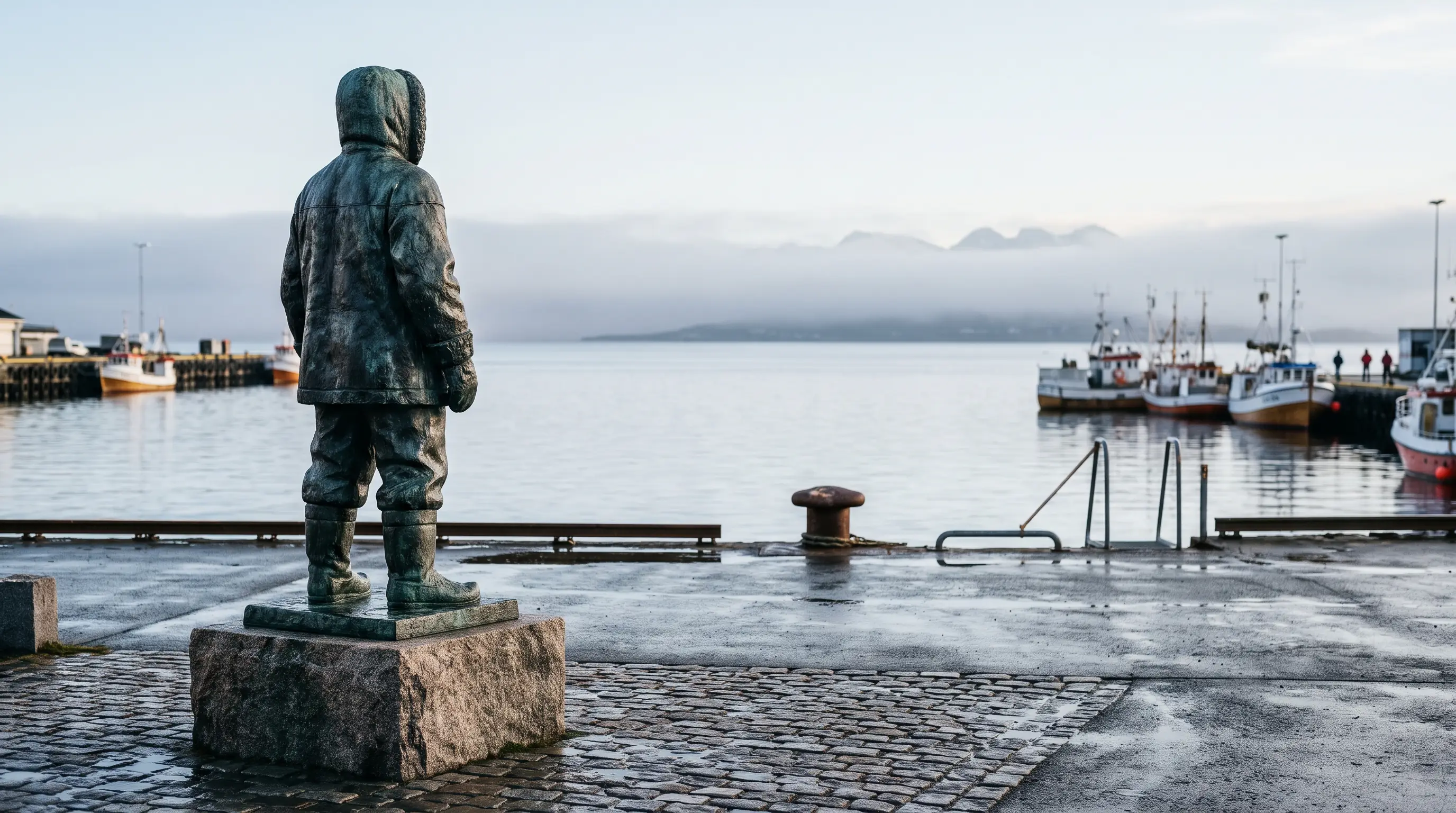
Amundsen left Tromsø at about 4 pm on 18 June 1928; no trace of any of the six men aboard was ever found.
- Seabed ruled out in 2009
- 35 sq miles
- Cleared by the 2009 search; where the plane lies is still unknown[6]
- Amundsen statue unveiled
- 16 July 1937
- Bronze statue unveiled by Helmer Hanssen on Amundsen's 65th birthday[7]
In this article
Jump to a section
Why Amundsen went after the Italia's survivors
Six men and an unfinished prototype
Six men took off that afternoon[1][2]:
- Roald Amundsen, the explorer
- Leif Dietrichson, Norwegian pilot
- René Guilbaud, French pilot[15]
- Albert Cavelier de Cuverville, French
- Gilbert Brazy, French
- Emile Valette, French
Featured · Destination
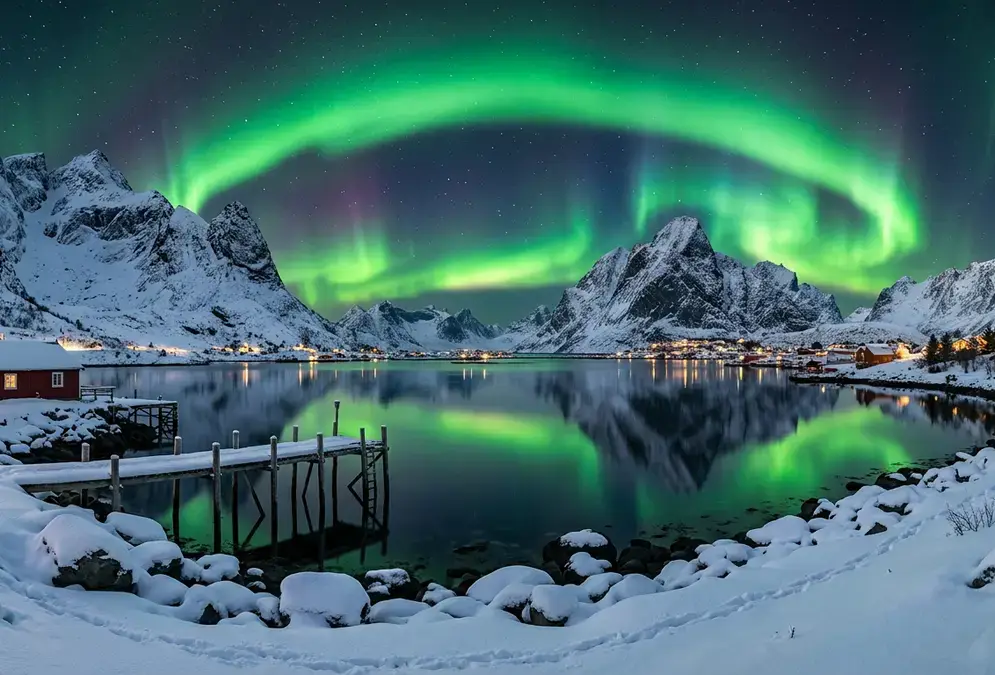
Northern Lights in Tromsø
At 69.6°N inside the auroral oval, Tromsø sees aurora at Kp 2. Peak season November–February. Best viewing spots, tour advice, and aurora forecast strategy.
What the sea gave back
The 2009 search ruled out 35 square miles of seabed
- 18 Jun 1928
Latham 47 leaves Tromsø
Six men fly out to aid the Italia survivors[1]
- 31 Aug 1928
Port float found
The torn-off float turns up off the coast of Troms[21]
- Oct 1928
Fuel tank found
A large gasoline tank is found on Haltenbanken[21]
- 1933
Fisherman's snag
A hooked object, possibly wreckage, escapes when the line breaks[26]
- 18 Jun 1934
Latham plaque unveiled
Le Temps editor J. Chatenet unveils it in Tromsø[30]
- 16 Jul 1937
Amundsen statue unveiled
Helmer Hanssen unveils the bronze[7]
- 2009
Hugin search
35 square miles of seabed ruled out[6]
Where Tromsø keeps Amundsen today
Recommended tours
Tours are selected for quality, not commission. I earn a small fee if you book — at no extra cost to you.


Fitting Amundsen into a Tromsø trip
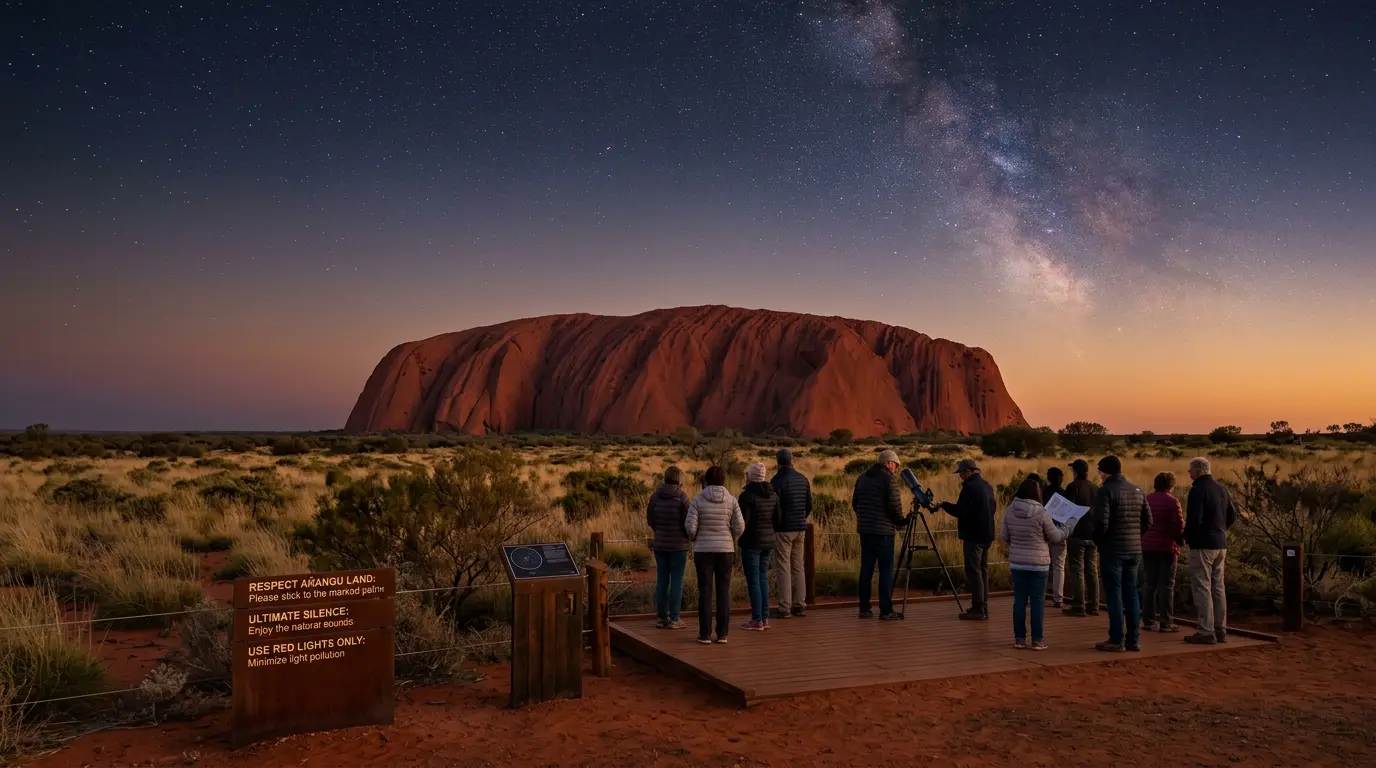
Featured · Article
Uluru Cultural Significance and Visitor Etiquette
Uluru is Anangu land under joint management. Here's why the 2019 climb closure is settled policy, what you can't photograph, and real visitor etiquette.
Frequently asked questions
What is known about Roald Amundsen's disappearance after he left Tromsø?
Was Roald Amundsen's body ever found?
What happened to the Latham 47 that Amundsen flew?
Why did Amundsen fly to rescue Umberto Nobile's crew despite their feud?
Where is the Amundsen statue in Tromsø?
Is there a memorial to the Latham 47 crew in Tromsø?
Sources
40 references Show Hide
- cambridge.org (opens in a new tab)
“On 18 June 1928, Roald Amundsen and a team of five men (René Guilbaud, Leif Dietrichson, Albert Cavelier de Cuverville, Gilbert Brazy and Emile Valette) flew in a French Latham 47 prototype aeroplane from Tromsø, Norway, to aid in the rescue of survivors of the crashed airship Italia.”
- dawn.com (opens in a new tab)
“On June 18, 1928 around 4pm, Amundsen, Norwegian pilot Leif Dietrichson and four French nationals took off from the northern Norwegian town of Tromsoe.”
- coolantarctica.com (opens in a new tab)
“the overloaded aircraft took off into bright sunlight and was described by a fisherman as heading into a bank of fog, climbing to try and fly over it, this was the last anyone ever saw of the aircraft or the men on board.”
- coolantarctica.com (opens in a new tab)
“No trace of the crews' remains were ever found.”
- polarlitteratur.no (opens in a new tab)
“Senere fant man to bensintanker – en på Trøndelagkysten og en i Steinsfjorden i Vesterålen.”
- nationalgeographic.com — The amundsen mystery remains (opens in a new tab)
“"We can say definitively that the aircraft is not within these 35 square miles of ocean, but we cannot say where it is," McCallum blogged on the expedition website”
- lokalhistoriewiki.no (opens in a new tab)
“Roald Amundsenstatuen, utført i bronse, ble avduket den 16. juli 1937 av Helmer Hanssen.”
- smithsonianmag.com (opens in a new tab)
“The Italia was just the second vessel ever to reach the North Pole; another Italian-built, Norwegian-owned airship, the Norge, had made the trip two years earlier, also under Nobile’s care.”
- snl.no (opens in a new tab)
“Seks av mannskapet var da i ballongkjølen og forsvant med ballongen. Av de ti på isen var mekanikeren Pomella død.”
- snl.no (opens in a new tab)
“Etter den siste peilingen de fikk tatt var de omkring 70 km nordøst for Nordaustlandet på Svalbard.”
- smithsonianmag.com (opens in a new tab)
“Roald Amundsen was just sitting down to eat at a banquet in Oslo, intended to honor two other pioneering Arctic aviators, when a message arrived from Spitsbergen: the crew of the Italia was in distress.”
- smithsonianmag.com (opens in a new tab)
“Tell them at once,” he said, “that I am ready to start instantly.””
- frammuseum.no (opens in a new tab)
“Amundsen had not reckoned on the fact that the airship and Italian colonel Nobile would receive so much attention, and this caused dissension between the two.”
- dawn.com (opens in a new tab)
“For the unprecedented international rescue effort, the French government made available to Amundsen a twin-engine Latham 47 - at the time an ultra-modern aircraft.”
- Wikipedia (opens in a new tab)
“The aircraft, piloted by Norwegian Leif Dietrichson and Frenchman René Guilbaud, picked up the explorer Roald Amundsen and a colleague at Bergen.”
- en.uit.no (opens in a new tab)
“With its location far to the north, Tromsø has served as the gateway to the Arctic for adventurers, hunters and researchers.”
- lokalhistoriewiki.no (opens in a new tab)
“Det var på skipsverftet her han fant «Gjøa». Det var her han hadde sin gode venn apoteker Zapffe, som hjalp ham med kontakter og mannskap, bl.a. Helmer Hanssen.”
- Wikipedia (opens in a new tab)
“The Type 47 was a large biplane powered by two Farman 12We engines mounted in tandem below the upper wing.”
- thenationalnews.com (opens in a new tab)
“The Latham 47 was built primarily of wood on a steel frame.”
- cambridge.org (opens in a new tab)
“the decision to employ for an Arctic relief mission a prototype aeroplane which had not completed its flight tests”
- Wikipedia (opens in a new tab)
“on 31 August the same year, the torn-off port float was found off the coast of Troms and, in October, a large gasoline tank was found on Haltenbanken.”
- cambridge.org (opens in a new tab)
“The party disappeared nearly without trace into the Barents Sea.”
- coolantarctica.com (opens in a new tab)
“The tank is on display in the Polar Museum in Tromso.”
- coolantarctica.com (opens in a new tab)
“One of the fuel tanks from the flying boat was found at sea some time later, it was considered by experts to have been converted into a makeshift float.”
- dawn.com (opens in a new tab)
“Someone used a knife and a large hammer on the tank. This proves that someone survived but they were not properly equipped to survive in water.”
- dawn.com (opens in a new tab)
“In 1933, a fisherman hooked an object that may have been a piece of the Latham's wreckage, according to experts, but his line broke, leaving the enigma intact.”
- thenationalnews.com (opens in a new tab)
“Two ships and a newly modified, unmanned submarine, the Hugin 1000, will be used to scan 114 square kilometres of seabed in the search for the plane.”
- thenationalnews.com (opens in a new tab)
“"It is one of the remaining unsolved mysteries in our time," the Royal Norwegian Navy said in a statement.”
- nationalgeographic.com — The amundsen mystery remains (opens in a new tab)
“McCallum believes that the plane is either in a different area of the sea or has been destroyed by industrial fishing activity over the years.”
- lokalhistoriewiki.no (opens in a new tab)
“Avdukingen av minneplaten fant sted 6 år etter ulykken, 18. juni 1934, og ble foretatt av avisens sjefredaktør, J. Chatenet.”
- visittromso.no (opens in a new tab)
“The Amundsen Monument was erected in 1937 by Helmer Hanssen, one of Roald Amundsen's expedition team members.”
- visittromso.no (opens in a new tab)
“Amundsen used to live with the Zapffe family when he was in Tromsø before going on his major expeditions.”
- visittromso.no (opens in a new tab)
“The Polar Museum in Tromsø: Exhibits related to the history of Tromsø city and the Arctic, the stories of trappers such as Henry Rudi and Wanny Woldstad, the expeditions of Roald Amundsen and Fridtjof Nansen and Svalbard's cultural history.”
- en.uit.no (opens in a new tab)
“The Polar Museum is one of the four exhibition arenas that constitute the Arctic University Museum of Norway.”
- visittromso.no (opens in a new tab)
“The commemorative plaque is a gift from the French newspaper "Le Temps".”
- thisdayinaviation.com (opens in a new tab)
“The Latham 47 had a maximum speed of 170 kilometers per hour (106 miles per hour). Its ceiling was 4,000 meters (13,123 feet), and its range was 900 kilometers (559 miles).”
- cambridge.org (opens in a new tab)
“in deciding to disregard warnings and fly this aeroplane unaccompanied over the Barents Sea, Amundsen took a significant risk that led to his death and those of his crew.”
- nationalgeographic.com — The amundsen mystery remains (opens in a new tab)
“The expedition focused on a small search area about 20 miles northwest of Bear Island, near where Amundsen's plane is thought to have gone down.”
- nationalgeographic.com — Search begins for explorer (opens in a new tab)
“the search for the aircraft begins again as New Zealander explorer Rob McCallum and his team set out to find the lost plane.”
- nationalgeographic.com — Search begins for explorer (opens in a new tab)
“The catch," McCallum said, "is that the search area has been defined by utilizing the only clues available." Those clues include the surfaced wing float and fuel tank, as well as a shiny object a fisherman almost reeled in in 1933”