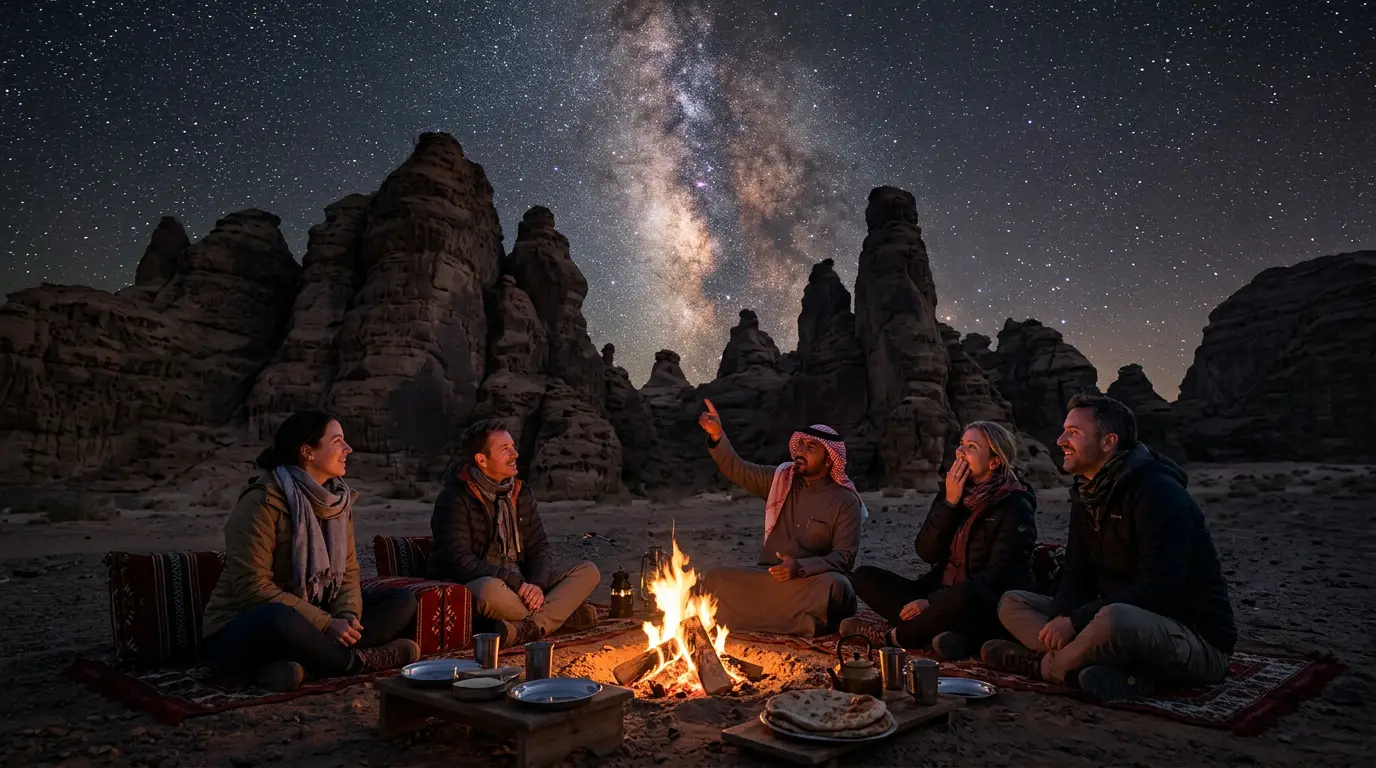

What is the best month to go stargazing in AlUla?
Ask "when's the best time to stargaze in AlUla" and you'll actually get two different answers. They don't contradict each other so much as measure two different things, and mixing them up is the easiest way to book the wrong week.
The destination-wide cool season runs October through April, and it's a heat call more than a sky call: AlUla's skies stay largely clear most nights of the year regardless of the month, so the season protects your daytime comfort at Hegra and Jabal Ikmah rather than chasing a clearer patch of atmosphere. For the month-by-month breakdown, including exactly how hot June gets against how comfortable January feels, see which months give AlUla its clearest skies.
The Stargazing at Gharameel tour, AlUla's flagship guided experience, keeps its own current booking calendar rather than running year-round on a fixed schedule, and it's worth confirming availability directly before building a trip around a specific month; tour operators adjust seasonal listings more often than a fixed climate pattern changes.
| Window | Dates | What it reflects |
|---|---|---|
| Destination-wide cool season | October-April | Heat comfort for daytime heritage touring; skies stay clear most of the year regardless |
| Gharameel tour's current booking calendar | Confirm directly with operator | One operator's live listing, not a claim about sky darkness |
| Peak summer | June-August | Hottest, least comfortable stretch for daytime touring; skies often still clear |
Do you need a tour to go stargazing in AlUla?
Yes, practically speaking. AlUla's flagship stargazing site, the AlGharameel Nature Reserve, has no independent access route documented anywhere official: the only way in is a guided 4x4 transfer from a designated pickup point, and the tour runs to its own group-minimum booking policy; confirm the exact pickup point and threshold directly with the operator[1]. There's no marked self-drive alternative described anywhere official.
Booking works a little differently than most stargazing tours because of that group-minimum policy. Solo travelers and couples should check current group-fill availability before locking in a date, since a booking below the threshold may need to wait on other guests joining the same night. Book directly through the Gharameel evening session, or start with the wider AlUla Stargazing destination guide for lodging and heritage-site logistics around the same trip.
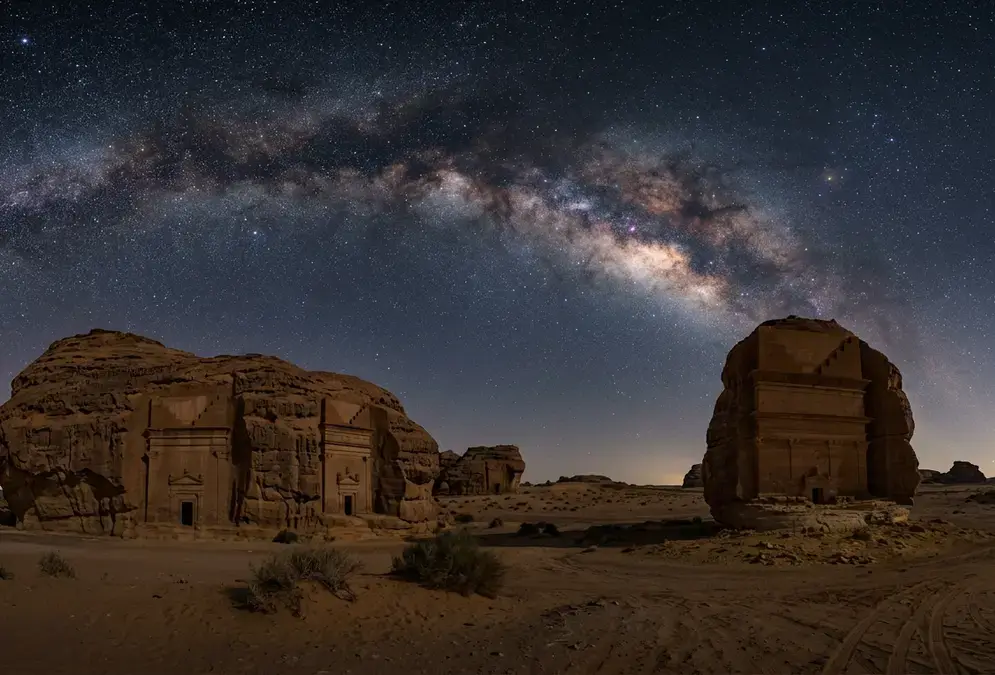
Featured · Destination
AlUla Stargazing
Stargaze above Hegra's 2,000-year-old Nabataean tombs in AlUla, the Gulf's first DarkSky-accredited Dark Sky Park. When to go, where to stay, and how to plan.
Is stargazing in AlUla safe?
Frame this one around guided-tour safety norms, not broad political or crime-risk claims, which this FAQ isn't positioned to make. Gharameel's remoteness is the whole point of the experience, and it comes with a genuine practical trade-off: mobile phones may have no reception at the site once you're out there[1], so you're relying on your guide and the vehicle you arrived in for anything that isn't already sorted before you leave the pickup point.
That no-signal reality is exactly why AlUla's official program runs guided rather than self-drive: a bilingual guide working the desert regularly, a vetted 4x4 operator, and a fixed pickup and return point remove most of the risk an unguided visitor would be taking on alone. AlUla itself carries an added layer of protection worth knowing: DarkSky International designated the region's stargazing zones, including Gharameel, as the Middle East's first International Dark Sky Park in late 2024[2], a status that comes with lighting and conservation standards most casual desert visits never touch. For the broader safety and entry-requirements layer, official government travel-advisory sources are the right place to check, not a stargazing FAQ.
Is AlUla stargazing suitable for families and children?
Gharameel's current booking policy sets its own minimum age for children, alongside the same group-minimum policy covered above; confirm the exact figure directly with the operator before booking. Treat both as current operator policy rather than a permanent rule; RCU has adjusted desert-experience logistics before as AlUla's astro-tourism program develops, so confirm directly if you're booking with younger children or a smaller group.
Within that minimum, the experience itself suits families reasonably well. It's a naked-eye program built around a guide's storytelling and a campfire dinner, not a technical astronomy session requiring steady hands on a telescope. Families comfortable with an evening desert excursion and a fixed group-size requirement are the target audience here; those hoping for a flexible, book-for-two-tonight option should check current availability first.
What should you wear for stargazing in the AlUla desert?
There's no officially published packing list for the Gharameel tour, but the shape of the evening tells you most of what you need: pack for the desert night as much as the daytime heat.
Sturdy, closed footwear and layers you can add as the sun goes down cover the basics for any guided desert excursion after dark. Pack warm layers for after sunset on top of whatever you wore for daytime touring, since temperatures drop fast once the light goes, and confirm any specific gear recommendations directly with the operator when you book.
Recommended tours
Tours are selected for quality, not commission. I earn a small fee if you book — at no extra cost to you.
Whatever the afternoon felt like, plan for both ends of the same day rather than assuming a warm afternoon means a warm night.
Saudi Arabia's general modest-dress expectations sit on top of that practical layer, and this FAQ won't hand you exact rules on shoulder or knee coverage, since guidance varies and this site isn't the authoritative source for it. Visit Saudi's own travel-planning guidance covers current expectations for visitors, and it's worth checking before you pack, particularly if the same trip includes stops beyond AlUla's desert tours.
Do you need a visa to visit AlUla, Saudi Arabia for stargazing?
AlUla sits inside Saudi Arabia's national e-visa program, and the honest short version is: it exists, it's official, and it covers a meaningful list of nationalities, plus a separate route for travelers who already hold a valid US, UK, or Schengen visa. Exactly how many countries qualify is a number this FAQ won't state, since secondary sources currently cite different counts for the same program, a sign that repeating either number here would go stale the moment the policy shifts.
Passport-validity requirements apply too, so check the current rule before you book flights. visa.visitsaudi.com is the one source worth trusting for current eligibility, passport rules, fees, and stay-length rules, not a travel-blog summary however confident it sounds. For the fuller flights-and-visa picture, including AlUla's own thin international airport schedule, see How to Get to AlUla, Saudi Arabia.