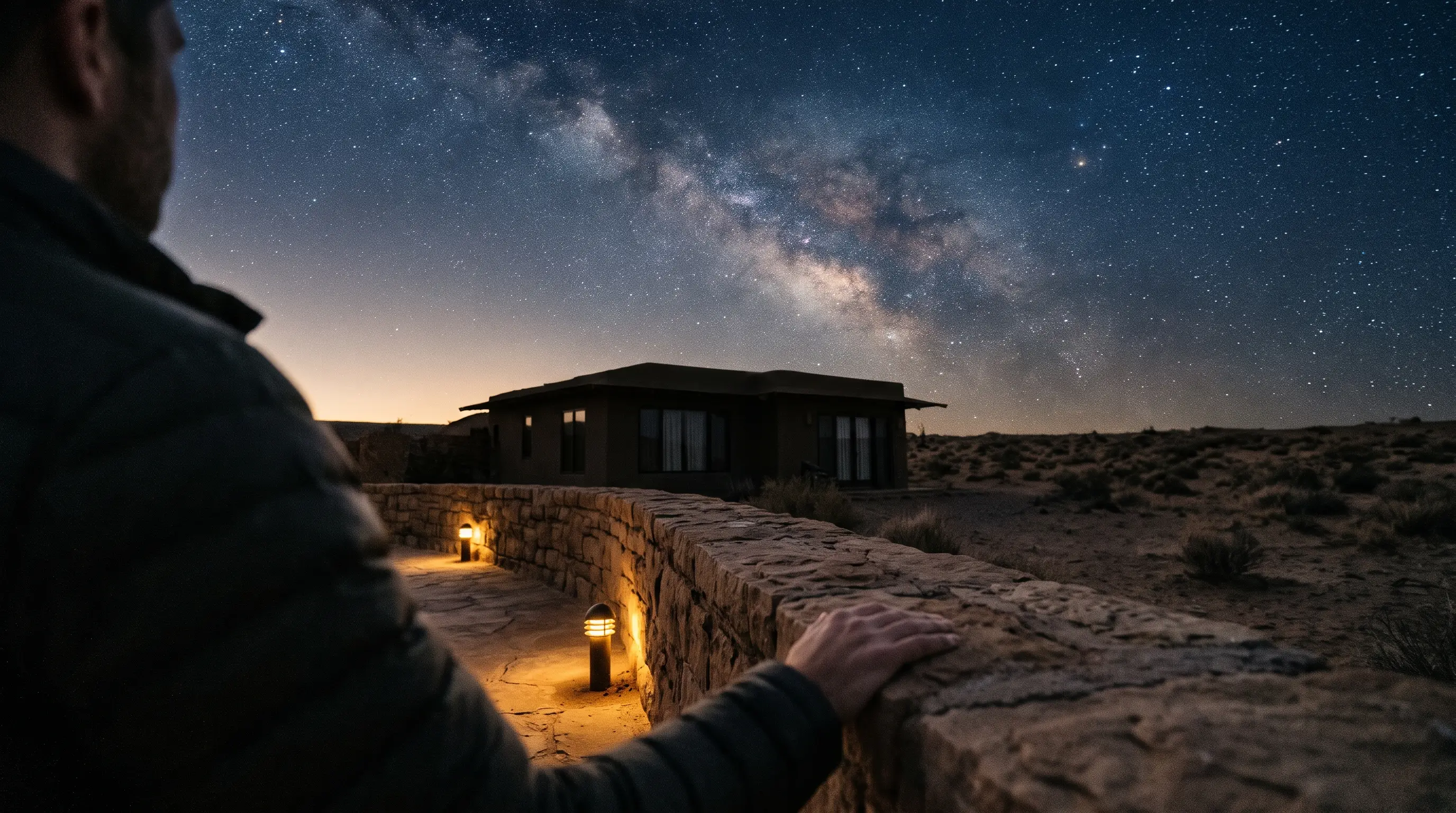
DarkSky's Resort Label Starts at 67% Compliant Lighting
I've seen dark skies firsthand in the Atacama altiplano, Namibia's NamibRand Nature Reserve, and Morocco's Merzouga dunes; every other destination I write about is built from measured Bortle and SQM data, cloud climatology, and primary sources like park services and the International Dark-Sky Association.
- First certified locations
- 2 resorts
- Desert Rock and Nujuma were first to earn the new certification[3]
In this article
Jump to a section
Why resorts got a tier of their own
What a resort has to prove
- Sky quality: a measured reading of at least 20.5 magnitudes per square arcsecond[13], or a location inside a designated International Dark Sky Park or Sanctuary, or in the core of a dark-sky conservation area[14].
- Wildlife: a written list of threatened or vulnerable species nearby that notes which are nocturnal or sensitive to light at night[15], plus mitigation such as removing luminaires, keeping light off sensitive spots or dimming on a timer[16].
- Lighting: a Lighting Management Plan with a retrofit timetable, 67% conforming at the start, 80% by year two and 100% by year five[1][17].
- Guests: safe night-sky viewing for everyone staying[18], and night-sky programmes wherever the resort routinely runs guest activities[19].
What changes on the ground
Featured · Destination
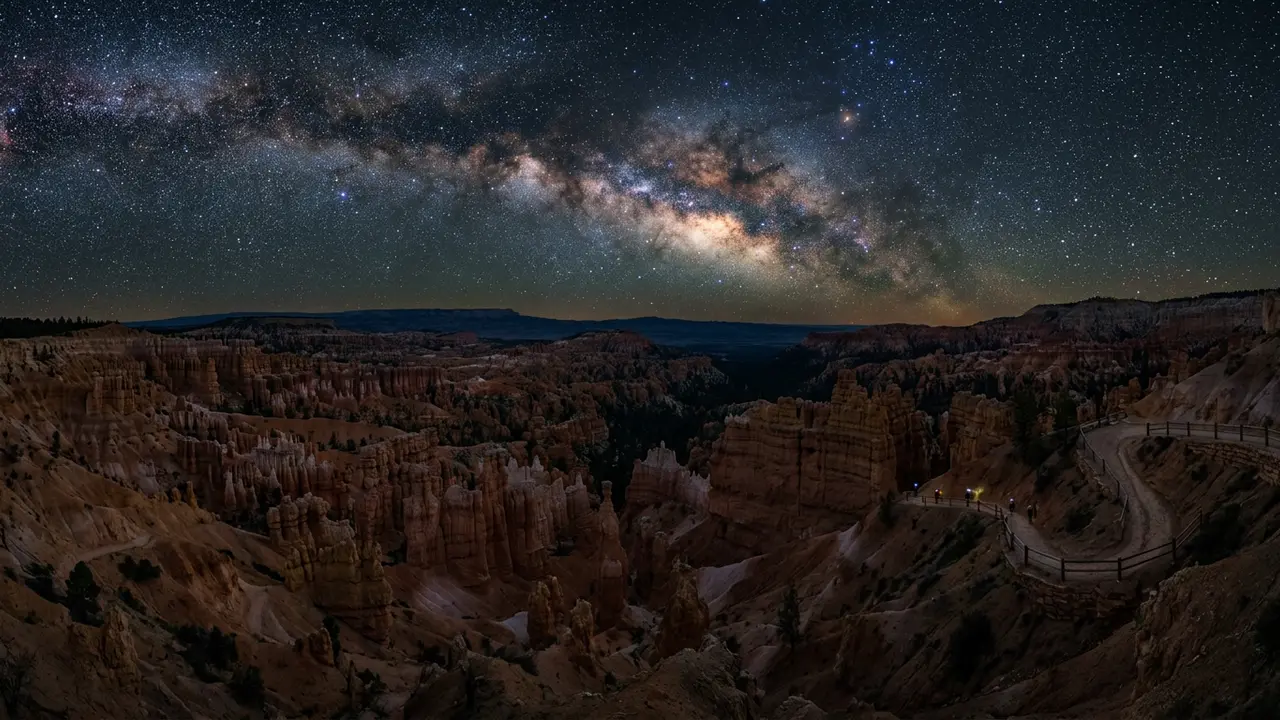
Stargazing in Bryce Canyon National Park
Bryce Canyon earned Gold-Tier Dark Sky Park status in 2019 after 50 years of astronomy programs. Drive in from Vegas or Salt Lake City to see it for yourself.
- Pathway lights: zero uplight, a colour temperature at or below 3000K, and dimmable to 10% of output[22].
- Tree and plant up-lighting: the best practice is none, and the minimum allowance is 200 lumens per tree and no more than 3,000 lumens per acre[23].
- Festoon and string lights in public common areas: 50 lumens per bulb at most[24].
- Glare: luminaires that emit under 5% of their light at or above 80 degrees from nadir[25].
- Windows: interior light controlled with window treatments, and a DarkSky card asking guests to close their curtains at night[26].
How the label is checked and kept
Featured · Article
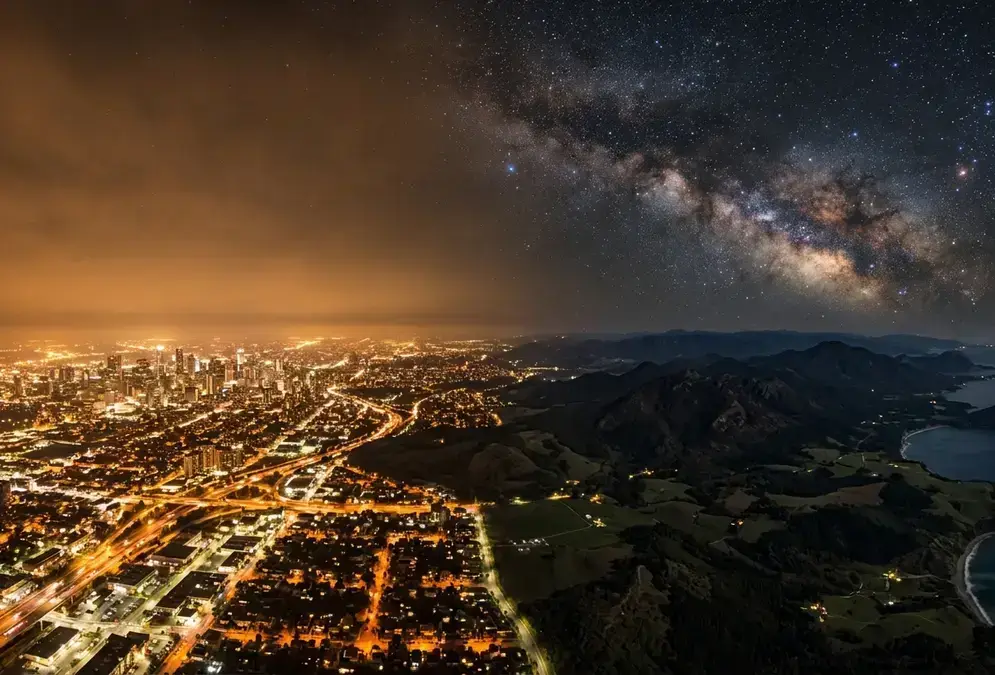
What Is Light Pollution? Definition, Types, and Solutions
Light pollution is artificial light brightening the night sky, affecting 80% of the world. Learn the 4 types, wildlife and health effects, and how to fix it.
How to read the label when you book
Confirm it on DarkSky's own site
- Which tier does it hold, Lodging or Resort?
- What is in its Lighting Management Plan, and what share of the lighting inventory conforms today?
- Was the sky criterion met by a reading or by a designated place nearby?
- Do the night-sky programmes run on your dates, and are they included in the rate?
Recommended tours
Tours are selected for quality, not commission. I earn a small fee if you book — at no extra cost to you.
Frequently asked questions
What does DarkSky approved resort certification require?
Does a DarkSky Approved Resort have to be inside a dark sky park?
Can a resort lose its DarkSky approval?
Sources
33 references Show Hide
- DarkSky International — Resorts guidelines (opens in a new tab)
“At least 67% of the existing lighting inventory shall conform to the LMP at the time the application is submitted.”
- DarkSky International — Darksky international launches the worlds first darksky approved resort certification recognizing red sea globals desert rock and nujuma as the first certified resorts (opens in a new tab)
“Founded in 2023 and expanded to include the Resort certification in 2026”
- DarkSky International — Darksky international launches the worlds first darksky approved resort certification recognizing red sea globals desert rock and nujuma as the first certified resorts (opens in a new tab)
“Desert Rock and Nujuma, a Ritz-Carlton Reserve, at The Red Sea were the first locations to earn the new DarkSky Approved Resort certification under the expanded DarkSky Approved Lodging & Resort program.”
- DarkSky International — Desert rock resort (opens in a new tab)
“Desert Rock is part of The Red Sea, a regenerative tourism destination on the northwest coast of Saudi Arabia.”
- DarkSky International — Lodging (opens in a new tab)
“A resort may include one or more hotels, lodges, cabins, villas, or other types of accommodation.”
- DarkSky International — Darksky international launches the worlds first darksky approved resort certification recognizing red sea globals desert rock and nujuma as the first certified resorts (opens in a new tab)
“DarkSky International recognized that the existing standards did not fully address the operational needs of large-scale resort destinations.”
- DarkSky International — Lodging (opens in a new tab)
“A lodge primarily serves as a base for enjoying the surrounding environment and generally offers an intimate setting with fewer facilities.”
- DarkSky International — Lodging (opens in a new tab)
“Developed in partnership with Under Canvas and Red Sea Global, the DarkSky Lodging & Resort certification program sets a new standard in the travel industry”
- DarkSky International — Darksky international launches the worlds first darksky approved resort certification recognizing red sea globals desert rock and nujuma as the first certified resorts (opens in a new tab)
“Together, we developed resort-specific lighting best practices that recognize the unique needs of larger hospitality destinations while upholding DarkSky’s rigorous standards for protecting the night.”
- DarkSky International — Darksky international launches the worlds first darksky approved resort certification recognizing red sea globals desert rock and nujuma as the first certified resorts (opens in a new tab)
“Red Sea Global is integrating responsible lighting into every stage of development to protect the ecological integrity of the night environment.”
- zawya.com (opens in a new tab)
“RSG now has 15 resorts open across three destinations and will continue expanding DarkSky compliance across its portfolio”
- DarkSky International — Resorts guidelines (opens in a new tab)
“Guests have regular nighttime access, and are provided educational, or outreach materials about night sky conservation.”
- DarkSky International — Resorts guidelines (opens in a new tab)
“The facility must provide evidence of a dark sky reading not lower than 20.5 stellar magnitudes per square arcsecond (mpsas)”
- DarkSky International — Resorts guidelines (opens in a new tab)
“Be located within a currently designated International Dark Sky Park or International Dark Sky Sanctuary, or within the core of an International Dark Sky conservation area.”
- DarkSky International — Resorts guidelines (opens in a new tab)
“List of threatened, endangered, or vulnerable species around the Facility that identifies which are nocturnal or sensitive to human-generated light at night.”
- DarkSky International — Resorts guidelines (opens in a new tab)
“Mitigation measures can include removing unnecessary luminaires, ensuring that light is not falling on sensitive locations, and/or installing controls programmed to dim and/or turn off lighting at designated times.”
- DarkSky International — Resorts guidelines (opens in a new tab)
“The LMP shall describe a schedule wherein 80% of the lighting inventory will conform to the LMP within two years of certification, and 100% within five years.”
- DarkSky International — Resorts guidelines (opens in a new tab)
“The Facility shall provide safe viewing of the night sky or the nighttime environment to all guests.”
- DarkSky International — Resorts guidelines (opens in a new tab)
“The Facility routinely provides programs for guests to attend, these shall include programs related to the night sky and/or nighttime environment.”
- zawya.com (opens in a new tab)
“sea turtle hatchlings, which use the natural brightness of the night sky over the sea to orient themselves toward the ocean”
- DarkSky International — Resorts guidelines (opens in a new tab)
“At its sole discretion, DarkSky may choose not to recognize a facility that meets the criteria but is proposed in a particularly sensitive location.”
- DarkSky International — Resorts guidelines (opens in a new tab)
“Use products with zero uplight. Color temperature <=3000K CCT. Dimmable to 10% of the total light output rating.”
- DarkSky International — Resorts guidelines (opens in a new tab)
“Limited to 200 lumens per tree, never exceeding 3,000 lumen per acre”
- DarkSky International — Resorts guidelines (opens in a new tab)
“Limited to 50 lumens maximum per lamp/bulb.”
- DarkSky International — Resorts guidelines (opens in a new tab)
“This can be achieved by using luminaires that emit less than 5% of their total light emission at or above 80-degrees from nadir.”
- DarkSky International — Resorts guidelines (opens in a new tab)
“Provide guests with a DarkSky educational card asking to close window treatments at night.”
- DarkSky International — Resorts guidelines (opens in a new tab)
“Any light domes present are dim, restricted in extent, and close to the horizon”
- DarkSky International — Resorts guidelines (opens in a new tab)
“DarkSky staff typically takes four to six weeks to complete an initial review and assessment of the application.”
- DarkSky International — Resorts guidelines (opens in a new tab)
“DarkSky or its designated representative will also conduct a site visit as part of the final review process.”
- DarkSky International — Resorts guidelines (opens in a new tab)
“Failure to submit the Annual Report in a timely manner will result in the suspension of the Facility’s DarkSky Approved Resort certification.”
- DarkSky International — Resorts guidelines (opens in a new tab)
“DarkSky will recertify each Facility _every five years_.”
- DarkSky International — Resorts guidelines (opens in a new tab)
“A Resort’s certification may be suspended for up to 12 months, during which time the Resort has a chance to remedy any deficiencies.”
- DarkSky International — Resorts guidelines (opens in a new tab)
“The designation entitles the facility owners to display the DarkSky Approved Resort logo and to promote this distinction in its marketing and outreach collateral.”