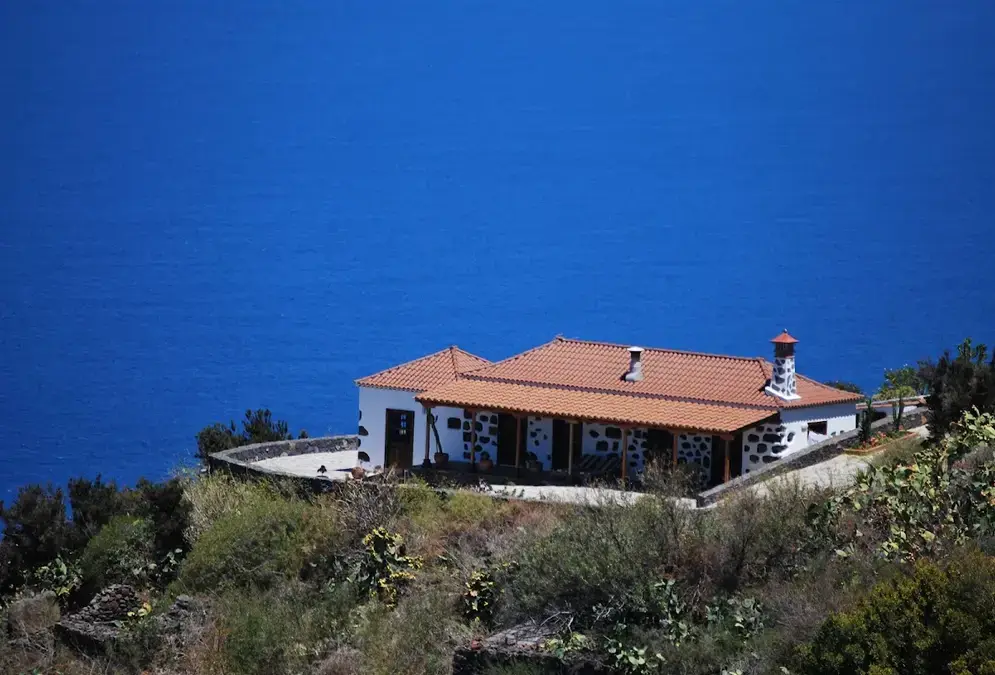
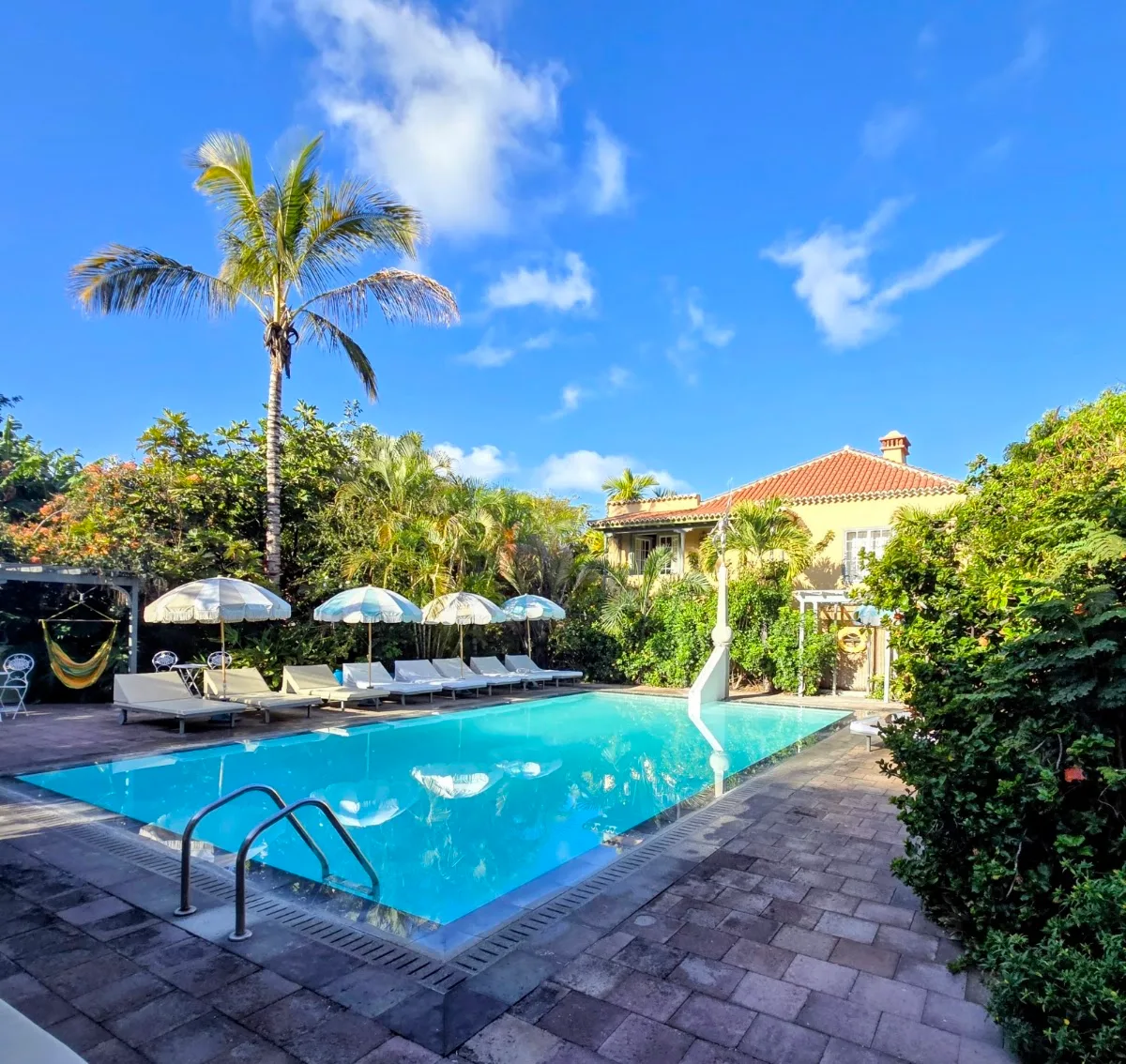
Hotel Hacienda de Abajo occupies a former 17th-century sugar plantation on Tazacorte's seafront, on the western side of La Palma, across the island's volcanic spine from the capital. That geography does real work: Santa Cruz de La Palma's streetlights sit behind the ridge, and a bank of cloud typically settles into the mountains at 1,000–2,000 m, sealing the capital's glow behind a natural barrier most nights of the year. This isn't a mountain refuge built for astronomers. It's a heritage hotel that happens to sit on the correct side of that barrier.
Why the location matters for stargazing
La Palma became the world's first Starlight Reserve in 2012, and the island has protected its skies by law since 1988, when the Ley del Cielo (Sky Quality Law) restricted outdoor lighting to shield the Observatorio del Roque de los Muchachos, home to the Gran Telescopio Canarias, one of the largest single-aperture optical telescopes on Earth. Every town on the island, including Tazacorte, runs on shielded, low-glare street lighting as a result.
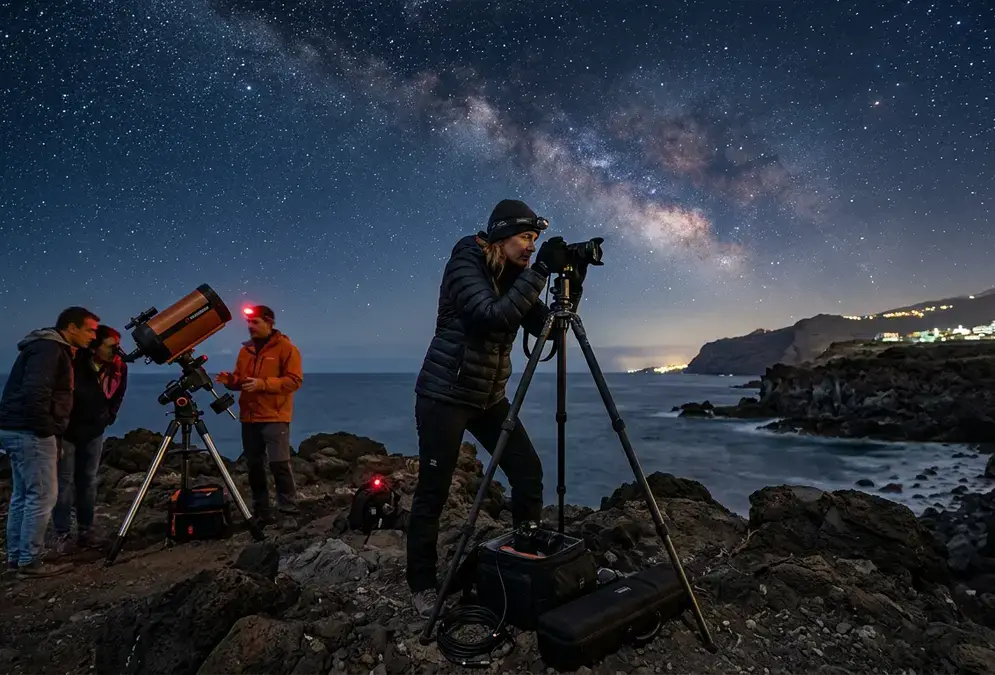
Be honest with yourself about what "hotel stargazing" means here, though. Tazacorte is a working fishing and banana-growing town with its own lights on, and the hotel's courtyard and pool deck sit inside that glow. The cloud inversion blocks the distant light dome from Santa Cruz; it does not turn Tazacorte itself into a dark-sky park. For a genuinely dark sky, the payoff is a short drive up to the coastal headlands above town or inland toward the ridge, where local lighting drops away and the cloud layer sits visibly below you. Compared with La Palma's dark-sky destinations further up the island, this is a comfortable heritage base rather than an observation platform. Plan the drive; don't expect to walk out the door onto Bortle 1 skies.
Where La Palma pulls ahead of its more famous neighbour: Tenerife's Teide skies compete with a far larger resident population and tourist infrastructure closer to the mountain. La Palma's population is a fraction of that, and its Sky Quality Law has three decades more enforcement behind it. Island for island, La Palma's skies are the more consistently dark, even if this particular hotel isn't the darkest spot on it.
Heritage rooms: 32 rooms, four centuries of decor
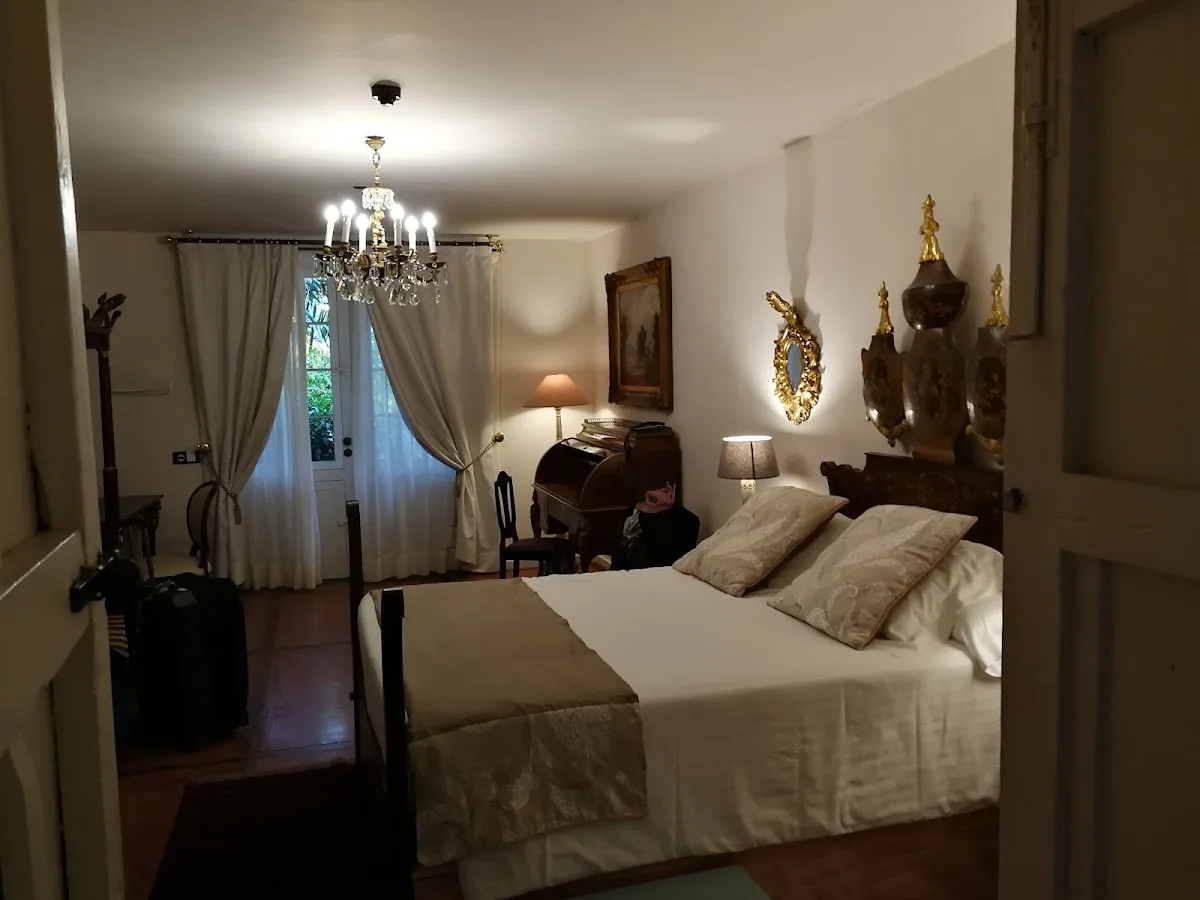
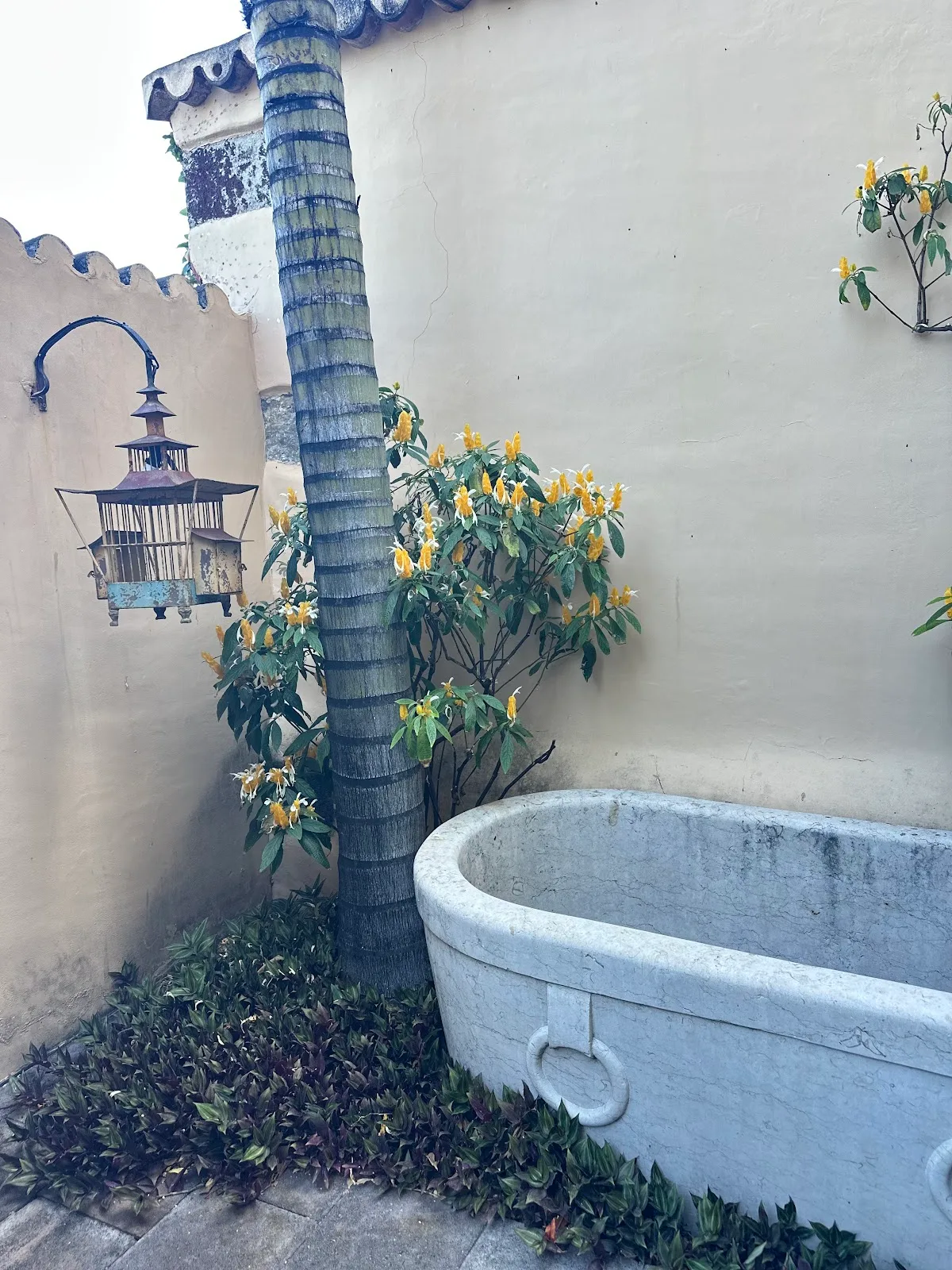
The hotel's other identity, and arguably its stronger one, is as a working heritage house. In 2023 it became the Canary Islands' first hotel to receive the Emblematic Hotel classification, reserved for properties considered integral to regional heritage, and it was named Best Luxury Hotel in the Canary Islands for 2026. Both are earned by the building itself: a 17th-century plantation house with gardens and courtyards, and 32 individually decorated rooms (32–74 m²) furnished with genuine antiques and artwork spanning close to two millennia. No two rooms match. Ask reception which room's decor era you're getting before you book, if that matters to you.
One correction worth making plainly: several booking round-ups and older travel write-ups describe this as a five-star property. It isn't. Major booking platforms consistently list it as four-star luxury, and the distinction matters if you're comparing it against genuine five-star resorts elsewhere in the Canaries. What you're paying for here is heritage and craft, not resort-scale five-star service infrastructure.
Facilities: pool, spa, and a restaurant that isn't trying to be a stargazing venue
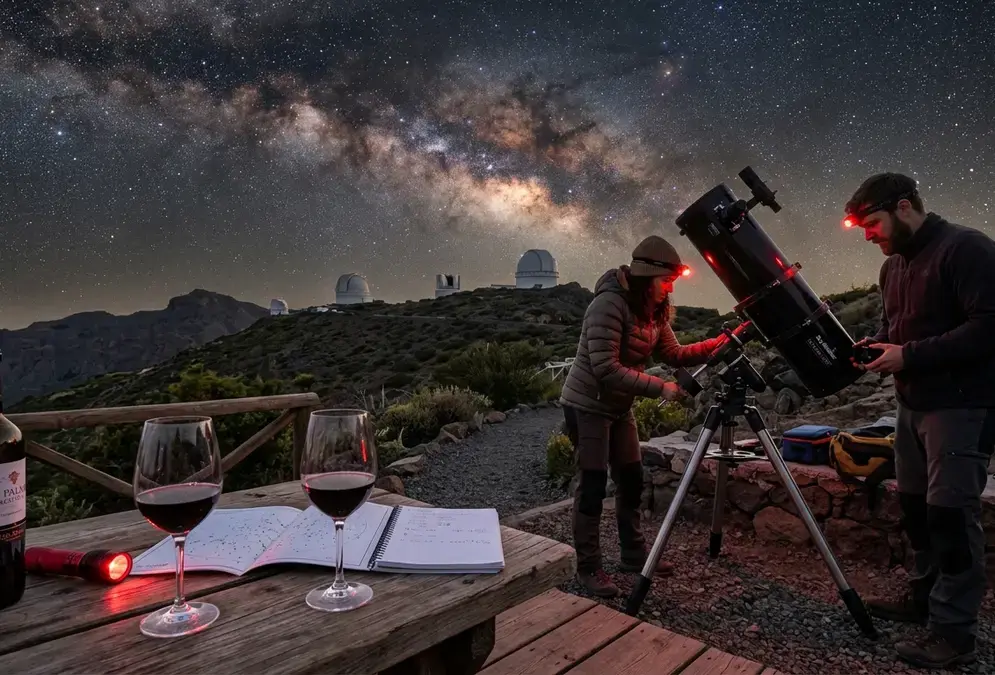
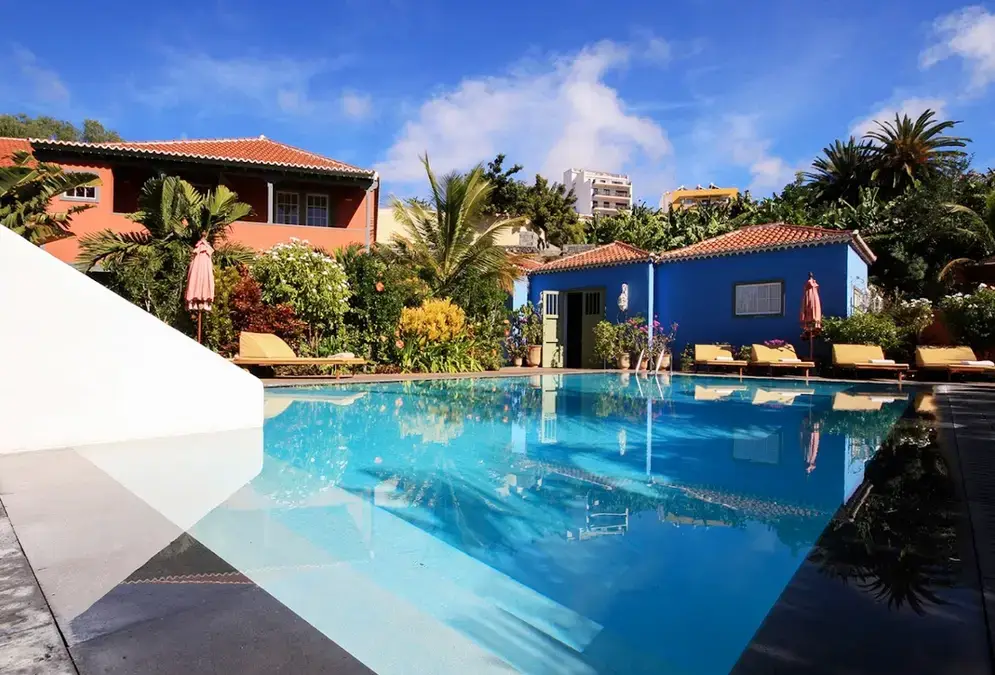
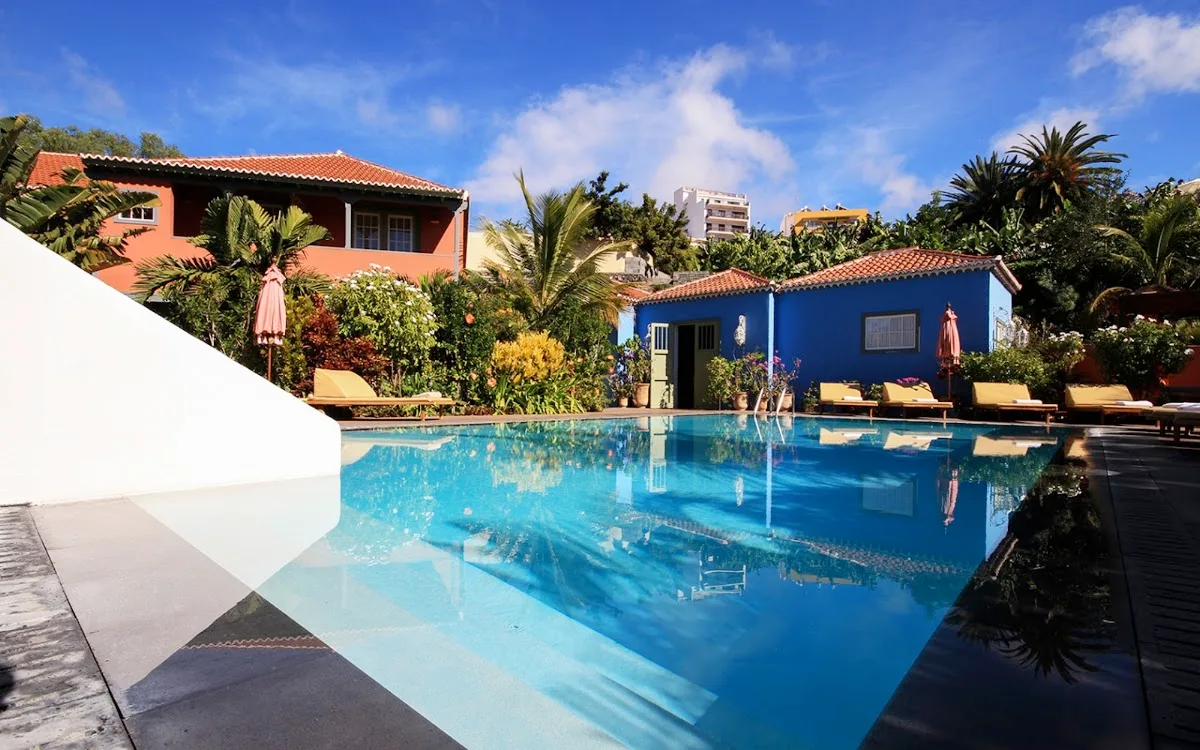
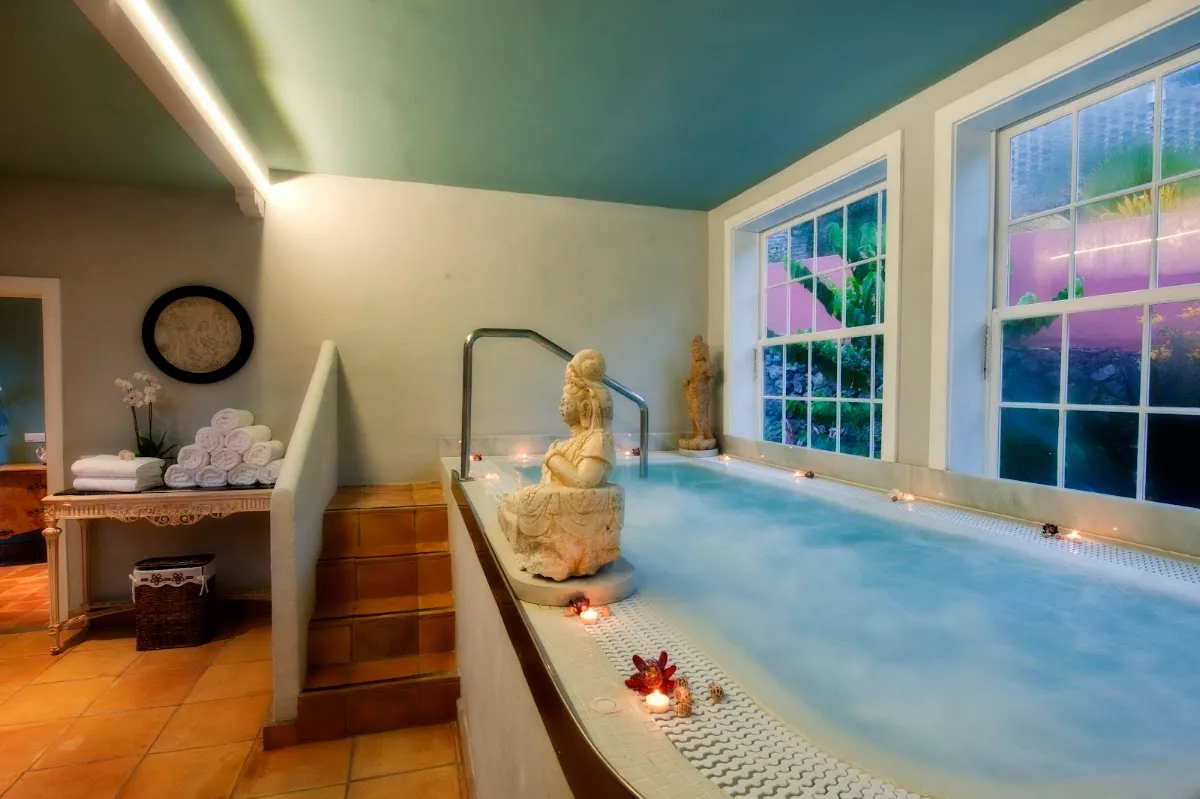
The hotel runs a heated outdoor pool, a full-service spa with jacuzzi, sauna, and whirlpool, a small wellness centre, and an à la carte restaurant serving Canarian and international dishes. None of it is built around astronomy. There's no on-site observatory or telescope programme here, unlike some of the mountain lodges further up La Palma. If a scheduled astronomy session or telescope hire matters to your trip, book it separately through a La Palma-based tour operator rather than expecting the hotel to provide it.
Adults-only: know the age policy before you book
Hacienda de Abajo is adults-only. Most listings state a minimum age of 14; others cite 16. That gap is worth resolving directly with the hotel before booking, especially if you're travelling with an older teenager and assuming the lower figure applies. For couples, solo travellers, and groups without children, the quiet is real: no children's pool noise, no early breakfast rush, just a plantation courtyard that goes properly still after dinner.
Caveats
Three things to weigh before booking. The adults-only policy rules this out for family trips entirely; see the best places to stay for La Palma stargazing for family-friendly alternatives elsewhere on the island. The price point, from €167 and running to €290 or more a night in high season, sits well above budget lodging on La Palma. And the stargazing case here is about geography and law, not amenities: you're paying for a heritage stay with genuinely dark skies nearby, not a dedicated astro-lodge with a telescope on the terrace.