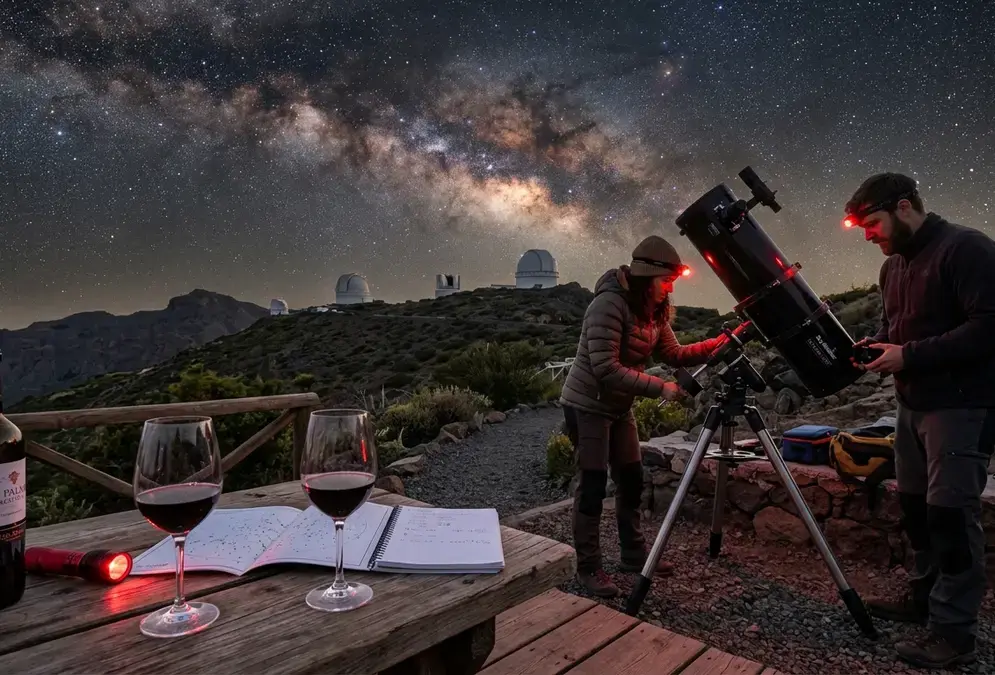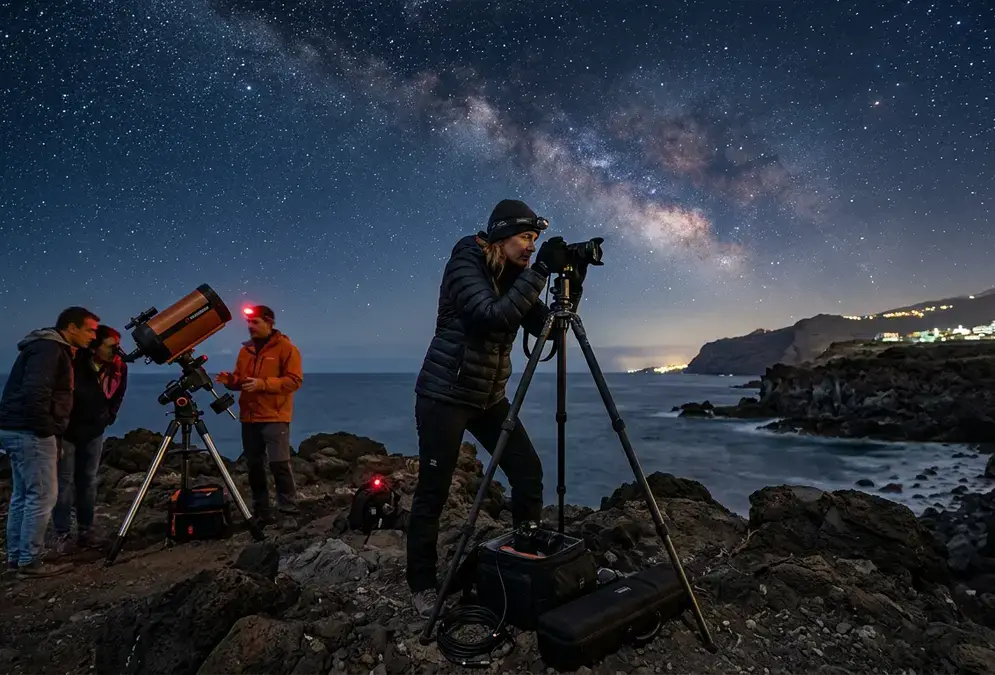
Photographer with a tripod-mounted camera under a star-filled sky on La Palma's coastline near Los Cancajos, a telescope set up nearby for the Nightscapes tour
Astrophotography

A photography-and-telescope evening on the world's first Starlight Reserve

Approximately 3–4 hours, based on comparable AstroLaPalma night tours; exact duration for this specific tour is not published on the operator's site
Runs year-round from Los Cancajos, weather and moon phase permitting. Exact departure days and start times are not published; confirm current availability directly with the operator before you plan your trip around it.
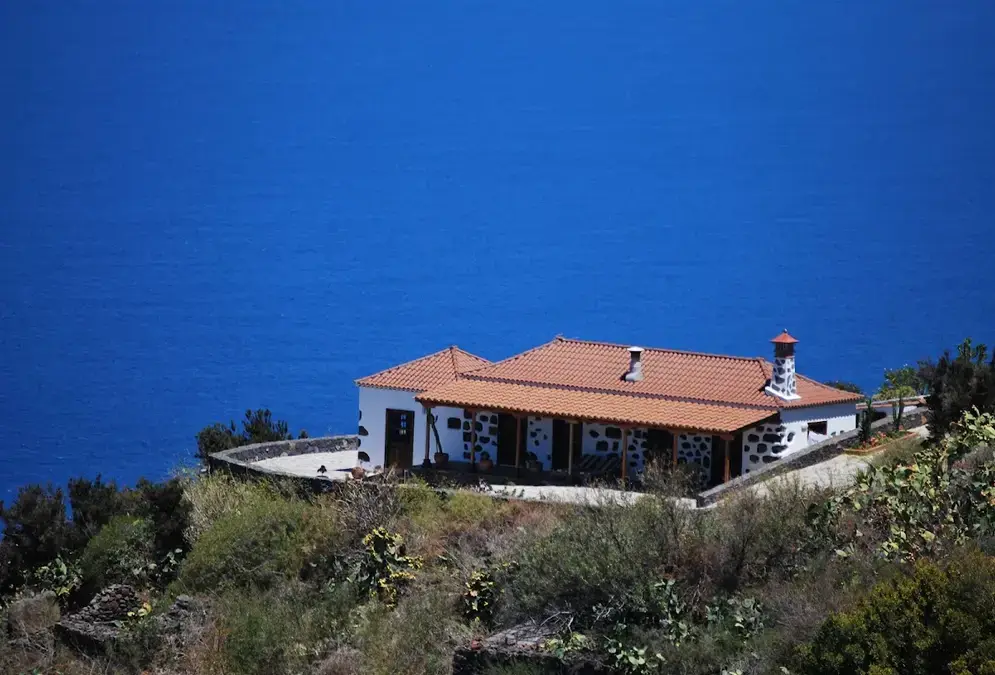
Los Cancajos, on La Palma's east coast near the airport. Exact pickup details are confirmed when you book directly with the operator.
All activities

Be honest with yourself before you book anything: La Palma does not have the astrophotography tour industry that Tenerife or Chile's Atacama Desert have built up. Search the big booking platforms and what you'll mostly find is general stargazing and telescope tours, not a shelf of camera-specific workshops. What does exist, confirmed and bookable, is one dedicated product: AstroLaPalma's Photo Tour: Nightscapes, a €49-per-person session run directly by the island's astro-tourism outfitter, departing Los Cancajos on the east coast. It's smaller and less specialized than the dedicated Milky Way photography workshops you'll find on Tenerife. It's still worth booking, because the sky above it is genuinely one of the darkest measured anywhere on Earth.

What Nightscapes actually includes

The operator, AstroLaPalma (La Palma Stars), runs Nightscapes as a hybrid session rather than a pure camera masterclass: guided night-sky and landscape photography instruction, with telescopes provided for observation between photo sessions. Guides work in English, German, and Spanish. Groups are described as small, though the operator doesn't publish an exact headcount. Meeting point is Los Cancajos; exact pickup details are confirmed when you book. The tour is not listed on GetYourGuide or Viator, so you book it the way most La Palma stargazing still gets arranged: directly, through lapalmastars.com, or by email or phone.

Not the same tour as Tenerife's

If you've looked at the Tenerife astrophotography tour equivalent, drop the comparison a little. That tour is a dedicated photographer-led workshop: groups capped at four to eight people, a working astrophotographer coaching manual exposure, focus, and composition for three or four hours straight, nothing else on the agenda. Nightscapes is a different shape of evening: photo coaching folded into a session that also puts you at a telescope. If a pure, camera-only masterclass is specifically what you want, La Palma's market at this price point doesn't have Tenerife's equivalent. The closest thing to that intensity here is a five-figure-euro step up, not a like-for-like swap.

Why the camera is worth bringing anyway

La Palma earned Starlight Reserve status in 2012, the first island on Earth to do so, and the La Palma stargazing guide covers why: Sky Quality Meter readings at the darkest sites run Bortle Class 1–2, among the lowest measured anywhere. The same Atlantic trade-wind cloud layer that clears Tenerife's Teide skies does the same work here, and it's the mechanism behind the cloud-inversion "sea of clouds" shot photographers travel to the Canary Islands for: a dark foreground of cloud sitting hundreds of metres below you, the Milky Way overhead.

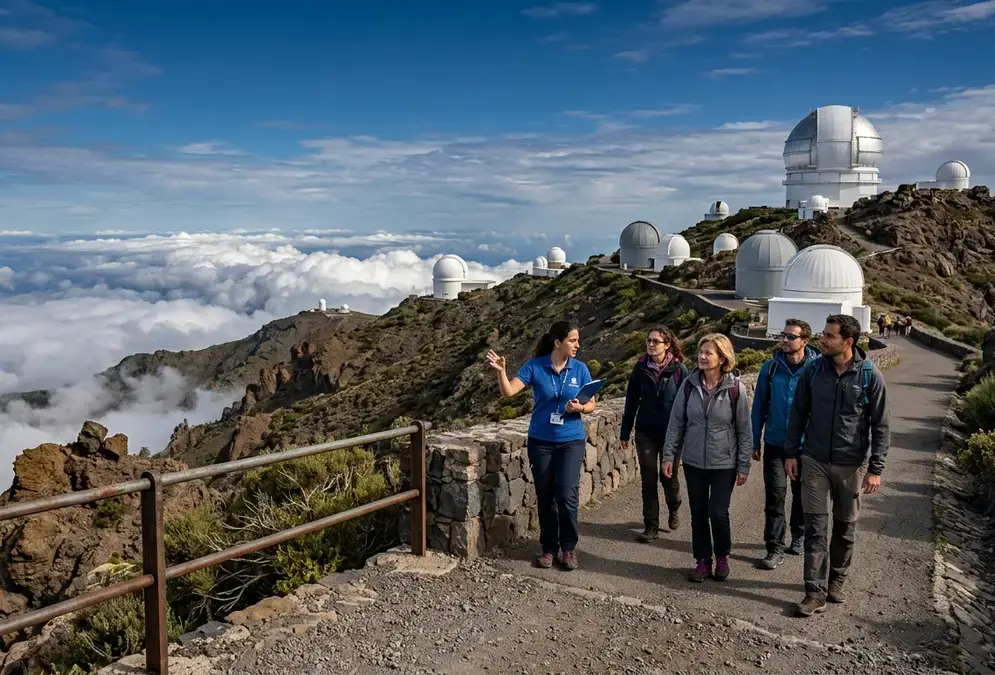
The Roque de los Muchachos Observatory itself is a day-visit-only research site; you can't point a tripod at its working telescopes after dark. But the ridge it sits on, and the roads and viewpoints around Garafía and the Caldera de Taburiente rim, are where the island's own photographers set up: volcanic silhouettes, a caldera drop-off, and a sky with almost nothing competing against it. AstroLaPalma doesn't publish the exact route Nightscapes follows, so treat this as what the island generally offers rather than a guarantee of this specific tour's vantage point, and ask at booking where that night's session is heading.

For serious enthusiasts: the 7-day workshop

If a single evening isn't enough, the same broad space includes Astromaster La Palma, a seven-day timelapse and landscape astrophotography workshop priced around €2,250. That's an enthusiast or specialist tier, not the mainstream option this page is built around, but it's worth knowing it exists if Nightscapes leaves you wanting a genuine deep dive rather than one three-hour evening.

Booking, weather, and what to actually bring

Book direct at lapalmastars.com/en/tours/, or reach the operator at info@lapalmastars.com or +34 622 805 618 / +34 922 433 564. Because this isn't a GetYourGuide listing, there's no algorithm-driven cancellation policy to check; ask the operator directly about weather and moon-phase rebooking when you book.

On gear: the operator's site doesn't spell out whether you need your own camera and tripod or whether equipment is supplied beyond the telescopes. Don't assume either way. Email ahead and ask specifically, especially if you're travelling with checked-bag-only camera gear and would need to rent locally. What isn't in question is the cold: La Palma's night air cools fast once the sun drops, on the coast and more so at altitude, so pack a proper layer regardless of the season, and bring a red-light headlamp if you have one so you're not wrecking your own night vision fumbling with a phone torch.

Moon phase matters more than the calendar month here, same as everywhere on this island: book within four or five nights of a new moon for the darkest sky and the clearest Milky Way, and check a current calima (Saharan dust) forecast if you're travelling in December or February, when lower-altitude skies are most likely to haze over.
Highlights

  • AstroLaPalma's Photo Tour: Nightscapes, the only dedicated astrophotography-specific tour confirmed bookable on La Palma
  • Photo coaching paired with telescope viewing between sessions, departing Los Cancajos
  • Guides available in English, German, and Spanish
  • Booked directly through the operator, not GetYourGuide or Viator
  • A premium 7-day Astromaster La Palma workshop exists for enthusiasts wanting a deeper program

Included

  • Guided night-sky and landscape photography instruction
  • Telescopes for observation between photography sessions
  • English, German, or Spanish-speaking guide
  • Small-group format departing from Los Cancajos

Not included

  • Camera and tripod: gear policy is not published on the operator's site; confirm at booking whether equipment is provided or required
  • Transport to Los Cancajos: you get yourself to the meeting point
  • Warm clothing and a red headlamp: pack your own
  • The 7-day Astromaster workshop: a separate premium product at roughly €2,250, not part of the €49 Nightscapes session

Practical information

Languages

English, German, Spanish

Group size

Small groups; exact capacity is not published, confirm at booking

Good to know before booking

  • Confirm the current schedule and departure dates directly with the operator; exact duration and days of operation are not published on the tour listing
  • This tour is booked direct via lapalmastars.com, not through GetYourGuide or Viator
  • Ask at booking whether you need to bring your own camera and tripod, since gear requirements are not detailed publicly
  • Pack warm layers regardless of season; La Palma's coastal and highland night sessions both cool quickly after dark

Prices & Booking

Bookable online

From €49 approx.

From €49 per person

Runs year-round from Los Cancajos, weather and moon phase permitting. Exact departure days and start times are not published; confirm current availability directly with the operator before you plan your trip around it.

Tags

la palma astrophotography stargazing milky way canary islands starlight reserve night photography los cancajos guided tour

Frequently asked questions

Is there a dedicated astrophotography tour on La Palma?

Yes, one confirmed option: AstroLaPalma's Photo Tour: Nightscapes, from €49 per person, booked direct through the operator. General stargazing and telescope tours are more common on the big booking platforms; this is the specific photography-focused option. Enthusiasts wanting more can also book the operator's separate 7-day Astromaster La Palma workshop, priced around €2,250.

How is this different from Tenerife's astrophotography tour?

Tenerife's version is a dedicated photographer-led workshop with small groups of 4-8 people and three to four hours of pure camera coaching. La Palma's Nightscapes tour is a hybrid: photo instruction paired with telescope viewing, not a camera-only masterclass. If you specifically want Tenerife's format, La Palma's market at this price point doesn't have a like-for-like equivalent.

Can I book AstroLaPalma's Nightscapes tour through GetYourGuide or Viator?

No. It isn't listed on either platform. Book directly at lapalmastars.com/en/tours/, or contact the operator by email (info@lapalmastars.com) or phone (+34 622 805 618 / +34 922 433 564).

What is the Astromaster La Palma workshop?

It's a separate, premium seven-day timelapse and landscape astrophotography workshop from the same operator, priced around €2,250. It's aimed at enthusiasts wanting an intensive multi-day program, not the mainstream option most travelers should book first.

Do I need to bring my own camera and tripod?

It isn't clearly stated on the operator's site. Don't assume equipment is provided beyond the telescopes used for observation between photo sessions. Email the operator ahead of your trip and ask directly, especially if you're traveling with limited luggage space.

What languages does the tour run in?

Guides are available in English, German, and Spanish.

When is the best time to book a La Palma astrophotography tour?

Book within four or five nights of a new moon for the darkest sky, roughly April through October when La Palma's broader stargazing season is strongest. Check a current calima (Saharan dust) forecast if you're traveling in January or February, since lower-altitude skies are more likely to haze over then.

Further reading

Sources