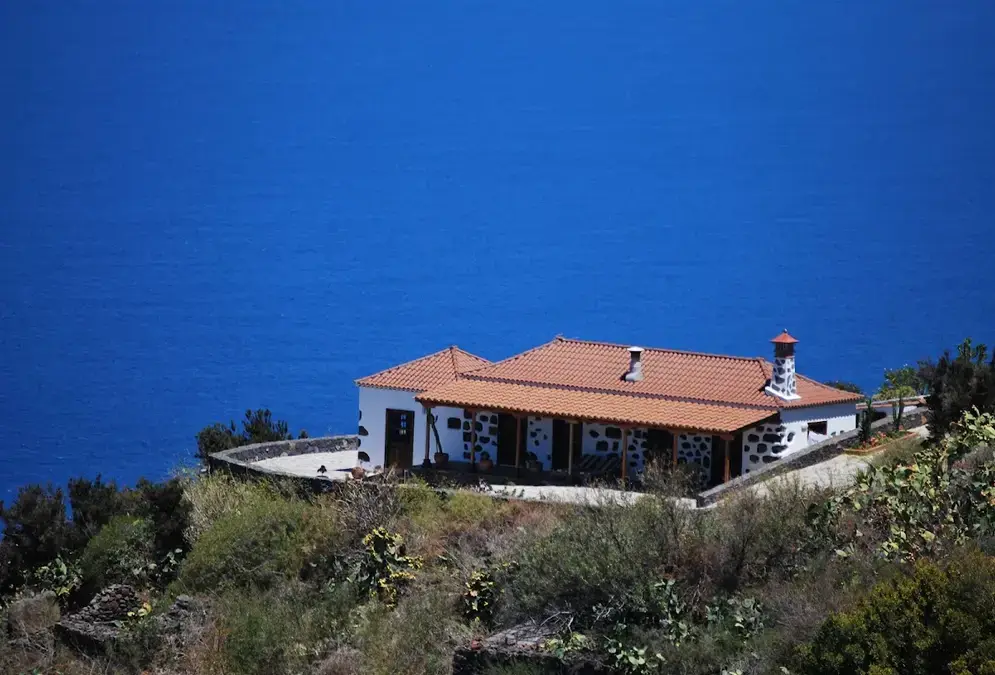
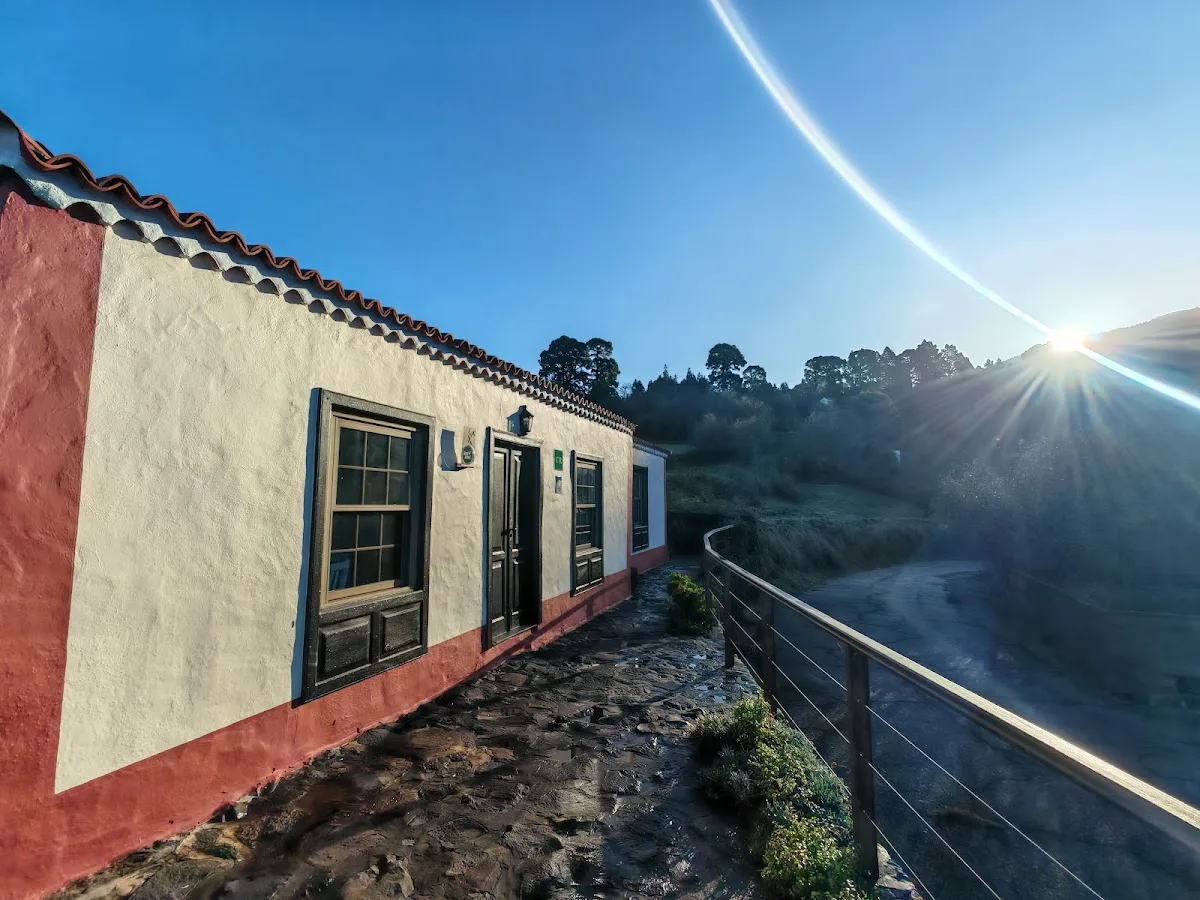
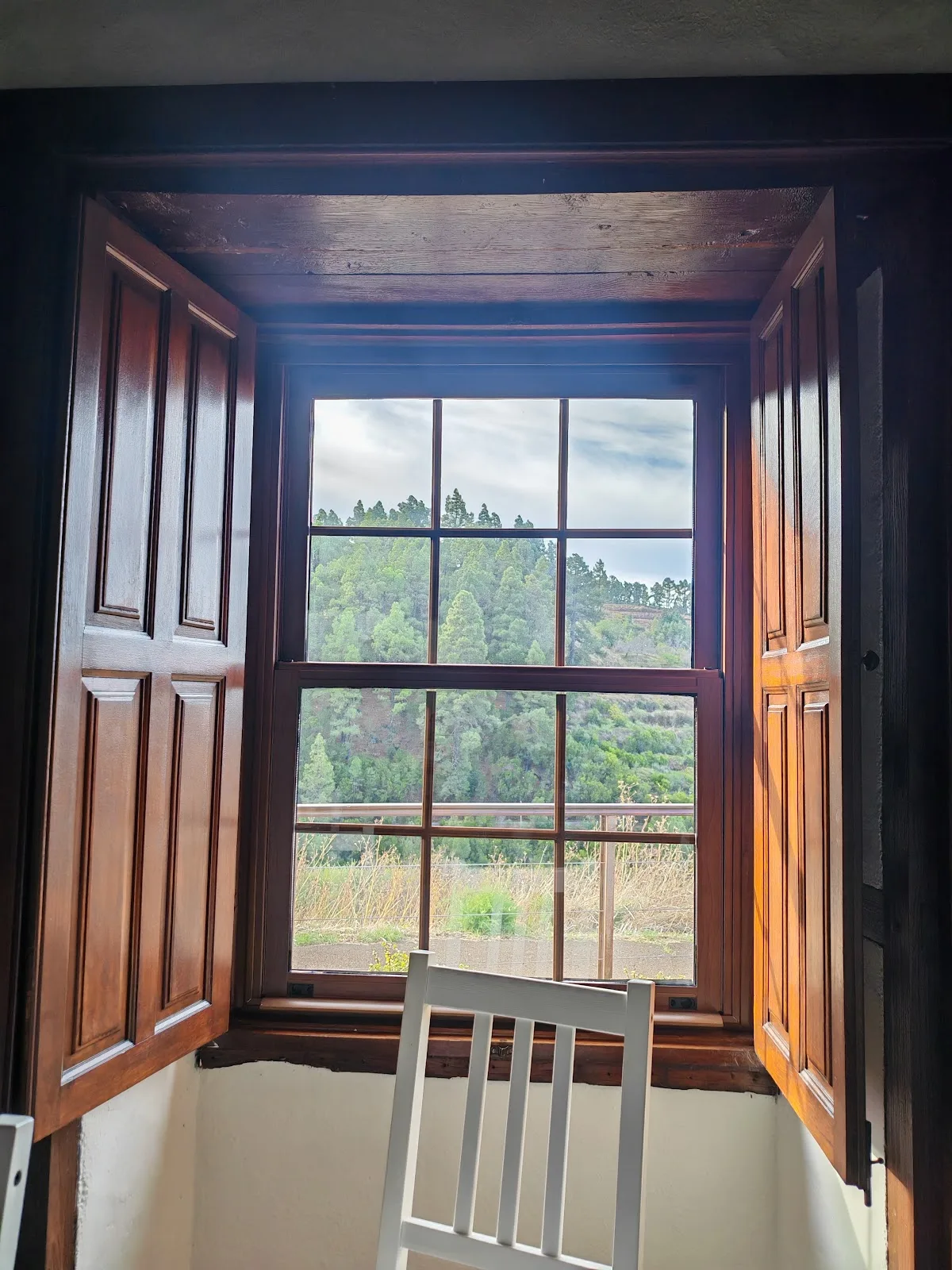
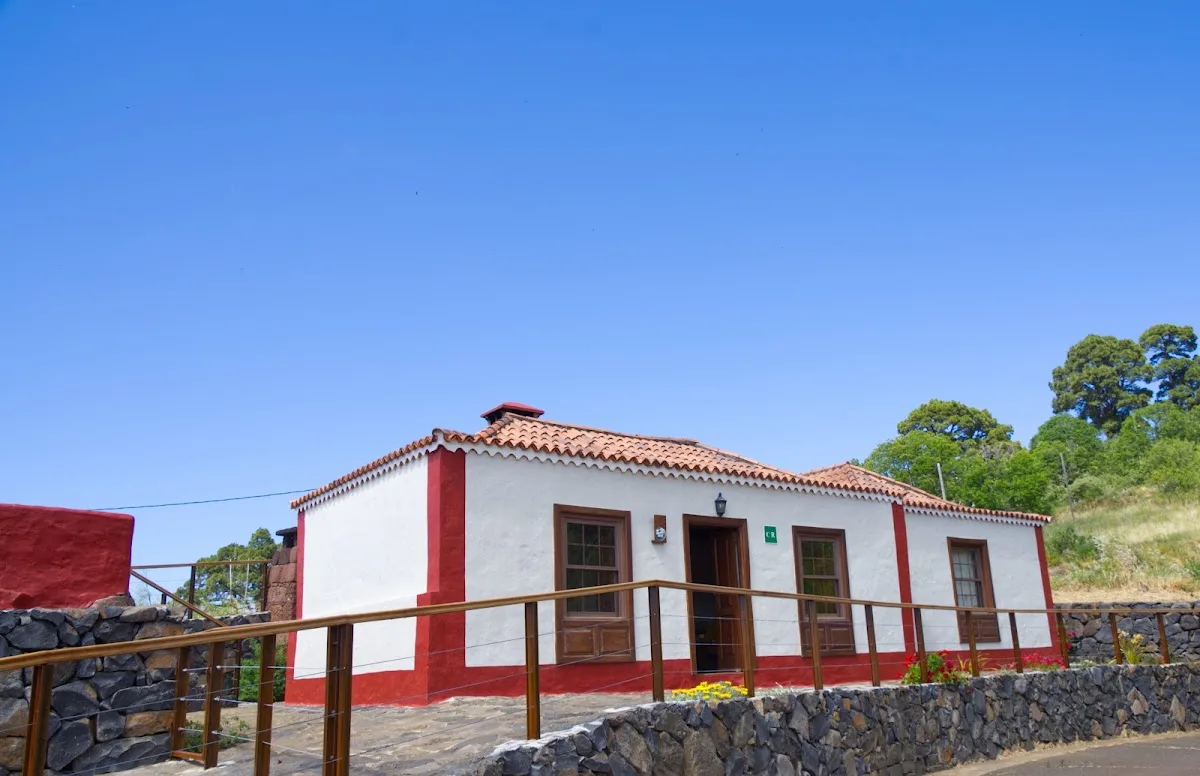
Casa El Colmenero has no Starlight Foundation plaque on the wall and no star rating on Booking.com. What it has is altitude: 1,042 metres on the sparsely populated north side of La Palma, high enough to sit above the Atlantic trade-wind cloud layer, which typically caps out somewhere between 800 and 1,500 m on a normal afternoon. That is the same mechanism that keeps the summit of the Roque de los Muchachos Observatory clear for the Gran Telescopio Canarias, currently the world's largest single-aperture optical telescope. This restored Canarian stone-and-wood rural house in Garafía sits inside that same clear-air band, several hundred metres below the observatory itself but well above where most of the island's cloud cover collects on a typical day.
The dark-sky case: altitude, isolation, and a cloud layer doing the work
La Palma has been a Starlight Reserve since 2012, the first island in the world to hold that designation, and the whole territory operates under a 1988 Sky Quality Law (Ley del Cielo) that restricts outdoor lighting, flight paths, and radio interference specifically to protect the night sky above the observatory. That protection is island-wide, but it is not evenly dark everywhere. The two population centres, Santa Cruz de la Palma and Los Llanos de Aridane, sit on the east and west coasts respectively and produce the island's only meaningful light domes. Garafía, on the remote north side, has neither. It is one of the least populated municipalities on La Palma, with no significant urban glow and a terrain of ravines and pine forest that keeps what little light exists from spreading far.
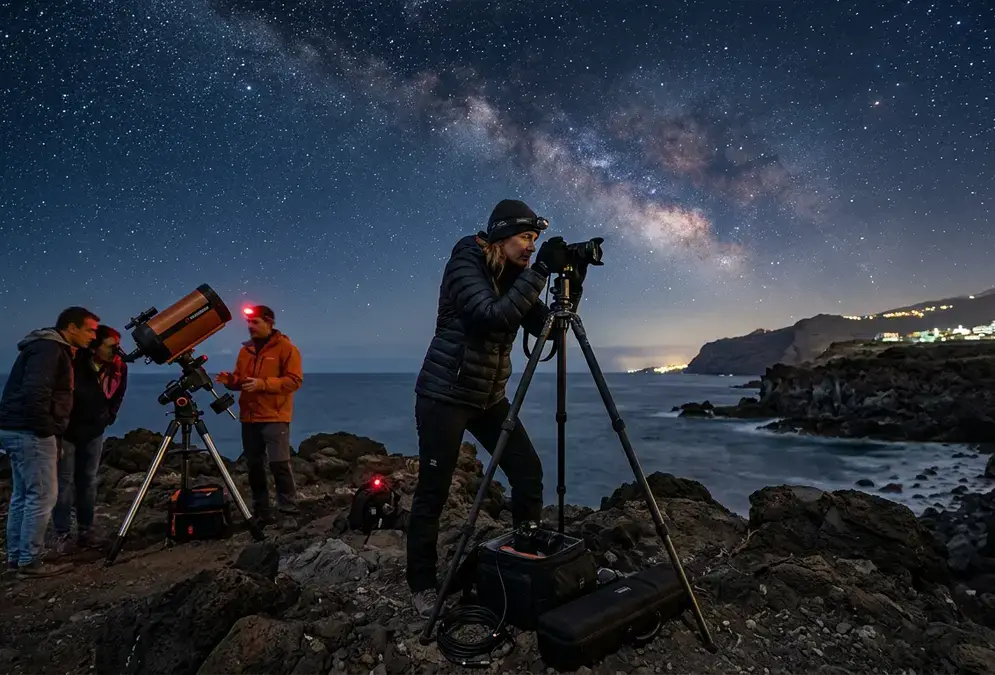
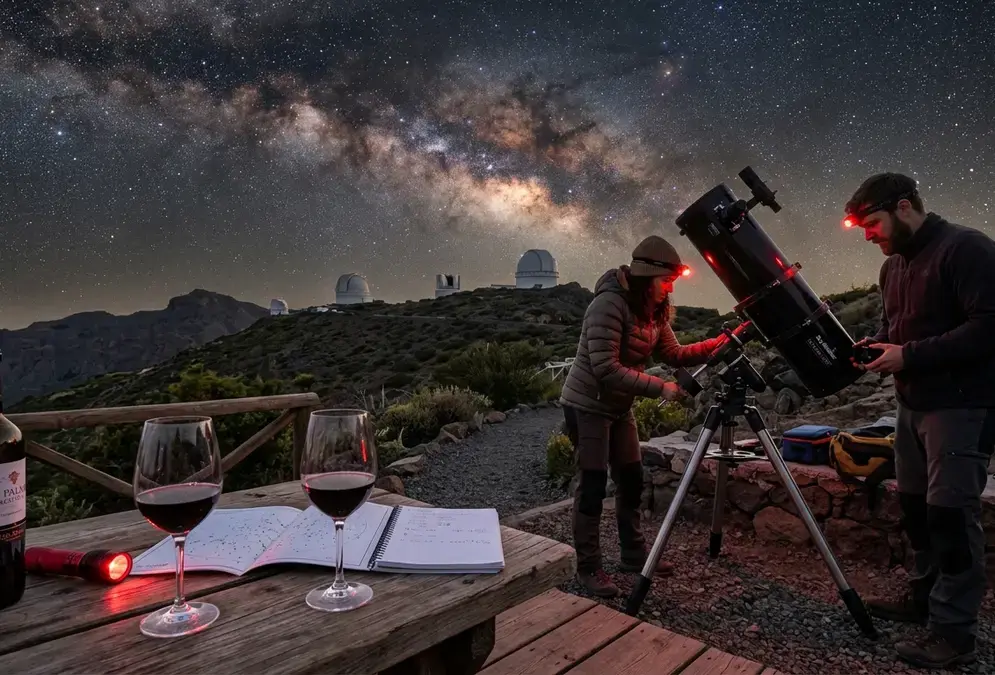
What actually delivers the dark sky at Casa El Colmenero is the combination of that isolation with elevation. At 1,042 m, the property sits above the altitude band where Atlantic moisture typically condenses into the low cloud deck that blankets the north coast most afternoons and evenings. Guests staying below that layer often watch the stars disappear behind cloud by 9pm; guests here are frequently looking down onto it. It is the identical physical process that makes the observatory itself viable at 2,396 m, just experienced several hundred metres lower and from a private terrace rather than a research dome. On a genuinely clear night with no moon, the Milky Way core and zodiacal light are both visible without a drive.
For comparison across the archipelago: the Parador de Las Cañadas del Teide in Tenerife sits inside a national park at 2,150 m with an on-site observatory and organised guest sessions. Casa El Colmenero is a different proposition entirely: no observatory, no scheduled programme, no staff. What it offers instead is a private, self-catering base under skies that are dark for the same climatic reason, at roughly half the price. If you are choosing between La Palma and its more heavily marketed neighbour, that is the honest trade-off, covered in more depth on the La Palma stargazing destination guide.
Inside the house: two bedrooms, a saltwater pool, and a terrace built for looking up
The house itself is a fully restored traditional Canarian stone-and-wood rural house, self-catering, with two bedrooms and one bathroom sleeping up to four adults plus one small child. It is not large and it is not designed to be a hotel substitute; it is designed as a private, quiet base for a multi-night stay rather than a one-night pass-through. The layout matters here more than the square metreage, because the whole point of the property is the outdoor space.
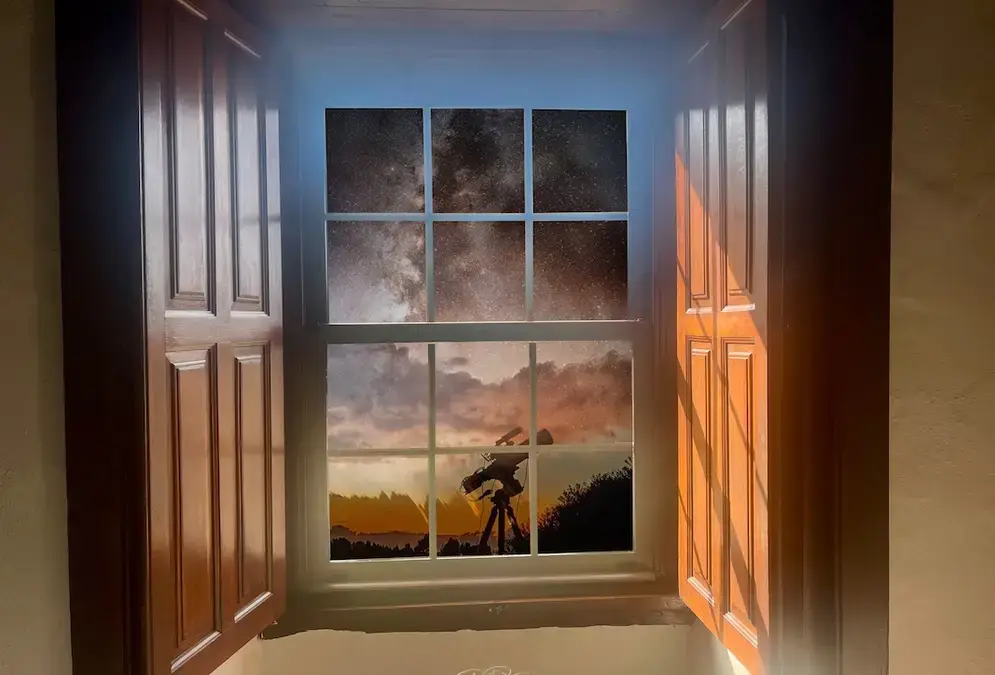
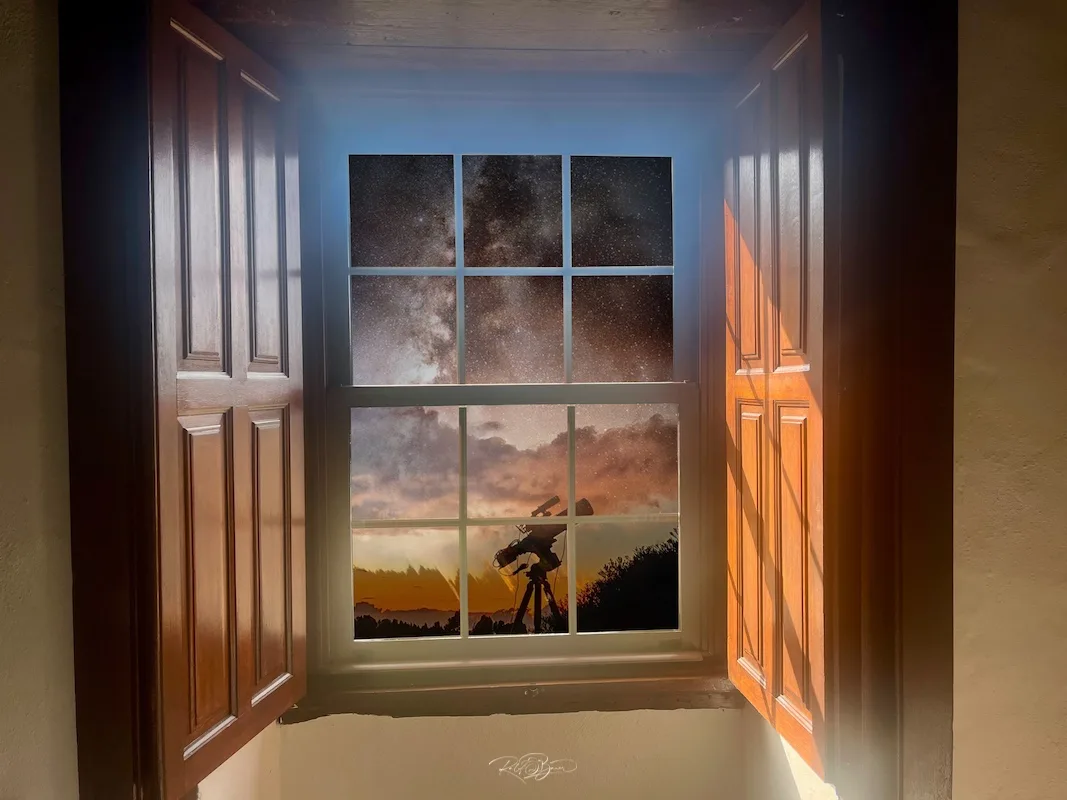
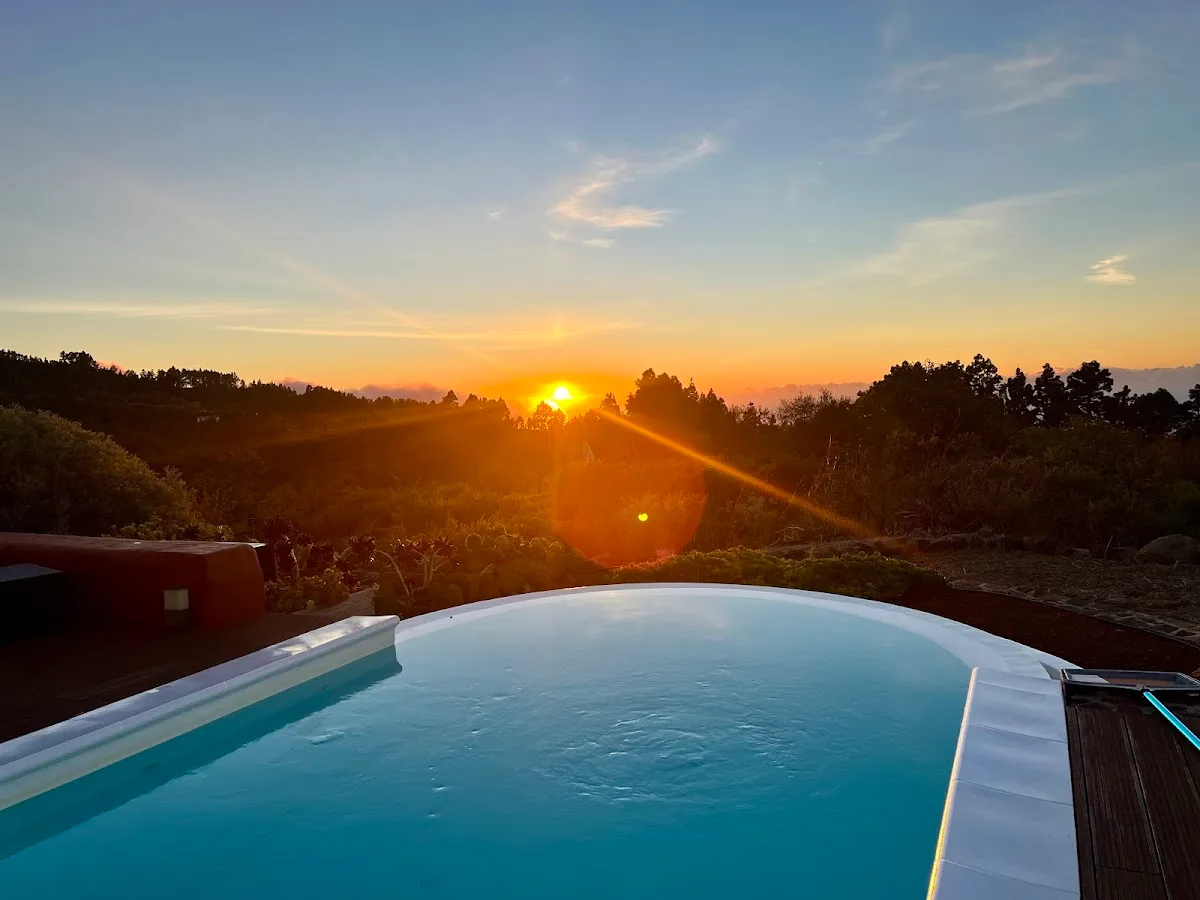
The private terrace is the reason this house made the shortlist. Listing copy and, more tellingly, guest reviews independently describe views of sea, mountain, and "the starry sky" (el cielo estrellado) from the same spot. That is not marketing language borrowed from a brochure; it is guests specifically calling out the remote location above the clouds as the standout feature of their stay, which is a stronger signal than any certification badge. Below the terrace sits a private saltwater swimming pool, 5.3 by 3.0 m, with optional heating for cooler months. A fireplace, free WiFi, free private parking, and a fully equipped kitchen round out the practical side.
Early Booking.com guest reviews put the property at 10/10 "Exceptional", with the Location sub-score at 9.4/10. Those figures come from a small early sample rather than a long review history, so treat them as a strong early signal rather than a settled verdict, and expect the score to move as more guests stay.
Why there's no Starlight badge here, and why that's not the whole story
Be clear about what this property is not. It is not one of La Palma's officially Starlight-certified rural houses, and no research into its listings or the island's Starlight accommodation registry turned up a certification. Two other properties on the island do carry that badge: Villa La Malvasía in Fuencaliente, certified in 2021, with vineyard views and traditional architecture in the south of the island; and Casa Rural El Pósito in Villa de Mazo, certified in 2014, with a dedicated astronomy corner and low-glare exterior lighting. Both are legitimate, badge-holding alternatives, and either is worth booking if a formal certification matters to you.
Neither, though, sits in the high-altitude, cloud-inversion belt that defines Casa El Colmenero's case. Villa La Malvasía is a lower-altitude vacation villa in the south without the "above the clouds" framing. El Pósito is smaller and more basic, a 6-person let in the southeast, well outside the west-side zone that feeds up toward the observatory access road. A certification recognises lighting design and formal programming; it does not, by itself, tell you whether a property sits above or below the cloud deck on a given night. Casa El Colmenero's dark-sky case rests on the physical fact of its elevation and isolation, plus a growing body of guest testimony pointing at the same thing. That is a different kind of evidence than a badge, not necessarily weaker evidence, and it is worth being upfront that it is not the same thing.
Self-catering in Garafía: kitchen, groceries, and what's actually nearby
There is no on-site staff and no restaurant attached to the property. Garafía is a rural municipality with limited services, so plan to arrive with groceries rather than expecting to find a supermarket around the corner. The nearest reasonably stocked shops are in the small settlements along the LP-1 coast road; a full supermarket run generally means a trip toward Puntagorda or further south. The kitchen is fully equipped for cooking, and the fireplace makes the house comfortable once the sun goes down and temperatures drop at altitude, even in a Canarian summer.
This is worth planning around rather than treating as a footnote. A two- or three-night stay works far better here than a single night, both because it lets you wait out one cloudy night for a clear one and because a single overnight barely justifies the drive in. The guide to where to stay for La Palma stargazing breaks down which of the island's lodging options suit a short stopover versus a longer, self-catering base like this one.
Getting there and fitting it into a La Palma trip
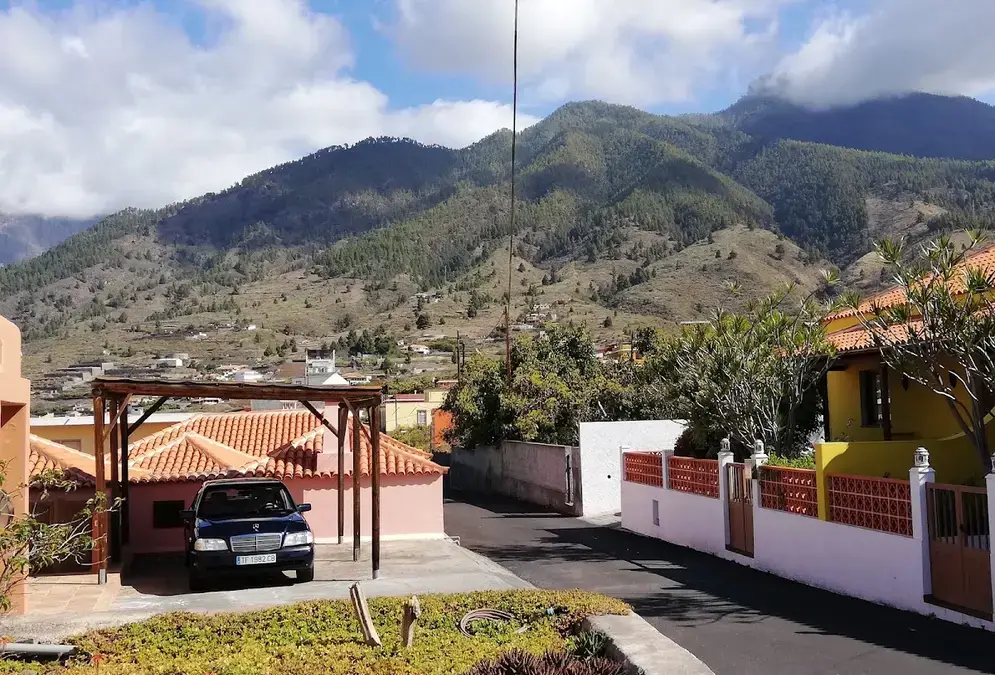
The address is Camino La Catela, s/n, in Garafía, on the island's remote north side. The roads in are narrow, winding mountain roads typical of northern La Palma, and a rental car is not optional here; there is no realistic public transport option to a house this isolated. Budget more driving time than the straight-line distance suggests, and expect to arrive with your headlights doing most of the work after dark.
The location is well placed for La Palma's astrotourism circuit beyond the terrace itself. The Garafía and Las Tricias area has its own recognised astronomical observation points, and the road network on this side of the island feeds up toward the access road to the Roque de los Muchachos Observatory summit, should you want to combine a night at the house with a daytime visit to the visitor centre. This puts Casa El Colmenero on the opposite side of the island from Santa Cruz de la Palma and Los Llanos de Aridane, which is precisely the point: it is as far as a comfortable rural house gets from the island's only real light sources.
Honest caveats: no staff, no restaurant, and a genuinely remote road
Three things to weigh before booking. None of them are dealbreakers, but all of them are real.
- No certification and no star rating. This is a casa rural, not a rated hotel, and Booking.com does not assign it a star category. If a Starlight badge or a formal star rating is a hard requirement for you, look at Villa La Malvasía or El Pósito instead.
- No restaurant and no daily housekeeping. You are cooking your own meals and managing your own groceries for the length of the stay. Bring supplies in with you; do not count on picking things up locally after dark.
- A genuinely remote, winding drive. Garafía is not a quick detour from the airport or the main southern resorts. Factor real driving time into your itinerary, and do not plan a same-day arrival-and-stargazing session without a buffer.
Entry-level self-catering pricing runs from roughly €31 per person per night, depending on season and occupancy, which puts a genuinely dark-sky-located stay within reach of a much wider range of travellers than a certified boutique property or a resort hotel. Exact nightly cost for the whole house varies with dates and party size, so treat that figure as a starting point rather than a fixed rate, and confirm current pricing on Booking.com before you commit dates.