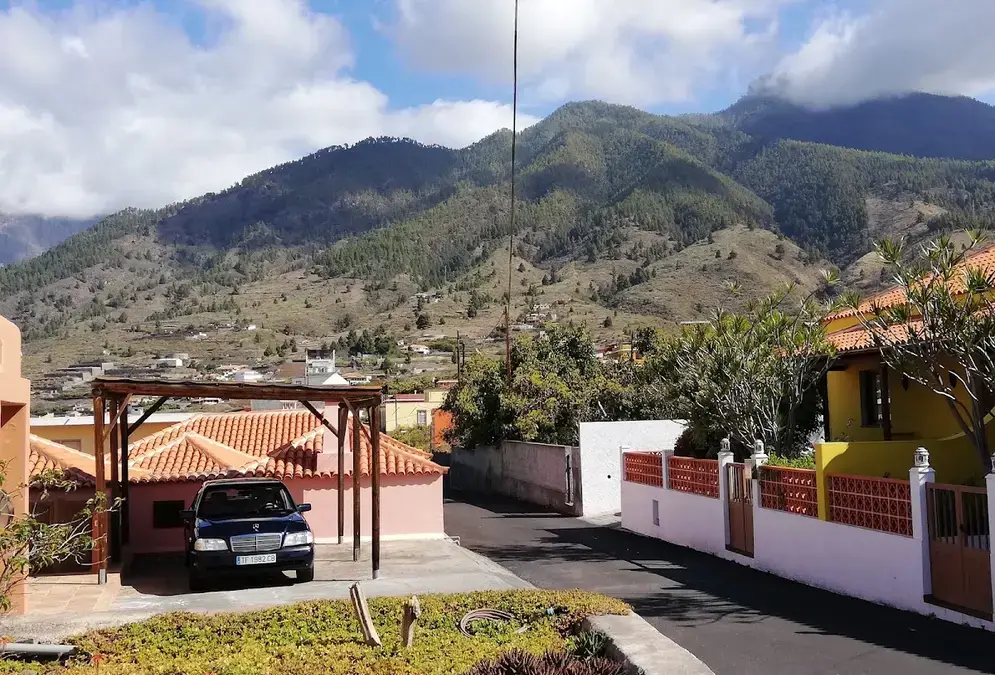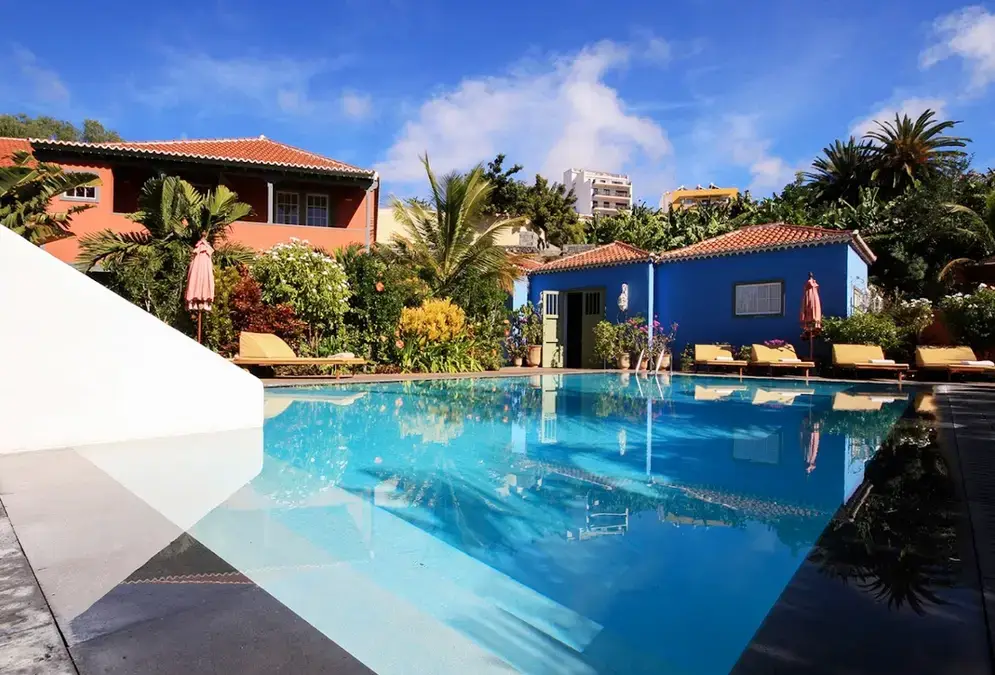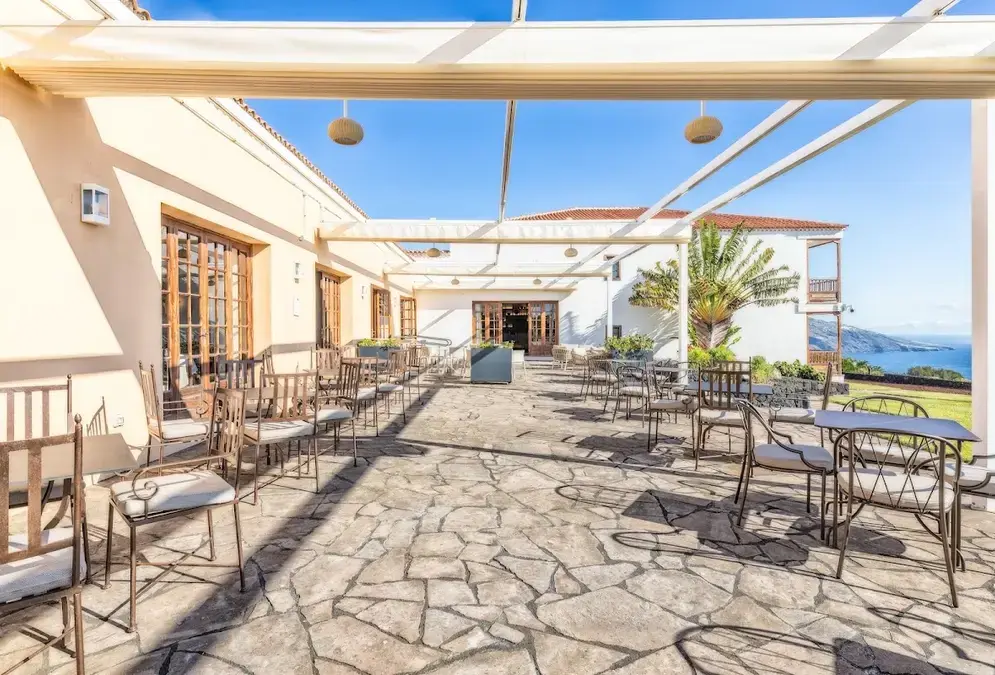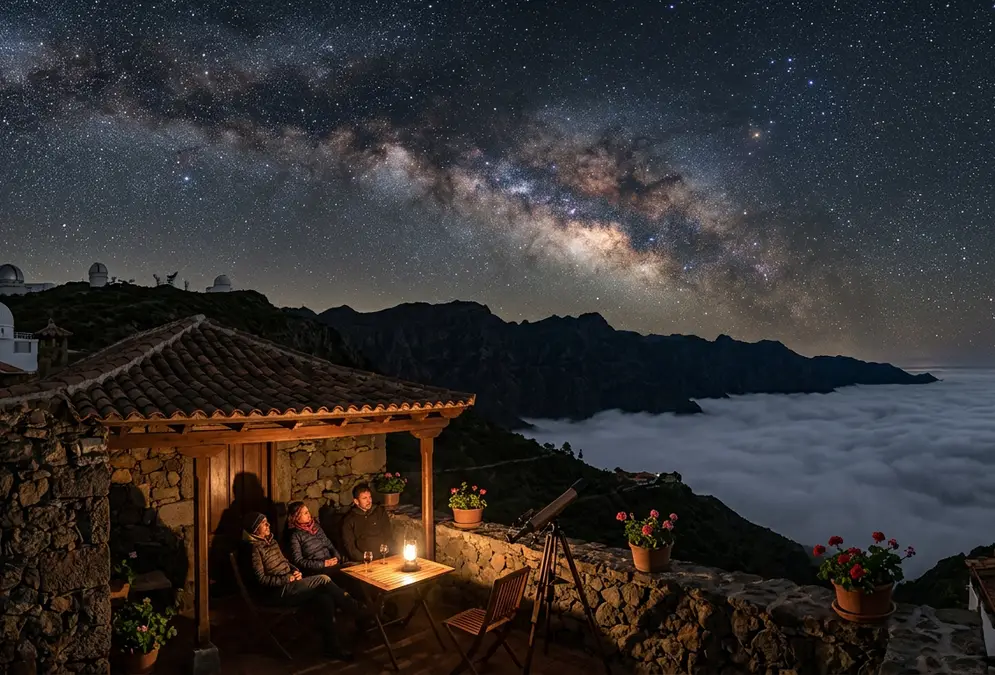

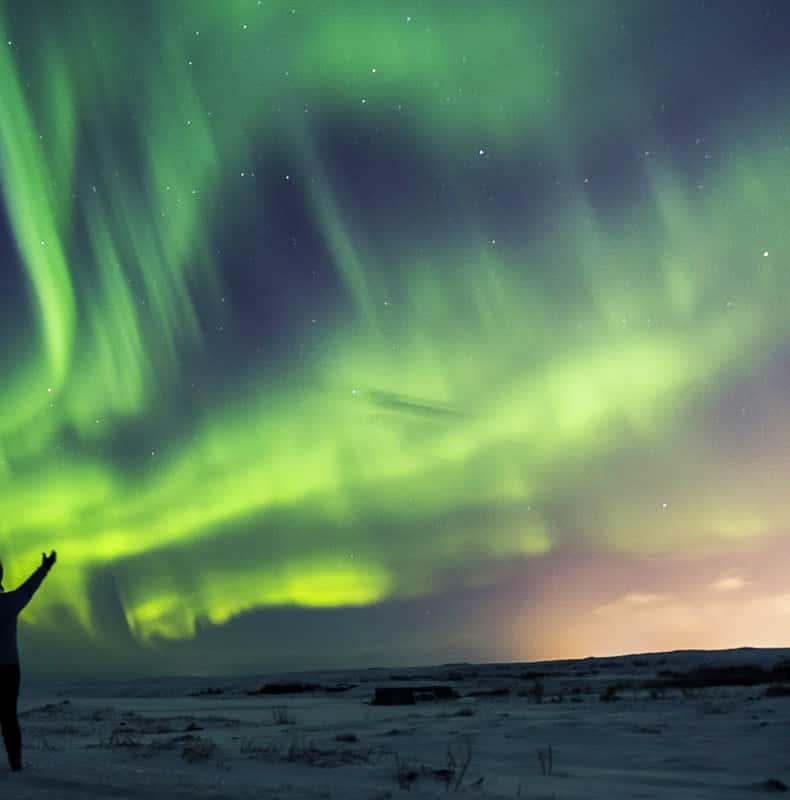
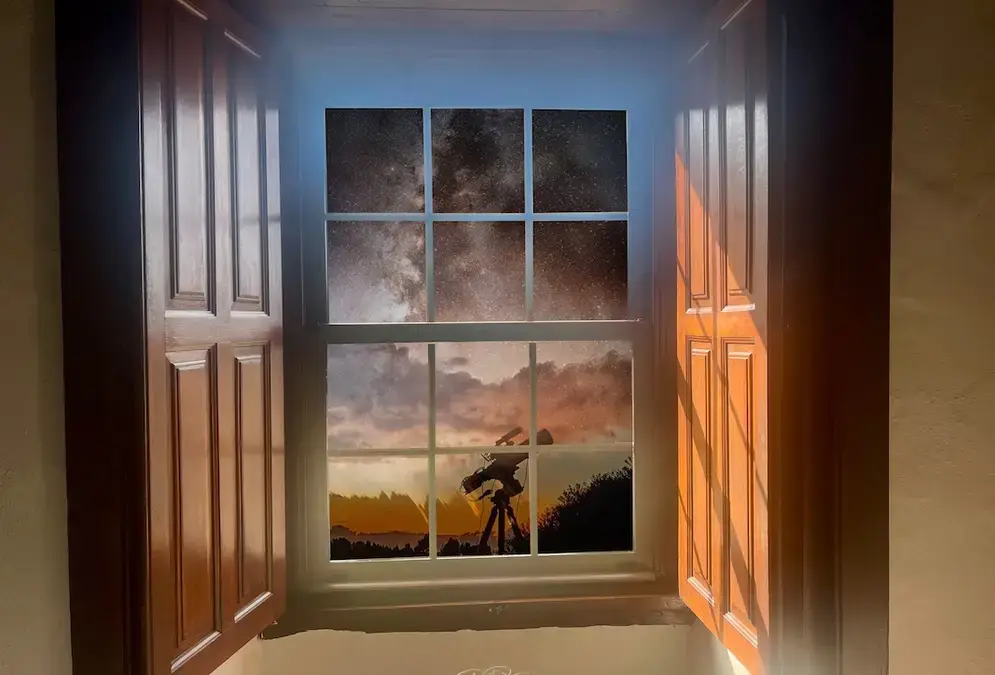
Night sky over Garafía, La Palma, the Milky Way rising above a rural-house terrace inside the cloud-inversion band near the Roque de los Muchachos Observatory

Best Places to Stay on La Palma for Stargazing

Five La Palma lodges ranked for stargazing: altitude, distance to Roque de los Muchachos, and price-to-value on the world's first Starlight Reserve island.

Our top pick

Casa El Colmenero

Best overall dark-sky value

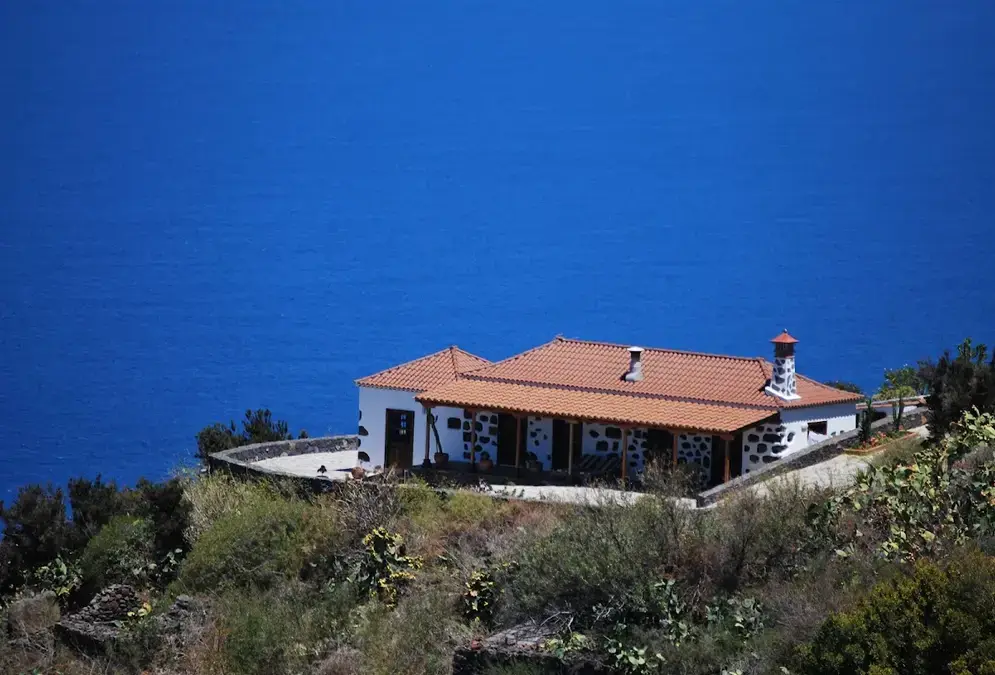
Casa El Colmenero wins because no other lodge on this list puts you inside the altitude band that clears the trade-wind cloud layer for a fraction of the price of a comparable heritage stay. From roughly €31 per person per night, it has no Starlight badge and no star rating, but its case rests on the same physical mechanism that keeps the Roque de los Muchachos Observatory's summit clear, plus guest testimony that specifically calls out the night sky from its private terrace.

Sits at 1,042 m in Garafía, La Palma's darkest municipality, inside the altitude band that typically clears the Atlantic cloud layer, with a 10/10 early guest score.

Runner-up: Casa Rural Los Barranquitos, a two-bedroom self-catering house in the same municipality, with a stated 40- to 60-minute drive up to the observatory and a 9.3/10 guest score

La Palma has held Starlight Reserve status since 2012, the first island in the world to earn it, and the distinction runs deeper than a certificate. A 1988 Sky Quality Law (Ley del Cielo) restricts outdoor lighting, radio interference, and flight paths specifically to protect the Roque de los Muchachos Observatory at 2,396 m, home to the Gran Telescopio Canarias, the world's largest single-aperture optical telescope. Where Tenerife's Teide skies compete with an island of nearly a million residents and a coastal tourism economy built for scale, La Palma's population sits closer to 84,000 across the whole island, and its dark-sky law has three decades more enforcement history behind it. It is the quieter, more remote half of the Canary Islands' astro-tourism story, with a fraction of the traffic on its mountain roads at night.

The real question is where you sleep. These five lodges are ranked on five criteria: dark-sky access at ground level from the altitude and isolation the property actually sits in, not a reading from a viewpoint you have to drive to; proximity to Roque de los Muchachos and the Caldera de Taburiente rim, in stated drive-time minutes where a source gives one; whether you can observe from the property itself or need to get in a car first; practical amenities for a stargazing-led stay, since none of these five run an on-site observatory; and price-to-value in euros for what's actually delivered. All rates are from 2025-2026 Booking.com and direct property listings. A rental car is non-negotiable for every option on this list; La Palma has no meaningful public transport once you leave Santa Cruz de la Palma and Los Llanos de Aridane, and several of these properties sit at the end of narrow mountain roads that take longer to drive than the straight-line distance suggests.

Ranked list

How we chose

The places on this list were selected against the following editorial criteria.

  • Dark-sky access from the property: altitude and isolation from the light domes of Santa Cruz de la Palma and Los Llanos de Aridane, not a Bortle reading from a viewpoint you have to drive to
  • Proximity to the Roque de los Muchachos Observatory (2,396 m) and the Caldera de Taburiente rim, measured in drive-time minutes where a source states one
  • On-site stargazing potential: can you step onto a terrace and look up, or does the darkest sky require getting in a car first?
  • Practical amenities for a stargazing-led stay: a kitchen or restaurant, private parking, somewhere warm after a cold night at altitude
  • Price-to-value ratio in euros per night (or per person) for the dark-sky experience actually delivered

All picks at a glance

  • Casa El Colmenero

    Best overall dark-sky value
    From (€/night)
    $ · from ~€31/person/night
    Key dark-sky advantage
    1,042 m in Garafía above the cloud inversion band, private terrace and saltwater pool, self-catering, from ~€31/person/night
  • Casa Rural Los Barranquitos

    Best budget base near the observatory road
    From (€/night)
    $ · from €86/night
    Key dark-sky advantage
    Two-bedroom self-catering house in Garafía's El Jaral, 40-60 min drive to Roque de los Muchachos, from €86/night
  • Casas Rurales Tola

    Best base for pairing stargazing with the Caldera de Taburiente
    From (€/night)
    $ · from €46/night
    Key dark-sky advantage
    Self-catering casa rural in El Paso, gateway to Caldera de Taburiente, from €46/night
  • Hotel Hacienda de Abajo

    Best heritage stay with a dark-sky-adjacent location
    From (€/night)
    $$$ · from €167/night
    Key dark-sky advantage
    Adults-only 4-star heritage hotel in Tazacorte, shielded from Santa Cruz's light dome by the cloud-inversion layer, from €167/night
  • Parador de La Palma

    Best comfort-and-location base, not a stargazing pick
    From (€/night)
    $$ · from €130/night
    Key dark-sky advantage
    4-star Parador in Breña Baja near the airport and Santa Cruz de la Palma, over an hour's drive from Roque de los Muchachos, from €130/night

On the map

Pin numbers match the ranking below.

Interactive map — loads as you scroll (requires JavaScript)

When to go

La Palma's stargazing case doesn't rest on long-term climate averages the way Tenerife's does; less has been published specifically on the island's night-sky season, so treat the pattern below as broadly similar to Tenerife's rather than independently measured for La Palma. What is well documented is the Atlantic trade-wind cloud layer, which sits lower and more consistently in summer, giving altitude-based lodges like Casa El Colmenero their best chance of clearing it, and calima, the Saharan dust intrusion that is most frequent and intense in January and February. Moon phase still matters more than month: a new-moon night in November beats a full-moon night in July anywhere on this list.

  • January: Fair — Calima intrusions are most frequent and intense this month, hazing skies at lower elevations; Atlantic frontal systems also bring more cloud and rain island-wide
  • February: Fair — Second peak calima month; the trade-wind cloud layer tends to sit higher and thicker, working against lower-altitude lodges clearing it
  • March: Good — Calima risk eases; the cloud layer starts settling toward its lower summer position, improving odds for altitude-based bases in Garafía
  • April: Good — Transition month; a Milky Way arm becomes visible low on the southern horizon before dawn, in a season pattern similar to Tenerife's
  • May: Peak — The trade-wind cloud layer sits at its lowest and most consistent, giving above-the-cloud lodges their best odds; the Milky Way core starts rising
  • June: Peak — Galactic core climbs high overhead; warm nights and a strong inversion make this one of the best windows of the year
  • July: Peak — Peak Milky Way season, by analogy with Tenerife's pattern; the cloud layer stays low, favouring Garafía's altitude lodges
  • August: Peak — Perseid meteor shower peaks mid-month; a secondary, higher-altitude Saharan dust layer can occasionally haze clarity, though the observatory itself sits above it
  • September: Peak — Shoulder month with fewer visitors; the Milky Way core is still high and the cloud layer remains favourably low
  • October: Good — Autumn transition; the cloud layer starts rising toward its winter position and nights cool at altitude
  • November: Fair — Atlantic frontal systems and stronger trade winds bring more island-wide cloud, the same pattern that lowers Tenerife's rating this month
  • December: Good — Longest nights of the year; cold at altitude and occasional winter fronts, but clear stretches between systems reward patience

Reporter notebook

Insider tips

Best time

Check the calima forecast before locking in January or February dates

Saharan dust intrusions peak in these two months and can haze the sky at lower elevations, even when Roque de los Muchachos itself, well above the dust layer, stays clear. If your trip has any flexibility, track current dust events before you commit to a Garafía house over an observatory day trip; a hazy week at the coast doesn't always mean a wasted week at altitude.
Booking tip

Book Garafía for the sky, El Paso for the Caldera, and don't expect one house to do both equally well

Casa El Colmenero and Casa Rural Los Barranquitos are 40 to 60 minutes from Roque de los Muchachos and sit in La Palma's darkest municipality; Casas Rurales Tola is a better base for hiking Caldera de Taburiente by day. Pick a lodge based on which half of the trip, day or night, matters more, or budget for two bases if your visit runs a week or longer.

In this guide

5 places
  1. Casa El Colmenero

    Best overall dark-sky value

    Casa El Colmenero

    $ · from ~€31/person/night 4.9 (12)

    Casa El Colmenero wins this list on a mechanism, not a marketing claim. At 1,042 m in Garafía, on La Palma's remote north side, the property sits inside the altitude band where the Atlantic trade-wind cloud layer typically breaks up, the same physical process that keeps the summit of the Roque de los Muchachos Observatory clear for the Gran Telescopio Canarias. Guests staying below that band watch the stars vanish behind cloud most evenings; guests here are often looking down onto it. Early Booking.com reviews put the property at 10/10 "Exceptional," with reviewers independently calling out sea, mountain, and starry-sky views from the same private terrace, testimony that carries real weight given there's no Starlight Foundation badge on the wall to lean on instead.

    That absence of certification is worth being upfront about. Villa La Malvasía and Casa Rural El Pósito both hold formal Starlight accreditation elsewhere on the island, and if a badge matters to you more than a physical mechanism, book one of those instead. What Casa El Colmenero offers is a private saltwater pool, a fireplace, a full kitchen, and a genuinely isolated stretch of Garafía coastline, at roughly €31 per person per night, a fraction of what a comparably positioned heritage hotel on the island's west coast charges. There's no restaurant and no staff, so arrive with groceries and expect to cook every meal, and budget real time for the narrow mountain road in. For a bigger house in the same municipality, see Casa Rural Los Barranquitos below.

    Pros

    • Sits at 1,042 m in Garafía, inside the altitude band that typically clears the Atlantic trade-wind cloud layer, the same mechanism that keeps the observatory summit clear
    • Guest reviews independently call out sea, mountain, and starry-sky views from the private terrace; a 10/10 early Booking.com score
    • Private saltwater pool, fireplace, and full kitchen for a comfortable multi-night, self-catering stay
    • From roughly €31 per person per night, a fraction of a comparable heritage stay on the island's west coast

    Cons

    • No Starlight Foundation certification and no star rating; the case rests on altitude and guest testimony, not a badge
    • No restaurant or staff; arrive with groceries and cook every meal
    • Narrow, winding mountain roads mean real extra driving time beyond the straight-line distance
  2. Casa Rural Los Barranquitos

    Best budget base near the observatory road

    Casa Rural Los Barranquitos

    $ · from €86/night 4.6 (5)

    Casa Rural Los Barranquitos sits a short drive from Casa El Colmenero in the same municipality, and it earns the runner-up spot on a fact the other Garafía house doesn't state as plainly: a 40- to 60-minute drive gets you up to the Roque de los Muchachos Observatory itself, gaining close to 2,000 m in elevation along mountain roads. Garafía is repeatedly singled out by the Cabildo de La Palma and the Instituto de Astrofísica de Canarias as among the island's darkest, most sparsely populated corners, and this two-bedroom self-catering house, with a private terrace and BBQ facing open Atlantic, is built for exactly that kind of night-drive trip rather than a passive terrace view.

    Where it edges Casa El Colmenero is value for a group: at €86 a night for the whole house, two bedrooms split across a family or two couples costs less per person than El Colmenero's per-person self-catering rate once you're travelling with four or more. Guest reviews average 9.3/10 on Booking.com, with visitors specifically praising the isolated, quiet setting and how accurately the listing matches reality. What it doesn't have is El Colmenero's altitude advantage: at roughly 300 m, it sits well below the band where the trade-wind cloud layer typically clears, and no review here makes the same direct claim about watching stars from the terrace. Nor is there a pool. Book this one for the drive-time certainty and the extra bedroom; book Casa El Colmenero for the doorstep sky.

    Pros

    • Same darkest municipality as Casa El Colmenero, with a stated 40- to 60-minute drive up to Roque de los Muchachos
    • Two bedrooms and a BBQ terrace make it the better-value pick for a family or two couples splitting the cost
    • 9.3/10 guest score on Booking.com, with reviews praising the isolated, quiet setting and an accurate listing

    Cons

    • At roughly 300 m, it sits below the altitude band that gives Casa El Colmenero its cloud-clearing advantage
    • No pool, and no guest testimony specifically about the night sky from the terrace
    • No restaurant or staff, and address pins for El Jaral can be imprecise; confirm the final turn with the host before dark
  3. Casas Rurales Tola

    Best base for pairing stargazing with the Caldera de Taburiente

    Casas Rurales Tola

    $ · from €46/night 4.2 (25)

    Casas Rurales Tola sits in El Paso, the highland town most stargazers on La Palma drive through on the way to the Caldera de Taburiente rim, and at €46 a night, it is the cheapest confirmed, bookable stay in this cluster. Its case for a dark-sky trip is geographic rather than measured: sitting inland and roughly 650-700 m up in the central highlands keeps it a genuine step back from the light domes of Los Llanos de Aridane and Santa Cruz de la Palma, the island's two coastal population centres, without any published Bortle reading or elevation figure for the property itself to back that up with a number.

    The trade-off against the two Garafía houses is distance. Casas Rurales Tola is well positioned for a day hiking or driving into the Caldera, and its central location on the island puts the west coast, the observatory road, and the park entrances all within a manageable drive rather than forcing you to commit to one side of the island. But there's no stated drive time to Roque de los Muchachos from here, and it sits considerably further from the observatory than either Garafía option above. Guests rate it 8.7/10 on Booking.com from around 97 reviews, praising a clean, spacious house in a calm neighbourhood. Book it if your trip is built around the Caldera by day as much as the sky by night; book a Garafía house if the observatory drive is the priority.

    Pros

    • The cheapest confirmed, bookable stay in this cluster at €46 a night
    • Inland, central highland position keeps it a genuine step back from the coastal light domes of Los Llanos de Aridane and Santa Cruz de la Palma
    • 8.7/10 guest score from around 97 reviews, and a central location that puts the Caldera, the west coast, and the observatory road all within a manageable drive

    Cons

    • No published elevation or Bortle reading for the property itself
    • No stated drive time to Roque de los Muchachos, and it sits considerably further from the observatory than the Garafía options
    • No restaurant or pool; self-catering only
  4. Hotel Hacienda de Abajo

    Best heritage stay with a dark-sky-adjacent location

    Hotel Hacienda de Abajo

    $$$ · from €167/night 4.7 (670)

    Hotel Hacienda de Abajo is the heritage pick on this list, not the dark-sky pick. This 17th-century sugar plantation on Tazacorte's seafront sits across La Palma's volcanic spine from the capital, and the mountains do block Santa Cruz de la Palma's light dome behind the cloud-inversion layer that typically settles between 1,000 and 2,000 m. That is a real, physical advantage. What it doesn't erase is Tazacorte itself: a working fishing and banana-growing town with its own street lighting, so the hotel's courtyard and pool deck sit inside a local glow that a short drive to the coastal headlands above town clears, but the hotel grounds themselves don't.

    At from €167 a night, rising past €290 in high season, this is the most expensive lodge in this cluster by a wide margin, and you are paying for the 2023 Emblematic Hotel classification, the antique-furnished rooms, the spa, and the adults-only quiet, not for a telescope on the terrace; there isn't one. Book it if a heritage stay with a genuinely dark sky a short drive away matters more to your trip than a doorstep Milky Way, and if you're travelling without children, since the adults-only policy (minimum age 14 to 16 depending on the source) rules out family trips entirely. For families wanting comfort at a similar level without the age restriction, look at the Parador de La Palma instead, with the same caveat that it isn't a dark-sky pick either.

    Pros

    • Tazacorte sits on the side of the island the cloud-inversion layer typically shields from Santa Cruz de la Palma's light dome
    • Canary Islands' first Emblematic Hotel classification, a 17th-century plantation building, full-service spa, and heated pool
    • Adults-only quiet, a genuine asset for couples wanting a still courtyard after dinner

    Cons

    • Tazacorte itself has its own working-town street lighting; the hotel grounds sit inside that local glow, not a dark sky on its own doorstep
    • From €167 a night, rising past €290 in high season, the most expensive lodge on this list by a wide margin
    • No telescope, observation deck, or astronomy programming on site
    • Adults-only policy (minimum age 14 to 16, depending on source) rules out family trips entirely
  5. Parador de La Palma

    Best comfort-and-location base, not a stargazing pick

    Parador de La Palma

    $$ · from €130/night 4.2 (1,141)

    The Parador de La Palma closes this list because its own setting works against it. Five minutes from Santa Cruz de la Palma and the island's airport in Breña Baja, the hotel sits at low elevation on the coastal shelf, inside the light dome cast by the capital and the airport together. There's no telescope, no observation deck, and no astronomy programming here, and the drive up to Roque de los Muchachos, at 2,396 m, takes well over an hour on mountain switchbacks. It is not a stargazing lodge, and booking it on the strength of the island's Starlight Reserve status alone would be a mistake.

    What it is, reliably, is a comfortable 4-star base: an 8.2/10 rating across 539 reviews, gardens with more than 70 plant species including native drago trees, a seasonal pool, and a genuinely good breakfast, five minutes from Playa de los Cancajos. If your La Palma trip mixes stargazing with beach days, the old town in Santa Cruz de la Palma, and an easy airport transfer, this earns a place on the itinerary as a first or last night, paired with a dedicated night trip up the mountain. It just isn't where you book the stargazing itself; any of the four lodges above does that job better.

    Pros

    • Reliable 4-star comfort with an 8.2/10 rating across 539 reviews, gardens with 70+ plant species, and easy access to the airport and Playa de los Cancajos
    • The most convenient first- or last-night base on the island, five minutes from Santa Cruz de la Palma

    Cons

    • Sits inside the light dome cast by Santa Cruz de la Palma and the airport; no telescope, deck, or astronomy programming on site
    • Roque de los Muchachos is well over an hour's drive up mountain switchbacks
    • Hotel bar and restaurant pricing runs high relative to the rest of the island

For most stargazing travellers on La Palma, the decision comes down to how much altitude and isolation you actually need versus how much comfort you want to pay for. Casa El Colmenero and Casa Rural Los Barranquitos both put you in Garafía, the island's darkest and least populated municipality, at a fraction of the cost of the west-coast heritage hotels; the choice between them is mostly about group size and whether the specific claim of an above-the-cloud terrace matters more to you than a stated drive time to the observatory. Casas Rurales Tola trades observatory proximity for a central position near the Caldera de Taburiente, useful if your days matter as much as your nights. Hotel Hacienda de Abajo and the Parador de La Palma serve a different trip altogether: comfort and heritage first, with the dark sky treated as a dedicated excursion rather than a doorstep view.

In every case, book around the new-moon window and check the season for calima. Saharan dust intrusions are most frequent in January and February, and they can haze the sky at lower elevations even when the observatory itself, well above the dust layer, stays clear. Match your dates to the moon phase and the season, then pick the lodge that fits what's left of your budget and your group size.

Frequently asked questions

Which lodge on La Palma is best for stargazing?

Casa El Colmenero in Garafía ranks first: at 1,042 m, it sits inside the altitude band where the Atlantic trade-wind cloud layer typically breaks up, the same mechanism that keeps the Roque de los Muchachos Observatory's summit clear. It carries no Starlight certification and no star rating, but guest reviews independently describe starry-sky views from the private terrace, and an early Booking.com score of 10/10. The runner-up, [Casa Rural Los Barranquitos](/lodges/casa-rural-los-barranquitos-review), sits in the same municipality with a stated 40- to 60-minute drive up to the observatory itself.

Can I stargaze from my lodge on La Palma without driving anywhere?

Only imperfectly, and only at the two Garafía properties. Casa El Colmenero, at 1,042 m, has the strongest case: it sits in the altitude band that typically clears the cloud layer, and guest reviews call out the night sky from its terrace directly. Casa Rural Los Barranquitos, at roughly 300 m in the same municipality, sits below that band, so its terrace is a reasonable but less certain bet. Every other lodge on this list, including the west-coast heritage hotels, requires a drive for the darkest sky.

How far is Roque de los Muchachos Observatory from these lodges?

Casa Rural Los Barranquitos states a 40- to 60-minute drive from its Garafía location, gaining close to 2,000 m in elevation. Casa El Colmenero sits in the same municipality and access corridor, though no source states an exact drive time for it. Casas Rurales Tola, in the central highlands town of El Paso, and the coastal Hotel Hacienda de Abajo and Parador de La Palma are all considerably further; the Parador's own materials describe the drive as well over an hour on mountain switchbacks.

Where should I stay on La Palma for stargazing on a budget?

Casas Rurales Tola in El Paso is the cheapest confirmed, bookable stay in this cluster at around €46 a night, though it sits further from the observatory than the Garafía options. Casa El Colmenero runs from roughly €31 per person per night, and Casa Rural Los Barranquitos, a two-bedroom house, costs €86 a night for the whole property, which works out cheaper per person for a family or two couples splitting the cost.

Do I need a rental car for a La Palma stargazing trip?

Yes, for every lodge on this list. La Palma has no meaningful public transport once you leave Santa Cruz de la Palma or Los Llanos de Aridane, and the road up to Roque de los Muchachos runs on unlit mountain switchbacks after dark. Several of these properties, particularly the two Garafía houses, sit at the end of narrow roads that take longer to drive than the straight-line distance suggests. Fill your tank before heading up; fuel stations are scarce past the coastal towns.

Is the Parador de La Palma good for stargazing?

No, not from the property itself. It sits at low elevation in Breña Baja, inside the light dome cast by Santa Cruz de la Palma and the airport, five minutes from both. There is no telescope, observation deck, or astronomy programming on site, and the drive to Roque de los Muchachos takes well over an hour. It is a comfortable, reliable 4-star base for the rest of a La Palma trip, not a dark-sky pick; pair it with a dedicated night excursion up the mountain.

What is calima, and does it affect stargazing on La Palma?

Calima is a Saharan dust intrusion that is most frequent and intense in January and February, hazing the sky mainly at lower elevations. Roque de los Muchachos, at 2,396 m, sits above the typical calima layer, so the observatory itself usually stays clear even during a dust event, but lodges at lower altitude, including most of the properties on this list outside the two Garafía houses, can see reduced sky clarity during stronger episodes.

When is the best time of year to book a La Palma stargazing lodge?

May through September is the strongest window: the Atlantic trade-wind cloud layer sits at its lowest and most consistent, giving altitude-based lodges like Casa El Colmenero their best chance of clearing it, and the Milky Way core is at its highest, in a seasonal pattern similar to Tenerife's. Avoid locking in January or February without checking the current calima forecast, since Saharan dust intrusions peak in those two months. Within any month, book the five-night window centred on the new moon; moon phase affects what you'll see more than the calendar month does.

Are any of La Palma's stargazing lodges Starlight certified?

Not the two ranked highest on this list. Casa El Colmenero and Casa Rural Los Barranquitos carry no formal Starlight Foundation certification; their case rests on altitude, isolation, and guest testimony rather than a badge. Villa La Malvasía in Fuencaliente (certified 2021) and Casa Rural El Pósito in Villa de Mazo (certified 2014) do hold certification, but sit in different parts of the island and don't share the same above-the-cloud altitude case.

Further reading

Sources